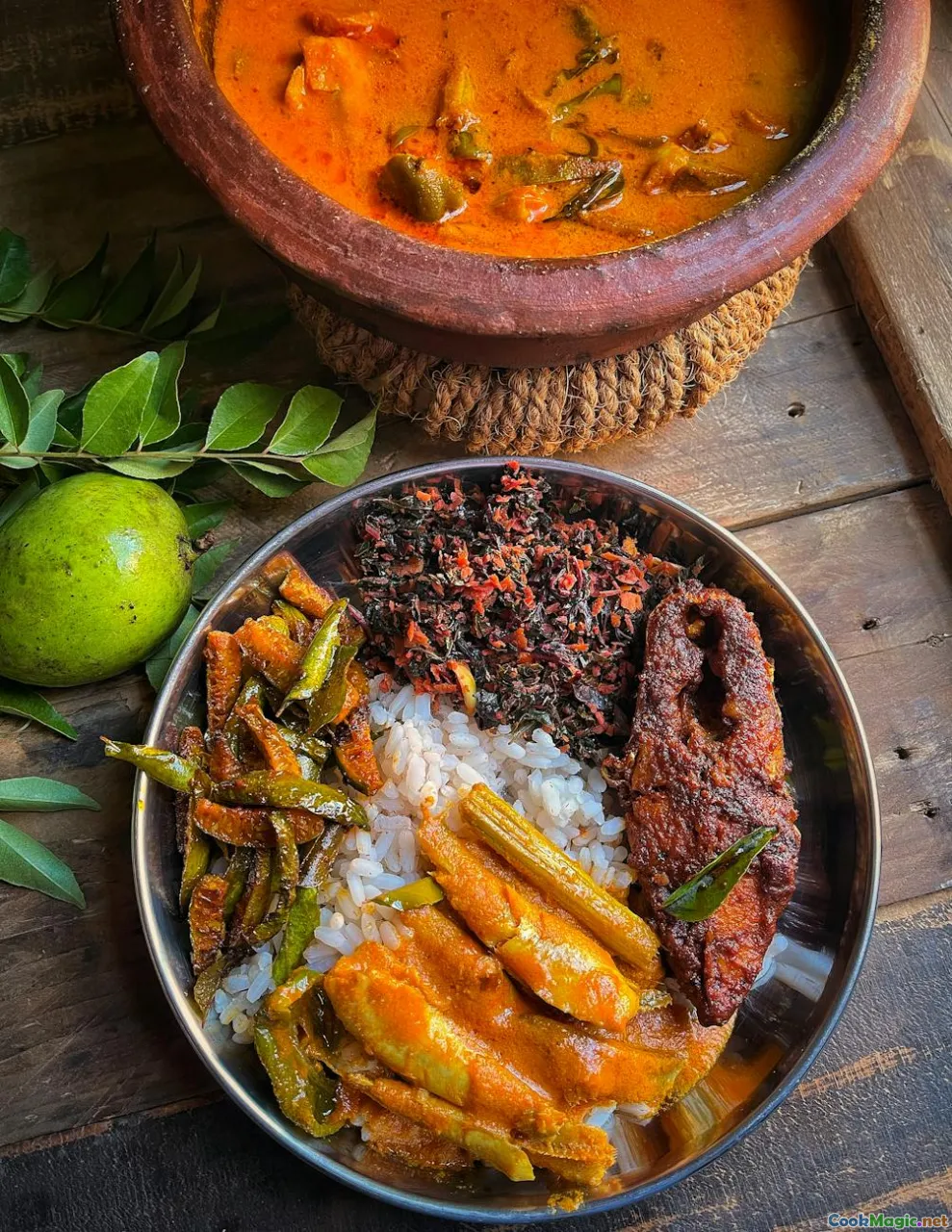
Camarão em frigideira com folhas de curry Sivakasi
(Sivakasi Curry Leaf Prawn Skillet)
(0 Avaliações)


0
247
novembro 14, 2025
Reportar um problema
Ingredientes
-
500 grams Camarões-tigre, descascados e desvenados
(Tails on for appearance; pat very dry)
-
25 grams Folhas de curry frescas
(Divide: most for roasting, a few for tempering)
-
120 grams Chalotas
(Picar grosseiramente)
-
6 cloves Alho
(Amassado)
-
20 grams Gengibre
(Fatiado)
-
2 pieces Pimentas verdes
(Cortar no sentido do comprimento)
-
3 pieces pimentas vermelhas secas
(Prefer Byadgi or Kashmiri for color)
-
2 tsp Grãos de pimenta-do-reino
(Moído na hora para melhor aroma)
-
1.5 tsp Sementes de funcho
(Signature Tamil aroma)
-
1 tsp Sementes de cominho
(Earthy base)
-
2 tsp Sementes de coentro
(Citrusy warmth)
-
0.5 tsp Pó de Cúrcuma
(For bright color and marinade)
-
1 tsp Pó de pimenta Kashmiri
(Vibrant color, mild heat)
-
1 tbsp Polpa de tamarindo
(Soak with 2 tbsp warm water)
-
1 tbsp Suco de limão
(For quick marinade brightness)
-
2 tbsp Óleo de coco
(Traditional cooking medium)
-
1 tsp Ghee
(Finish for sheen and aroma)
-
0.5 tsp Sementes de mostarda
(For tempering crackle)
-
0.5 tsp Jaggery
(Softens tamarind edge)
-
1 tsp Sal
(Ajuste a gosto)
-
2 tbsp Coentro fresco
(Bem picado, para decorar)
-
60 ml Água
(For grinding and deglazing as needed)
(Tails on for appearance; pat very dry)
(Divide: most for roasting, a few for tempering)
(Picar grosseiramente)
(Amassado)
(Fatiado)
(Cortar no sentido do comprimento)
(Prefer Byadgi or Kashmiri for color)
(Moído na hora para melhor aroma)
(Signature Tamil aroma)
(Earthy base)
(Citrusy warmth)
(For bright color and marinade)
(Vibrant color, mild heat)
(Soak with 2 tbsp warm water)
(For quick marinade brightness)
(Traditional cooking medium)
(Finish for sheen and aroma)
(For tempering crackle)
(Softens tamarind edge)
(Ajuste a gosto)
(Bem picado, para decorar)
(For grinding and deglazing as needed)
Nutrição
- Porções: 4
- Tamanho da Porção: 1 prato (250g)
- Calories: 290 kcal
- Carbohydrates: 10 g
- Protein: 27 g
- Fat: 16 g
- Fiber: 2 g
- Sugar: 3 g
- Sodium: 780 mg
- Cholesterol: 180 mg
- Calcium: 110 mg
- Iron: 2.3 mg
Instruções
-
1 - Prep the prawns:
Rinse prawns briefly, then pat completely dry. Moisture causes steaming instead of searing.
-
2 - Quick marinade:
Toss prawns with turmeric, half the lemon juice, a pinch of salt, and a pinch of crushed pepper. Set aside while you prep the masala.
-
3 - Roast spices and curry leaves:
In a dry skillet, roast black peppercorns, fennel, cumin, coriander, dried red chilies, and most curry leaves on medium heat until fragrant, 2–3 minutes. Cool slightly.
-
4 - Grind masala paste:
Grind the roasted mixture with shallots, garlic, ginger, Kashmiri chili powder, tamarind pulp with its soaking water, and a splash of water to a thick, coarse paste.
-
5 - Tempering:
Heat coconut oil in the skillet. Add mustard seeds; when they crackle, add green chilies and a few fresh curry leaves.
-
6 - Sauté the paste:
Add the ground paste with salt. Cook on medium, stirring, until it thickens and oil separates at the edges. Do not let it scorch; deglaze with water if needed.
-
7 - Sear the prawns:
Turn heat to medium-high. Add prawns and toss to coat. Cook just until opaque and curled, 3–4 minutes, keeping them juicy.
-
8 - Balance and glaze:
Stir in jaggery (optional) and remaining lemon juice. Splash in a little water if too thick, then simmer to a glossy, clinging consistency.
-
9 - Finish:
Stir in ghee (optional) for sheen. Adjust salt and heat. Garnish with cilantro.
-
10 - Serve:
Rest 1 minute and serve hot with parotta, steamed rice, dosai, or lemon rice.
Rinse prawns briefly, then pat completely dry. Moisture causes steaming instead of searing.
Toss prawns with turmeric, half the lemon juice, a pinch of salt, and a pinch of crushed pepper. Set aside while you prep the masala.
In a dry skillet, roast black peppercorns, fennel, cumin, coriander, dried red chilies, and most curry leaves on medium heat until fragrant, 2–3 minutes. Cool slightly.
Grind the roasted mixture with shallots, garlic, ginger, Kashmiri chili powder, tamarind pulp with its soaking water, and a splash of water to a thick, coarse paste.
Heat coconut oil in the skillet. Add mustard seeds; when they crackle, add green chilies and a few fresh curry leaves.
Add the ground paste with salt. Cook on medium, stirring, until it thickens and oil separates at the edges. Do not let it scorch; deglaze with water if needed.
Turn heat to medium-high. Add prawns and toss to coat. Cook just until opaque and curled, 3–4 minutes, keeping them juicy.
Stir in jaggery (optional) and remaining lemon juice. Splash in a little water if too thick, then simmer to a glossy, clinging consistency.
Stir in ghee (optional) for sheen. Adjust salt and heat. Garnish with cilantro.
Rest 1 minute and serve hot with parotta, steamed rice, dosai, or lemon rice.
Mais sobre: Camarão em frigideira com folhas de curry Sivakasi
Story and spirit
Sivakasi Karuveppilai Eral is an ode to Tamil Nadu’s southern spice trail. Sivakasi, famed for fireworks and printing, also hums with street-side fry shops where seafood meets pounding iron skillets, perfumed by curry leaves hitting hot oil. This dish celebrates that moment: prawns flash-seared in a peppery, fennel-forward masala, glossed with tamarind and finished with the irresistible crackle of mustard and curry leaves. The flavor profile sits at the intersection of Chettinad’s bold spice backbone and coastal Tamil Nadu’s love for aromatic leaves and quick, high-heat seafood cooking.
Why this recipe works
- Two forms of curry leaf: first roasted and ground into the masala for deep, tea-like aroma; second fried whole in tempering for bright, leafy top notes. The dual approach builds layered flavor.
- Pepper-fennel-cumin-coriander is a classic South Indian quartet, offering heat, sweetness, earth, and citrus. Grinding after a quick roast blooms oils without bitterness.
- Tamarind provides tang that lifts seafood sweetness; a tiny pinch of jaggery balances the edges without making it sweet.
- High-heat, short-time searing keeps prawns springy, never rubbery. The masala is cooked first to doneness so prawns only need a quick finish.
Texture and taste
Expect a clingy skillet masala that stains the prawns a vivid brick-red from Kashmiri chili and turmeric. The bite brings a sequence: popping mustard and curry leaf, gentle heat from red chilies, aromatic fennel and pepper warmth, then a quietly sour finish from tamarind and lemon. It is fiery in spirit but rounded and aromatic rather than overwhelmingly hot.
Tips and technique
- Dry the prawns thoroughly. Surface moisture is the enemy of browning.
- Cook the masala till you see tiny oil beads separating. That visual cue signals the raw edge of spices and aromatics has cooked off.
- Keep a little water to deglaze. This prevents scorching and lifts fond for deeper flavor.
- Watch the clock on the prawns. Depending on size, 3–4 minutes is plenty. Remove from heat the moment they curl into a loose C.
- Control heat: slit green chilies add aroma without much seed-driven fire; you can omit for milder versions.
- If fresh curry leaves are wet, pat them dry before roasting or tempering to avoid oil splatter.
Ingredient swaps and variations
- Protein: This masala loves squid rings, firm white fish, or chicken thigh strips. For vegetarian options, try king oyster mushrooms or firm paneer cubes; adjust cooking time accordingly.
- Fat: Coconut oil is traditional; use neutral oil plus a teaspoon of toasted sesame oil for a different but delicious finish.
- Sourness: If tamarind is unavailable, combine lemon juice with a teaspoon of rice vinegar to mimic gentle tartness.
- Heat: Swap Kashmiri chili with paprika for color and add ground cayenne to dial heat independently.
- Herbs: Add a handful of mint at the end for a fresh lift.
Serving ideas
This skillet prawn pairs beautifully with flaky Malabar parotta, ghee rice, kal dosai, or even buttery toast for a fusion brunch. A crisp cucumber-onion salad and a wedge of lemon complete the plate.
Make-ahead and storage
- The roasted spice and curry leaf paste can be prepared up to 3 days ahead and refrigerated in an airtight jar with a thin oil layer on top.
- Cooked prawns keep well for 1 day in the fridge; rewarm gently to avoid overcooking.
- Roast extra curry leaves and blitz into a powder with salt as a finishing sprinkle for other dishes.
Cultural note
While Sivakasi is not a coastal town, its markets pull in seafood from Tuticorin and Rameswaram. The region’s palate leans peppery and aromatic rather than creamy, and curry leaves are used with particular enthusiasm. This dish channels the tempo of local fry counters: speed, heat, and maximal aroma, where fresh seafood meets a masala that is both rustic and refined.
Troubleshooting
- Masala tastes raw or harsh: cook longer on medium heat until oil separates; add a splash of water to prevent burning.
- Too spicy: balance with a little more jaggery and lemon, then fold in a spoon of ghee.
- Prawns turned rubbery: next time, add them later and cook a minute less; serve immediately.
Chef’s note
I love how the curry leaf shows up twice here, first as a quiet bass note and then as a bright cymbal crash. It proves that great South Indian cooking is as much about technique as ingredients. Respect the sequence, keep the heat honest, and Sivakasi’s skillet magic will fill your kitchen.