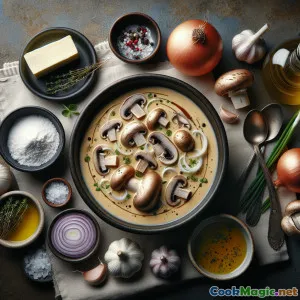
メコン川の発酵魚の米麺スープ
(Mekong Fermented Fish Noodle Soup)
(0 レビュー)
材料
-
400 grams 生の米麺(bánh phở または bún)
(Use fresh; if dried, use 200 g and soak per package)
-
80 grams 発酵魚ペースト(mắm cá linh/mắm sặc)
(Strong, savory paste; adjust to taste)
-
1500 ml 鶏または豚のブイヨン
(Homemade preferred; water with bouillon works)
-
300 grams ナマズ/スネークヘッドのしっかりした白身魚のフィレ
(Skinless; cut into bite-size chunks)
-
200 grams むきえび
(Medium size, tails on optional)
-
150 grams 豚バラ肉の薄切り
(Adds richness; omit for lighter bowl)
-
3 stalks レモングラスの茎、軽くつぶした
(Trim ends; bruise to release oils)
-
20 grams ガランガル、薄切り
(Ginger can substitute in a pinch)
-
4 leaves カフィルライムの葉
(Tear to release aroma)
-
4 pieces エシャロット、薄切り
(Adds sweetness and body)
-
4 cloves ニンニク (みじん切り)
(Fragrant base)
-
2 pieces トマト、くし形切り
(Adds umami and color)
-
200 grams アジア産ナス(角切り)
(Traditional in Mekong soups)
-
150 grams パイナップル、薄いウェッジ
(Balances funk with fruitiness)
-
2 tbsp タマリンドピューレ(またはペースト)
(Sour backbone; adjust to taste)
-
1 tbsp パームシュガー(またはブラウンシュガー)
(Softens saltiness, deepens flavor)
-
2 tbsp 魚醤
(味を見て調える)
-
2 tbsp 料理用油
(Neutral oil for sautéing)
-
150 grams もやし
(Rinse crisp and keep cold)
-
1 cup フレッシュハーブミックス(タイ バジル、ギザギザ葉のコリアンダー、ミント)
(ざっくりと裂いた)
-
2 stalks 青ねぎの薄切り
(Green parts for garnish)
-
2 pieces バードアイ・チリ、薄切り
(For heat; serve on side)
-
2 whole ライム
(Wedges for serving)
-
2 tbsp フライドオニオン
(Crunchy finish)
-
1 tsp 塩
(最後に調整)
(Use fresh; if dried, use 200 g and soak per package)
(Strong, savory paste; adjust to taste)
(Homemade preferred; water with bouillon works)
(Skinless; cut into bite-size chunks)
(Medium size, tails on optional)
(Adds richness; omit for lighter bowl)
(Trim ends; bruise to release oils)
(Ginger can substitute in a pinch)
(Tear to release aroma)
(Adds sweetness and body)
(Fragrant base)
(Adds umami and color)
(Traditional in Mekong soups)
(Balances funk with fruitiness)
(Sour backbone; adjust to taste)
(Softens saltiness, deepens flavor)
(味を見て調える)
(Neutral oil for sautéing)
(Rinse crisp and keep cold)
(ざっくりと裂いた)
(Green parts for garnish)
(For heat; serve on side)
(Wedges for serving)
(Crunchy finish)
(最後に調整)
栄養
- 分量: 4
- 1人分の量: 1 bowl (400 ml)
- Calories: 620 kcal
- Carbohydrates: 0 g
- Protein: 32 g
- Fat: 22 g
- Fiber: 4 g
- Sugar: 6 g
- Sodium: 1400 mg
- Cholesterol: 145 mg
- Calcium: 180 mg
- Iron: 3.2 mg
作り方
-
1 - Prep aromatics and proteins:
Bruise lemongrass, slice galangal, tear lime leaves. Thinly slice shallots and mince garlic. Cut fish into chunks, slice pork belly, and clean shrimp. Rinse herbs and bean sprouts; keep chilled.
-
2 - Toast the fermented paste:
Heat oil in a large pot over medium. Sauté shallots until translucent, add garlic, lemongrass, and galangal. Stir in fermented fish paste and cook 1–2 minutes until deeply aromatic to mellow bitterness.
-
3 - Build and simmer the broth:
Pour in stock. Add kaffir lime leaves and bring to a gentle simmer. Skim any foam. Let simmer 15–20 minutes so the fermented paste fully dissolves and perfumes the broth.
-
4 - Balance the Base:
Whisk in tamarind and palm sugar. Season with fish sauce. Taste and balance: salty, sour, sweet, and savory should be harmonious. Adjust with more water if too intense.
-
5 - Poach proteins gently:
Slip pork belly into simmering broth; cook 3 minutes. Add fish; cook until just opaque. Add shrimp last; cook 1–2 minutes. Lift proteins to a plate to prevent overcooking.
-
6 - Cook vegetables in broth:
Add eggplant and tomato to the pot; simmer until just tender. Stir in pineapple if using for fruity depth. Keep broth at a gentle bubble to preserve clarity.
-
7 - Prepare Noodles:
Blanch fresh rice noodles 15–30 seconds (or cook soaked dried noodles per package). Drain well. Divide noodles among four warmed bowls.
-
8 - Assemble Bowls:
Arrange fish, shrimp, and pork belly over noodles. Ladle hot broth with vegetables into each bowl. Top with bean sprouts, herbs, scallions, fried shallots, and sliced chilies.
-
9 - Finish and Serve:
Squeeze lime over each bowl. Offer extra fish sauce, chilies, and more tamarind or sugar at the table so diners can fine-tune their bowl.
-
10 - Clean up and storage:
Cool leftover broth quickly; store separately from noodles. Refrigerate up to 3 days or freeze 2 months. Rinse pot with hot water and a splash of vinegar to remove aromas.
Bruise lemongrass, slice galangal, tear lime leaves. Thinly slice shallots and mince garlic. Cut fish into chunks, slice pork belly, and clean shrimp. Rinse herbs and bean sprouts; keep chilled.
Heat oil in a large pot over medium. Sauté shallots until translucent, add garlic, lemongrass, and galangal. Stir in fermented fish paste and cook 1–2 minutes until deeply aromatic to mellow bitterness.
Pour in stock. Add kaffir lime leaves and bring to a gentle simmer. Skim any foam. Let simmer 15–20 minutes so the fermented paste fully dissolves and perfumes the broth.
Whisk in tamarind and palm sugar. Season with fish sauce. Taste and balance: salty, sour, sweet, and savory should be harmonious. Adjust with more water if too intense.
Slip pork belly into simmering broth; cook 3 minutes. Add fish; cook until just opaque. Add shrimp last; cook 1–2 minutes. Lift proteins to a plate to prevent overcooking.
Add eggplant and tomato to the pot; simmer until just tender. Stir in pineapple if using for fruity depth. Keep broth at a gentle bubble to preserve clarity.
Blanch fresh rice noodles 15–30 seconds (or cook soaked dried noodles per package). Drain well. Divide noodles among four warmed bowls.
Arrange fish, shrimp, and pork belly over noodles. Ladle hot broth with vegetables into each bowl. Top with bean sprouts, herbs, scallions, fried shallots, and sliced chilies.
Squeeze lime over each bowl. Offer extra fish sauce, chilies, and more tamarind or sugar at the table so diners can fine-tune their bowl.
Cool leftover broth quickly; store separately from noodles. Refrigerate up to 3 days or freeze 2 months. Rinse pot with hot water and a splash of vinegar to remove aromas.
メコン川の発酵魚の米麺スープ :の詳細
Fermented Fish Rice Noodle Soup (Bún Mắm–Inspired)
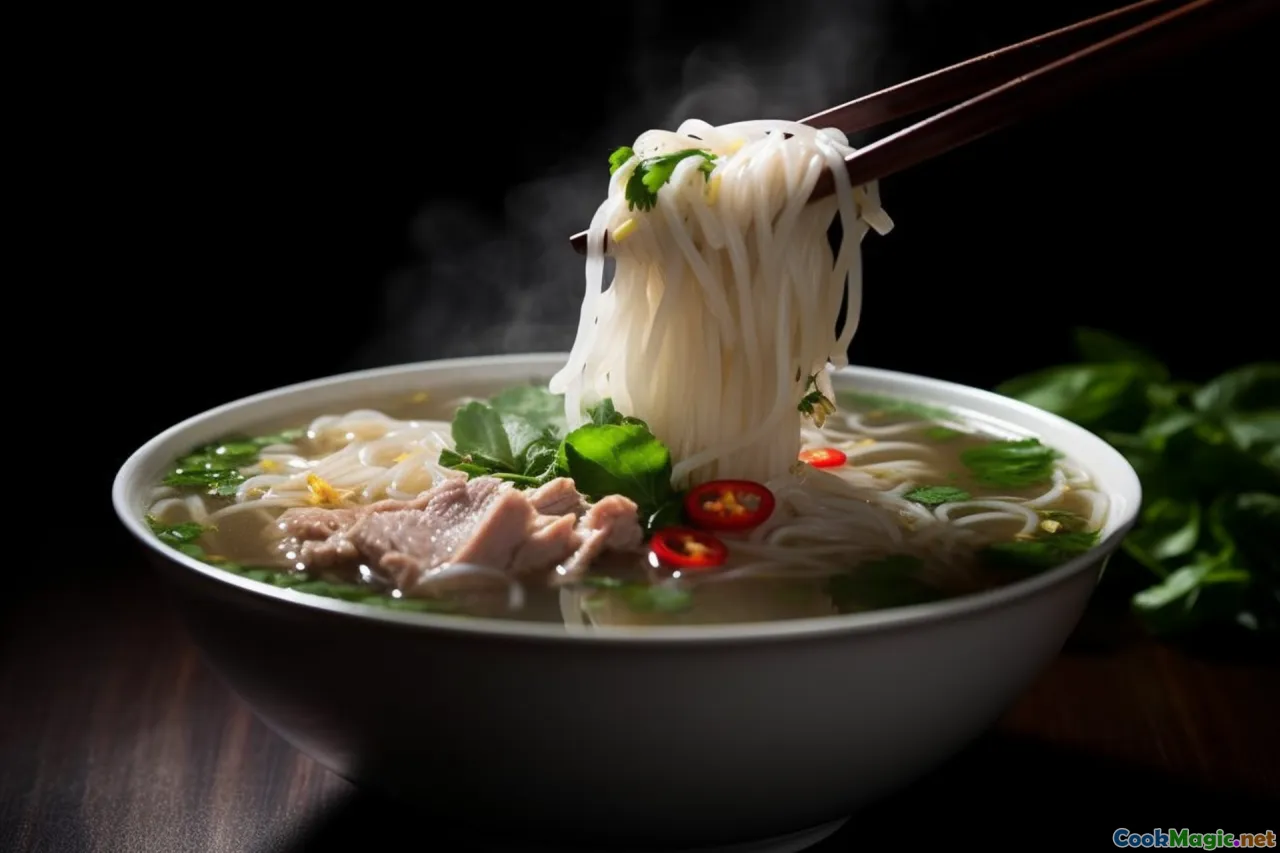
Fermented Fish Rice Noodle Soup is a love letter to the Mekong Delta, where river life meets markets brimming with herbs, seafood, and the unmistakable perfume of fermented fish. This bowl is bold: it does not whisper flavor; it sings it. The fermented fish paste (mắm) infuses the broth with deep umami, which is then brightened by tamarind, softened by palm sugar, and lifted with fresh herbs and lime. The result is a layered, comforting soup that’s at once rustic and refined.
What makes this soup special
- Fermented complexity: Mắm brings a savory depth you cannot mimic with conventional stock alone. Toasting it briefly in oil with aromatics mellows sharp edges and coaxes out roundness.
- Textural contrast: Tender fish and shrimp, juicy tomatoes and eggplant, bouncy rice noodles, and crisp bean sprouts create a dynamic bowl.
- Modular toppings: Fresh herbs, chilies, fried shallots, and lime let each diner tailor salt, heat, and brightness.
Tips and notes
- Control the funk: Toast the fermented paste gently before adding liquid. This step is crucial for smoothing bitterness and building aroma.
- Balance is everything: Taste for a triangle of flavors—salty (fish sauce and fermented paste), sour (tamarind, lime), and sweet (palm sugar). If the broth seems too intense, add a ladle of hot water to widen the flavors.
- Keep proteins silky: Poach fish and shrimp at a bare simmer. Remove them once just cooked to avoid toughness. Slide them back into bowls before serving.
- Noodle choice: Flat bánh phở yields a familiar slurp; round bún noodles give a springier bite. Rinse briefly in hot water right before serving to remove starch and rewarm.
- Vegetables: Eggplant absorbs the broth’s character magnificently; tomatoes add umami and color. Pineapple is optional but traditional in many riverine soups for fruity acidity.
- Garnish wisely: Herbs like Thai basil and sawtooth coriander stand up to bold broths. Mint and cilantro can also be used, but avoid overpowering with stems.
- On heat: Bird’s eye chilies pack serious punch. Offer them on the side so each bowl can find its level.
- Aroma management: A splash of vinegar or a wedge of lemon simmered in the empty pot helps banish lingering scents. Coffee grounds in a small bowl left near the stovetop also absorb odors.
Ingredient sourcing and substitutions
- Fermented fish paste: Vietnamese mắm cá linh or mắm sặc are ideal. If unavailable, Thai pla ra or Cambodian prahok can step in; start with less and build up. In a pinch, combine mild fish sauce with a teaspoon of anchovy paste to approximate depth (less traditional, but serviceable).
- Stock: Pork or chicken stock provides backbone. Vegetable stock works for pescatarian versions—just increase mushrooms or kelp for body.
- Galangal and kaffir lime leaves: Recommended for a Southeast Asian perfume; if you can’t find them, use ginger and extra lemongrass, plus lime zest at the end.
- Palm sugar: Brown sugar or jaggery make fine substitutes.
- Tamarind: Fresh pulp has dimension. Tamarind concentrate is stronger; start with 1 tablespoon and adjust.
Cultural significance and history
This soup is inspired by bún mắm, a hallmark of the Mekong Delta in southern Viet Nam. The region’s rich waterways and fish preservation traditions gave rise to mắm—fermented fish products that predate refrigeration and became culinary cornerstones. Over generations, cooks paired these concentrated flavors with abundant herbs, seasonal vegetables, and noodles, creating a market-stall favorite that fuels fishermen, vendors, and families alike.
Similar fermented fish traditions ripple across Southeast Asia—Thai pla ra, Lao padaek, and Cambodian prahok—each shaping local noodle soups with distinct accents. What unites them is thrift, ingenuity, and boldness: transforming humble fish into a symphony of savor.
Serving and pairing ideas
- Crunch and cool: Serve with extra bean sprouts, cucumber batons, and shredded cabbage for contrast.
- Heat and lift: Provide lime wedges, chili slices, and a small bowl of fish sauce. A dab of chili oil adds a fragrant kick.
- Drinks: Light, crisp beers (rice lager), iced jasmine tea, or a citrusy soda cut through richness. Adventurous pairings include a tart gose or a dry Riesling.
Make-ahead and storage
- Broth develops even more character overnight. Keep noodles separate to maintain texture.
- Refrigerate broth (without herbs or sprouts) up to 3 days or freeze up to 2 months. Reheat gently to avoid cloudiness.
- Refresh herbs in ice water for 5 minutes before serving to maximize snap and aroma.
Variations
- River-only: Skip pork belly for a lighter, purely seafood bowl; add squid rings or clams.
- Garden version: Use mushroom dashi (shiitake + kombu) and miso for body; add tofu and charred eggplant. It won’t be traditional, but honors the spirit of fermented depth.
- Northern touch: Add a hint of grilled aromatics (char a shallot and a piece of ginger) for smokiness.
Chef’s thoughts
Fermented Fish Rice Noodle Soup rewards patience and curiosity. The first aroma may surprise, but the sip that follows is layered, comforting, and addictive. Once you learn to balance the salty-sour-sweet trio and to treat proteins gently, the bowl becomes a canvas for seasons and markets. It’s the kind of soup that makes a kitchen feel alive: a pot murmuring on the stove, herbs waiting to be torn, and a table ready for conversation.