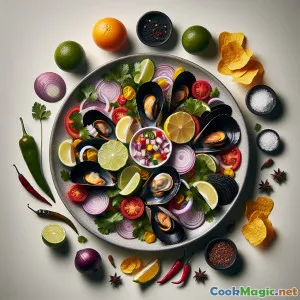
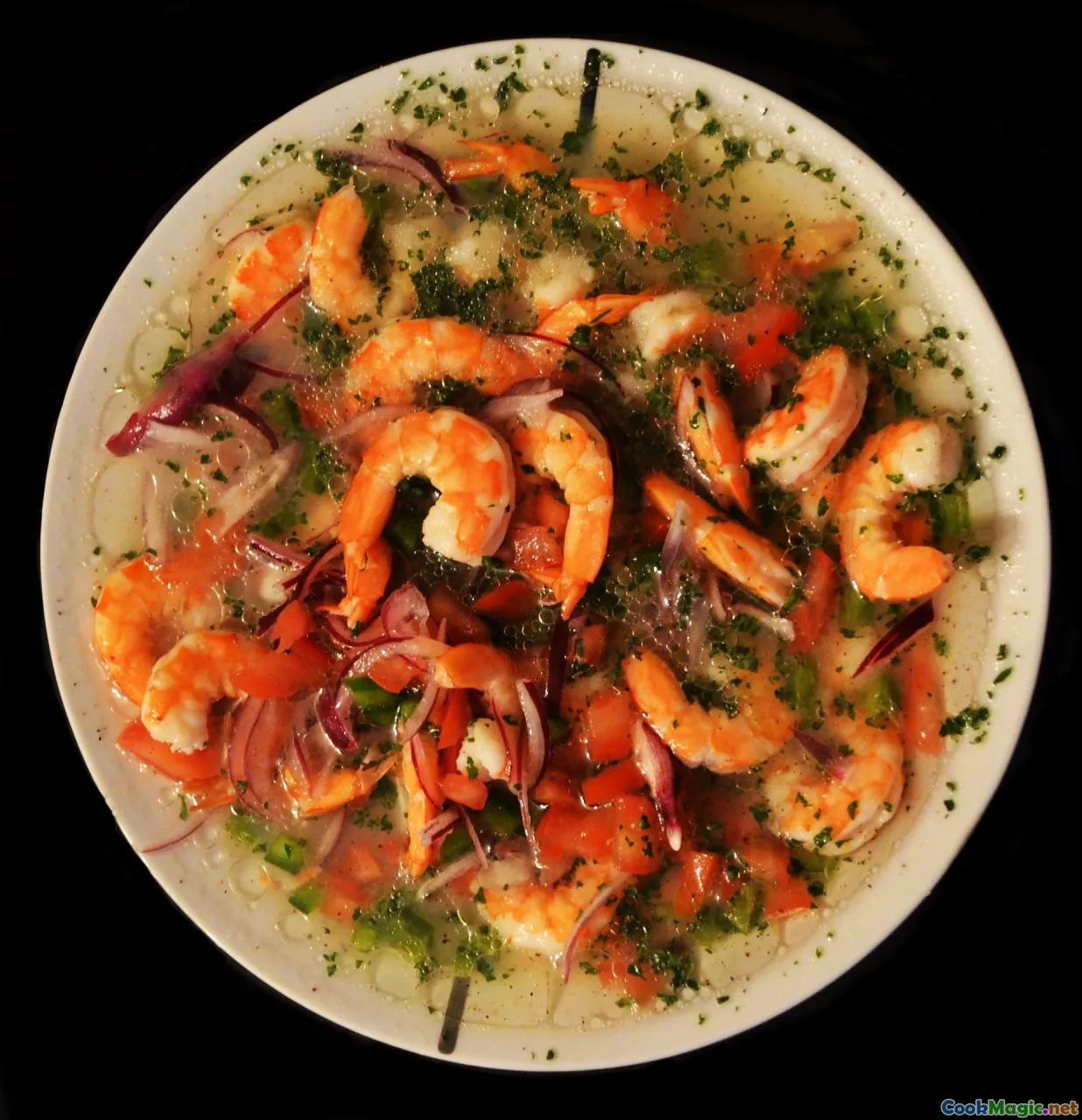
Ceviche de Mejillón Negro Esmeraldeño
(Tangy Black Clam Ceviche Esmeraldeño Style)
(0 Reseñas)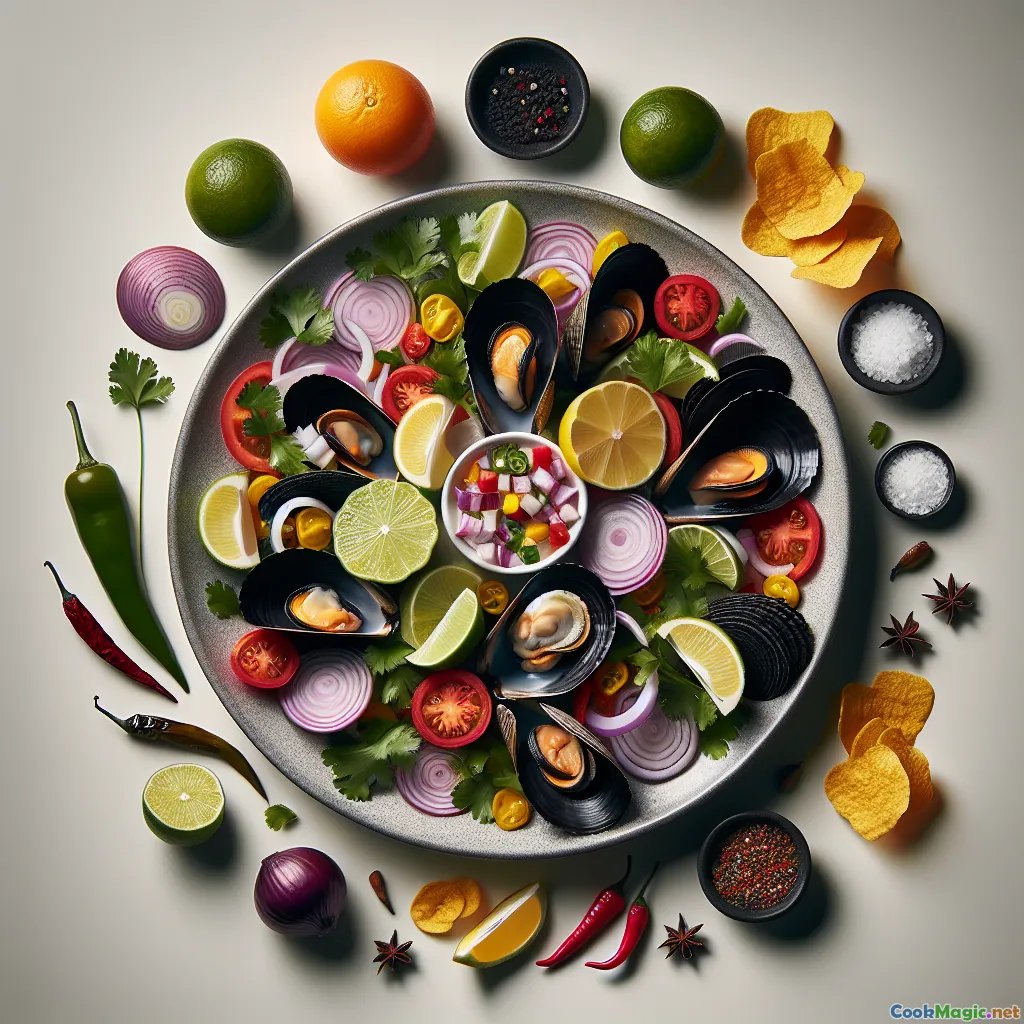
0
885
julio 16, 2025
Informar de un problema
Ingredientes
-
500 grams Concha negra (Black clams)
(Fresco, cepillado, conchas retiradas)
-
1 medium Cebolla roja
(Cortado en rodajas finas)
-
8 whole Limas
(Solo zumo recién exprimido)
-
60 ml Jugo de naranja
(Fresco, no es de concentrado; adorno opcional con piel de cítrico.)
-
1/3 cup Cilantro
(Finamente picado)
-
1 medium Tomate
(Cortado en pequeños cubos)
-
1 whole Pimiento picante (ají o Serrano)
(Picado finamente, opcional según la tolerancia al picante.)
-
1 tsp Sal
(Ajustar al gusto)
-
1/2 tsp Pimienta negra
-
1/4 tsp Comino
(Opcional, para un aroma auténtico.)
-
30 grams Maíz tostado (chifles o maíz tostado)
(Para decorar y crujir)
-
40 grams Chips de plátano
(Opcional, para servir)
(Fresco, cepillado, conchas retiradas)
(Cortado en rodajas finas)
(Solo zumo recién exprimido)
(Fresco, no es de concentrado; adorno opcional con piel de cítrico.)
(Finamente picado)
(Cortado en pequeños cubos)
(Picado finamente, opcional según la tolerancia al picante.)
(Ajustar al gusto)
(Opcional, para un aroma auténtico.)
(Para decorar y crujir)
(Opcional, para servir)
Nutrición
- Porciones: 4
- Tamaño de porción: 1 tazón (250g)
- Calories: 220 kcal
- Carbohydrates: 23 g
- Protein: 17 g
- Fat: 3 g
- Fiber: 4 g
- Sugar: 6 g
- Sodium: 650 mg
- Cholesterol: 75 mg
- Calcium: 100 mg
- Iron: 6 mg
Instrucciones
-
1 - Limpiar y preparar almejas:
Limpie completamente las almejas negras bajo agua fría. Use un cepillo suave para fregar las conchas si es necesario. Abra las almejas y coloque la carne en un colador, enjuagando suavemente la arena residual.
-
2 - Macera la cebolla:
Deja la cebolla roja en rodajas finas en agua con hielo durante 5 minutos para suavizar su sabor. Escúrrela bien antes de usar.
-
3 - Mezcla base para ceviche:
Coloca la carne limpia de almeja en un cuenco no reactivo. Añade jugo de lima, jugo de naranja (si lo usas), sal, pimienta y comino. Revuelve suavemente.
-
4 - Añadir Verduras y Sabor:
Incorpora cilantro, cebolla macerada, ají picado (si se desea) y tomate. Mezcla para combinar.
-
5 - Marinar el ceviche:
Cubre el tazón y refrigéralo durante 8–15 minutos, permitiendo que el cítrico 'cocine' las almejas y que los sabores se fusionen.
-
6 - Servir y Decorar:
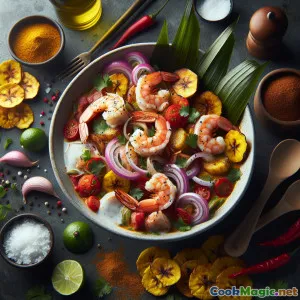
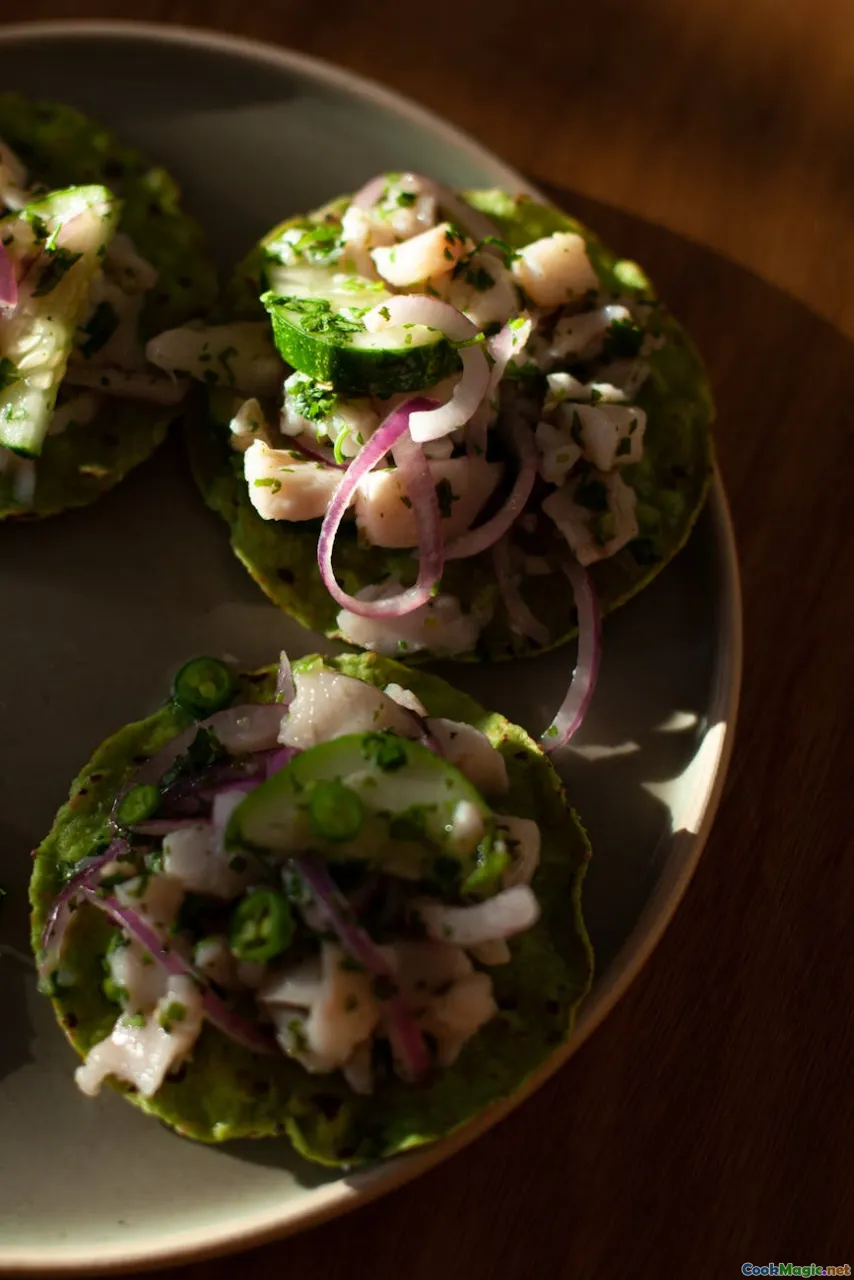
Sirve frío en cuencos pequeños. Termina con cilantro fresco, maíz asado y chips de plátano macho a un lado, según desees.
Limpie completamente las almejas negras bajo agua fría. Use un cepillo suave para fregar las conchas si es necesario. Abra las almejas y coloque la carne en un colador, enjuagando suavemente la arena residual.
Deja la cebolla roja en rodajas finas en agua con hielo durante 5 minutos para suavizar su sabor. Escúrrela bien antes de usar.
Coloca la carne limpia de almeja en un cuenco no reactivo. Añade jugo de lima, jugo de naranja (si lo usas), sal, pimienta y comino. Revuelve suavemente.
Incorpora cilantro, cebolla macerada, ají picado (si se desea) y tomate. Mezcla para combinar.
Cubre el tazón y refrigéralo durante 8–15 minutos, permitiendo que el cítrico 'cocine' las almejas y que los sabores se fusionen.
Sirve frío en cuencos pequeños. Termina con cilantro fresco, maíz asado y chips de plátano macho a un lado, según desees.
Más información sobre: Ceviche de Mejillón Negro Esmeraldeño
Ceviche de Concha Negra Esmeraldeño: History, Culture, and Culinary Insights
Ceviche de Concha Negra Esmeraldeño is one of Ecuador’s most coveted coastal delicacies, steeped in traditions and abounding with regional influences. Originating from the northern province of Esmeraldas—an area famed for its Afro-Ecuadorian heritage and vibrant seafood fare—this ceviche diverges strikingly from its better-known cousins made with white fish or shrimp. Esmeraldas sits right along Ecuador's balmy Pacific Ocean, making fresh shellfish an immense part of the local diet.
Unique and Bold Main Ingredient
Concha negra, or black clam (Anadara tuberculosa), is distinguished by an almost inky color, robust briny flavor, and more intense savoriness compared to typical ceviche ingredients. Black clam also lends a deeper, slightly mystical color to the marinating liquid—often resulting in a purplish or jet-black consommé prized as both a delicacy and a restorative tonic. There's even a cultural belief among many locals that ceviche de concha negra is an aphrodisiac and provides a potent boost of energy.
Cultural Significance and Regional Atmosphere
The city of Esmeraldas, with its dynamic, African-Ecuadorian energy, hosts what can best be described as sensory culinary rituals. Vendors serve this ceviche piping fresh, regal in bright orange limes and lush green cilantro, at seaside markets, roadside stalls, and family homes for weekend indulgence or recados (celebrations). It’s a dish tied intimately to communal gatherings, symbolizing the abundance of the sea and the resourcefulness of coastal dwellers.
Preparation & Traditional Serving
Preparing this ceviche is both art and celebration: the clams must be fresh—often still pulsating with saline ‘life’—cleaned meticulously, and only momentarily marinated so their supple texture and natural juice remain vivid. Macerating the onions beforehand is not just a flavor technique; it’s about ensuring the layering of tastes and making the dish more palatable and refreshing on hot coastal days. The addition of orange juice isn’t strictly canonical but often used for extra sweetness or for times when limes are exceptionally tart.
Esmeraldeños frequently finish the dish with crunchy corn kernels (‘maíz tostado’) and crisp plantain chips, which provide flavor contrast and textural interest, all eaten preferably while watching the Pacific waves.
Unique Aspects & Tips
- Clam Freshness: Only use the freshest black clams you can get—texture and brininess start to diminish within hours.
- Citrus Marination: Unlike fish-based ceviches, you want the ‘cooking’ time very brief in order to preserve the clam’s soft, yielding bite.
- Optional Additions: Locals might stir in a teaspoon of cold clam broth to heighten the flavor—if your shellfish is top quality, collect and strain it!
- Herbage and Heat: While aji tends to be optional (spice tolerance in Ecuador varies regionally), a gentle sprinkle offers a wonderful kick without overshadowing the sweet-plump seafood.
Modern Enjoyment – Sustainable and Accessible
Due to overfishing and regulations on black clam harvest, availability varies, yet the dish persists as a beloved regional identity marker. For home cooks outside South America, frozen black clam meat (often from specialized Latin food markets) can offer a close approximation.
What Stands Out Most?
- The unusual color and strong ocean flavor—unmistakably different from lemony fish ceviches.
- Its symbolism as festive and even slightly “forbidden” sea magic from Ecuador’s northern shores.
Final Thoughts
To taste Ceviche de Concha Negra Esmeraldeño is to bite into the very essence of Ecuador’s glorious Pacific coast—salty breezes, warm hospitality, drums and marimbas echoing in the background, and the flavor of tradition that links past and future generations. This recipe not only delights, but feeds the adventurous soul with cultural adventure, uniqueness, and soul.