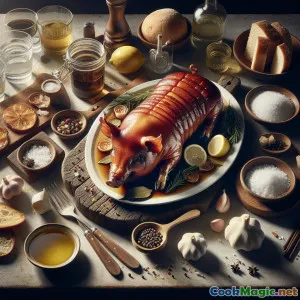
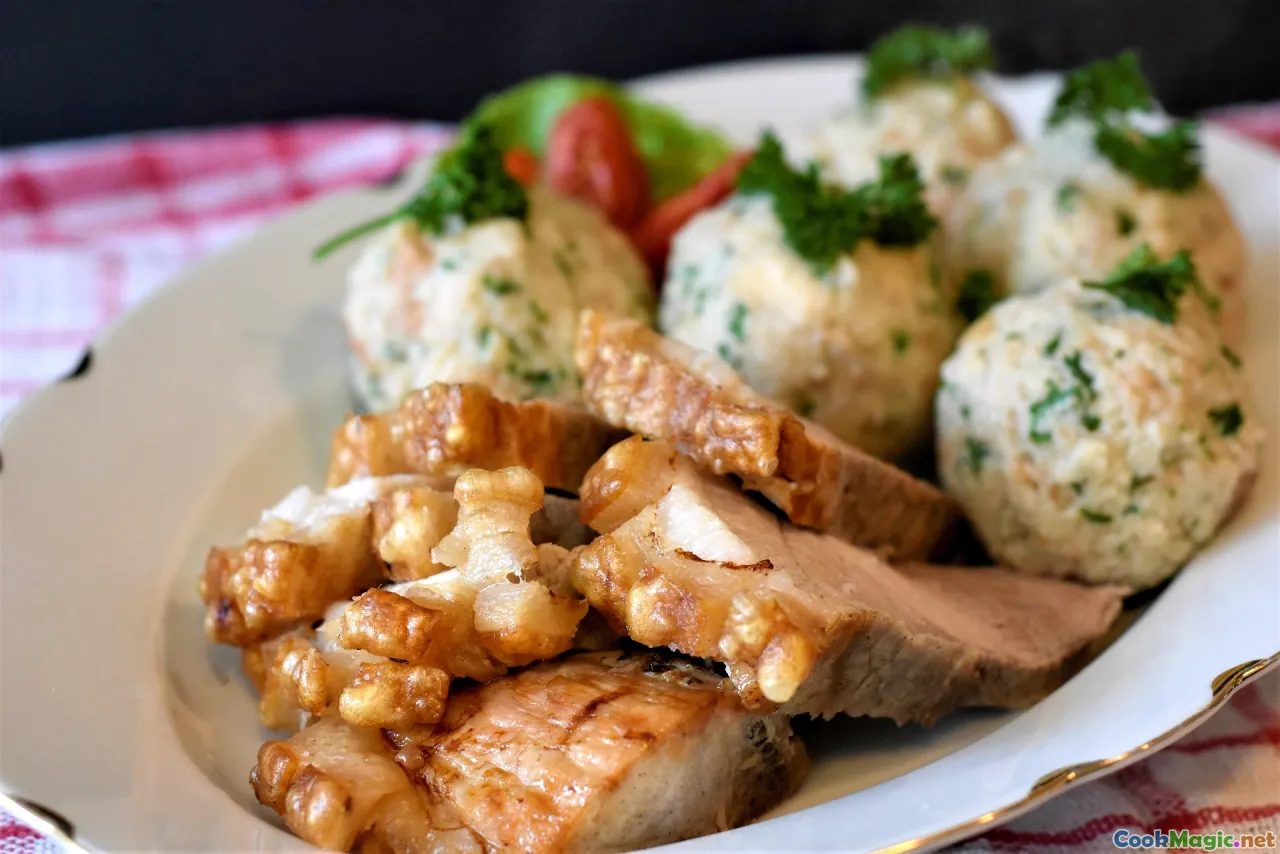
Leitão assado segoviano com pele crocante
(Crisp-Skinned Segovian Suckling Piglet Roast)
(0 Avaliações)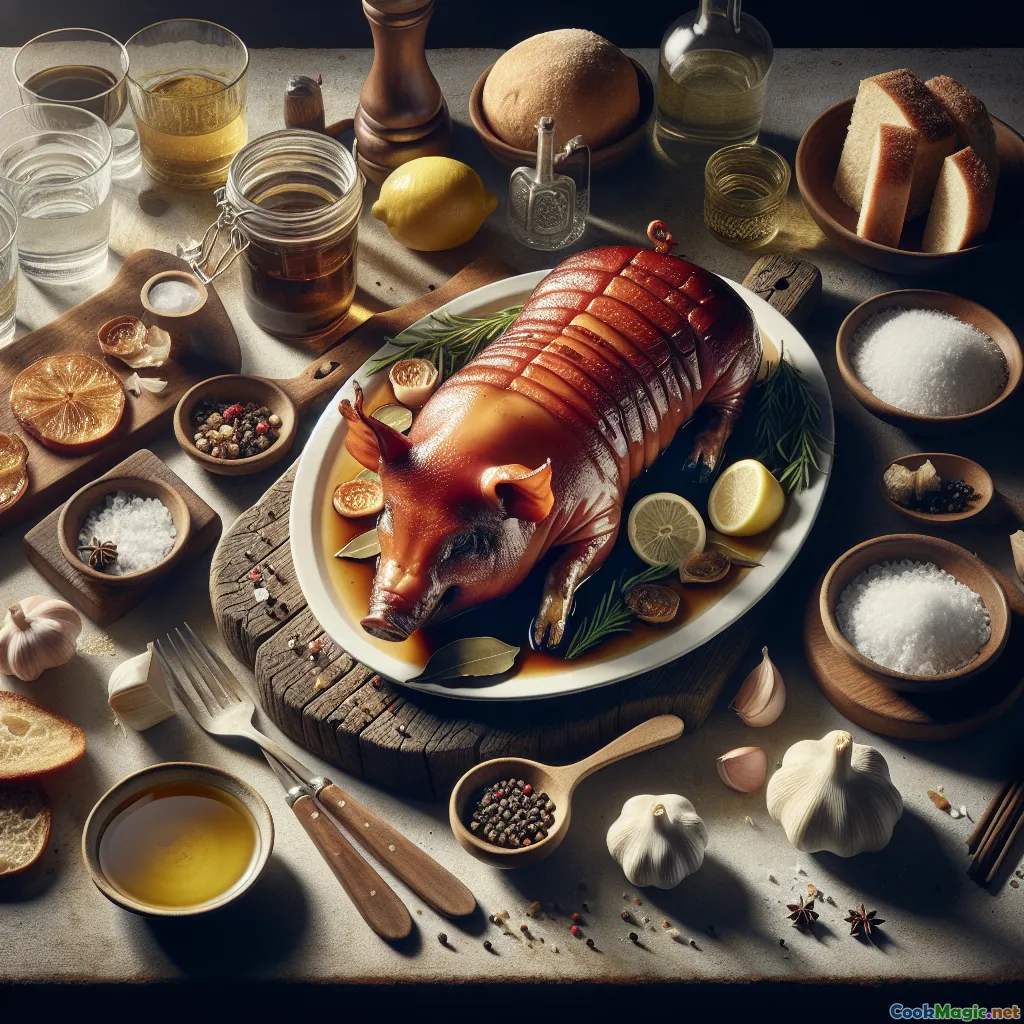
0
23
janeiro 15, 2026
Reportar um problema
Ingredientes
-
1 whole leitão
(4–5 kg dressed weight, head-on, eviscerated, skin intact)
-
60 grams Sal marinho grosso
(Adjust to taste; season interior and exterior)
-
80 grams Banha de porco
(Melted; traditional fat for basting)
-
500 ml Água
(For the roasting pan to humidify and create jus)
-
150 ml vinho branco seco
(Adds aroma to pan juices; omit for classic minimalist version)
-
4 cloves Dentes de alho
(Lightly crushed; perfumes the cavity)
-
3 leaves Folhas de louro
(Tucked in cavity for fragrance)
-
1 whole Limão
(Halved, to wipe the cavity and reduce any porkiness)
-
1 tsp Pimenta preta
(Freshly ground; traditionalists omit pepper)
-
1 tbsp Azeite
(For final glaze if skin needs extra shine)
-
1 tbsp Vinagre de maçã
(Mixed with lard to encourage blistering crackling)
-
4 pieces Fatias de pão amanhecido ou tiras de madeira
(To elevate piglet and keep skin from sitting in liquid)
(4–5 kg dressed weight, head-on, eviscerated, skin intact)
(Adjust to taste; season interior and exterior)
(Melted; traditional fat for basting)
(For the roasting pan to humidify and create jus)
(Adds aroma to pan juices; omit for classic minimalist version)
(Lightly crushed; perfumes the cavity)
(Tucked in cavity for fragrance)
(Halved, to wipe the cavity and reduce any porkiness)
(Freshly ground; traditionalists omit pepper)
(For final glaze if skin needs extra shine)
(Mixed with lard to encourage blistering crackling)
(To elevate piglet and keep skin from sitting in liquid)
Nutrição
- Porções: 6
- Tamanho da Porção: 1 portion (300g with skin)
- Calories: 780 kcal
- Carbohydrates: 0 g
- Protein: 55 g
- Fat: 60 g
- Fiber: 0 g
- Sugar: 1 g
- Sodium: 900 mg
- Cholesterol: 210 mg
- Calcium: 40 mg
- Iron: 2.8 mg
Instruções
-
1 - Preheat and prepare pan:
Heat oven to 170°C (340°F). Place a large earthenware or roasting pan on a rack in the lower third. Lay stale bread slices or wooden slats to form a simple trivet.
-
2 - Dry the piglet thoroughly:
Pat the piglet completely dry, inside and out, with paper towels. Moisture on the skin prevents crisping. Do not score the skin; keep it intact.
-
3 - Season cavity and limbs:
Rub the cavity with lemon (optional). Season interior generously with coarse salt; add garlic and bay leaves if using. Lightly salt joints and underarms.
-
4 - Set up the roast:
Brush the piglet all over with melted lard. Place it belly-up on the trivet so it doesn’t sit in liquid. Pour water and wine (if using) into the pan, not over the skin.
-
5 - Initial gentle roast:
Roast at 170°C, basting exposed meat (not skin) with pan juices every 20 minutes. Maintain a shallow pool of liquid to keep the environment humid.
-
6 - Flip and baste skin:
Carefully turn the piglet skin-side up using towels. Mix remaining lard with vinegar (optional) and brush a thin film over the skin. Increase oven to 200°C (392°F).
-
7 - Crisp to glass-like crackling:
Roast until the skin blisters evenly and turns lacquered chestnut, about 35–45 minutes. Rotate pan for even color. Avoid splashing liquid on the skin.
-
8 - Rest properly:
Transfer piglet to a warm platter and rest 8–10 minutes. Keep the crackling dry by tenting loosely with foil, leaving vents for steam to escape.
-
9 - Make a simple jus:
Deglaze pan on stovetop, scraping browned bits. Reduce to a glossy jus; season with salt and a pinch of pepper if desired. Strain for a refined finish.
-
10 - Carve and Serve:
In Segovian tradition, demonstrate tenderness by cutting with a plate edge, then break the plate for good luck. Portion with crackling intact. Serve with the jus.
Heat oven to 170°C (340°F). Place a large earthenware or roasting pan on a rack in the lower third. Lay stale bread slices or wooden slats to form a simple trivet.
Pat the piglet completely dry, inside and out, with paper towels. Moisture on the skin prevents crisping. Do not score the skin; keep it intact.
Rub the cavity with lemon (optional). Season interior generously with coarse salt; add garlic and bay leaves if using. Lightly salt joints and underarms.
Brush the piglet all over with melted lard. Place it belly-up on the trivet so it doesn’t sit in liquid. Pour water and wine (if using) into the pan, not over the skin.
Roast at 170°C, basting exposed meat (not skin) with pan juices every 20 minutes. Maintain a shallow pool of liquid to keep the environment humid.
Carefully turn the piglet skin-side up using towels. Mix remaining lard with vinegar (optional) and brush a thin film over the skin. Increase oven to 200°C (392°F).
Roast until the skin blisters evenly and turns lacquered chestnut, about 35–45 minutes. Rotate pan for even color. Avoid splashing liquid on the skin.
Transfer piglet to a warm platter and rest 8–10 minutes. Keep the crackling dry by tenting loosely with foil, leaving vents for steam to escape.
Deglaze pan on stovetop, scraping browned bits. Reduce to a glossy jus; season with salt and a pinch of pepper if desired. Strain for a refined finish.
In Segovian tradition, demonstrate tenderness by cutting with a plate edge, then break the plate for good luck. Portion with crackling intact. Serve with the jus.
Mais sobre: Leitão assado segoviano com pele crocante
Overview
Segovian Suckling Piglet Roast—cochinillo asado—is one of Spain’s most emblematic dishes, particularly in the Castilian city of Segovia. Revered for its astonishingly tender meat and shatteringly crisp, glass-like crackling, the dish is a masterclass in restraint: salt, lard, and water do the heavy lifting, while time and gentle heat coax out textures and aromas that define an entire region’s culinary identity.
This rendition honors tradition with a minimalist approach and offers optional aromatic touches (garlic, bay, a whisper of wine) for cooks who enjoy nuanced layers. The secret is humidity during the first half of roasting to keep the flesh succulent, followed by higher heat and dry skin to achieve that signature crackle.
Key Tips and Notes
- Dryness is destiny: The skin must be bone-dry before it goes into the oven. Any surface moisture will steam, preventing blistering. Pat thoroughly and air-dry briefly if time allows.
- Humidity first, dryness second: A little water (and optional wine) in the pan during the initial roast keeps the environment moist, protecting the delicate meat from drying out.
- No scoring: Unlike some pork roasts, traditional cochinillo does not benefit from scoring the skin. The unbroken surface helps produce that uniform glassy crackle.
- Gentle handling: When flipping, support the piglet with towels and your forearms. Puncturing the skin will create a steam vent and spoil the crackling.
- Don’t baste the skin: Only baste exposed meat. Liquid on the skin softens it.
- Vinegar-lard glaze (optional): A small splash of vinegar in melted lard accelerates blistering and shine. Use sparingly; the goal is a whisper, not a wash.
- Rest with vents: Resting is essential for juices to settle, but trap too much steam and you’ll lose the crisp texture. Tent loosely and leave vents.
History and Cultural Significance
Cochinillo asado has been served in Segovia for centuries, celebrated in rustic asadores where clay cazuelas, wood-fired ovens, and local lard are standard. The city’s aqueduct and Roman heritage draw the eye, but inside its taverns, the spectacle arrives on a wooden board: a small, golden piglet split and bronzed. The classic proof of doneness is theatrical—servers slice the roast not with a knife, but with the edge of a ceramic plate, demonstrating melting tenderness, then smash the plate for good luck. It’s both culinary ceremony and cultural memory.
The dish represents Castilian austerity. Rather than aggressive spicing, it valorizes the pristine quality of the piglet itself—nourished on milk, exceptionally young, and carefully sourced. The fat is mild, the flavor delicate, and the texture incomparable when cooked with patience and humility. Cochinillo is festive, tied to family gatherings, baptisms, and winter celebrations, yet it remains remarkable for its simplicity.
Unique Aspects of This Recipe
- Minimalist backbone, optional nuance: Purists use only salt, lard, and water. This recipe respects that foundation while offering modest additions—garlic, bay, white wine—that can be omitted without compromising authenticity.
- Earthenware or modern pan: Traditionalists favor clay, which distributes heat gently. If you don’t have one, a sturdy roasting pan with a makeshift trivet of stale bread or wooden slats works beautifully.
- Environmental control: The two-phase roast—humid then dry—gives reliable results in home ovens, mirroring the logic of wood-fired asadores.
Serving Ideas
- Keep sides simple: Roasted potatoes in duck fat, a crisp green salad, or charred spring onions let the cochinillo shine.
- Classic partners: Pan con tomate, padrón peppers, or sautéed wild mushrooms nod to Spanish seasonality.
- Wine pairing: Choose a youthful Tempranillo from Ribera del Duero, a Mencía with lift, or a mineral-driven white like Godello for contrast.
Troubleshooting
- Skin won’t crisp: The skin was damp, or the oven wasn’t hot enough during the finishing phase. Pat dry, brush a minimal lard-vinegar mix, and raise heat briefly.
- Pale patches: Rotate the pan and increase airflow. A fan-assisted burst (if available) for a few minutes can even out color.
- Dry meat: Too much heat too early, or not enough humidity. Ensure a shallow pool of water during the first phase and avoid overcooking.
Personal Notes
Cooking this dish is an exercise in trust. The temptation to add spices or glaze is strong, but the greatest revelation comes from restraint. When done right, the crackling fractures into translucent shards that dissolve with a gentle snap, while the meat underneath is softly perfumed and almost spoon-tender. It reminds me that some of the world’s greatest recipes require fewer ingredients and more attention. With calm technique and a steady oven, this Segovian masterpiece becomes accessible at home—spectacular enough for celebration, yet humble at heart, like the clay cazuela it’s traditionally roasted in.