Crepes Rústicos de Ervas com Recheio de Ameixa com Mel
(Rustic Herb Crepes with Honeyed Prune Filling)
(0 Avaliações)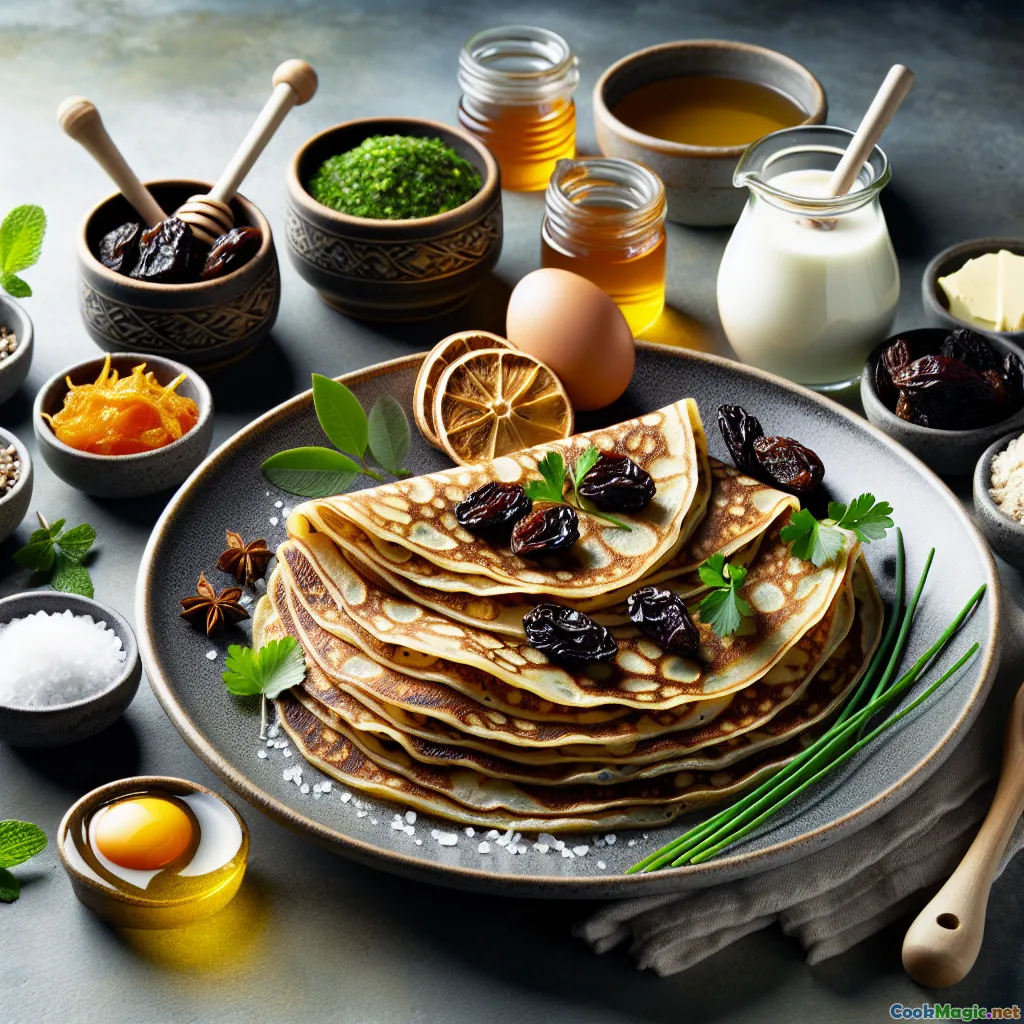

0
2,202
julho 19, 2025
Reportar um problema
Ingredientes
-
120 grams Farinha de trigo integral
(preferencialmente moído na pedra)
-
30 grams Farinha de trigo comum
(para uma textura mais leve)
-
2 tablespoons Cebolinha fresca
(Finamente picado)
-
1.5 tablespoons Salsa fresca
(Finamente picado)
-
0.5 teaspoon sal grosso fino do mar
-
2 each ovos grandes
(Temperatura ambiente)
-
320 ml Leite integral
(pode substituir por leite vegetal)
-
30 grams Manteiga sem sal
(Derretido e levemente resfriado)
-
200 grams Ameixas secas
(Sem caroço)
-
1 teaspoon Raspas de laranja
(Ralada finamente)
-
2 tablespoons Mel
(Mais extra para regar)
-
1 tablespoon Suco de limão
-
100 ml Água
-
80 grams Creme de leite azedo
(Para servir)
-
8 small leaves Hortelã fresca
(Para guarnição)
(preferencialmente moído na pedra)
(para uma textura mais leve)
(Finamente picado)
(Finamente picado)
(Temperatura ambiente)
(pode substituir por leite vegetal)
(Derretido e levemente resfriado)
(Sem caroço)
(Ralada finamente)
(Mais extra para regar)
(Para servir)
(Para guarnição)
Nutrição
- Porções: 4
- Tamanho da Porção: 2 crepes (aprox. 220 g)
- Calories: 407 kcal
- Carbohydrates: 69 g
- Protein: 12 g
- Fat: 10 g
- Fiber: 8 g
- Sugar: 30 g
- Sodium: 210 mg
- Cholesterol: 90 mg
- Calcium: 140 mg
- Iron: 3.2 mg
Instruções
-
1 - Preparar a massa de crepe:
Em uma tigela grande, bata as farinhas de trigo integral e de uso comum com sal. Em outra tigela, bata os ovos, em seguida incorpore o leite e a manteiga derretida, seguido de cebolinha e salsa. Adicione aos poucos os ingredientes úmidos aos secos, mexendo até obter uma mistura homogênea. Deixe a massa descansar por 20 minutos.
-
2 - Cozinhe crepes com ervas:
Aqueça uma frigideira antiadherente de cerca de 20–23 cm de diâmetro, levemente untada, em fogo médio. Com uma concha, verta o suficiente de massa para cobrir a frigideira de forma uniforme. Cozinhe cada crepe por 1–2 minutos, até as bordas se soltarem; vire e cozinhe mais 1 minuto. Transfira para um prato; repita com o restante da massa, empilhando os crepes com papel manteiga entre eles.
-
3 - Recheio de ameixas secas cozidas:
Em uma panela, combine ameixas secas, raspas de casca de laranja, mel, suco de limão e água. Leve para ferver em fogo médio-baixo. Cozinhe por 8–10 minutos, mexendo, até que as ameixas estejam inchadas, perfumadas e com calda. Deixe esfriar ligeiramente; amasse suavemente se desejar um recheio mais macio.
-
4 - Monte as crêpes:
Com uma colher, coloque uma quantidade generosa de recheio de ameixa seca no centro de cada crepe. Enrole ou dobre em quatro. Arrume nos pratos.
-
5 - Decorar e Servir:
Regue as crepes com mel. Adicione uma colher de crème fraîche e espalhe folhas de hortelã, se usar. Sirva imediatamente, morna ou à temperatura ambiente.
Em uma tigela grande, bata as farinhas de trigo integral e de uso comum com sal. Em outra tigela, bata os ovos, em seguida incorpore o leite e a manteiga derretida, seguido de cebolinha e salsa. Adicione aos poucos os ingredientes úmidos aos secos, mexendo até obter uma mistura homogênea. Deixe a massa descansar por 20 minutos.
Aqueça uma frigideira antiadherente de cerca de 20–23 cm de diâmetro, levemente untada, em fogo médio. Com uma concha, verta o suficiente de massa para cobrir a frigideira de forma uniforme. Cozinhe cada crepe por 1–2 minutos, até as bordas se soltarem; vire e cozinhe mais 1 minuto. Transfira para um prato; repita com o restante da massa, empilhando os crepes com papel manteiga entre eles.
Em uma panela, combine ameixas secas, raspas de casca de laranja, mel, suco de limão e água. Leve para ferver em fogo médio-baixo. Cozinhe por 8–10 minutos, mexendo, até que as ameixas estejam inchadas, perfumadas e com calda. Deixe esfriar ligeiramente; amasse suavemente se desejar um recheio mais macio.
Com uma colher, coloque uma quantidade generosa de recheio de ameixa seca no centro de cada crepe. Enrole ou dobre em quatro. Arrume nos pratos.
Regue as crepes com mel. Adicione uma colher de crème fraîche e espalhe folhas de hortelã, se usar. Sirva imediatamente, morna ou à temperatura ambiente.
Mais sobre: Crepes Rústicos de Ervas com Recheio de Ameixa com Mel
Herb Flecked Wheat Crepes with Prunes: In-Depth Recipe Insights & Story
This unique recipe for Herb Flecked Wheat Crepes with Prunes dances the line between rustic wholegrain goodness and sophisticated English brunch fare. The marriage of whole wheat’s nutty depth with the verdant layer of fresh chives and parsley creates a pastry that is fragrant, nutritious, and visually appealing—a canvas both humble and splendid.
Origins & Cultural Context
Crepes, derived from France, have made their way across the Channel and deep into British home kitchens, especially in their heartier, earthier forms. Traditionally, English pancakes are thinner than American pancakes, closer to French crepes, and are often filled with citrus-sweet or fruity preserves.
Prunes, in turn, were once a darling of the British dessert larder due to the import routes from southern Europe and North Africa as well as their ability to grant both sweetness and substance in less-ingenious seasonal periods. Their natural complexity when stewed with citrus and honey brightly recalls the orchard preserves of English countryside kitchens.
Key Features & Why It's Unique
The most striking feature here is the contrast—gentle but complex—a crepe speckled boldly with fresh green herbs (chives for oniony lift, parsley for recessive verdancy) paired against the deep, caramel-like prune filling. By using whole wheat, you’re rewarded with more lasting flavour and texture as well as a touch of health benefit from fiber.
The orange zest and lemon juice in the prune stew both sharpen and uplift the stew’s flavor, banishing the tired reputation prunes often get and reminding you just how aromatic and prized they are when handled well.
Tips & Notes
- Batter Rest is Key: Letting the crepe batter rest hydrates the flour, prevents toughness, and allows flavors from the herbs to infuse further. Don’t skip this.
- Pan Selection Matters: Thin, lightweight non-stick pans ensure optimal heat transfer and produce delicate, even crepes.
- VARIATIONS:
- For extra richness, you can swap crème fraîche for Greek yogurt or thick ricotta.
- If you're after gluten-freedom, sub 1-to-1 gluten-free all-purpose flour blends for the flours.
- Add a pinch of dried tarragon or dill to the herb blend to subtly augment each bite.
Personal & Modern Takes
When reconstructing this recipe for a global audience today, it remains faithful to its English essence yet flexible enough to fit varying palates—perfect as an unexpected brunch treat, a clever meatless entrée, or even a subtly sweet supper. The visual—but more importantly, the flavor—of fresh herbs within the crepes elevates them well above the ordinary.
Social & Celebration Notes
Crepes have always been connected to festivity, and these are no different—serving them for occasions such as Shrove Tuesday or as part of a springtime gathering brings together community, sharing, and remixing the familiar.
Let yourself innovate further with this template by different fruits—apricots, dried cherries—or bolder herbs. Consider, too, the environmental and economic positives: prunes are sustainable and provide fantastic shelf-life for season-bridging staple enjoyment.
Final Thoughts
Most of all, Herb Flecked Wheat Crepes with Prunes reminds us to appreciate the inherent beauty of blending savory herbal vibrancy with nature’s own fruit sugars. The approachable steps, detailed here, should arm even modest-home cooks with the confidence to create this memorable dish. Each forkful delivers a taste of the English countryside at its most enchanting—and makes clear that culinary heritage, when approached with creativity and respect, is never old-fashioned.