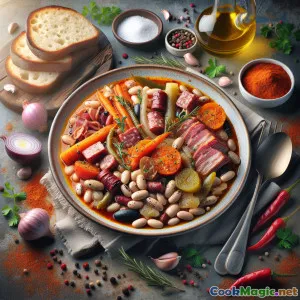
ट्रांसिल्वेनियन अंगूर के पत्तों वाले सरमाले के साथ धूम्रपान किया हुआ सूअर का मांस
(Transylvanian Grape-Leaf Sarmale with Smoked Pork)
(0 समीक्षाएँ)


सामग्री
-
30 leaves नमकीन पानी में डाले गए अंगूर के पत्ते
(Rinsed to remove excess salt; use a few extra for lining the pot)
-
600 grams ग्राउंड पोर्क
(20–25% fat for juicy filling)
-
200 grams गाउंड बीफ
(Adds depth; can replace with more pork)
-
120 grams धूम्रपान किया हुआ सूअर का पेट (या बेकन)
(Diced small; traditional Transylvanian touch)
-
120 grams शॉर्ट ग्रेन राइस
(Rinsed; short-grain helps bind the filling)
-
2 medium पीली प्याज
(बारीक कटा हुआ)
-
4 cloves लहसुन की कलियां
(कटा हुआ)
-
2 tbsp ताज़ा डिल
(Chopped; stems fine)
-
1 tbsp ताजा टैरेगॉन
(Chopped; hallmark of Transylvania)
-
2 tsp मिठाई पेपरिका
(Hungarian-style if available)
-
2 tsp मिश्रित समुद्री नमक
(Adjust to taste, leaves may be salty)
-
1 tsp काली मिर्च
(ताज़ा पिसा हुआ)
-
2 tbsp टमाटर का पेस्ट
(For the braising liquid)
-
600 ml चिकन या पोर्क स्टॉक
(Warm; low-sodium preferred)
-
250 ml अचार ब्राइन या सॉरक्रॉट रस
(Adds tang and authenticity)
-
2 tbsp सूरजमुखी का तेल
(Neutral, traditional Romanian oil)
-
2 leaves तेज पत्ते
(खुशबू के लिए)
-
2 sprigs ताजा थाइम
(Optional herb layer)
-
1 tbsp नींबू का रस
(Balances richness)
-
180 grams खट्टा क्रीम
(सर्विंग के लिए)
-
900 grams पकी हुई पोलेंटा (mămăligă)
(Traditional side)
(Rinsed to remove excess salt; use a few extra for lining the pot)
(20–25% fat for juicy filling)
(Adds depth; can replace with more pork)
(Diced small; traditional Transylvanian touch)
(Rinsed; short-grain helps bind the filling)
(बारीक कटा हुआ)
(कटा हुआ)
(Chopped; stems fine)
(Chopped; hallmark of Transylvania)
(Hungarian-style if available)
(Adjust to taste, leaves may be salty)
(ताज़ा पिसा हुआ)
(For the braising liquid)
(Warm; low-sodium preferred)
(Adds tang and authenticity)
(Neutral, traditional Romanian oil)
(खुशबू के लिए)
(Optional herb layer)
(Balances richness)
(सर्विंग के लिए)
(Traditional side)
पोषण
- परोसने की संख्या: 6
- सेवा आकार: 2 rolls (250g)
- Calories: 620 kcal
- Carbohydrates: 0 g
- Protein: 33 g
- Fat: 41 g
- Fiber: 4 g
- Sugar: 4 g
- Sodium: 920 mg
- Cholesterol: 110 mg
- Calcium: 80 mg
- Iron: 3.2 mg
निर्देश
-
1 - Prep the grape leaves:
Rinse brined grape leaves under cold water. If very salty or tough, blanch 1–2 minutes in simmering water, then drain. Reserve 4–5 leaves to line the pot.
-
2 - Sweat aromatics:
Warm sunflower oil in a skillet over medium heat. Add diced smoked pork belly; render lightly, 3 minutes. Add onions and cook until glassy, 5–6 minutes, then stir in garlic for 30 seconds.
-
3 - Mix the filling:
In a large bowl combine ground pork, ground beef, rinsed rice, sautéed onion mixture, dill, tarragon, paprika, black pepper, and 1.5 tsp salt. Mix gently until evenly distributed without compacting.
-
4 - Line the pot:
Line the base of a heavy pot with reserved grape leaves. Scatter a few bacon bits if you have extra; this prevents sticking and perfumes the rolls.
-
5 - Roll the sarmale:
Place a leaf shiny-side down, stem toward you. Add 1–2 tablespoons filling near the base. Fold sides inward, then roll tightly toward the tip, tucking ends so the roll is sealed.
-
6 - Layer neatly:
Arrange rolls seam-side down in concentric circles. Build a second layer on top if needed, nestling snugly so they don’t unravel during cooking.
-
7 - Prepare braising liquid:
Whisk tomato paste into warm stock. Add brine or sauerkraut juice (if using) and lemon juice. Taste; it should be pleasantly savory-tangy.
-
8 - Add herbs and pour:
Tuck bay leaves and thyme between layers. Pour braising liquid to just cover the top layer; add a bit more stock or water if needed.
-
9 - Gently simmer:
Bring to a bare simmer, cover, and cook on low heat 75–90 minutes until leaves are tender and rice is fully cooked. Avoid vigorous boiling to keep rolls intact.
-
10 - Rest and thicken:
Turn off heat and rest covered 15 minutes. The rolls will settle and absorb flavors. Adjust seasoning in the sauce if needed.
-
11 - Serve:
Plate 2–3 rolls per person with a spoon of the cooking juices. Top with sour cream and serve alongside hot polenta.
-
12 - Store and reheat:
Cool leftovers, refrigerate up to 4 days or freeze up to 2 months. Reheat gently with a splash of stock to keep moist.
Rinse brined grape leaves under cold water. If very salty or tough, blanch 1–2 minutes in simmering water, then drain. Reserve 4–5 leaves to line the pot.
Warm sunflower oil in a skillet over medium heat. Add diced smoked pork belly; render lightly, 3 minutes. Add onions and cook until glassy, 5–6 minutes, then stir in garlic for 30 seconds.
In a large bowl combine ground pork, ground beef, rinsed rice, sautéed onion mixture, dill, tarragon, paprika, black pepper, and 1.5 tsp salt. Mix gently until evenly distributed without compacting.
Line the base of a heavy pot with reserved grape leaves. Scatter a few bacon bits if you have extra; this prevents sticking and perfumes the rolls.
Place a leaf shiny-side down, stem toward you. Add 1–2 tablespoons filling near the base. Fold sides inward, then roll tightly toward the tip, tucking ends so the roll is sealed.
Arrange rolls seam-side down in concentric circles. Build a second layer on top if needed, nestling snugly so they don’t unravel during cooking.
Whisk tomato paste into warm stock. Add brine or sauerkraut juice (if using) and lemon juice. Taste; it should be pleasantly savory-tangy.
Tuck bay leaves and thyme between layers. Pour braising liquid to just cover the top layer; add a bit more stock or water if needed.
Bring to a bare simmer, cover, and cook on low heat 75–90 minutes until leaves are tender and rice is fully cooked. Avoid vigorous boiling to keep rolls intact.
Turn off heat and rest covered 15 minutes. The rolls will settle and absorb flavors. Adjust seasoning in the sauce if needed.
Plate 2–3 rolls per person with a spoon of the cooking juices. Top with sour cream and serve alongside hot polenta.
Cool leftovers, refrigerate up to 4 days or freeze up to 2 months. Reheat gently with a splash of stock to keep moist.
ट्रांसिल्वेनियन अंगूर के पत्तों वाले सरमाले के साथ धूम्रपान किया हुआ सूअर का मांस :के बारे में ज़्यादा जानकारी
About Sarmale cu Foi de Viță Transilvănene
This Transylvanian-style sarmale reimagines the beloved Romanian stuffed roll, trading the more common cabbage wrapping for supple grape leaves. The result is a delicate, herbal package with a winey fragrance that nods to the vineyards spreading across the Târnave and Mureș valleys. Inside, a savory blend of pork (and optional beef) harmonizes with sweet paprika, dill, and an unmistakable hint of tarragon—an herb closely associated with Transylvanian cooking. Smoked pork belly threads through the filling, perfuming each bite and lending depth to the braising juices.
Grape leaves add a tender snap and gentle acidity that balance the richness of the meat. A tomato-kissed stock, often brightened with a splash of brine or sauerkraut juice, slowly bathes the rolls until the rice is tender and the leaves are silky. Served with cool sour cream and warm polenta, this dish offers the comforting rhythm of Romanian home cooking with the refined aroma of the vineyard.
Culinary Roots and Cultural Significance
Sarmale is quintessential across Romania and much of Eastern Europe, with variations found from the Balkans to the Caucasus. In Transylvania, culinary traditions reflect a tapestry of Romanian, Hungarian, and Saxon influences. Tarragon, for instance, is a hallmark herb of the region, while sweet Hungarian paprika adds color and warmth without overwhelming heat. The use of grape leaves, while common along the Black Sea and in the Middle East, takes on a distinctly local character here when paired with smoked pork and polenta.
Sarmale often anchors festive gatherings—Christmas, Easter, weddings—where large pots simmer slowly while stories are shared and bread is passed around the table. This version is equally at home as a cozy weekend project or as a celebratory centerpiece.
Technique Tips and Notes
- Choosing leaves: Brined grape leaves are convenient. Rinse well to temper saltiness. If using fresh leaves, blanch 1–2 minutes, then shock in cold water to preserve color.
- Rice texture: Short-grain rice helps the filling hold together. Rinse to remove excess starch, which keeps the filling cohesive yet tender.
- Seasoning balance: Grape leaves and brine can be salty; under-salt the filling at first, then adjust the sauce at the end.
- Rolling method: Keep the filling compact but not compressed. Overworking the meat can make rolls dense.
- Gentle simmer: A low, steady simmer ensures leaves don’t toughen and rolls don’t burst. Consider placing a heat diffuser under the pot.
- Oven alternative: Bake covered at 170°C/340°F for about 2 hours, adding liquid as needed to keep the top layer barely submerged.
- Make-ahead: Sarmale tastes even better the next day. The flavors marry as the rolls rest.
- Freezer-friendly: Freeze tightly packed in sauce. Thaw overnight and reheat gently with a splash of stock.
Serving Suggestions
- Classic sides: Serve with mămăligă (polenta), sour cream, and pickled vegetables like gogoșari (red pickled peppers).
- Finishing touches: A drizzle of the braising liquid, a crack of black pepper, and fresh dill brighten the plate.
- Wine pairing: Try a crisp Romanian white such as Fetească Regală or a dry rosé; their acidity complements the smoky, savory profile.
Variations to Explore
- Mushroom–walnut filling: For a hearty vegetarian twist, sauté chopped mushrooms with walnuts, onions, and paprika; add rice and herbs.
- Leaner option: Substitute part of the pork with ground turkey thigh. Add a bit of olive oil to preserve juiciness.
- Spicy accent: A pinch of hot paprika or crushed chili flakes can lift the sauce without overshadowing the aromatic tarragon.
- Cabbage crossover: Mix grape and cabbage leaves for varied texture and flavor in the same pot.
Why This Recipe Works
- Aromatic harmony: Dill and tarragon offer freshness, while paprika and smoked pork deepen savoriness.
- Balanced braise: Stock, tomato, and a touch of brine create a rounded, tangy sauce that penetrates the rolls.
- Thoughtful texture: Short-grain rice binds the meat, and gentle cooking ensures the grape leaves stay supple, not stringy.
Personal Notes
I love how this Transylvanian version bridges rustic comfort and vineyard elegance. The scent of tarragon drifting from the pot hints at the region’s culinary crossroads, while the soft grape leaves elevate each bite. Take your time with the rolling—there’s a quiet pleasure in crafting uniform bundles. And don’t skip the rest after cooking; it allows the flavors to settle and the sauce to thicken slightly, making every serving more satisfying. Whether you’re celebrating or simply craving a Sunday project, these sarmale promise warmth, fragrance, and a taste of Transylvania’s storied table.