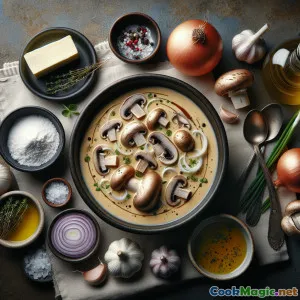
मिसो शोरबा के साथ पर्वतीय जड़ी-बूटियों वाला चाइव हॉट पॉट
(Mountain Herb Chive Hot Pot with Miso Broth)
(0 समीक्षाएँ)


सामग्री
-
1500 ml पानी
(Base for the broth; filtered if possible)
-
10 grams Kombu (सूखा केल्प)
(One 10–12 cm piece; forms the dashi base)
-
20 grams सूखे शिटाके मशरूम
(Soak; use soaking liquid in broth)
-
45 ml हल्की सोया सॉस
(Usukuchi if available for color; adjust to taste)
-
30 ml मिरिन
(Adds gentle sweetness and sheen)
-
30 ml साके
(Balances aroma; can substitute dry white wine)
-
60 grams सफेद मसो पेस्ट
(Shiro miso for mild sweetness; whisk off heat)
-
15 ml तिल का तेल
(Aromatic finish to the broth)
-
2 cloves लहसुन की कलियां
(Lightly smashed for fragrance; remove before serving)
-
10 grams ताज़ा अदरक
(Thin slices for a clean, warm note)
-
300 grams नापा गोभी
(Cut into 5 cm pieces; core included for sweetness)
-
200 grams डाइकॉन मूली
(Thin half-moons for quick cooking)
-
1 piece प्याज
(Large; bias-cut 1 cm thick)
-
300 grams सख्त टोफू
(Cut into 3 cm cubes; drain well)
-
150 grams एनोकी मशरूम
(Trim base; separate into clusters)
-
150 grams ताजा shiitake मशरूम
(Stems removed; caps halved if large)
-
120 grams लहसुन-चाइव्स (nira) या सामान्य चाइव्स
(Cut into 5–6 cm lengths)
-
200 grams पहाड़ी जंगली पत्तेदार साग (sansai mix)
(Fiddleheads, mitsuba, watercress, or chrysanthemum leaves)
-
300 grams बहुत पतला कटा बीफ या पोर्क
(Shabu-shabu style; omit for vegetarian)
-
300 grams उडॉन नूडल्स पके हुए
(For shime (finishing course))
-
1 strip युज़ु या नींबू छिलका
(Adds bright citrus aroma to broth)
-
120 ml पोंज़ू सॉस
(For dipping; store-bought or homemade)
-
to taste as needed चिली तेल या शिचिमी टोगाराशी
(Optional heat for serving)
(Base for the broth; filtered if possible)
(One 10–12 cm piece; forms the dashi base)
(Soak; use soaking liquid in broth)
(Usukuchi if available for color; adjust to taste)
(Adds gentle sweetness and sheen)
(Balances aroma; can substitute dry white wine)
(Shiro miso for mild sweetness; whisk off heat)
(Aromatic finish to the broth)
(Lightly smashed for fragrance; remove before serving)
(Thin slices for a clean, warm note)
(Cut into 5 cm pieces; core included for sweetness)
(Thin half-moons for quick cooking)
(Large; bias-cut 1 cm thick)
(Cut into 3 cm cubes; drain well)
(Trim base; separate into clusters)
(Stems removed; caps halved if large)
(Cut into 5–6 cm lengths)
(Fiddleheads, mitsuba, watercress, or chrysanthemum leaves)
(Shabu-shabu style; omit for vegetarian)
(For shime (finishing course))
(Adds bright citrus aroma to broth)
(For dipping; store-bought or homemade)
(Optional heat for serving)
पोषण
- परोसने की संख्या: 4
- सेवा आकार: 1 कटोरा (350g)
- Calories: 480 kcal
- Carbohydrates: 0 g
- Protein: 28 g
- Fat: 20 g
- Fiber: 6 g
- Sugar: 7 g
- Sodium: 1180 mg
- Cholesterol: 55 mg
- Calcium: 210 mg
- Iron: 3.6 mg
निर्देश
-
1 - Soak the umami base:
Rinse kombu to remove excess white film. In a pot, combine water with kombu and dried shiitake. Soak 20 minutes to extract savory depth.
-
2 - Build the dashi-miso broth:
Heat the pot gently until just before boiling. Remove kombu, then simmer 5 minutes. Add garlic and ginger. Stir in soy, mirin, and sake. Remove from heat and whisk in miso until dissolved. Finish with sesame oil; strain if you prefer a clear broth.
-
3 - Prep and arrange vegetables:
Cut napa, daikon, and leek as directed. Cube tofu. Trim mushrooms. Cut chives into 5–6 cm pieces. Arrange dense veg and tofu at the bottom of a wide pot, with mushrooms around the edges.
-
4 - Add aromatic broth:
Pour hot broth over the arranged ingredients. Add the strip of yuzu or lemon peel for aroma.
-
5 - Simmer the base layers:
Cover and simmer gently until napa softens and daikon turns translucent, about 8–10 minutes. Avoid a rolling boil to keep the broth clear.
-
6 - Add chives and mountain greens:
Scatter garlic chives and sansai greens over the top. Simmer 1–2 minutes until just wilted and vibrant.
-
7 - Swish the meat (optional):
If using meat, swish thin slices in the simmering broth for 30–60 seconds until just cooked and tender. Keep a section meat-free for vegetarian diners.
-
8 - Serve with condiments:
Ladle vegetables, tofu, mushrooms, and broth into bowls. Offer ponzu and a dab of chili oil or shichimi for personalizing heat and brightness.
-
9 - Finish with noodles (shime):
Add cooked udon to the remaining broth. Simmer 2–3 minutes to absorb flavors and serve as a comforting final course.
Rinse kombu to remove excess white film. In a pot, combine water with kombu and dried shiitake. Soak 20 minutes to extract savory depth.
Heat the pot gently until just before boiling. Remove kombu, then simmer 5 minutes. Add garlic and ginger. Stir in soy, mirin, and sake. Remove from heat and whisk in miso until dissolved. Finish with sesame oil; strain if you prefer a clear broth.
Cut napa, daikon, and leek as directed. Cube tofu. Trim mushrooms. Cut chives into 5–6 cm pieces. Arrange dense veg and tofu at the bottom of a wide pot, with mushrooms around the edges.
Pour hot broth over the arranged ingredients. Add the strip of yuzu or lemon peel for aroma.
Cover and simmer gently until napa softens and daikon turns translucent, about 8–10 minutes. Avoid a rolling boil to keep the broth clear.
Scatter garlic chives and sansai greens over the top. Simmer 1–2 minutes until just wilted and vibrant.
If using meat, swish thin slices in the simmering broth for 30–60 seconds until just cooked and tender. Keep a section meat-free for vegetarian diners.
Ladle vegetables, tofu, mushrooms, and broth into bowls. Offer ponzu and a dab of chili oil or shichimi for personalizing heat and brightness.
Add cooked udon to the remaining broth. Simmer 2–3 minutes to absorb flavors and serve as a comforting final course.
मिसो शोरबा के साथ पर्वतीय जड़ी-बूटियों वाला चाइव हॉट पॉट :के बारे में ज़्यादा जानकारी
Mountain Herb Chive Hot Pot: Story, Tips, and Notes
If winter had a scent, it would smell like steam rising from a pot of miso-dashi, fresh chives, and forest mushrooms. Mountain Herb Chive Hot Pot takes inspiration from Japanese sansai nabe—literally “mountain vegetable hot pot”—a seasonal celebration of wild greens and the quiet power of umami. While foraging isn’t required, the spirit of the dish is present: crisp greens that wilt at the table, a broth soft with miso and layered with kombu and shiitake, and a convivial pace that encourages conversation as much as cooking.
What makes this hot pot special
- Chive-forward aroma: Garlic chives (nira) add a distinctly verdant flavor that holds its own against miso and mushrooms without becoming overpowering.
- Umami architecture: Kombu and dried shiitake supply glutamates and guanylate, creating a synergistic depth; miso rounds out the body while soy and mirin balance salt and sweetness.
- Table-side cooking: The dish cooks progressively, keeping greens vibrant and mushrooms meaty. It’s interactive without being fussy.
- Flexible by design: Keep it vegetarian with tofu and mushrooms, or add thin-sliced beef or pork for a shabu-shabu flourish. Finish with noodles (shime) to ensure no drop of broth is wasted.
Ingredient notes and smart swaps
- Chives: Garlic chives (nira) are traditional here; regular chives or even young scallions work in a pinch. Cut into lengths so they wilt elegantly without turning stringy.
- Mountain greens (sansai): Depending on season and region, this can mean fiddleheads, mitsuba, chrysanthemum leaves (shungiku), or watercress. In supermarkets, a mix of baby spinach, pea shoots, and watercress gives a similar snap and herbal character.
- Mushrooms: Mixing textures is key—silky enoki, hearty shiitake, and any local wild mushrooms. Dried shiitake are essential for the broth’s backbone; don’t skip the soaking step.
- Broth base: Shiro miso keeps the broth pale and delicate. If using a darker miso (aka or awase), reduce the quantity slightly and adjust soy to keep salinity balanced.
- Meat or no meat: Paper-thin slices cook in seconds, making the pot adaptable to mixed diets. Keep chopsticks designated for raw meat and serve meat-free sections first.
Technique tips for clarity and depth
- Low and slow: Bring kombu just to the edge of a boil, then remove it to avoid bitterness. The gentle approach yields a clean, luminous broth.
- Whisk miso off heat: This preserves its delicate fermented aroma and avoids graininess. A small ladle of hot broth helps dissolve it evenly.
- Stage your vegetables: Dense items like daikon, leek, and cabbage go in first; fast-cooking greens and chives go in last to capture their color and perfume.
- Season at the table: Offer ponzu and chili oil so each diner finds their balance of acidity, salt, and heat.
Cultural context and significance
Hot pot (nabe) is a winter ritual across Japan, with countless regional variations—yosenabe packed with seafood, chanko-nabe fueling sumo wrestlers, and miso-based pots that feel like a warm embrace. Sansai nabe is particularly cherished in mountainous regions where spring brings a burst of foraged greens. This recipe honors that tradition while being practical for urban kitchens: it uses supermarket-accessible stand-ins without losing the dish’s spirit. The chive emphasis nods to the countryside, where hardy alliums push through cold soils, heralding the changing seasons.
Serving ideas and accompaniments
- Rice or noodles: Rice is classic, but finishing with udon (shime) is a satisfying second course.
- Pickles and crunch: Quick tsukemono or lightly salted cucumbers add a refreshing counterpoint.
- Beverages: Warm sake or genmaicha pairs beautifully with the broth’s gentle sweetness and mushroom depth.
Make-ahead and storage
- Broth: Prepare the dashi-miso base up to 3 days ahead; store chilled and reheat gently without boiling. Add sesame oil just before serving.
- Prep box: Wash and cut vegetables and mushrooms in advance; store in airtight containers lined with towels to keep them crisp.
- Leftovers: Strain and chill the remaining broth; it’s fantastic for a next-day noodle soup. Consume within 2–3 days.
Personal notes
I love using a strip of citrus peel—yuzu if I can find it, lemon if not. It seems minor, but that fleeting aroma punctuates the earthiness of mushrooms and the sweetness of napa in a way that wakes the palate. And while the beef addition is optional, even a modest amount swished table-side enriches the broth for the final udon course, making the finishing bowl feel like a brand-new dish. However you compose your pot, keep the spirit of seasonality and restraint; let the chives and mountain herbs sing over the gentle hum of miso and dashi.