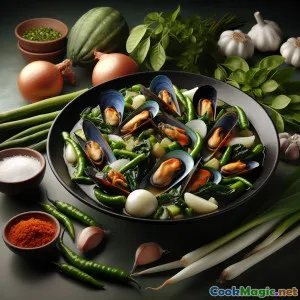
Sopa de Mejillones y Moringa: Fusión de Sopa
(Tinolang Tahong: Mussel & Moringa Soup Fusion)
(0 Reseñas)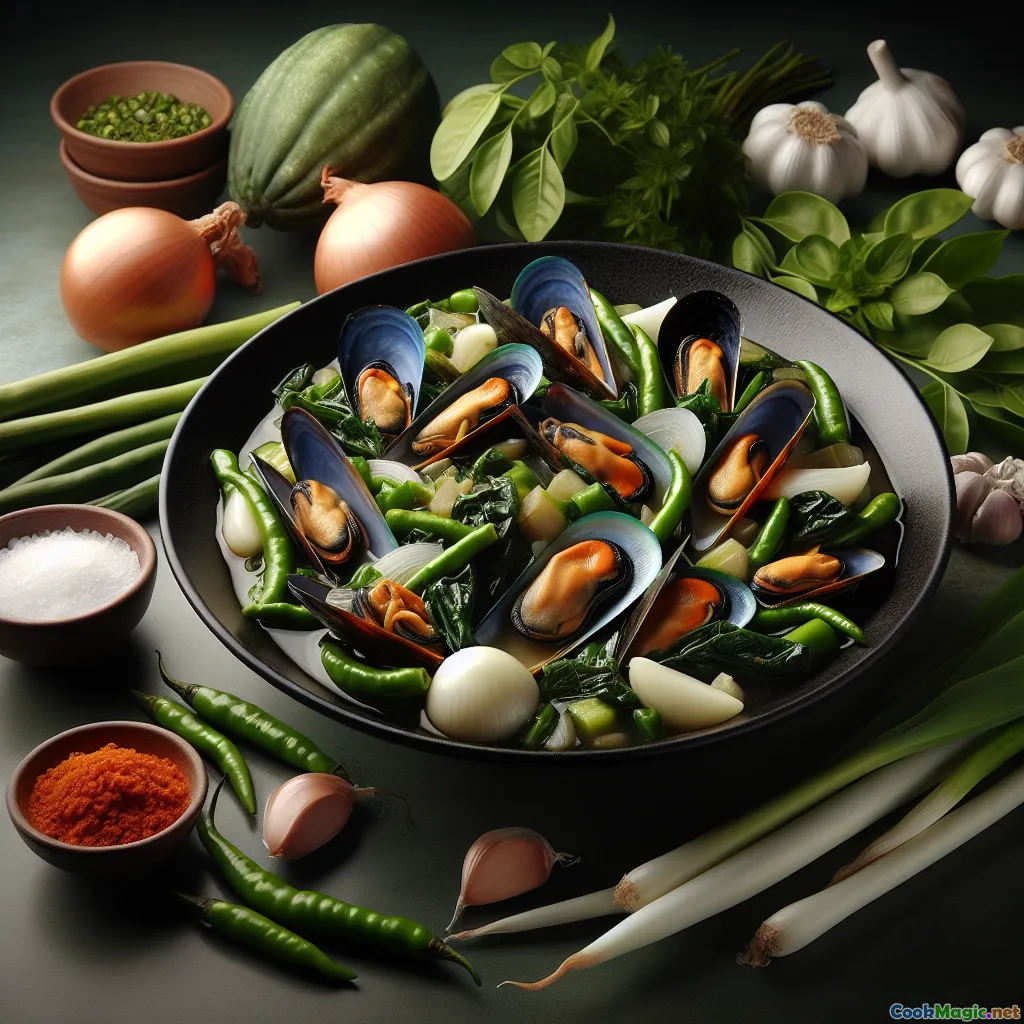
0
1,014
julio 14, 2025
Informar de un problema
Ingredientes
-
1 kilogram Mejillones frescos (tahong)
(Limpio y sin barba)
-
2 cups Hojas de Moringa (moringa)
(Enjuagado y secado)
-
2 inches Jengibre
(cortado en láminas finas)
-
1 medium Cebolla
(Cortado en cuartos)
-
4 cloves Ajo
(Picado)
-
2 tablespoons Salsa de pescado (patis)
(Ajustar al gusto)
-
1.5 liters Agua
-
2 pieces Chiles de dedo verdes (siling haba)
(Entero)
-
1 medium Chayote (sayote)
(Pelado y cortado en gajos)
-
- - Sal y pimienta
(Al gusto)
(Limpio y sin barba)
(Enjuagado y secado)
(cortado en láminas finas)
(Cortado en cuartos)
(Picado)
(Ajustar al gusto)
(Entero)
(Pelado y cortado en gajos)
(Al gusto)
Nutrición
- Porciones: 4
- Tamaño de porción: Un bol profundo (aproximadamente 350ml)
- Calories: 220 kcal
- Carbohydrates: 17 g
- Protein: 23 g
- Fat: 5 g
- Fiber: 4 g
- Sugar: 4 g
- Sodium: 870 mg
- Cholesterol: 65 mg
- Calcium: 225 mg
- Iron: 9 mg
Instrucciones
-
1 - Preparar ingredientes:
Limpie y desvenezce los mejillones. Enjuague las hojas de malunggay y reserve. Corte la cebolla, el ajo, el jengibre y corte el chayote si lo usa.
-
2 - Saltear Aromáticos:
En una olla grande de sopa, calienta un poco de aceite a fuego medio. Sofríe las rodajas de jengibre hasta que estén fragantes, agrega el ajo y las cebollas, y cocina hasta que estén translúcidos.
-
3 - Preparar la Base de Sopa:
Vierte la salsa de pescado y remueve. Agrega agua y lleva a un hervor suave.
-
4 - Agregar mejillones y verduras:
Agrega mejillones y chayote opcional. Cocina a fuego lento hasta que los mejillones se abran (descarta los que permanezcan cerrados) y el chayote esté tierno.
-
5 - Finalizar con Malunggay:
Apaga el fuego. Añade hojas de malunggay y chiles de dedo. Remueve y cubre durante 1 minuto para marchitar las verduras e infundir calor.
-
6 - Sazonar y Servir:
Ajusta con sal y pimienta al gusto. Sirve la sopa en tazones y sirve muy caliente, idealmente con arroz al vapor.
Limpie y desvenezce los mejillones. Enjuague las hojas de malunggay y reserve. Corte la cebolla, el ajo, el jengibre y corte el chayote si lo usa.
En una olla grande de sopa, calienta un poco de aceite a fuego medio. Sofríe las rodajas de jengibre hasta que estén fragantes, agrega el ajo y las cebollas, y cocina hasta que estén translúcidos.
Vierte la salsa de pescado y remueve. Agrega agua y lleva a un hervor suave.
Agrega mejillones y chayote opcional. Cocina a fuego lento hasta que los mejillones se abran (descarta los que permanezcan cerrados) y el chayote esté tierno.
Apaga el fuego. Añade hojas de malunggay y chiles de dedo. Remueve y cubre durante 1 minuto para marchitar las verduras e infundir calor.
Ajusta con sal y pimienta al gusto. Sirve la sopa en tazones y sirve muy caliente, idealmente con arroz al vapor.
Más información sobre: Sopa de Mejillones y Moringa: Fusión de Sopa
Tinolang Tahong at Malunggay: A Modern Take on Filipino Comfort Soup
Overview
Tinolang Tahong at Malunggay is a creative adaptation of the well-loved Filipino chicken soup called "tinola." By integrating the ocean’s bounty with land’s greenery, this dish revitalizes classic flavors and highlights the best of local coastal and agricultural produce. Mussels, referred to as 'tahong,' and malunggay (moringa) leaves create a power-packed, health-boosting soup that’s as comforting as it is nutritious.
History and Cultural Significance
Tinola traces its origin to the heart of Philippine family kitchens, traditionally made with chicken, green papaya, and chili tops in a ginger broth. It's the heritage chicken soup cooked whenever someone was sick, or comfort was sought on rainy days.
Coastal villages, facing abundant shellfish, innovated by substituting chicken with mussels, giving birth to specialties like Tinolang Tahong. The addition of malunggay—celebrated in the Philippines as the “miracle leaf” for its nutritional content—progressed tinola from a simple comfort food into a hearty, immunity-boosting staple.
Malunggay is particularly prized; it's the go-to green for nourishment in countless provincial soups, especially among breastfeeding mothers and anyone in need of a fortifying meal. “Siling haba,” a mild green chili, enhances the peppery undertones while keeping the soup suitable for most palates. Chayote, although optional, brings a gentle sweetness and delicate texture that melds beautifully with the shellfish.
Unique Aspects
The transformation of tinola into this seafood-centric version is testament to Filipino resourcefulness—maximizing fresh catches and local greens. The ginger and aromatics provide fragrance and subtle spice, expertly balancing the umami shellfish broth.
Some variations sprinkle goji berries or swap chayote for green papaya, or ladle the finished soup over thin rice noodles for a heartier meal. It's ordinarily enjoyed as a main course, accompanied by a bowl of steamed reddish-hue "dinorado" rice.
Tinolang Tahong at Malunggay is inherently flexible, welcoming swaps according to what's in season and available. What anchors the dish, regardless of adaptations, are the invigorating flavors of ginger, the ocean-brine of mussels, and the vivid verdure of malunggay.
Cooking Tips
- Always scrub and debeard mussels thoroughly to ensure a clean, grit-free broth. Discard any mussels that fail to open after cooking.
- For extra depth, sauté the shells a bit with the aromatics before adding water.
- Malunggay leaves need minimal cooking—residual heat prevents them from becoming mushy and ensures more of their nutrients remain intact.
- Fish sauce levels might need adjusting depending on the saltiness of your mussels and brand preference.
- For an extra kick, add finger chilies just before serving; bruise them gently to release mellow heat without overpowering.
Nutrition Notes
This soup harnesses both protein-rich shellfish and malunggay’s robust micronutrients (like calcium, iron, and vitamin C). The broth stays light yet carries a depth uncharacteristic of many Western seafood soups. Tinolang Tahong is naturally gluten-free, low in fat, and makes for an impressive dish if you’re cookware-savvy or seeking new flavors with familiar comfort undertones.
Personal Thoughts
Tinolang Tahong at Malunggay is a shining example of how home cooks ingeniously reinterpret heirloom flavors, motivated by what’s fresh at hand. There is a profound beauty in the simplicity with which this dish is made—just a handful of honest, local ingredients swirling in a practical, no-fuss pot. Each spoonful brings not just complex flavor but also a sense of nostalgia and well-being. Whether enjoyed as a rainy day ritual or festive family centerpiece, Tinolang Tahong reminds us that some of the finest meals are those that connect us to both our land and sea heritage.
I highly recommend experimenting with the vegetable component; leafy spinach, moringa, or mustard greens all work beautifully. And don’t forget to serve with lots of steaming white rice—the gold standard Filipino pairing for brothy meals. Enjoy!