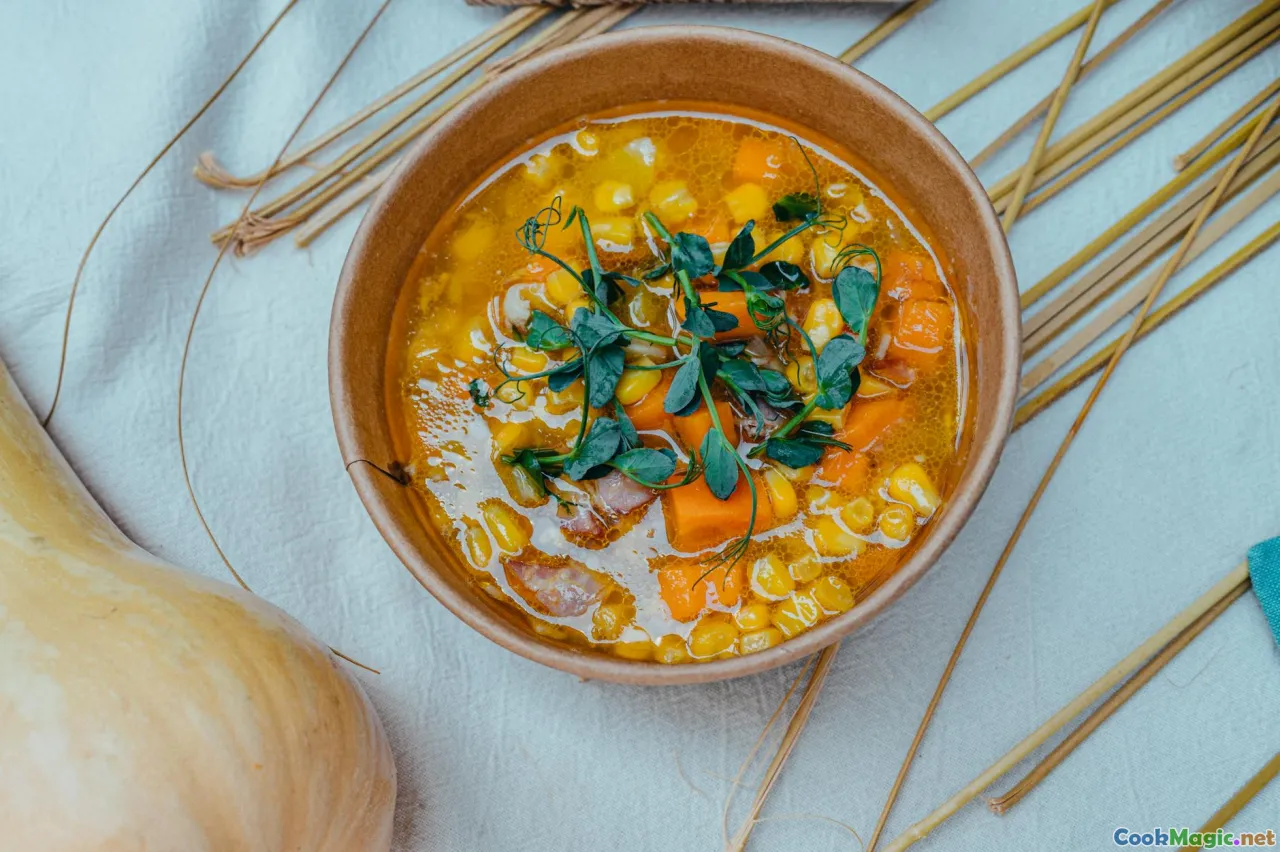
Armonía de Estofado de Calabaza y Maní Ruandés
(Rwandan Pumpkin & Peanut Stew Harmony)
(0 Reseñas)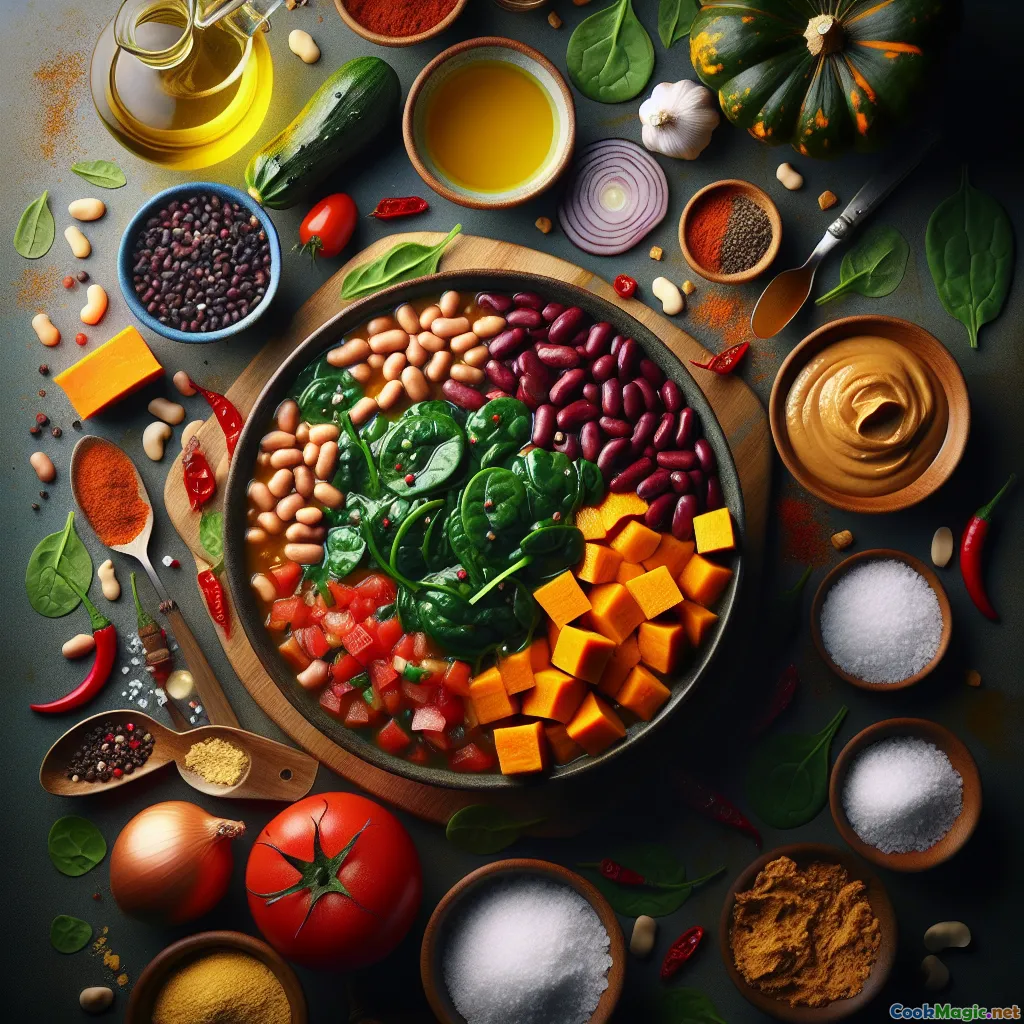

0
860
julio 19, 2025
Informar de un problema
Ingredientes
-
500 grams Calabaza (cortada en cubos)
(Fresco, preferentemente pelado y sin semillas)
-
250 grams Frijoles rojos (cocidos)
(Se puede sustituir por frijoles rojos.)
-
100 grams Mantequilla de cacahuate
(Suave, sin azúcar)
-
1 medium Cebolla, finamente picada
-
100 grams Espinaca fresca (picada groseramente)
(Hojas de col de hoja ancha como alternativa)
-
2 medium Tomate (picado)
-
2 pieces Dientes de ajo, picados
-
2 tbsp Aceite vegetal
-
1 tsp Sal
(Al gusto)
-
0.5 tsp Pimienta negra
(Al gusto)
-
500 ml Caldo de Verduras
(O agua)
-
0.25 tsp Copos de chile
(Opcional, para ajustar el calor)
(Fresco, preferentemente pelado y sin semillas)
(Se puede sustituir por frijoles rojos.)
(Suave, sin azúcar)
(Hojas de col de hoja ancha como alternativa)
(Al gusto)
(Al gusto)
(O agua)
(Opcional, para ajustar el calor)
Nutrición
- Porciones: 4
- Tamaño de porción: 1 tazón (300g)
- Calories: 420 kcal
- Carbohydrates: 54 g
- Protein: 17 g
- Fat: 16 g
- Fiber: 12 g
- Sugar: 11 g
- Sodium: 690 mg
- Cholesterol: 0 mg
- Calcium: 110 mg
- Iron: 3.1 mg
Instrucciones
-
1 - Preparar Verduras:
Pela la calabaza y córtala en dados. Pica las cebollas, los tomates y las espinacas frescas. Pica los dientes de ajo. Reserva todos los ingredientes preparados.
-
2 - Saltear Aromáticos:
En una olla grande, calienta aceite vegetal a fuego medio. Agrega la cebolla y cocina hasta que esté translúcida, luego incorpora el ajo y saltea durante 1 minuto hasta desprender aroma.
-
3 - Añadir verduras:
Añade calabaza y tomates a la olla. Remueve durante 3 minutos hasta que las verduras se ablanden.
-
4 - Base para guisos a fuego lento:
Vierte el caldo de verduras, sazona con sal y (opcional) pimienta negra y copos de chile. Cubre y cocina a fuego suave durante 15 minutos, hasta que la calabaza esté tierna al tenedor.
-
5 - Incorpora la mantequilla de maní y los frijoles.:
Reduce el calor a bajo. Mezcla la crema de cacahuate con una cuchara de caldo caliente para soltarla, luego incorpora la mezcla al guiso. Agrega frijoles rojos cocidos. Mezcla bien.
-
6 - Terminar y marchitar las hojas verdes:
Añade espinacas picadas o hojas verdes. Cocina destapado durante 4–5 minutos hasta que se marchiten y todo se mezcle bien.
-
7 - Prueba y sirve:
Ajusta la sazón si es necesario. Sirve caliente en tazones, opcionalmente adornado con cacahuates extra o con un chorrito de aceite de cacahuate.
Pela la calabaza y córtala en dados. Pica las cebollas, los tomates y las espinacas frescas. Pica los dientes de ajo. Reserva todos los ingredientes preparados.
En una olla grande, calienta aceite vegetal a fuego medio. Agrega la cebolla y cocina hasta que esté translúcida, luego incorpora el ajo y saltea durante 1 minuto hasta desprender aroma.
Añade calabaza y tomates a la olla. Remueve durante 3 minutos hasta que las verduras se ablanden.
Vierte el caldo de verduras, sazona con sal y (opcional) pimienta negra y copos de chile. Cubre y cocina a fuego suave durante 15 minutos, hasta que la calabaza esté tierna al tenedor.
Reduce el calor a bajo. Mezcla la crema de cacahuate con una cuchara de caldo caliente para soltarla, luego incorpora la mezcla al guiso. Agrega frijoles rojos cocidos. Mezcla bien.
Añade espinacas picadas o hojas verdes. Cocina destapado durante 4–5 minutos hasta que se marchiten y todo se mezcle bien.
Ajusta la sazón si es necesario. Sirve caliente en tazones, opcionalmente adornado con cacahuates extra o con un chorrito de aceite de cacahuate.
Más información sobre: Armonía de Estofado de Calabaza y Maní Ruandés
Imvange ya Ibihaza n'Ubunyobwa: Rwandan Pumpkin & Peanut Stew
Introduction
Imvange ya Ibihaza n'Ubunyobwa is an iconic Rwandan comfort dish, made with soft, sweet pumpkin (ibihaza), creamy peanut butter (ubunyobwa), hearty beans, and leafy greens—sometimes likened to an East African harmony of homely ingredients. Its gentle, nutty sweetness and rustic warmth make it both deeply satisfying and highly nutritious. Typically enjoyed across Rwanda, this stew is the stuff of childhood memories, village feasts, and modern kitchens seeking extraordinary vegan fare.
History & Cultural Significance
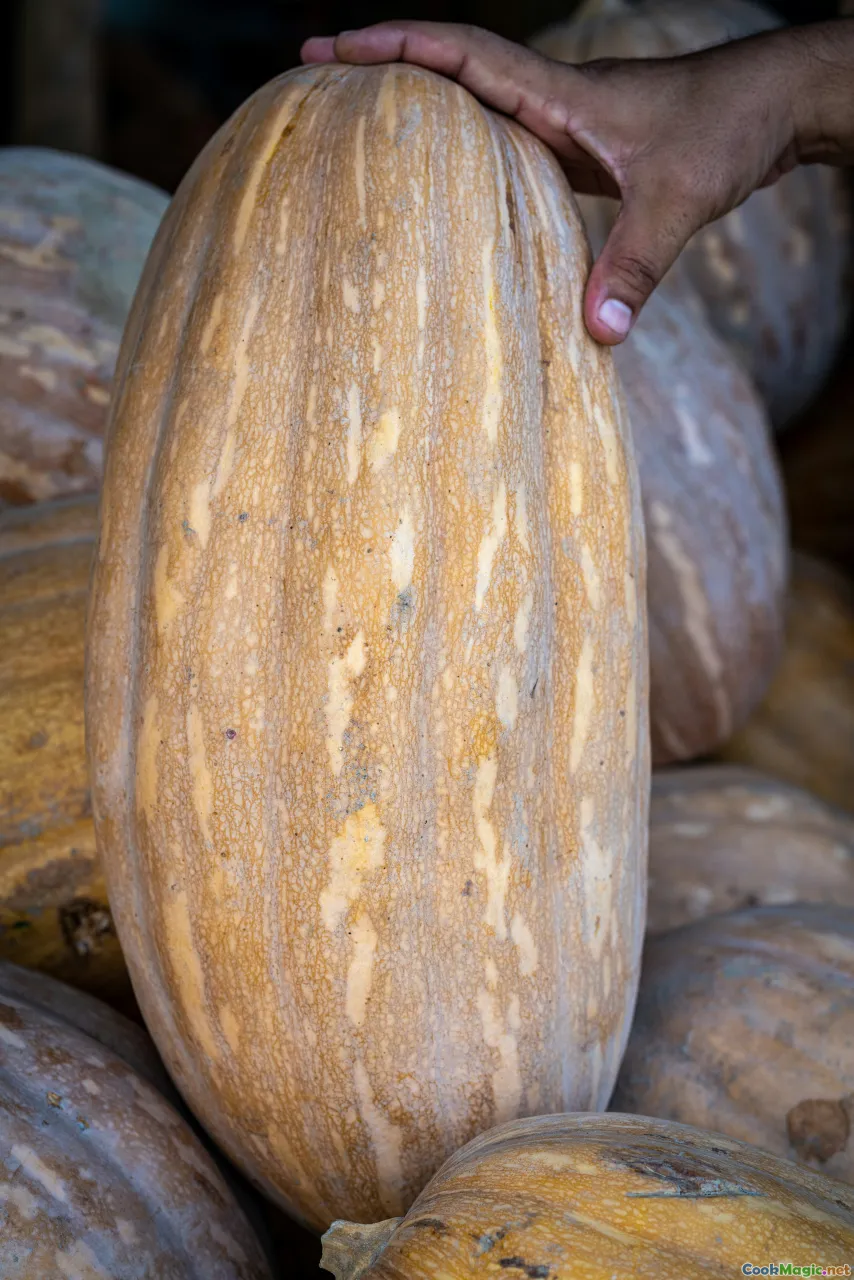
Pumpkin (ibihaza) holds a special place in Rwandan agriculture—cultivated for generations and commonly found in home gardens. Locally, it symbolizes prosperity and resilience. Peanuts, introduced over a century ago and grown widely, are integral to many Rwandan sauces and stews for their deliciously satiny texture, flavor, and plant-based protein.
Historically, Rwandan families reserved this meal for after harvest, using every part of the pumpkin: flesh, seeds, and sometimes even young leaves. The essential triad—pumpkin, beans, and peanut butter—promotes sustenance with minimal ingredients but maximal nourishment. Over time, urban households refined the method, creating an endlessly adaptable recipe often made in one pot for convenience.
Unique Aspects
- Vegan Yet Wholesome: Combining beans and peanut butter produces a “complete protein,” perfect for plant-based diets. The stew is high in vitamins and minerals, and the creaminess means you won’t miss dairy.
- Balanced Flavors: Sweet pumpkin cozying up to richly creamy peanuts, the earthy beans adding substantial spine, and fresh greens or collards imparting a contrast in both color and nutrition.
- Economical & Flexible: Any pumpkin or squash variant works. Red beans can be swapped for kidney or black beans. Greens—sometimes not at all traditional—offer a nutrient upgrade but can be omitted.
Tips & Notes
- Pumpkin Star: Rwandan pumpkins can be quite starchy, but any orange-fleshed variety works. Dice evenly for consistent cooking.
- Peanut Butter Magic: Always use unsweetened natural peanut butter to let the savory notes shine.
- Beans: Cooking dried red beans from scratch with a bay leaf or a pinch of local spices will dial up the stew’s depth, though canned beans speed things up.
- Greens Are Optional: While spinach or collard adds bonus color and nutrition, feel free to leave it out if you want to keep things ultratraditional.
- Serve Smart: In Rwanda, this dish is sometimes eaten alone, with boiled sweet potatoes (ibijumba), or umuceri (rice). It keeps well for days, flavor improving overnight.
Serving Suggestions
Ladle the stew into cozy bowls, sprinkle with roasted pumpkin seeds for a nutty crunch, or drizzle a hint of mild chili or raw peanut oil for a pretty gloss. It makes a filling meal on a chilly evening or a memorable entrée for a global vegan feast.
Personal Thoughts
Cooking Imvange ya Ibihaza n'Ubunyobwa in a modern kitchen feels like participating in an ancestral ritual. Every spoonful channels the Rwandan philosophy of not letting nourishment go to waste. It’s especially rewarding for families with children—its sweetness and simplicity win them over, and parents know they’re offering serious nutrition. Sharing this heritage recipe is telling the world how something humble, local, and sustainable can truly become gourmet. Try it—you’ll feel the warmth of Rwanda right at your table.