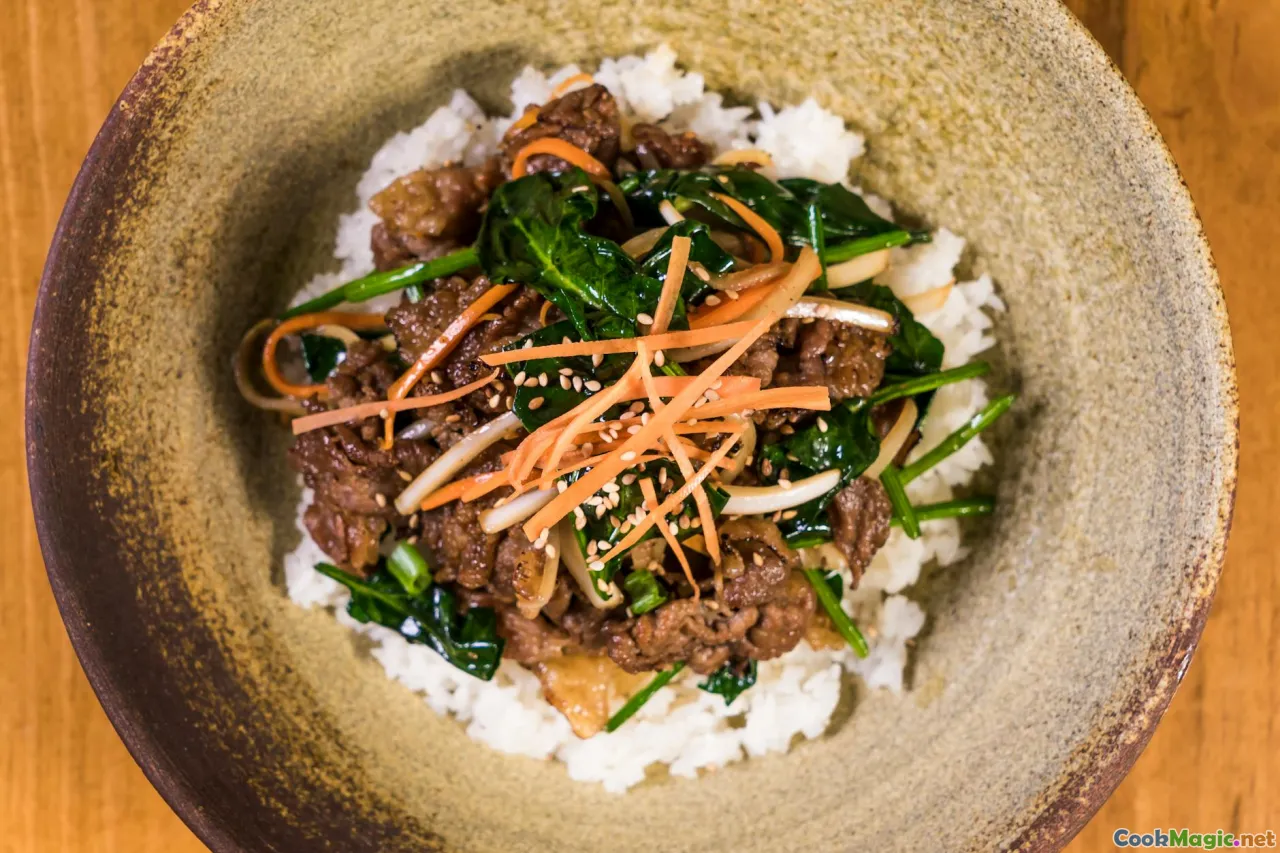
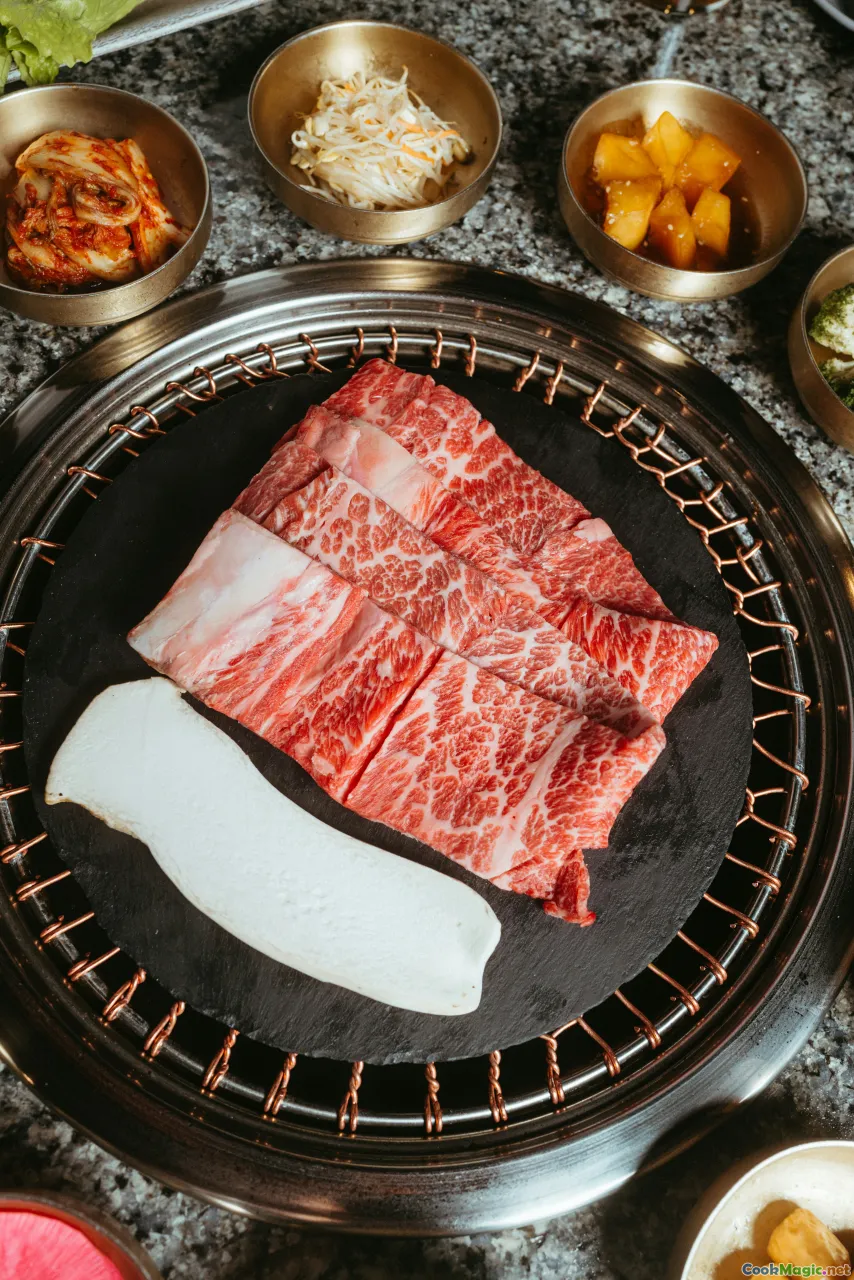
Banquete de Bulgogi Dolpan que chisporrotea
(Sizzling Dolpan Bulgogi Feast)
(0 Reseñas)

0
161
diciembre 03, 2025
Informar de un problema
Ingredientes
-
600 grams Bistec de ribeye de res, cortado en láminas muy finas
(Partially freeze 30 minutes for paper-thin slices)
-
80 ml Salsa de soja
(Use Korean ganjang if available)
-
120 grams Pera coreana rallada
(Tenderizes and sweetens; sub apple + 1 tsp sugar)
-
2 tbsp Azúcar moreno
(Ajustar al gusto)
-
1 tbsp Mirin
(Adds gloss and subtle sweetness)
-
4 cloves Ajo (picado)
(Freshly minced for best aroma)
-
2 tsp Jengibre (finamente rallado)
(Bright heat; do not overpower)
-
2 tbsp Aceite de sésamo tostado
(Nutty finish)
-
0.5 tsp Pimienta negra, recién molida
(Agrega calidez)
-
4 stalks Cebolletas, cortadas en láminas finas
(Divide whites and greens)
-
1 medium Cebolla amarilla, en rodajas
(Sweetens as it chars)
-
1 medium Zanahoria en juliana
(Color and crunch)
-
200 grams Setas (shiitake ostra), en rodajas
(Earthy depth)
-
1 small Calabacín en medias lunas
(Quick-cooking veg)
-
150 grams Rodajas de tteok (pastel de arroz coreano)
(Soak in warm water 10 minutes if firm)
-
1 tbsp Aceite neutro (semilla de uva o canola)
(For the hot stone or cast-iron)
-
1 tbsp Semillas de sésamo tostadas
(Para decorar)
-
4 cups Arroz al vapor de grano corto, caliente
(Para servir)
-
12 leaves Hojas de lechuga (romaine o de hoja roja)
(For wrapping (ssam))
-
8 leaves Hojas de perilla
(Herbal lift)
-
1 tbsp Gochujang
(For ssamjang sauce)
-
1 tbsp Doenjang
(Fermented depth for ssamjang)
-
1 tsp Miel
(Balances heat in ssamjang)
-
1 tsp Vinagre de arroz
(Brightens dipping sauce)
-
1 tbsp Agua
(Loosen ssamjang to dipping consistency)
(Partially freeze 30 minutes for paper-thin slices)
(Use Korean ganjang if available)
(Tenderizes and sweetens; sub apple + 1 tsp sugar)
(Ajustar al gusto)
(Adds gloss and subtle sweetness)
(Freshly minced for best aroma)
(Bright heat; do not overpower)
(Nutty finish)
(Agrega calidez)
(Divide whites and greens)
(Sweetens as it chars)
(Color and crunch)
(Earthy depth)
(Quick-cooking veg)
(Soak in warm water 10 minutes if firm)
(For the hot stone or cast-iron)
(Para decorar)
(Para servir)
(For wrapping (ssam))
(Herbal lift)
(For ssamjang sauce)
(Fermented depth for ssamjang)
(Balances heat in ssamjang)
(Brightens dipping sauce)
(Loosen ssamjang to dipping consistency)
Nutrición
- Porciones: 4
- Tamaño de porción: 1 sizzling plate (350g)
- Calories: 680 kcal
- Carbohydrates: 0 g
- Protein: 36 g
- Fat: 24 g
- Fiber: 5 g
- Sugar: 18 g
- Sodium: 1200 mg
- Cholesterol: 95 mg
- Calcium: 110 mg
- Iron: 4.5 mg
Instrucciones
-
1 - Slice the beef:
Partially freeze ribeye for 30 minutes, then slice as thinly as possible against the grain. Pat dry to aid caramelization.
-
2 - Make the Marinade:
Whisk soy sauce, grated pear, brown sugar, mirin, garlic, ginger, sesame oil, and black pepper. Stir in scallion whites.
-
3 - Marinate Beef:
Toss beef with marinade. Rest 20–30 minutes at room temp (or up to 8 hours chilled). Do not overmarinate to avoid mushy texture.
-
4 - Prep Vegetables:
Slice onion, carrot, mushrooms, and zucchini. Soak rice cakes in warm water if using. Rinse and dry lettuce and perilla leaves.
-
5 - Mix ssamjang:
Combine gochujang, doenjang, honey, rice vinegar, and water until smooth. Adjust sweetness or tang to taste.
-
6 - Heat the dolpan:
Place stone platter or heavy cast-iron skillet over medium-high heat until very hot. Lightly oil the surface.
-
7 - Arrange vegetables:
Lay onion, carrot, mushrooms, and zucchini in a ring around the edge to blister and soften while the center stays free for beef.
-
8 - Sear the bulgogi:
Spread a thin layer of marinated beef in the center. Let sizzle undisturbed to sear, then flip and toss until browned and glossy.
-
9 - Add rice cakes and finish:
Tuck in drained rice cakes and remaining marinade juices. Cook until the sauce reduces and clings. Scatter scallion greens and sesame seeds.
-
10 - Serve sizzling:
Bring the sizzling platter to the table. Build wraps with lettuce, perilla, rice, bulgogi, vegetables, and a dab of ssamjang.
Partially freeze ribeye for 30 minutes, then slice as thinly as possible against the grain. Pat dry to aid caramelization.
Whisk soy sauce, grated pear, brown sugar, mirin, garlic, ginger, sesame oil, and black pepper. Stir in scallion whites.
Toss beef with marinade. Rest 20–30 minutes at room temp (or up to 8 hours chilled). Do not overmarinate to avoid mushy texture.
Slice onion, carrot, mushrooms, and zucchini. Soak rice cakes in warm water if using. Rinse and dry lettuce and perilla leaves.
Combine gochujang, doenjang, honey, rice vinegar, and water until smooth. Adjust sweetness or tang to taste.
Place stone platter or heavy cast-iron skillet over medium-high heat until very hot. Lightly oil the surface.
Lay onion, carrot, mushrooms, and zucchini in a ring around the edge to blister and soften while the center stays free for beef.
Spread a thin layer of marinated beef in the center. Let sizzle undisturbed to sear, then flip and toss until browned and glossy.
Tuck in drained rice cakes and remaining marinade juices. Cook until the sauce reduces and clings. Scatter scallion greens and sesame seeds.
Bring the sizzling platter to the table. Build wraps with lettuce, perilla, rice, bulgogi, vegetables, and a dab of ssamjang.
Más información sobre: Banquete de Bulgogi Dolpan que chisporrotea
Why this feast sizzles
Dolpan bulgogi is all about theater and texture. Dolpan means stone platter, and when it is heated until nearly smoking, it delivers a fast Maillard sear that locks in juices while caramelizing the sweet-savory marinade. The platter arrives at the table still audibly sizzling, turning dinner into an interactive experience as guests fold meat and vegetables into crisp lettuce leaves with a swipe of ssamjang.
Flavor architecture
Classic bulgogi balances soy, sweetness, fat, and aromatics. Here, grated Korean pear softens the beef and contributes natural fruit sugars for lacquered edges. Brown sugar and mirin build depth, while toasted sesame oil perfumes each bite. Garlic and ginger add warmth without overshadowing the meat. Keeping the beef in paper-thin slices ensures quick cooking and a tender chew.
Pro tip: do not overmarinate. Fruit enzymes are potent; 20–30 minutes at room temperature or up to 8 hours in the fridge is plenty. If you substitute apple for pear, add a touch less and avoid pureeing to keep the texture from turning pasty.
Technique and heat management
The hallmark of dolpan bulgogi is contrast: sizzling center, gently blistering vegetables at the rim. Heat the stone or a heavy cast-iron skillet until very hot; a drop of water should skitter on contact. Spread the beef in a thin layer so moisture evaporates instantly. Crowding leads to steaming. Work in batches if needed and fold in remaining marinade juices only at the end so the sauce reduces into a glossy glaze instead of pooling.
Arrange onion, carrot, mushrooms, and zucchini in a ring. They sweeten and soften as the beef sears, creating a built-in garnish. Rice cakes (tteok) add delightful chew; soak briefly if firm so they crisp at the edges yet stay tender within.
Ssam: the perfect bite
Korean meals celebrate composure at the table. Pile a lettuce leaf with a couple of slices of beef, a bit of rice, a mushroom or two, and a dot of ssamjang. Perilla leaves, if you have them, introduce an herbaceous, almost anise-like lift that many consider the signature finish.
Ssamjang quick mix
Blend gochujang and doenjang with honey and rice vinegar. The gochujang brings gentle heat, doenjang brings savory funk, and vinegar keeps the palate bright. Thin with water to a dipable consistency and adjust to your preference.
Substitutions and dietary notes
- Gluten-free: use gluten-free tamari in place of regular soy sauce and confirm gochujang and doenjang are certified gluten-free.
- Lower sodium: replace part of the soy sauce with water, and finish with a pinch of sea salt at the table if needed.
- No pear available: use half a sweet apple plus 1 teaspoon sugar, or 1 teaspoon grated kiwi for tenderizing (reduce marinating time).
- Vegetarian variation: swap beef for thickly sliced king oyster mushrooms and extra-firm tofu; press tofu well and sear until golden before glazing.
Make-ahead and leftovers
Slice beef a day ahead and keep chilled. Mix marinade up to 3 days in advance. Marinate beef the day of cooking for best texture. Leftovers make fantastic bibimbap: reheat bulgogi, nestle over hot rice with a fried egg, kimchi, and any leftover vegetables. If the sauce thickens in the fridge, loosen with a splash of water while reheating.
Equipment notes and safety
A true dolpan retains heat for an extended sizzle, but a cast-iron skillet replicates the effect well. Preheat thoroughly, then lightly oil to prevent sticking. Use trivet and thick mitts when serving; the platter remains dangerously hot. Keep children and pets clear of the table’s edge, and announce that the plate is hot before serving family-style.
Cultural context
Bulgogi, meaning fire meat, dates back centuries in Korean cuisine, evolving from skewered charcoal-grilled beef to the modern marinated slices cooked on dome or plate grills. The dolpan presentation captures the communal spirit of Korean dining: guests cook and assemble as they please, pairing each mouthful with banchan such as kimchi, pickled radish, seasoned spinach, and bean sprouts. The sizzling sound, fragrant steam, and interactive wrapping ritual turn a simple meal into celebration.
Troubleshooting
- Beef steams instead of browns: the pan wasn’t hot enough or you added too much at once. Cook in smaller batches.
- Meat is mushy: the pear or marinade sat too long. Shorten marination next time.
- Sauce is runny: reduce briefly on high heat until it clings; a pinch of sugar can help it lacquer.
Serving suggestions
Round out the feast with a bowl of seaweed soup or a crisp cucumber salad. For drinks, barley tea is classic and refreshing; a light lager or sparkling water with citrus also pairs well. Finish with fresh fruit for a clean, cooling end to the meal.
From first sizzle to the last glossy bite, this Dolpan Bulgogi Feast brings heat, aroma, and conviviality to the table. It is a dish that rewards attention to thin slicing, smart marination, and unapologetically high heat—simple techniques that yield restaurant-level drama at home.