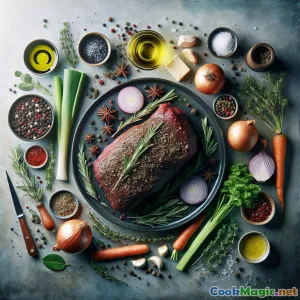
Lengua de vaca en salsa cremosa de maní y hierbas
(Beef Tongue in Creamy Peanut-Herb Sauce)
(0 Reseñas)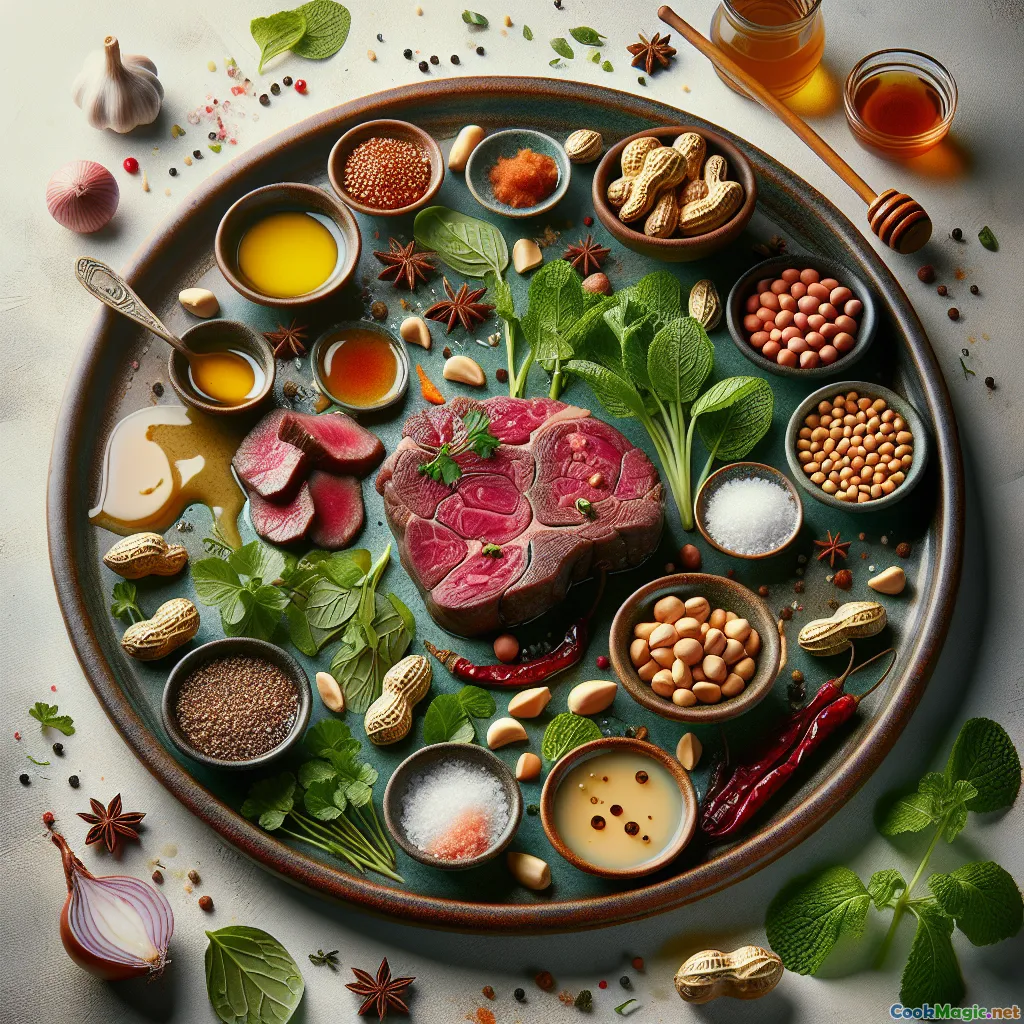


0
1,108
julio 18, 2025
Informar de un problema
Ingredientes
-
1 whole (approx. 1.2kg) Lengua de ternera
(La lengua fresca y limpia ofrece el mejor sabor.)
-
85 grams Cacahuetes
(Tostado, sin sal; se pueden usar anacardos para variar.)
-
30 grams Perejil de hoja plana
(Picar groseramente)
-
15 grams Hojas de Menta Frescas
(Tallos retirados)
-
10 grams Estragón
(Opcional, pero muy recomendado para aportar profundidad de sabor.)
-
2 cloves Ajo
(Aplastado)
-
1 teaspoon Mostaza inglesa
(Añade calor suave)
-
2 tablespoons Vinagre de sidra de manzana
(Para realzar el brillo)
-
1 tablespoon Miel
(Equilibrio de la acidez)
-
120 ml Leche entera
(diluir la salsa)
-
1 teaspoon Sal
(Ajustar al gusto)
-
0.5 teaspoon Pimienta negra
-
1 medium Cebolla
(Cortado en cuartos)
-
2 whole Hojas de laurel
-
1 whole apio
(Opcional, para el líquido aromático de estofar.)
-
1 whole Zanahoria
(Pelado, para estofar la lengua)
-
2 liters Agua
(Para cocinar lengua)
(La lengua fresca y limpia ofrece el mejor sabor.)
(Tostado, sin sal; se pueden usar anacardos para variar.)
(Picar groseramente)
(Tallos retirados)
(Opcional, pero muy recomendado para aportar profundidad de sabor.)
(Aplastado)
(Añade calor suave)
(Para realzar el brillo)
(Equilibrio de la acidez)
(diluir la salsa)
(Ajustar al gusto)
(Cortado en cuartos)
(Opcional, para el líquido aromático de estofar.)
(Pelado, para estofar la lengua)
(Para cocinar lengua)
Nutrición
- Porciones: 4
- Tamaño de porción: 1 plato (250g)
- Calories: 525 kcal
- Carbohydrates: 0 g
- Protein: 37 g
- Fat: 34 g
- Fiber: 5 g
- Sugar: 7 g
- Sodium: 680 mg
- Cholesterol: 185 mg
- Calcium: 92 mg
- Iron: 5.4 mg
Instrucciones
-
1 - Prepare el líquido para brasear.:
Pon la lengua de res en una olla grande con cebolla, hojas de laurel, sal, apio y zanahoria (si las usas). Agrega agua para cubrirla por completo. Llévala a hervor suave.
-
2 - Cocina la lengua a fuego lento.:
Cubre la olla, baja el fuego y deja hervir a fuego suave durante 3 horas o hasta que la lengua esté tierna y se pueda atravesar con un tenedor. Retira la espuma que se forme durante la cocción.
-
3 - Quitar y pelar:
Lleva la lengua a una tabla de cortar. Deja que se enfríe un poco y luego pela la piel externa gruesa. Corta en láminas de 1 cm de grosor.
-
4 - Licúa la salsa de maní y hierbas:
En una licuadora, combine maní, perejil, menta, estragón (si lo usa), ajo, mostaza, vinagre de sidra de manzana, miel, leche, sal y pimienta. Licúe hasta obtener una salsa cremosa. Ajuste la consistencia con más leche si lo desea.
-
5 - Recalienta y emplata.:
Calienta las lonchas de lengua en un poco del líquido de braising reservado, si lo deseas. Colócalas en los platos y rocía generosamente con la salsa de maní y hierbas. Decora con hierbas extra y cacahuates picados.
Pon la lengua de res en una olla grande con cebolla, hojas de laurel, sal, apio y zanahoria (si las usas). Agrega agua para cubrirla por completo. Llévala a hervor suave.
Cubre la olla, baja el fuego y deja hervir a fuego suave durante 3 horas o hasta que la lengua esté tierna y se pueda atravesar con un tenedor. Retira la espuma que se forme durante la cocción.
Lleva la lengua a una tabla de cortar. Deja que se enfríe un poco y luego pela la piel externa gruesa. Corta en láminas de 1 cm de grosor.
En una licuadora, combine maní, perejil, menta, estragón (si lo usa), ajo, mostaza, vinagre de sidra de manzana, miel, leche, sal y pimienta. Licúe hasta obtener una salsa cremosa. Ajuste la consistencia con más leche si lo desea.
Calienta las lonchas de lengua en un poco del líquido de braising reservado, si lo deseas. Colócalas en los platos y rocía generosamente con la salsa de maní y hierbas. Decora con hierbas extra y cacahuates picados.
Más información sobre: Lengua de vaca en salsa cremosa de maní y hierbas
Beef Tongue in Peanut Herb Sauce: A Modern Twist on English Fare
If you’ve ever wanted to push the boundaries of traditional English cuisine and savor the complex delights of nose-to-tail eating, look no further than Beef Tongue in Peanut Herb Sauce. This dish brings together the classic slow-cooked tenderness of beef tongue and pairs it with a creamy, vibrant sauce inspired by both British and international flavors. Its rich cultural heritage and creative modern elements make it an exceptional main course for adventurous cooks eager to exercise skill and surprise.
Background & History
Beef tongue is one of the traditional cuts treasured in English country cooking, often considered a delicacy reserved for special Sunday lunches or festive occasions. While not as commonly encountered on everyday tables in recent decades, tongue's reputation for flavor and melt-in-your-mouth tenderness remains undisputed. Historically, it would be poached simply along with aromatics and served cold, accompanied by piquant mustard or horseradish. Here, the classic cut is reimagined: the tongue is slow-simmered, deeply seasoned, and uplifted with an elegant, contemporary sauce blending roasted peanuts, fresh herbs, and the zing of vinegar.
Peanuts aren’t native to England, but found their way into the modern British kitchen through colonial and global influences. Combining them—with herbs like mint and parsley—with other local flavors is reflective of the fusion trend shaping UK dining today. Cutting through the unctuous character of offal with creamy nuttiness and bursts of green, it raises this humble classic to gourmet status.
The Art & Novelty of Offal
Eating beef tongue requires a sense of culinary adventure, but its reward is unforgettable. The meat is gently braised until supremely soft, sliced thin, and served warm—perfectly contrasted by the lush, tangy peanut herb sauce. The flexibility of the recipe (use tarragon or swap in other herbs that look best at the market) means that creative cooks can adapt based on seasonality, or to encourage wary eaters to discover delicious new favorites.
Tips & Tricks
- Tongue Preparation: Plunging the tongue into hot water as the first step makes removing the skin easy once braised. Peel very soon after braising when it's still warm for best results.
- Flavor Infusion: Aromatics like bay leaf, celery, and carrot deepen tongue's natural savory qualities. You can swap in leeks or fennel for nuance.
- Peanut Allergy? Cashews or sunflower seeds blended with herbs also yield a creamy, unique sauce for those avoiding peanuts.
- Make Ahead: Cooked tongue keeps for days in the fridge, and you can prepare the herb sauce up to a day ahead. They’re easy to assemble just before serving.
- Serving Suggestions: Pair with simply boiled new potatoes, roasted root vegetables, or a crusty British brown bread to soak up every last drop of sauce.
Cultural Significance
Beef tongue connects modern tables with a rich heritage, reminding us of a time when British cooks were ingenious in transforming humble or overlooked cuts into something splendid. Today, modern cooks are rediscovering the creativity and fullness this food offers, celebrating sustainability and whole-animal appreciation. By integrating international flavors—like peanuts and fresh tarragon—this recipe fuses contemporary tastes with time-honored values, making every meal more exciting and meaningful.
Unique Aspects & Final Thoughts
What makes this dish particularly unique is the striking interplay of earthy beefiness and silky herbal creaminess. The peanut sauce not only provides flavor, but color and body, ensuring the dish feels decadent yet unexpectedly bright and modern. It’s a conversation starter, a piece of culinary history reinvigorated for a new generation.
As a chef who loves to invite diners beyond their comfort zones, I find offal dishes like this exemplify the best of English kitchen values: thrift, creativity, and respect for the breadth of ingredients our world provides. Give it a try, and you might discover a new favorite that ... literally, and figuratively ... brings new tongue to the table.
Bon appétit!