하리사 육수와 함께하는 베르베르 생선 빵
(Berber Fish Bread with Harissa Broth)
(0 리뷰)


재료
-
300 grams 듀럼 세몰리나 가루
(Fine semolina for supple flatbread)
-
100 grams 다목적 밀가루
(Lightens texture of the bread)
-
5 grams 활성 건조 효모
(About 1.5 tsp)
-
220 ml 따뜻한 물
(Adjust a little for a soft dough)
-
45 ml 올리브 오일
(Divided between dough and pan)
-
10 grams 고운 바다 소금
(About 2 tsp for dough and stew)
-
5 grams 설탕
(효모를 활성화하는 데 도움이 됩니다)
-
600 grams 흰살 생선 필레(바다농어, 그루퍼, 또는 스내퍼)
(Firm, skinless pieces, cut into large chunks)
-
800 ml 생선 육수(또는 물)
(Homemade stock preferred for depth)
-
1 large 양파
(얇게 썬)
-
5 cloves 마늘
(잘게 썬)
-
2 medium 토마토
(Diced, or use canned if out of season)
-
30 grams 토마토 페이스트
(About 2 tbsp, boosts umami and color)
-
25 grams 하리사 페이스트
(열 조절을 취향에 맞게 조정하기)
-
1 tsp 분쇄된 캐러웨이 씨앗
(Classic Tunisian spice pairing with fish)
-
1 tsp 간 고수
(Warms the broth)
-
0.5 tsp 갈은 커민
(Earthy undertone)
-
1 tsp 달콤한 파프리카
(Adds color and mild sweetness)
-
0.5 tsp 강황
(Golden hue; optional but traditional in some regions)
-
2 leaves 월계수 잎
(Subtle aromatic base)
-
0.5 Fruit 절인 레몬
(Rind finely chopped for brightness)
-
200 grams 조리된 병아리콩
(Adds body and protein)
-
1 medium 감자
(Diced 1 cm for hearty texture)
-
1 tbsp 케이퍼
(Briny lift)
-
40 grams 검은 올리브
(씨 제거, 장식용)
-
10 grams 신선한 고수(고수 잎)
(Chopped, plus extra for serving)
-
2 tbsp 레몬 주스
(Stirs in at the end to balance)
-
0.5 tsp 신선하게 갈은 검은 후추
(맛에 따라)
-
0.25 tsp 칠리 플레이크
(For extra heat if harissa is mild)
(Fine semolina for supple flatbread)
(Lightens texture of the bread)
(About 1.5 tsp)
(Adjust a little for a soft dough)
(Divided between dough and pan)
(About 2 tsp for dough and stew)
(효모를 활성화하는 데 도움이 됩니다)
(Firm, skinless pieces, cut into large chunks)
(Homemade stock preferred for depth)
(얇게 썬)
(잘게 썬)
(Diced, or use canned if out of season)
(About 2 tbsp, boosts umami and color)
(열 조절을 취향에 맞게 조정하기)
(Classic Tunisian spice pairing with fish)
(Warms the broth)
(Earthy undertone)
(Adds color and mild sweetness)
(Golden hue; optional but traditional in some regions)
(Subtle aromatic base)
(Rind finely chopped for brightness)
(Adds body and protein)
(Diced 1 cm for hearty texture)
(Briny lift)
(씨 제거, 장식용)
(Chopped, plus extra for serving)
(Stirs in at the end to balance)
(맛에 따라)
(For extra heat if harissa is mild)
영양 정보
- 인분: 4
- 1인분 크기: 1 bowl with torn bread (350g)
- Calories: 620 kcal
- Carbohydrates: 0 g
- Protein: 35 g
- Fat: 22 g
- Fiber: 9 g
- Sugar: 8 g
- Sodium: 980 mg
- Cholesterol: 70 mg
- Calcium: 100 mg
- Iron: 5 mg
조리법
-
1 - Activate Yeast:
Whisk warm water with yeast and sugar; let stand until foamy. In a bowl, combine semolina and all-purpose flour with half the salt.
-
2 - Make and knead dough:
Pour yeast mixture and 1 tbsp olive oil into the flours. Mix, then knead 8–10 minutes until smooth and elastic. Lightly oil the bowl and dough.
-
3 - First Rise:
Cover and proof in a warm spot until doubled, about 45 minutes. Meanwhile, prep vegetables and measure spices.
-
4 - Start the stew base:
Warm 2 tbsp olive oil in a wide pot. Soften onion with a pinch of salt, then add garlic; cook until fragrant, 1 minute.
-
5 - Build the harissa broth:
Stir in tomato paste, harissa, caraway, coriander, cumin, paprika, turmeric, and bay leaves. Add diced tomatoes and stock; bring to a lively simmer.
-
6 - Simmer Vegetables:
Add potato (if using) and chickpeas. Simmer 8–10 minutes until potato begins to soften. Season with remaining salt and pepper.
-
7 - Cook the flatbread:
Punch down dough and divide into two balls. Roll to 6–7 mm thick. Cook on a hot dry skillet 2–3 minutes per side until golden blisters form. Tear into large rustic pieces.
-
8 - Poach the fish:
Nestle fish pieces into the simmering broth. Poach gently 6–8 minutes until opaque and flaky. Stir in preserved lemon, capers, and lemon juice. Adjust seasoning.
-
9 - Assemble Bowls:
Divide torn bread into warm bowls. Ladle hot broth over to soak. Top with fish, chickpeas, and vegetables. Garnish with olives and chopped cilantro.
-
10 - Serve:
Finish with an extra drizzle of olive oil and a wedge of lemon. Serve immediately while the bread is still tender but not soggy.
Whisk warm water with yeast and sugar; let stand until foamy. In a bowl, combine semolina and all-purpose flour with half the salt.
Pour yeast mixture and 1 tbsp olive oil into the flours. Mix, then knead 8–10 minutes until smooth and elastic. Lightly oil the bowl and dough.
Cover and proof in a warm spot until doubled, about 45 minutes. Meanwhile, prep vegetables and measure spices.
Warm 2 tbsp olive oil in a wide pot. Soften onion with a pinch of salt, then add garlic; cook until fragrant, 1 minute.
Stir in tomato paste, harissa, caraway, coriander, cumin, paprika, turmeric, and bay leaves. Add diced tomatoes and stock; bring to a lively simmer.
Add potato (if using) and chickpeas. Simmer 8–10 minutes until potato begins to soften. Season with remaining salt and pepper.
Punch down dough and divide into two balls. Roll to 6–7 mm thick. Cook on a hot dry skillet 2–3 minutes per side until golden blisters form. Tear into large rustic pieces.
Nestle fish pieces into the simmering broth. Poach gently 6–8 minutes until opaque and flaky. Stir in preserved lemon, capers, and lemon juice. Adjust seasoning.
Divide torn bread into warm bowls. Ladle hot broth over to soak. Top with fish, chickpeas, and vegetables. Garnish with olives and chopped cilantro.
Finish with an extra drizzle of olive oil and a wedge of lemon. Serve immediately while the bread is still tender but not soggy.
하리사 육수와 함께하는 베르베르 생선 빵 :에 대한 자세한 정보
What is Ftagh Bil Hout?
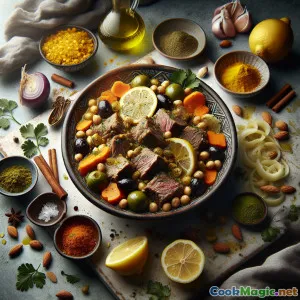
Ftagh Bil Hout, sometimes spelled ftat/ftet bil hout, is a soulful Tunisian Berber dish where torn semolina flatbread is soaked in a spiced fish broth. Think of it as a comforting cross between a seafood stew and bread salad: the bread becomes the heart of the dish, drinking up the fragrant harissa-tomato broth until it’s plush and flavorful. It’s family-style fare—set the pot in the middle, and everyone scoops fish and broth over a bed of warm, torn bread.
Origins and Cultural Significance
Across southern Tunisia and the island of Djerba, Berber households have long stretched limited ingredients by combining bread with stews: lamb, vegetable, or fish. This thrifty method is more than economy; it’s a culinary philosophy of abundance—turning broth into a feast by letting bread act as sponge and sustenance. Caraway and coriander, common along the North African coast, reflect the spice trade routes that threaded through Carthage and beyond. Harissa, a Tunisian icon, adds heat, depth, and a roasted chili fragrance that pairs naturally with the clean sweetness of local fish.
Ftagh is as much a technique as a recipe. It’s a way to gather: bread is baked quickly on a saj, clay pan, or skillet, torn with the hands, and bathed in broth. For Ramadan iftar, Fridays, or seaside weekends, it delivers warmth and nourishment without fuss.
Flavor Profile and What Makes It Unique
- The broth: a bright, tomato-rich base sharpened with lemon juice and perfumed by caraway, coriander, and paprika. Harissa threads smokiness and chili warmth throughout.
- The bread: fine semolina produces tender chew, while a quick skillet bake gives charred blisters that translate into toasted notes once soaked.
- The fish: firm white fillets poached gently, flaking into large pieces so each bite balances broth, bread, and seafood.
Unlike many stews served over rice or couscous, Ftagh Bil Hout features bread as the principal starch. Its texture—neither soup nor porridge—makes it memorable: spoonable but substantial.
Tips for Success
- Mind the heat: Poach fish at a bare simmer to keep it delicate. A rolling boil will toughen it and cloud the broth.
- Season in layers: Salt onions early to draw sweetness, season the broth after adding tomatoes, then adjust once lemon and preserved lemon go in.
- Bread texture: Roll the flatbread to about 6–7 mm. Thicker stays dense; thinner may disintegrate. Cook just until puffed and spotted.
- Control soak: Add broth to bread right before serving. Too early and the bread collapses; too late and it won’t absorb enough.
- Harissa choice: Traditional Tunisian harissa can be potent. Start modestly and build up. If your harissa is mild, a pinch of chili flakes restores the desired warmth.
Ingredient Swaps and Variations
- Fish: Use any firm white fish—sea bream, cod, or halibut. Mixed seafood (squid or shrimp) can join for a “fruits of the sea” version.
- Bread: In a pinch, use store-bought flatbread or day-old khobz torn and lightly toasted.
- Broth: No fish stock? Use water and extra tomato paste, then simmer fish bones or a piece of kombu for added umami.
- Extras: Chickpeas add body and protein; potatoes make it heartier. Olives, capers, or preserved lemon bring briny complexity.
Make-Ahead, Storage, and Reheating
- The flatbread can be cooked earlier in the day; rewarm on a dry skillet and tear before serving.
- The broth keeps 3 days refrigerated. Reheat gently and add lemon juice and herbs at the last moment for freshness.
- Assemble to order. Bread and broth stored together will over-soak. Keep components separate until serving.
Equipment Notes
- A wide, shallow pot maximizes surface area for even poaching.
- A heavy skillet or griddle creates the classic blistered flatbread without needing a tandoor or saj.
Serving Ideas and Pairings
- Serve with lemon wedges, extra harissa, and a small salad of shaved fennel and orange. Mint tea or a crisp, lightly chilled white wine pairs beautifully.
Personal Thoughts
This dish captures why North African cooking is so satisfying: practical techniques that create generous flavors. Torn bread—humble and handmade—meets a radiant broth. Each spoonful is textural theatre: soft bread, silky fish, little pops of chickpea and briny olive, threaded with citrus and spice. It’s comfort you can build together at the table. If you love bouillabaisse or cioppino, Ftagh Bil Hout offers a Tunisian-Berber echo—simpler, earthier, and just as celebratory.
Troubleshooting
- Broth tastes thin: Reduce uncovered for a few minutes, or whisk in a teaspoon of tomato paste. A splash more lemon at the end can sharpen the edges.
- Bread too tough: Increase hydration slightly next time and knead until elastic. Overcooking the flatbread can dry it—aim for soft with charred spots.
- Fish flakes apart: Use larger chunks and do not stir once added; swirl the pot instead.
With a handful of pantry spices, fresh fish, and semolina, Ftagh Bil Hout transforms an everyday kitchen into a coastal Tunisian kitchen. It’s weeknight-manageable yet dinner-party-worthy—exactly the kind of food that turns a table into a gathering.