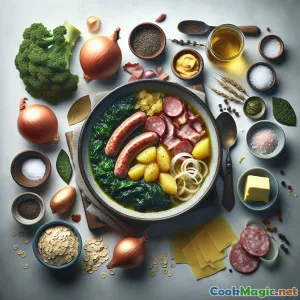
バイエルン風猟師の根菜シチュー 野生のきのこ入り
(Bavarian Hunter’s Root Stew with Wild Mushrooms)
(0 レビュー)

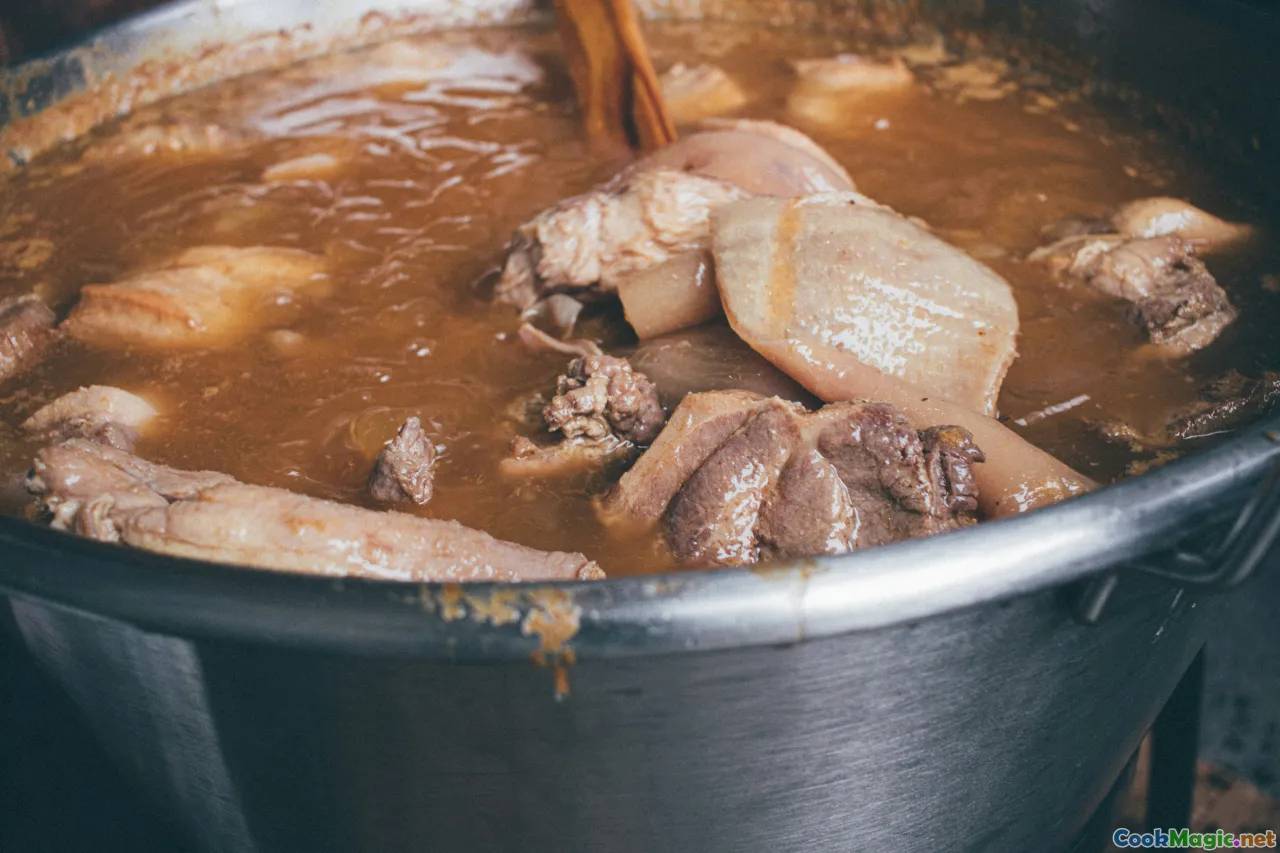

材料
-
900 grams 鹿肩肉、3cm角に切り分けた
(Beef chuck works if venison is unavailable.)
-
100 grams スモークベーコンのラルドン
(Adds smoky depth; omit for a lighter stew.)
-
2 tbsp 万能小麦粉
(Light dredge for browning and slight thickening.)
-
2 tbsp 中性油
(For searing; use canola or sunflower oil.)
-
1 tbsp 無塩バター
(Adds richness at the finish.)
-
300 grams 黄玉ねぎのみじん切り
(About 2 large onions.)
-
4 cloves にんにくの房、みじん切り
(Fresh garlic for aromatic depth.)
-
300 grams にんじん(ざく切り)
(Cut into 2–3 cm pieces.)
-
250 grams パースニップ、乱切り
(Sweet earthiness complements game.)
-
200 grams セロリアック(セロリの根)、角切り
(Peel thickly to remove fibrous skin.)
-
400 grams 粘質のじゃがいも、角切り
(Waxy types hold shape; avoid floury potatoes.)
-
250 grams 野生キノコ(チャンテルレルまたはクリミニ)、薄切り
(Brush clean; avoid soaking to keep flavor concentrated.)
-
2 tbsp トマトペースト
(For color and umami; toast briefly for sweetness.)
-
250 ml ドライレッドワイン
(A medium-bodied wine like Spätburgunder or Pinot Noir.)
-
1200 ml 牛肉または狩猟肉のストック
(Low-sodium preferred to control seasoning.)
-
6 pieces ジュニパーベリー、軽く砕いた
(Classic ‘jäger’ piney note; use sparingly.)
-
2 leaves ベイリーフ
(Remove before serving.)
-
4 sprigs フレッシュタイム
(Sub with 1 tsp dried thyme if needed.)
-
1 tsp キャラウェイシード
(Traditional Bavarian spice that complements cabbage and roots.)
-
1 tsp スイートパプリカ
(Avoid smoked if you prefer a classic profile.)
-
1 tsp 新鮮に挽いたブラックペッパー
(味に合わせて調整してください。)
-
2 tsp 細かい海塩
(Adjust based on stock salinity.)
-
1 tbsp リンゴ酢
(Balances richness at the end.)
-
1 tbsp バイエルン風の甘いマスタード
(Adds gentle sweetness and shine.)
-
1 tsp レモンの皮(細かくすりおろしたもの)
(Brightens flavors right before serving.)
-
2 tbsp フラットリーフパセリのみじん切り
(Fresh herbal finish.)
-
2 tbsp リンゴンベリージャム、盛り付け用
(Traditional sweet-tart accent; cranberry sauce also works.)
-
6 slices 盛り付け用の薄切りライ麦パン
(Great for dipping and sopping up juices.)
(Beef chuck works if venison is unavailable.)
(Adds smoky depth; omit for a lighter stew.)
(Light dredge for browning and slight thickening.)
(For searing; use canola or sunflower oil.)
(Adds richness at the finish.)
(About 2 large onions.)
(Fresh garlic for aromatic depth.)
(Cut into 2–3 cm pieces.)
(Sweet earthiness complements game.)
(Peel thickly to remove fibrous skin.)
(Waxy types hold shape; avoid floury potatoes.)
(Brush clean; avoid soaking to keep flavor concentrated.)
(For color and umami; toast briefly for sweetness.)
(A medium-bodied wine like Spätburgunder or Pinot Noir.)
(Low-sodium preferred to control seasoning.)
(Classic ‘jäger’ piney note; use sparingly.)
(Remove before serving.)
(Sub with 1 tsp dried thyme if needed.)
(Traditional Bavarian spice that complements cabbage and roots.)
(Avoid smoked if you prefer a classic profile.)
(味に合わせて調整してください。)
(Adjust based on stock salinity.)
(Balances richness at the end.)
(Adds gentle sweetness and shine.)
(Brightens flavors right before serving.)
(Fresh herbal finish.)
(Traditional sweet-tart accent; cranberry sauce also works.)
(Great for dipping and sopping up juices.)
栄養
- 分量: 6
- 1人分の量: 1 ボウル (350g)
- Calories: 480 kcal
- Carbohydrates: 0 g
- Protein: 34 g
- Fat: 16 g
- Fiber: 8 g
- Sugar: 9 g
- Sodium: 780 mg
- Cholesterol: 95 mg
- Calcium: 95 mg
- Iron: 6.2 mg
作り方
-
1 - Prep aromatics and roots:
Dice onions and mince garlic. Peel and cut carrots, parsnips, celeriac, and potatoes into 2–3 cm chunks. Clean and slice mushrooms.
-
2 - Season and dredge venison:
Pat venison dry. Season with 1 tsp salt and half the pepper. Toss with flour to lightly coat, shaking off excess.
-
3 - Render bacon and brown meat:
In a heavy Dutch oven, render bacon over medium heat until crisp. Remove bacon. Add oil and brown venison in batches, turning to color all sides. Set browned meat aside.
-
4 - Sweat the Aromatics:
Add onions to the pot with a pinch of salt; cook until translucent. Stir in garlic, caraway, paprika, and remaining pepper; cook 1 minute until fragrant.
-
5 - Tomato paste and deglaze:
Stir in tomato paste and cook until brick red. Deglaze with red wine, scraping up browned bits. Reduce by half to cook off alcohol.
-
6 - Build the stew base and simmer:
Return venison and bacon to the pot. Add stock, juniper, bay, and thyme. Bring to a gentle simmer, cover, and cook until meat starts to tenderize.
-
7 - Add sturdy roots:
Stir in carrots, parsnips, and celeriac. Maintain a low simmer, covered, until vegetables begin to soften and meat is nearing tender.
-
8 - Potatoes and mushrooms:
Add potatoes and mushrooms. Simmer uncovered to reduce slightly and cook potatoes until just tender. Skim any excess fat from the surface.
-
9 - Finish and balance:
Remove bay and thyme stems. Stir in mustard, vinegar, butter, and parsley. Adjust salt and pepper to taste. Add lemon zest if using for brightness.
-
10 - Rest and Serve:
Let stew rest 5 minutes. Ladle into warm bowls. Serve with rye bread and a small spoon of lingonberry jam on the side.
Dice onions and mince garlic. Peel and cut carrots, parsnips, celeriac, and potatoes into 2–3 cm chunks. Clean and slice mushrooms.
Pat venison dry. Season with 1 tsp salt and half the pepper. Toss with flour to lightly coat, shaking off excess.
In a heavy Dutch oven, render bacon over medium heat until crisp. Remove bacon. Add oil and brown venison in batches, turning to color all sides. Set browned meat aside.
Add onions to the pot with a pinch of salt; cook until translucent. Stir in garlic, caraway, paprika, and remaining pepper; cook 1 minute until fragrant.
Stir in tomato paste and cook until brick red. Deglaze with red wine, scraping up browned bits. Reduce by half to cook off alcohol.
Return venison and bacon to the pot. Add stock, juniper, bay, and thyme. Bring to a gentle simmer, cover, and cook until meat starts to tenderize.
Stir in carrots, parsnips, and celeriac. Maintain a low simmer, covered, until vegetables begin to soften and meat is nearing tender.
Add potatoes and mushrooms. Simmer uncovered to reduce slightly and cook potatoes until just tender. Skim any excess fat from the surface.
Remove bay and thyme stems. Stir in mustard, vinegar, butter, and parsley. Adjust salt and pepper to taste. Add lemon zest if using for brightness.
Let stew rest 5 minutes. Ladle into warm bowls. Serve with rye bread and a small spoon of lingonberry jam on the side.
バイエルン風猟師の根菜シチュー 野生のきのこ入り :の詳細
Overview
Bavarian Hunter’s Root Stew is a rustic, soul-warming pot inspired by the Alpine forests and the traditional Jäger (hunter) kitchens of southern Germany. At its heart is tender venison slowly simmered with a colorful medley of root vegetables—carrots, parsnips, and celeriac—enriched with wild mushrooms and perfumed by juniper, bay, and thyme. A touch of red wine deepens the broth, while a finishing spoon of Bavarian sweet mustard and a splash of apple cider vinegar brighten the stew just before serving. The result is a balanced bowl: woodsy, savory, subtly sweet from the roots, and layered with gentle spice.
Why this stew works
- Balance of flavors: Juniper’s piney aroma and caraway’s warmth complement venison’s clean, lean character. Tomato paste and mushrooms add umami, while sweet mustard lends gloss and mild sweetness.
- Texture harmony: Long simmering tenderizes the meat without breaking the roots into mush. Staggered additions ensure everything reaches perfect doneness: sturdy roots first, then potatoes and mushrooms.
- Make-it-your-own: Venison is traditional, but well-marbled beef chuck is an excellent substitute that still respects the spirit of the dish.
Ingredient notes
- Venison: Shoulder or leg is ideal for braising. Trim silver skin for tenderness. If substituting, choose beef chuck or shank, cut into similar cubes.
- Wild mushrooms: Chanterelles are wonderful when in season; cremini or a mix of cremini and oyster mushrooms work year-round. Avoid soaking mushrooms—wipe clean to prevent waterlogging.
- Root vegetables: Parsnips contribute sweetness, celeriac adds savory celery notes, and carrots offer color. Waxy potatoes hold their shape during simmering.
- Spices and herbs: Juniper berries are quintessential to hunter-style dishes. Use lightly crushed berries so they release flavor without overpowering. Caraway is a Bavarian pantry staple that marries beautifully with roots and rye.
- Liquids: A medium-bodied dry red wine (German Spätburgunder/Pinot Noir if you can find it) and a good stock form the stew’s backbone. Low-sodium stock is best for seasoning control.
Technique tips
- Browning matters: Build fond by searing the meat in batches and toasting tomato paste until it deepens in color. This lays the foundation for complex flavor.
- Gentle simmer: Keep the stew at a low bubble—vigorous boiling toughens lean venison and breaks up vegetables.
- Balanced finish: Right at the end, mustard and vinegar sharpen the flavors, while a knob of butter rounds edges and adds a satiny gloss. Parsley brings freshness, and a whisper of lemon zest brightens the woodland notes.
- Rest before serving: Five minutes of rest helps the flavors settle and the broth thicken slightly as bubbles subside.
A brief history and cultural touchstones
“Jäger” or hunter-style cooking is rooted in Central Europe, where forest game and wild mushrooms have long anchored autumn and winter tables. In Bavaria, the culinary tradition leans into robust, warming dishes designed to nourish after a day outdoors. Juniper, thyme, and bay are classic companions to game; caraway, beloved in Bavarian baking and braises, echoes the region’s affinity for rye breads and cabbage. Serving a small spoon of lingonberry jam alongside game is a nod to Alpine and Nordic sensibilities—tart fruit against savory richness.
Serving suggestions and pairings
- Bread: Thick slices of rustic rye or Bauernbrot are essential for sopping up juices.
- Sides: A simple buttered savoy cabbage, warm potato dumplings (Kartoffelknödel), or a crisp apple-fennel slaw cut through the stew’s depth.
- Drinks: Pair with a malty Märzen or Dunkel lager, or pour more of the red wine you cooked with. A dry Riesling also works, its acidity matching the stew’s brightness.
Make-ahead, storage, and reheating
Like most stews, this improves overnight. Cool quickly, then refrigerate up to 3 days or freeze up to 2 months. Reheat gently on the stovetop, adding a splash of stock or water if the stew has thickened. Taste and adjust seasoning after reheating—salt perception can shift as flavors meld.
Substitutions and variations
- Meat: Beef chuck or pork shoulder are reliable alternatives. For a vegetarian spin, replace meat with extra mushrooms (porcini, shiitake) and add a splash of soy sauce for umami.
- Herbs: Swap thyme for rosemary (use sparingly). A bay-and-allspice combo is also traditional in some Germanic kitchens.
- Thickeners: If you prefer a thicker stew, mash a few potato pieces against the side of the pot near the end, or whisk in a cornstarch slurry for a glossy finish.
- Heat level: A pinch of hot paprika or chili flakes can lend gentle warmth without overriding the herbal profile.
Chef’s notes
Respect the cadence of the cook: build flavor with browning, deglaze thoughtfully, then simmer with patience. This is a stew to lean over—inhale the juniper, taste the broth’s evolution, and adjust in small, deliberate steps. The final spoon of mustard and splash of vinegar are more than a flourish—they’re the balancing act that elevates the dish from rustic to refined. Serve steaming, with bread at the ready and a little lingonberry on the side, and you’ll be transported to a Bavarian lodge after a day’s trek in the pines.