Harissa के साथ ट्यूनीशिया-शैली के पुदीने वाले फावा बीन्स स्ट्यू
(Tunisian Minted Broad Bean Stew with Harissa)
(0 समीक्षाएँ)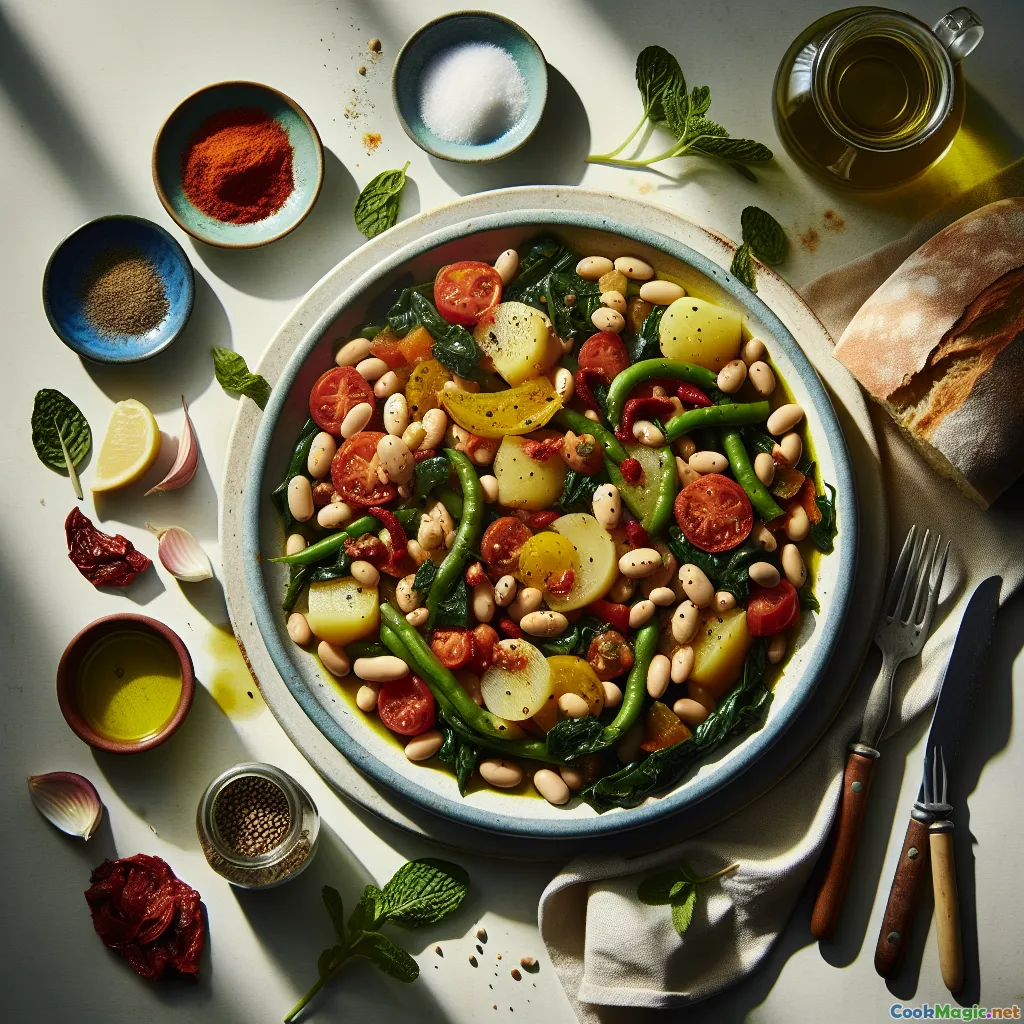


सामग्री
-
3 tbsp एक्स्ट्रा वर्जिन जैतून का तेल
(Tunisian olive oil preferred for peppery flavor)
-
1 large पीला प्याज, बारीक कटा हुआ
(About 200g)
-
4 cloves पतला कटा हुआ लहसुन
(Do not burn; keep heat moderate)
-
2 tbsp टमाटर का पेस्ट
(Double-concentrated if available)
-
1.5 tbsp हरीसा पेस्ट
(Adjust to heat tolerance)
-
1 tsp पिसा हुआ करवी
(Classic Tunisian spice note)
-
1 tsp पिसा हुआ धनिया
(Warm citrusy depth)
-
0.5 tsp पीस हुआ जीरा
(Earthy base note)
-
400 grams क्रश किए हुए टमाटर
(Or 4 ripe tomatoes, chopped)
-
750 ml सब्जी का स्टॉक
(कम सोडियम पसंदीदा)
-
600 grams ब्रॉड बीन्स (फावा), छिली हुई
(Fresh or frozen; if large, slip skins)
-
300 grams वॉक्सी आलू, 1.5 सेमी के सम आकार के क्यूब में कटे हुए
(Adds body; optional)
-
150 grams स्विस चार्ड या पालक, कटा हुआ
(Stir in at the end)
-
1 tbsp संरक्षित नींबू के छिलके, बारीक काटे
(Rinse to reduce saltiness)
-
15 grams ताज़ा पुदीना पत्ते, बारीक कटे हुए
(Plus extra leaves to garnish)
-
2 tbsp नींबू का रस
(ताजगी के लिए ताजा निचोड़ा गया)
-
1.25 tsp समुद्री नमक
(Adjust to taste and stock salinity)
-
0.5 tsp काली मिर्च
(ताज़ा पिसा हुआ)
-
0.5 tsp चीनी
(Balances acidity if needed)
-
4 slices परोसने के लिए कुरकुरा ब्रेड
(पारंपरिक साथी)
(Tunisian olive oil preferred for peppery flavor)
(About 200g)
(Do not burn; keep heat moderate)
(Double-concentrated if available)
(Adjust to heat tolerance)
(Classic Tunisian spice note)
(Warm citrusy depth)
(Earthy base note)
(Or 4 ripe tomatoes, chopped)
(कम सोडियम पसंदीदा)
(Fresh or frozen; if large, slip skins)
(Adds body; optional)
(Stir in at the end)
(Rinse to reduce saltiness)
(Plus extra leaves to garnish)
(ताजगी के लिए ताजा निचोड़ा गया)
(Adjust to taste and stock salinity)
(ताज़ा पिसा हुआ)
(Balances acidity if needed)
(पारंपरिक साथी)
पोषण
- परोसने की संख्या: 4
- सेवा आकार: 1 कटोरा (300g)
- Calories: 320 kcal
- Carbohydrates: 0 g
- Protein: 14 g
- Fat: 11 g
- Fiber: 12 g
- Sugar: 8 g
- Sodium: 620 mg
- Cholesterol: 0 mg
- Calcium: 120 mg
- Iron: 4.2 mg
निर्देश
-
1 - Prep vegetables and beans:
Finely chop onion and slice garlic. If using fresh broad beans, shell them. For large, mature beans, blanch 1 minute and pop off the tough outer skins for a tender stew.
-
2 - Sweat aromatics:
Warm olive oil in a heavy pot over medium heat. Add onion and a pinch of salt. Cook, stirring, until soft and translucent, 6–8 minutes. Add garlic and cook 1 minute more.
-
3 - Bloom spices and tomato paste:
Stir in tomato paste, harissa, caraway, coriander, and cumin. Cook 2–3 minutes to darken the paste and bloom spices, stirring to prevent sticking.
-
4 - Build the Base:
Add crushed tomatoes and bring to a simmer. Pour in vegetable stock, scraping up any fond. Return to a gentle simmer.
-
5 - Simmer with potatoes:
If using potatoes, add now. Season with half the salt and all the pepper. Simmer uncovered until potatoes are nearly tender, about 12–15 minutes.
-
6 - Cook the broad beans:
Add broad beans. Simmer gently until just tender: 8–12 minutes for fresh shelled beans, 5–7 minutes for frozen. Avoid overcooking to keep their green color.
-
7 - Finish with greens, mint, and lemon:
Stir in chopped chard/spinach, mint, and lemon juice. Add preserved lemon if using. Simmer 2–3 minutes until greens wilt and flavors marry. Adjust salt; add sugar if needed.
-
8 - Rest and Serve:
Remove from heat and rest 5 minutes. Ladle into bowls, garnish with extra mint, and serve with warm crusty bread.
Finely chop onion and slice garlic. If using fresh broad beans, shell them. For large, mature beans, blanch 1 minute and pop off the tough outer skins for a tender stew.
Warm olive oil in a heavy pot over medium heat. Add onion and a pinch of salt. Cook, stirring, until soft and translucent, 6–8 minutes. Add garlic and cook 1 minute more.
Stir in tomato paste, harissa, caraway, coriander, and cumin. Cook 2–3 minutes to darken the paste and bloom spices, stirring to prevent sticking.
Add crushed tomatoes and bring to a simmer. Pour in vegetable stock, scraping up any fond. Return to a gentle simmer.
If using potatoes, add now. Season with half the salt and all the pepper. Simmer uncovered until potatoes are nearly tender, about 12–15 minutes.
Add broad beans. Simmer gently until just tender: 8–12 minutes for fresh shelled beans, 5–7 minutes for frozen. Avoid overcooking to keep their green color.
Stir in chopped chard/spinach, mint, and lemon juice. Add preserved lemon if using. Simmer 2–3 minutes until greens wilt and flavors marry. Adjust salt; add sugar if needed.
Remove from heat and rest 5 minutes. Ladle into bowls, garnish with extra mint, and serve with warm crusty bread.
Harissa के साथ ट्यूनीशिया-शैली के पुदीने वाले फावा बीन्स स्ट्यू :के बारे में ज़्यादा जानकारी
Overview
Tunisian Minted Broad Bean Stew is a vibrant, plant-forward dish that captures the spirit of North African home cooking: bold spice, sun-soaked tomatoes, and the refreshing lift of fresh mint and lemon. Known locally as a fava-focused preparation, it’s the sort of stew that feels hearty yet never heavy. Broad beans (favas) are celebrated throughout the Maghreb in spring, when markets brim with velvety pods. This recipe leans into harissa’s warmth, the citrusy whisper of coriander and caraway, and a finishing flourish of mint that makes the whole pot sing.
Flavor Profile and Technique
The foundation is classic: sweat onion and garlic until sweet, then bloom tomato paste and spices. This step is essential; darkening the paste concentrates umami and removes raw acidity, while blooming spices in oil unlocks fat-soluble aromatics for a deeper, more integrated flavor. A gentle simmer with crushed tomatoes and stock creates a lush broth. Potatoes, if used, bring body and a traditional comfort; chard or spinach add nutritional color and a soft, earthy counterpoint to the beans. The final touch—fresh mint and lemon juice—provides a clean, herbaceous finish that’s distinctly Tunisian.
Harissa’s role is nuanced. While it lends heat, Tunisian harissa is as much about fragrance as fire: dried chilies, garlic, caraway, and coriander build layers that pair beautifully with the nutty sweetness of broad beans. If your harissa is particularly spicy, add it gradually and balance with a touch more tomato or a pinch of sugar.
Cultural Notes
Broad beans are deeply woven into Tunisian foodways. In spring, they are enjoyed fresh in salads, stews, and quick sautés; in cooler months, dried favas anchor hearty dishes and dips. Stews like this are commonly served with thick slices of country bread, which scoop up broth and beans without need for utensils. During Ramadan, such a stew offers gentle nourishment after a day of fasting—protein-rich, mineral-dense, and easy on the stomach when cooked with care.
Mint, too, is essential in Tunisian kitchens, appearing in salads, couscous, and even tea. Here, it adds brightness without overshadowing the beans. The optional preserved lemon nods to the Mediterranean pantry, bringing salinity and perfumed citrus to lift the stew.
Ingredient Tips and Swaps
- Beans: Fresh shelled broad beans are ideal. If the beans are mature (thick skin), blanch and slip off the skins for tenderness. Frozen broad beans are a dependable alternative.
- Heat level: Harissa varies. Start with less if unsure, then adjust. A smoky harissa adds depth; a bright, fresh harissa keeps the stew lively.
- Greens: Swiss chard gives silkiness; spinach is delicate and quick-cooking; kale works but needs a few extra minutes.
- Citrus: If preserved lemon isn’t handy, use extra zest and a pinch more salt. Always finish with fresh lemon juice.
- Stock: Vegetable stock keeps it vegan; light chicken stock is a traditional option for omnivores.
Serving and Pairings
Serve hot with crusty bread or khobz tabouna (Tunisian semolina bread). A crisp side salad—cucumbers, tomatoes, red onion, and a squeeze of lemon—balances the stew’s warmth. Mint tea or a chilled yogurt drink (for non-vegan pairings) makes a refreshing companion.
Make-Ahead, Storage, and Reheating
The stew keeps well for 3–4 days in the refrigerator. As with many stews, flavors deepen overnight. Reheat gently until just simmering to preserve the beans’ texture and color. The mint’s freshness benefits from an extra sprinkle of chopped leaves at serving time. It also freezes well without the greens; add those fresh upon reheating.
Troubleshooting
- Beans turning gray or mushy: Overcooking or too vigorous a boil. Keep to a gentle simmer and add large beans later in the process.
- Too spicy: Stir in more tomato, a splash of stock, or a spoon of yogurt on the side (if not keeping vegan). A pinch of sugar can soften harsh heat.
- Flat flavor: Add a squeeze more lemon, a pinch of salt, or a final drizzle of good olive oil. Fresh mint at the end restores brightness.
Why You’ll Love It
This stew balances comfort with clarity. It’s robust but not heavy, assertive but not overwhelming, and it celebrates seasonal produce. With pantry spices and a few fresh accents, it brings the soul of Tunisian cooking to your table in under an hour and a half. Whether for a weeknight meal or a relaxed weekend spread, it’s a bowl that invites seconds—and conversation about the flavors of the Mediterranean rim.