Fassi Rfissa उत्सव चिकन और ट्रिड के साथ
(Fassi Rfissa Celebration with Chicken and Trid)
(0 समीक्षाएँ)


सामग्री
-
1500 grams हड्डी सहित चिकन के टुकड़े (पैर और जांघें)
(Skin on for richer broth)
-
900 grams पीला प्याज, पतली कटी
(About 6 medium; the soul of the sauce)
-
250 grams हरी दालें
(Do not pre-cook; holds shape in stew)
-
2 tbsp मेथी के दाने (helba)
(Soak to mellow bitterness)
-
4 tbsp एक्स्ट्रा वर्जिन जैतून का तेल
(For sautéing onions)
-
1 tbsp Smen (मैरोक्कन संरक्षित मक्खन)
(Adds authentic depth; use ghee if unavailable)
-
2 tsp जिंजर पाउडर
(Classic Fassi warmth)
-
1.5 tsp हल्दी
(Gives hallmark golden hue)
-
1.5 tsp Ras el hanout
(Fassi blend if possible)
-
1 tsp ताजा पिसा हुआ काला मिर्च
(स्वाद के अनुसार समायोजित करें)
-
2 tsp मिश्रित समुद्री नमक
(Divide and season gradually)
-
1 pinch केसर के धागे, बिखरे हुए
(Bloom in warm water)
-
60 ml केसर फूलने के लिए गर्म पानी
(Use to deglaze aromatics)
-
1 piece दालचीनी की छड़ी
(Sub 1/4 tsp ground if needed)
-
0.5 piece संरक्षित नीबू के छिलके, पतले टुकड़े
(Rinse lightly to control salt)
-
0.5 cup ताजा धनिया (कटा हुआ)
(Stems add flavor; reserve some for garnish)
-
0.25 cup ताज़ा समतल-पत्ते वाला अजमोद, कटा हुआ
(Adds grassy brightness)
-
1500 ml पानी या हल्का चिकन स्टॉक
(Adjust to maintain saucy consistency)
-
600 grams सामान्य उद्देश्य का आटा
(For trid/msemen dough)
-
100 grams ड्यूर्म गेंहू की महीन सूजी
(Adds texture and aroma)
-
1.5 tsp मिश्रित समुद्री नमक
(आटा मसाले के लिए मसाला)
-
1 tsp चीनी
(Optional; helps browning)
-
420 ml गर्म पानी (आटे के लिए)
(Add gradually for soft, elastic dough)
-
120 ml तटस्थ तेल (आकार देने/पकाने के लिए)
(Sunflower or canola)
-
60 grams पिघला हुआ मक्खन
(For laminating layers)
-
50 grams छिड़काव के लिए अतिरिक्त सूजी
(Prevents sticking; adds crunch)
-
0.5 cup ब्लैंचेड बादाम भुने हुए
(Traditional celebratory garnish)
-
3 pieces कड़े उबले अंडे, आधे किए हुए
(Symbolic garnish for festivities)
-
2 tbsp भुने हुए तिल
(Nutty finish)
(Skin on for richer broth)
(About 6 medium; the soul of the sauce)
(Do not pre-cook; holds shape in stew)
(Soak to mellow bitterness)
(For sautéing onions)
(Adds authentic depth; use ghee if unavailable)
(Classic Fassi warmth)
(Gives hallmark golden hue)
(Fassi blend if possible)
(स्वाद के अनुसार समायोजित करें)
(Divide and season gradually)
(Bloom in warm water)
(Use to deglaze aromatics)
(Sub 1/4 tsp ground if needed)
(Rinse lightly to control salt)
(Stems add flavor; reserve some for garnish)
(Adds grassy brightness)
(Adjust to maintain saucy consistency)
(For trid/msemen dough)
(Adds texture and aroma)
(आटा मसाले के लिए मसाला)
(Optional; helps browning)
(Add gradually for soft, elastic dough)
(Sunflower or canola)
(For laminating layers)
(Prevents sticking; adds crunch)
(Traditional celebratory garnish)
(Symbolic garnish for festivities)
(Nutty finish)
पोषण
- परोसने की संख्या: 6
- सेवा आकार: 1 platter portion (400g)
- Calories: 850 kcal
- Carbohydrates: 0 g
- Protein: 40 g
- Fat: 35 g
- Fiber: 10 g
- Sugar: 9 g
- Sodium: 980 mg
- Cholesterol: 130 mg
- Calcium: 140 mg
- Iron: 6 mg
निर्देश
-
1 - Soak Fenugreek and Rinse Lentils:
Rinse fenugreek seeds, then soak in cool water for 2–4 hours or overnight to mellow bitterness. Rinse lentils and set aside; no soaking needed.
-
2 - Bloom saffron:
Crumble saffron into 60 ml warm water. Let stand while you prep aromatics to release color and aroma.
-
3 - Season the Chicken:
Toss chicken with 1 tsp salt, ginger, turmeric, ras el hanout, and black pepper. Set aside to marinate while onions are prepared.
-
4 - Slice and Sweat Onions:
In a large heavy pot, warm olive oil and smen over medium heat. Add sliced onions and a pinch of salt. Cook, stirring, until translucent and sweet, 10–12 minutes.
-
5 - Brown Chicken:
Push onions to the sides; add chicken pieces. Brown lightly on both sides to develop flavor, about 5 minutes per side.
-
6 - Build the broth:
Add cinnamon stick, preserved lemon, and bloomed saffron with its liquid. Stir to coat, scraping up any browned bits.
-
7 - Add Legumes and Simmer:
Drain fenugreek; add to pot with lentils and 1.5 L water/stock. Bring to a gentle boil, then lower to simmer. Cover and cook 45–60 minutes until chicken is nearly tender.
-
8 - Finish the Stew:
Stir in cilantro and parsley. Adjust salt and pepper. Simmer uncovered 15–20 minutes to thicken; the sauce should be spoonable, not soupy.
-
9 - Make Trid Dough:
Combine flour, semolina, salt, and sugar. Gradually add warm water, kneading 8–10 minutes until smooth and elastic. Rest 15–20 minutes, covered.
-
10 - Portion and Laminate:
Divide dough into 8–10 balls. Oil your hands and surface. Flatten each ball thinly, brush with melted butter and oil, sprinkle semolina, then fold into square packets.
-
11 - Cook Msemen:
Heat a griddle over medium. Cook each laminated packet 2–3 minutes per side, brushing lightly with oil, until golden and cooked through. Keep warm under a towel.
-
12 - Shred the Trid:
When cool enough to handle, tear msemen into bite-size ribbons. Pile on a large warmed platter, creating a nest.
-
13 - Assemble and Steam-Soak:
Ladle some hot broth over the shredded trid. Arrange chicken and lentils on top. Pour remaining broth gradually, allowing bread to absorb. Tent with foil 5–10 minutes.
-
14 - Garnish and Serve:
Top with toasted almonds, sesame, and halved eggs if using. Serve immediately, inviting diners to scoop from the communal platter.
Rinse fenugreek seeds, then soak in cool water for 2–4 hours or overnight to mellow bitterness. Rinse lentils and set aside; no soaking needed.
Crumble saffron into 60 ml warm water. Let stand while you prep aromatics to release color and aroma.
Toss chicken with 1 tsp salt, ginger, turmeric, ras el hanout, and black pepper. Set aside to marinate while onions are prepared.
In a large heavy pot, warm olive oil and smen over medium heat. Add sliced onions and a pinch of salt. Cook, stirring, until translucent and sweet, 10–12 minutes.
Push onions to the sides; add chicken pieces. Brown lightly on both sides to develop flavor, about 5 minutes per side.
Add cinnamon stick, preserved lemon, and bloomed saffron with its liquid. Stir to coat, scraping up any browned bits.
Drain fenugreek; add to pot with lentils and 1.5 L water/stock. Bring to a gentle boil, then lower to simmer. Cover and cook 45–60 minutes until chicken is nearly tender.
Stir in cilantro and parsley. Adjust salt and pepper. Simmer uncovered 15–20 minutes to thicken; the sauce should be spoonable, not soupy.
Combine flour, semolina, salt, and sugar. Gradually add warm water, kneading 8–10 minutes until smooth and elastic. Rest 15–20 minutes, covered.
Divide dough into 8–10 balls. Oil your hands and surface. Flatten each ball thinly, brush with melted butter and oil, sprinkle semolina, then fold into square packets.
Heat a griddle over medium. Cook each laminated packet 2–3 minutes per side, brushing lightly with oil, until golden and cooked through. Keep warm under a towel.
When cool enough to handle, tear msemen into bite-size ribbons. Pile on a large warmed platter, creating a nest.
Ladle some hot broth over the shredded trid. Arrange chicken and lentils on top. Pour remaining broth gradually, allowing bread to absorb. Tent with foil 5–10 minutes.
Top with toasted almonds, sesame, and halved eggs if using. Serve immediately, inviting diners to scoop from the communal platter.
Fassi Rfissa उत्सव चिकन और ट्रिड के साथ :के बारे में ज़्यादा जानकारी
Fassi Rfissa Celebration: A Golden Feast of Comfort
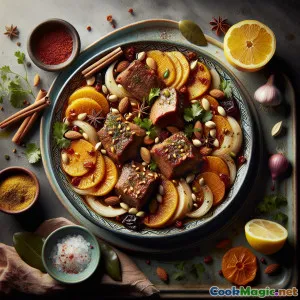
Rfissa is one of Morocco’s most treasured celebratory dishes, and the Fassi version—rooted in the intellectual and culinary center of Fez—feels like a warm embrace on a platter. Imagine tender chicken and earthy lentils simmered with mountains of sweet onions, saffron, ginger, and the distinctive whisper of fenugreek (helba). Then picture that aromatic stew cascading over a bed of shredded, buttery trid (msemen), the flaky pan-fried flatbread that drinks in every drop. It’s communal, generous, and beautifully textural—soft ribbons of bread below, succulent chicken above, and a glossy sauce that ties it all together.
What Makes It Special
- Saffron and preserved lemon: The soul of Moroccan perfume—floral, sunny, and gently tangy.
- Fenugreek: A defining note of Rfissa that adds comforting depth. Soaking tempers bitterness while leaving its nutty, maple-like aroma.
- Trid/msemen: Not just a starch, but an integral texture that absorbs and concentrates flavor, turning every bite into soft, fragrant folds.
- Onion-forward sauce: A mountain of slow-sweated onions becomes the sweet backbone of the dish.
Technique Tips
- Balance the broth: Rfissa shouldn’t be soupy. Aim for a glossy sauce that clings to the trid. If it’s too loose, simmer uncovered to reduce; if too tight, loosen with hot water or stock.
- Soak fenugreek: Two to four hours makes a difference. The seeds soften, bloom, and mellow.
- Bloom saffron: Crumble it into warm water to release color and aroma before it hits the pot.
- Layer the flatbread: Laminating with butter and oil gives msemen strength and flake, so it drinks the stew without disintegrating.
- Rest the dough: A short rest relaxes gluten, making the dough easier to stretch whisper-thin.
Make-Ahead and Shortcuts
- The stew keeps brilliantly: Cook the chicken-lentil base a day ahead; flavors deepen overnight. Reheat gently with a splash of water.
- Freeze msemen: Cooked, cooled flatbreads freeze well. Rewarm on a dry skillet before shredding.
- Store-bought option: If pressed for time, use good-quality store-bought msemen, warqa, or even buttery parathas. The soul of Rfissa remains in the spice-and-onion broth.
Substitutions and Variations
- No smen? Use ghee or a knob of butter for depth.
- Lentils: Green or brown varieties hold shape best. Avoid red lentils; they become mushy.
- Spice blend: If ras el hanout is unavailable, a mix of coriander, cumin, cardamom, a pinch of clove, and a hint of nutmeg works.
- Garnish: Toasted almonds and hard-boiled eggs nod to celebration. For weeknights, keep it simple with herbs alone.
Cultural Significance and History
Rfissa is often associated with joyous family milestones—births, homecomings, and major holidays. In many households, it’s the dish served to celebrate a new mother, believed to be nourishing and restorative thanks to fenugreek and onions. The culinary lineage reaches back to medieval North Africa, where bread and broth were often entwined; rfissa represents that tradition evolved: the bread is not merely a side, but a foundation that transforms broth into a banquet.
Fez, with its storied medina and scholarly legacy, has long influenced Morocco’s taste for refinement—complex spices, careful technique, and balance. The Fassi touch in this recipe emphasizes saffron and a generous onion base that cooks down into a jammy, golden braise. Every component is intentional: from the perfume of preserved lemon to the gentle heat of ginger, it’s a harmony built for sharing.
Serving and Accompaniments
- Serve on a wide platter so the stew can spread and soak evenly.
- Offer harissa on the side for those who want heat.
- A simple tomato and cucumber salad refreshes the palate between rich bites.
- Mint tea is a classic companion, its sweetness playing nicely with the savory, spiced profile.
Troubleshooting
- Bitter notes? Ensure fenugreek was well-soaked and not scorched during cooking. A small pinch of sugar or a squeeze of lemon can rebalance.
- Dry or bready texture? Add a ladle of hot stock across the platter and re-tent with foil to steam.
- Pale color? Your turmeric or saffron may be weak; bloom saffron longer and add a pinch more turmeric.
Personal Notes
What I love most about Rfissa is the cadence of the cook. You build a fragrant base; you let time do its work; you fold and griddle bread until your kitchen smells like butter and toast. Then, in a final, generous gesture, you pour one into the other and watch them become more than the sum of their parts. This is the kind of dish that invites people to linger, to reach in together, to tell stories while the steam curls up and the saffron-laced sauce does its quiet magic. It’s not just dinner—it’s a celebration, Fassi at heart, and unforgettable on the table.