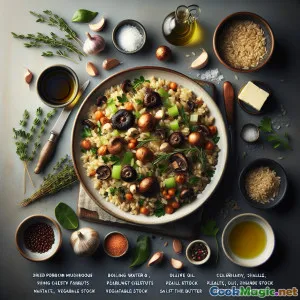
Herzhafter Farro-Pilaf mit Steinpilzen und Kastanien
(Hearty Porcini and Chestnut Farro Pilaf)
(0 Bewertungen)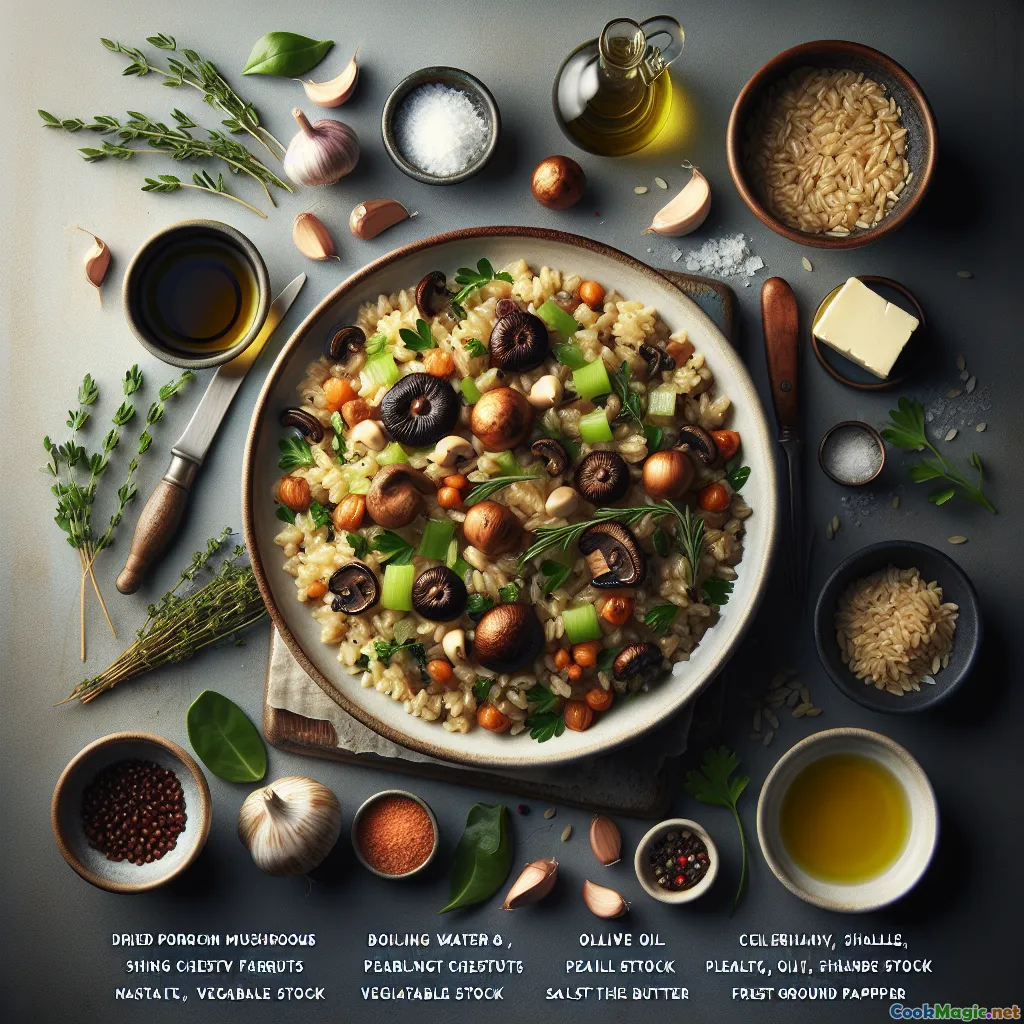
0
1,141
Juli 17, 2025
Problem melden
Zutaten
-
20 grams Getrocknete Steinpilze
(Eingeweicht und gehackt)
-
250 ml Kochen Wasser
(Zum Einweichen von Steinpilzen)
-
120 grams Fertig gekochte Maronen
(Grob gehackt)
-
200 grams Gerösteter Grünkern (geschält)
(Gründlich gespült)
-
2 tbsp Olivenöl
-
2 medium Schalotten
(Fein gewürfelt)
-
1 stick Sellerie
(Fein gewürfelt)
-
2 cloves Knoblauch
(Gehackt)
-
650 ml Gemüsebrühe
(Heiß; kann bei Bedarf durch Hühnerbrühe ersetzt werden.)
-
2 tsp Frische Thymianblätter
(Zusätzliche Portion für die Garnitur)
Glattblatt-Petersilie, a handful
-
1 tbsp Ungesalzene Butter
(Zum Verfeinern, oder vegane Butter für die vegane Version)
Salz & frisch gemahlener schwarzer Pfeffer, to taste
(Eingeweicht und gehackt)
(Zum Einweichen von Steinpilzen)
(Grob gehackt)
(Gründlich gespült)
(Fein gewürfelt)
(Fein gewürfelt)
(Gehackt)
(Heiß; kann bei Bedarf durch Hühnerbrühe ersetzt werden.)
(Zusätzliche Portion für die Garnitur)
(Zum Verfeinern, oder vegane Butter für die vegane Version)
Nährwerte
- Portionen: 4
- Portionsgröße: 1 großzügige Schüssel (250 g)
- Calories: 390 kcal
- Carbohydrates: 64 g
- Protein: 10 g
- Fat: 9 g
- Fiber: 8 g
- Sugar: 3 g
- Sodium: 720 mg
- Cholesterol: 5 mg
- Calcium: 55 mg
- Iron: 3.1 mg
Anweisungen
-
1 - Steinpilze einweichen:
Getrocknete Steinpilze in eine Schüssel geben, mit kochendem Wasser bedecken und 20 Minuten einweichen. Wenn sie wieder aufgeweicht sind, die Pilze herausnehmen, die überschüssige Flüssigkeit ausdrücken, grob hacken und das Einweichwasser beiseite stellen.
-
2 - Die Basisaromen vorbereiten:
Erhitzen Sie Olivenöl in einer breiten Kasserolle bei mittlerer Hitze. Schalotten und Sellerie mit einer Prise Salz 4-5 Minuten anbraten, bis sie weich sind.
-
3 - Knoblauch und Steinpilze hinzufügen:
Rühren Sie fein gehackten Knoblauch und fein gehackte Steinpilze unter. Kochen Sie weitere 2 Minuten, bis es aromatisch duftet.
-
4 - Den Farro rösten:
Fügen Sie das gewaschene Farro hinzu. Wenden und rühren Sie es 1–2 Minuten lang, bis die Körner leicht geröstet sind.
-
5 - Mit Steinpilzflüssigkeit ablöschen:
Seihen Sie die reservierte Steinpilz-Einweichflüssigkeit ab, um Verunreinigungen zu entfernen, und gießen Sie sie dann in die Pfanne. Kratzen Sie die goldenen Rückstände vom Pfannenboden ab, um maximalen Geschmack zu erzielen.
-
6 - Mit Brühe und Kastanien köcheln lassen.:
Fügen Sie heiße Gemüsebrühe und gehackte Kastanien zusammen mit Thymian hinzu. Würzen Sie leicht mit Salz und Pfeffer. Umrühren, zum sanften Simmern bringen und dann abdecken.
-
7 - Pilaw kochen, bis er zart ist.:
Auf kleiner Flamme köcheln lassen, dabei ein- oder zweimal umrühren, etwa 20 Minuten, bis Farro prall ist und die Flüssigkeit aufgenommen wurde. Falls nötig mehr Brühe hinzufügen, damit die Körner nur knapp bedeckt bleiben.
-
8 - Fertigstellen und ruhen lassen:
Hitze ausstellen. Die Butter (oder vegane Butter, falls gewünscht) einrühren, Würze anpassen, abdecken und 5 Minuten ruhen lassen, damit die Körner die Aromen aufnehmen.
-
9 - Servieren und Garnieren:
Fluff den Pilaf mit einer Gabel auf. Bestreue ihn mit Petersilie und extra Thymian. Servieren Sie ihn heiß als erdige Herbst-Beilage oder als vegetarisches Hauptgericht.
Getrocknete Steinpilze in eine Schüssel geben, mit kochendem Wasser bedecken und 20 Minuten einweichen. Wenn sie wieder aufgeweicht sind, die Pilze herausnehmen, die überschüssige Flüssigkeit ausdrücken, grob hacken und das Einweichwasser beiseite stellen.
Erhitzen Sie Olivenöl in einer breiten Kasserolle bei mittlerer Hitze. Schalotten und Sellerie mit einer Prise Salz 4-5 Minuten anbraten, bis sie weich sind.
Rühren Sie fein gehackten Knoblauch und fein gehackte Steinpilze unter. Kochen Sie weitere 2 Minuten, bis es aromatisch duftet.
Fügen Sie das gewaschene Farro hinzu. Wenden und rühren Sie es 1–2 Minuten lang, bis die Körner leicht geröstet sind.
Seihen Sie die reservierte Steinpilz-Einweichflüssigkeit ab, um Verunreinigungen zu entfernen, und gießen Sie sie dann in die Pfanne. Kratzen Sie die goldenen Rückstände vom Pfannenboden ab, um maximalen Geschmack zu erzielen.
Fügen Sie heiße Gemüsebrühe und gehackte Kastanien zusammen mit Thymian hinzu. Würzen Sie leicht mit Salz und Pfeffer. Umrühren, zum sanften Simmern bringen und dann abdecken.
Auf kleiner Flamme köcheln lassen, dabei ein- oder zweimal umrühren, etwa 20 Minuten, bis Farro prall ist und die Flüssigkeit aufgenommen wurde. Falls nötig mehr Brühe hinzufügen, damit die Körner nur knapp bedeckt bleiben.
Hitze ausstellen. Die Butter (oder vegane Butter, falls gewünscht) einrühren, Würze anpassen, abdecken und 5 Minuten ruhen lassen, damit die Körner die Aromen aufnehmen.
Fluff den Pilaf mit einer Gabel auf. Bestreue ihn mit Petersilie und extra Thymian. Servieren Sie ihn heiß als erdige Herbst-Beilage oder als vegetarisches Hauptgericht.
Mehr über: Herzhafter Farro-Pilaf mit Steinpilzen und Kastanien
Porcini & Chestnut Farro Pilaf: Story, Tips, and Inspiration
This Porcini & Chestnut Farro Pilaf is an inviting dish drawing upon earthy, woodland influences across British and wider European culinary tradition—bridging rural cuisine with the heart of modern vegetarian cooking. The core of the pilaf is wholesome farro, a hearty ancient grain appreciated for its bouncy, nutty texture and resistance to overcooking.
Dried porcini are prized throughout Europe, but they particularly shine in British and continental autumnal dishes, evocative of cozy forests and harvest months. Their intense savory, umami-rich taste delivers aromatic depth—combined here with the buttery sweetness of chestnuts, which appear in centuries-old English country fare. Pilafs themselves, though a staple across Eurasia, easily accommodate local crops and flavors, with Britain increasingly embracing grains like farro and barley in creative, healthy dishes.
Cultural and Seasonal Relevance
Pilafs are traditionally a reflection of regional abundance and make clever use of storeable goods, suitable for English winter pantries. Chestnuts, especially, have a festive feel in the UK, being roasted at Christmas markets, while mushrooms claim special status in English wild-foraging culture.
This dish naturally welcomes vegan and vegetarian adaptations without compromising on comfort or flavor, underlining a new wave of 'British gastronomy.' Olive oil provides the flavor-forward fat, but an optional late swirl of butter (or a non-dairy alternative) delivers additional richness for the final personality boost.
Tips for Success:
- Soaking Porcini Carefully: Always strain the soaking liquid through a coffee filter or cloth to avoid grit.
- Using Pre-Cooked Chestnuts saves a great deal of effort and keeps the nutty sweetness up front—find them vacuum packed or in jars.
- Pearled Farro is best for speed; wholegrain provides more chew if you don’t mind longer cooking.
- Substitutions: Barley is a robust stand-in for farro. Shiitake can substitute for porcini in a pinch; walnuts can partly replace chestnuts for different texture.
- Be mindful with salt, as porcini soaking liquid or commercial stocks can contribute a lot—always taste as you go.
Why This Dish Shines:
It’s both rustic and elegant, equally happy gracing a Sunday roast table as starring in a vegetarian main course. Despite the modest list of humble ingredients, it packs dimension when finished with fresh herbs—thyme and parsley lifting alongside the duskiness of mushrooms and crayons of chestnut.
Cooks’ Notes:
- Great the next day: as with risottos and grain salads, leftovers taste even better after marinating together overnight.
- Easily transportable for potlucks or work lunches.
- Pair with a robust English ale or smoky cup of lapsang souchong for a textbook autumn meal.
Historical Roots:
While pilaf has roots in ancient Persia and the Mediterranean, migrations through Europe saw it adapted to new environments—the English version embraces woodland ingredients. Farro was once far more common in British soils, and is now reclaimed by chefs for its texture and nutritive value, connecting the nation's culinary past with the green-driven cuisine of today.
Unique Aspects:
- Packs impressive protein and fiber, while keeping things plant-central.
- Brings a potent aroma and wooded character with minimal specialty shopping.
- Unusual pairing of mushrooms and chestnut against farro—a combination you won’t often find, but once tasted becomes comfort food in an instant.
Whether you're seeking a holiday side, warming weekday dinner, or creative vegetarian centerpiece, this pilaf celebrates the rich bounty of Britain's hedgerows and harvest, championing delicious tradition and new culinary invention all at once.