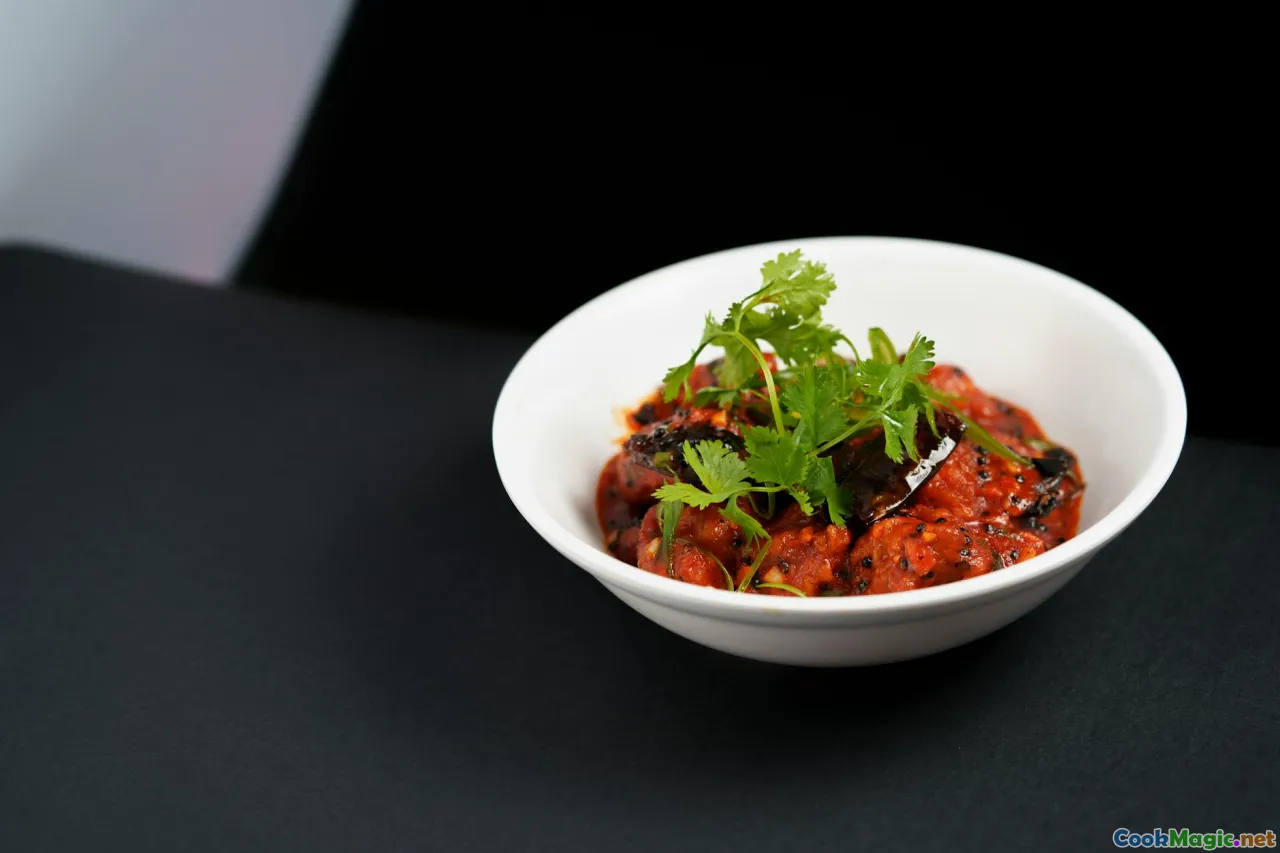
Chidambaram Auberginen-Gothsu: Säuerlicher Eintopf im Tempelstil
(Chidambaram Eggplant Gothsu: Tangy Temple-Style Stew)
(0 Bewertungen)
Portionen
Portionsgröße
Vorbereitungszeit
Kochzeit
Gesamtzeit



Kategorien
Land
Küchen
Schwierigkeitsgrad
Stimmen
0
0
Seitenaufrufe
155
155
Aktualisieren
Dezember 08, 2025
Dezember 08, 2025
Melden
Problem melden
Problem melden
Zutaten
-
400 grams Kleine lila Auberginen (Indische Aubergine)
(Choose firm, small eggplants for fewer seeds and better texture)
-
150 grams Schalotten (Sambar-Zwiebeln)
(Peeled; can substitute 1 medium red onion)
-
30 grams Tamarinde
(Soak in warm water; or use 2 tbsp tamarind concentrate)
-
600 ml Wasser
(Passen Sie die Konsistenz an, damit sie die gewünschte Konsistenz erreicht)
-
3 tbsp Sesamöl (gingelly)
(Cold-pressed gives authentic flavor)
-
1 tsp Senfsamen
(Zum Würzen)
-
1 tsp Chana dal (zum Anrösten)
(Adds nutty bite)
-
1 tsp Urad-Dal (zum Temperieren des Öls)
(Helps flavor the oil)
-
3 whole Getrocknete rote Chilischoten (zum Temperieren)
(Mild to medium heat; adjust to taste)
-
12 leaves Curryblätter
(Frisch bevorzugt)
-
1/4 tsp Asafoetida (Hing)
(Use gluten-free hing if needed)
-
1/4 tsp Kurkuma-Pulver
(Farbe und Erdigkeit)
-
1 tsp Jaggery
(Balances tamarind’s sourness)
-
1 1/4 tsp Salz
(Nach Geschmack anpassen)
-
2 tbsp Frische Korianderblätter
(Fein gehackt zum Garnieren)
-
2 tbsp Koriandersamen (für Gothsu-Pulver)
(Primary aroma in the spice blend)
-
1 tbsp Chana dal (für Gothsu-Pulver)
(Adds body and nuttiness)
-
1 tsp Urad dal (für Gothsu-Pulver)
(Balances the spice mix)
-
4 whole Getrocknete rote Chilischoten (für Gothsu-Pulver)
(Choose by heat preference)
-
1/2 tsp Schwarze Pfefferkörner (für Gothsu-Pulver)
(Adds warm heat)
-
1/4 tsp Bockshornkleesamen (für Gothsu-Pulver)
(Use sparingly; can turn bitter if over-roasted)
-
2 tsp Weiße Sesamsamen (für Gothsu-Pulver)
(Traditional in some families; adds silkiness)
-
1 whole Grüne Chilischote, längs eingeschnitten
(For fresh heat; optional)
-
1 tsp Ghee
(Finish for non-vegan version; omit to keep vegan)
(Choose firm, small eggplants for fewer seeds and better texture)
(Peeled; can substitute 1 medium red onion)
(Soak in warm water; or use 2 tbsp tamarind concentrate)
(Passen Sie die Konsistenz an, damit sie die gewünschte Konsistenz erreicht)
(Cold-pressed gives authentic flavor)
(Zum Würzen)
(Adds nutty bite)
(Helps flavor the oil)
(Mild to medium heat; adjust to taste)
(Frisch bevorzugt)
(Use gluten-free hing if needed)
(Farbe und Erdigkeit)
(Balances tamarind’s sourness)
(Nach Geschmack anpassen)
(Fein gehackt zum Garnieren)
(Primary aroma in the spice blend)
(Adds body and nuttiness)
(Balances the spice mix)
(Choose by heat preference)
(Adds warm heat)
(Use sparingly; can turn bitter if over-roasted)
(Traditional in some families; adds silkiness)
(For fresh heat; optional)
(Finish for non-vegan version; omit to keep vegan)
Nährwerte
- Portionen: 4
- Portionsgröße: 1 bowl (250 ml)
- Calories: 210 kcal
- Carbohydrates: 0 g
- Protein: 5 g
- Fat: 9 g
- Fiber: 7 g
- Sugar: 11 g
- Sodium: 780 mg
- Cholesterol: 0 mg
- Calcium: 110 mg
- Iron: 2.4 mg
Anweisungen
-
1 - Soak tamarind and prep:
Soak tamarind in 200 ml warm water for 10 minutes. Rinse and dice brinjals into 1.5 cm cubes. Peel shallots. Keep remaining water ready.
-
2 - Roast spices for gothsu powder:
Dry-roast coriander seeds, chana dal, urad dal, dried red chilies, black peppercorns, fenugreek, and sesame (if using) on low heat until fragrant and lightly golden.
-
3 - Grind spice blend:
Cool roasted spices and grind to a slightly coarse powder. Set aside; this is your gothsu podi.
-
4 - Temper aromatics:
Heat sesame oil in a pot. Splutter mustard seeds, then add chana dal, urad dal, dried red chilies, curry leaves, and a pinch of asafoetida.
-
5 - Sauté shallots and brinjal:
Add shallots and sauté until translucent. Add brinjal and turmeric; cook 3–4 minutes until edges soften and slightly color.
-
6 - Deglaze with tamarind:
Squeeze and strain tamarind into 250 ml water. Pour into pot to deglaze, scraping browned bits. Add remaining water and bring to a boil.
-
7 - Simmer Until Tender:
Reduce heat and simmer until brinjals are soft but hold shape. Lightly mash a few pieces to thicken the stew.
-
8 - Season with gothsu podi:
Stir in 2–3 tbsp gothsu podi, salt, and jaggery. Simmer 3–4 minutes for spices to bloom. Add slit green chili if using.
-
9 - Finish and Rest:
Adjust consistency with hot water if needed. Optional: swirl in ghee. Turn off heat, cover, and rest 5 minutes.
-
10 - Garnish and Serve:
Garnish with coriander leaves. Serve hot with ven Pongal, idli, dosa, or steamed rice.
Soak tamarind in 200 ml warm water for 10 minutes. Rinse and dice brinjals into 1.5 cm cubes. Peel shallots. Keep remaining water ready.
Dry-roast coriander seeds, chana dal, urad dal, dried red chilies, black peppercorns, fenugreek, and sesame (if using) on low heat until fragrant and lightly golden.
Cool roasted spices and grind to a slightly coarse powder. Set aside; this is your gothsu podi.
Heat sesame oil in a pot. Splutter mustard seeds, then add chana dal, urad dal, dried red chilies, curry leaves, and a pinch of asafoetida.
Add shallots and sauté until translucent. Add brinjal and turmeric; cook 3–4 minutes until edges soften and slightly color.
Squeeze and strain tamarind into 250 ml water. Pour into pot to deglaze, scraping browned bits. Add remaining water and bring to a boil.
Reduce heat and simmer until brinjals are soft but hold shape. Lightly mash a few pieces to thicken the stew.
Stir in 2–3 tbsp gothsu podi, salt, and jaggery. Simmer 3–4 minutes for spices to bloom. Add slit green chili if using.
Adjust consistency with hot water if needed. Optional: swirl in ghee. Turn off heat, cover, and rest 5 minutes.
Garnish with coriander leaves. Serve hot with ven Pongal, idli, dosa, or steamed rice.
Mehr über: Chidambaram Auberginen-Gothsu: Säuerlicher Eintopf im Tempelstil
A tangy, smoky eggplant stew from Chidambaram, perfect with ven Pongal or idli.
What is Chidambaram Kathirikai Gothsu?\nChidambaram Kathirikai Gothsu is a tangy, temple-style eggplant stew from the temple town of Chidambaram in Tamil Nadu, India. “Kathirikai” means eggplant (brinjal), and “gothsu” refers to a lightly thickened, tamarind-forward gravy perfumed with a distinctive roasted spice blend. It is the traditional soulmate of ven Pongal (a creamy rice-lentil porridge), but it also pairs beautifully with idli, dosa, and even plain steamed rice.\n\n## What Makes the Chidambaram Version Special\nWhile many regions prepare “gotsu/gothsu,” the Chidambaram style is revered for a few unique touches:\n\n- A custom roasted spice blend (gothsu podi) built on coriander seeds, dals, chilies, and a whisper of fenugreek for complexity.\n- Gingelly (sesame) oil, which lends a nutty aroma and silkiness that suits eggplant.\n- The use of small, purple brinjals that soften into the stew, some cubes mashing into a velvety base while others remain intact for texture.\n- A balanced triad of sour (tamarind), heat (chilies, pepper), and a shy sweetness (often jaggery) that rounds the dish.\n\n## Flavor and Texture\nExpect a bright, tangy backbone from tamarind, lifted by the roasted warmth of coriander and pepper. The curry leaves, mustard, and dals in the tempering bring crackle and nuttiness. The final texture should be spoonable and glossy—not too thick like chutney, not too thin like sambar. It’s meant to hug each mouthful of Pongal.\n\n## Tips for Success\n- Choose small, firm brinjals: They have fewer seeds and better structure. If using larger eggplants, slice into even cubes and soak briefly in salted water to reduce bitterness and browning.\n- Roast spices patiently: Keep heat low. Fenugreek burns easily; the goal is fragrant and lightly golden, never dark.\n- Control sourness: Tamarind varies. Start with the recipe quantity, then adjust at the end if needed. A teaspoon of jaggery can transform sharp sourness into a rounded tang.\n- Texture insurance: Lightly mash a few cooked brinjal pieces in the pot. This naturally thickens without flour or starch.\n- Sesame oil matters: Gingelly oil is more than tradition—it amplifies the nutty profile and ties the spices together.\n- Vegan and gluten-free: The recipe is naturally both, provided you use gluten-free asafoetida. Skip ghee to keep it fully vegan.\n\n## Serving Suggestions\n- Classic: Ladle over hot, ghee-scented ven Pongal.\n- Tiffin favorites: Serve with idli or dosa for a tangy counterpoint.\n- Rice bowl: Spoon over steamed rice with a drizzle of sesame oil.\n\n## Variations You Can Try\n- Tomato lift: Add one small chopped tomato with the brinjals for a fruitier tang.\n- Smoky edge: Char whole brinjals over an open flame, peel, and roughly chop before simmering for a subtle smokiness.\n- Spice tweak: Swap some dried red chilies for Byadagi (for color and mild heat) or Guntur (for sharper heat).\n- Sesame-in: Some households include sesame seeds in the gothsu podi for extra richness—try and see which you prefer.\n- Instant Pot method: Sauté tempering and veggies on Sauté mode, add tamarind water and spices, pressure cook 2 minutes, quick release, and finish with gothsu podi on Sauté.\n\n## Cultural Notes\nChidambaram is home to the iconic Nataraja temple, a center of Saivite devotion and temple cuisine. Dishes like gothsu evolved to be humble, soulful, and easily scaled for large congregations. They spotlight pantry staples—dals, chilies, and spices—crafted into a dish that tastes far greater than the sum of its parts. Gotham-like, gothsu stands in for sambar when a lighter, tang-forward side is desired, especially at breakfast alongside Pongal.\n\n## Make-Ahead, Storage, and Reheating\n- Make-ahead: The gothsu podi keeps for 2–3 weeks in an airtight jar; it’s a fantastic flavor booster for quick curries.\n- Storage: The prepared gothsu keeps 3–4 days refrigerated. The sour profile actually melds beautifully by day two.\n- Reheat: Warm gently on the stovetop, adding a splash of hot water if it has thickened.\n\n## Why You’ll Love It\nChidambaram Kathirikai Gothsu is a masterclass in balance and restraint: no overload of spices, no heavy lentils—just a clean, vibrant stew that wakes up the palate. If you love dishes that feel both comforting and bright, this temple-town classic belongs in your rotation. With its minimal prep and mostly pantry ingredients, it’s as practical for weeknights as it is festive for Pongal mornings.\n\n## Chef’s Notes\n- Salt early, taste late: Brinjals love salt; season the pot, then fine-tune after adding the spice blend.\n- Don’t skip the rest: A brief covered rest merges the spice notes and softens the edges of the tamarind.\n- Garnish judiciously: Coriander adds freshness but can overpower if heavy-handed—sprinkle, don’t blanket.\n\nIn a world of complex curries, this gothsu’s elegance lies in its intention: clarity of flavor, balance of sour and spice, and the quietly luxurious mouthfeel that only brinjal and sesame oil can create.
Bewerte das Rezept
Kommentar und Rezension hinzufügen
Benutzerrezensionen
Basierend auf 0 Rezensionen
Noch keine Rezensionen hinzugefügt.
Kommentare werden nicht zur Veröffentlichung freigegeben, wenn sie SPAM sind, beleidigend oder themenfremd sind, Schimpfwörter verwenden, persönliche Angriffe enthalten oder Hass jeglicher Art fördern.