مشوى الإلك من جامع الغذاء مع توت العرعر وصلصة المقلاة الغابية
(Forager’s Juniper Elk Roast with Forest Pan Sauce)
(0 المراجعات)


المكونات
-
1.5 kg لحم Elk مشوي (من المنطقة العلوية للفخذ أو الأرداف)، مقطع ومزيل
(Sub venison or beef sirloin if unavailable)
-
2 tbsp ثمار العرعر، مهروسة بلطف
(Gives piney, resinous aroma)
-
2.5 tsp ملح كوشير
(اضبط حسب الذوق)
-
1.5 tsp فلفل أسود مطحون طازجًا
(Coarse grind preferred)
-
6 sprigs فروع الزعتر الطازج
(Sub rosemary if preferred)
-
5 cloves فصوص الثوم المهروسة
(Do not mince; prevents burning)
-
1 tbsp قشر البرتقال المبشور ناعماً
(Adds brightness against gamey flavors)
-
60 ml أكوفيت أو جين جاف
(Amplifies juniper; sub extra stock if avoiding alcohol)
-
2 tbsp زيت الزيتون
(For searing)
-
2 tbsp زبدة غير مملحة
(For sautéing and mounting sauce)
-
1 large بصل أصفر، مقطع شرائح
(Forms aromatic roasting bed)
-
3 medium جزر مقطع إلى مكعبات
(Sweetens the jus)
-
2 stalks سيقان الكرفس مقطوعة إلى مكعبات
(Classic mirepoix balance)
-
2 leaves أوراق الغار
(Earthy depth)
-
200 grams فطر بري (chanterelles أو مزيج)، نظيف
(Sub cremini if needed)
-
500 ml مرق لحم بقري أو لعبة منخفض الصوديوم
(Base for pan sauce)
-
120 grams التوت البري أو لينجونبيري
(Tart counterpoint)
-
1 tbsp خل التفاح
(Brightens the sauce)
-
1 tsp سكر بني أو عسل
(توازن حموضة التوت)
-
1 tbsp أطراف التنوب أو إبر إكليل الجبل، مفرومة ناعماً
(Adds foresty freshness)
-
2 tsp نشا الذرة
(For slurry thickening)
-
2 tbsp ماء بارد
(To mix with cornstarch)
-
0.5 tsp رقائق ملح البحر، للاستخدام عند التقديم
(Optional final seasoning)
(Sub venison or beef sirloin if unavailable)
(Gives piney, resinous aroma)
(اضبط حسب الذوق)
(Coarse grind preferred)
(Sub rosemary if preferred)
(Do not mince; prevents burning)
(Adds brightness against gamey flavors)
(Amplifies juniper; sub extra stock if avoiding alcohol)
(For searing)
(For sautéing and mounting sauce)
(Forms aromatic roasting bed)
(Sweetens the jus)
(Classic mirepoix balance)
(Earthy depth)
(Sub cremini if needed)
(Base for pan sauce)
(Tart counterpoint)
(Brightens the sauce)
(توازن حموضة التوت)
(Adds foresty freshness)
(For slurry thickening)
(To mix with cornstarch)
(Optional final seasoning)
التغذية
- الحصص: 6
- حجم الحصة: 1 slice with sauce (220g)
- Calories: 420 kcal
- Carbohydrates: 0 g
- Protein: 48 g
- Fat: 18 g
- Fiber: 3 g
- Sugar: 6 g
- Sodium: 680 mg
- Cholesterol: 150 mg
- Calcium: 60 mg
- Iron: 6.5 mg
التعليمات
-
1 - Season and marinate:
Pat the elk dry. Rub with crushed juniper, salt, pepper, thyme, smashed garlic, and orange zest. Splash with aquavit (or a spoon of stock). Cover and marinate at room temp 25 minutes, or refrigerate up to 4 hours.
-
2 - Preheat and sear:
Preheat oven to 180°C (355°F). Heat olive oil in a heavy oven-safe skillet or roasting pan over medium-high. Sear elk on all sides until well browned, 2–3 minutes per side.
-
3 - Build an aromatic bed:
Scatter onion, carrot, celery, and bay leaves in the pan. Set the seared roast on top so air and heat can circulate. This keeps the underside from stewing.
-
4 - Deglaze:
Pour in any remaining aquavit and enough stock to make a shallow bath (about 500 ml total liquid). Scrape up browned bits to dissolve into the jus.
-
5 - Roast to temperature:
Roast until the thickest part reads 54–55°C (130°F) for medium-rare, 60–65°C (140–149°F) for medium. Begin checking at 45 minutes; baste once or twice with pan juices.
-
6 - Sauté Mushrooms:
While the roast cooks, sauté mushrooms in 1 tbsp butter with a pinch of salt until golden and fragrant, 6–8 minutes. Reserve for the sauce.
-
7 - Rest the roast:
Transfer elk to a warm plate and tent loosely with foil. Rest 10 minutes to redistribute juices. Strain pan juices into a saucepan; discard spent aromatics.
-
8 - Make forest pan sauce:
Simmer strained juices with berries and vinegar until berries burst, 5 minutes. Stir in brown sugar if using. Whisk cornstarch with cold water, drizzle in to lightly thicken. Off heat, whisk in remaining 1 tbsp butter, the sautéed mushrooms, and chopped spruce tips. Season to taste.
-
9 - Slice:
Slice the elk across the grain into 1–1.5 cm slices. Sprinkle with sea salt flakes to finish.
-
10 - Serve:
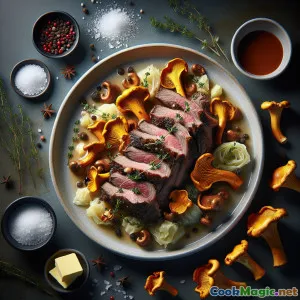
Spoon sauce onto warmed plates, top with elk slices, and finish with a few crushed juniper berries or fresh herbs if desired. Serve with buttered root vegetables or rye bread.
Pat the elk dry. Rub with crushed juniper, salt, pepper, thyme, smashed garlic, and orange zest. Splash with aquavit (or a spoon of stock). Cover and marinate at room temp 25 minutes, or refrigerate up to 4 hours.
Preheat oven to 180°C (355°F). Heat olive oil in a heavy oven-safe skillet or roasting pan over medium-high. Sear elk on all sides until well browned, 2–3 minutes per side.
Scatter onion, carrot, celery, and bay leaves in the pan. Set the seared roast on top so air and heat can circulate. This keeps the underside from stewing.
Pour in any remaining aquavit and enough stock to make a shallow bath (about 500 ml total liquid). Scrape up browned bits to dissolve into the jus.
Roast until the thickest part reads 54–55°C (130°F) for medium-rare, 60–65°C (140–149°F) for medium. Begin checking at 45 minutes; baste once or twice with pan juices.
While the roast cooks, sauté mushrooms in 1 tbsp butter with a pinch of salt until golden and fragrant, 6–8 minutes. Reserve for the sauce.
Transfer elk to a warm plate and tent loosely with foil. Rest 10 minutes to redistribute juices. Strain pan juices into a saucepan; discard spent aromatics.
Simmer strained juices with berries and vinegar until berries burst, 5 minutes. Stir in brown sugar if using. Whisk cornstarch with cold water, drizzle in to lightly thicken. Off heat, whisk in remaining 1 tbsp butter, the sautéed mushrooms, and chopped spruce tips. Season to taste.
Slice the elk across the grain into 1–1.5 cm slices. Sprinkle with sea salt flakes to finish.
Spoon sauce onto warmed plates, top with elk slices, and finish with a few crushed juniper berries or fresh herbs if desired. Serve with buttered root vegetables or rye bread.
المزيد عن : مشوى الإلك من جامع الغذاء مع توت العرعر وصلصة المقلاة الغابية
Why this recipe works
Forager’s Juniper Elk Roast is a celebration of the Nordic forest in one dish: lean, clean-tasting elk; the piney, citrus-resin notes of crushed juniper; and a glossy pan sauce laced with wild mushrooms and tart berries. Elk (called “elg” in Scandinavia, often referring to what North Americans call moose) is naturally lean, so the key is to coax deep flavor while protecting tenderness. A short aromatic marinade seasons the surface and perfumes the meat without drawing out moisture. Hard searing builds a savory crust, and a moderate oven finishes the roast gently. Resting allows the meat’s juices to redistribute, while the pan sauce unites everything: stock for body, berries for brightness, vinegar for lift, and butter for silk.
Flavor profile and texture
- Juniper brings the unmistakable scent of evergreen, with peppery and citrusy undertones that harmonize with thyme and garlic.
- Aquavit (or gin) subtly echoes the juniper and caraway notes often found in Nordic spirits; it evaporates during cooking, leaving a nuanced aroma. Stock can replace it entirely if you prefer to avoid alcohol.
- The sauce strikes a forest balance: savory roasted drippings, earthy mushrooms, bright berries, and a final gloss of butter. The result is refined yet rustic.
Tips and notes
- Sourcing meat: If elk is unavailable, venison or a well-trimmed beef sirloin/eye of round works beautifully. Choose a roast with even thickness for predictable cooking.
- Don’t over-marinate: Juniper is potent; 25 minutes at room temperature or up to 4 hours chilled is plenty. Longer can make flavors overly resinous.
- Temperature targets: For the juiciest slices, aim for 54–55°C (130°F) for medium-rare or up to 60–62°C (140–144°F) for medium. Elk is lean and can dry if taken higher. Always use a reliable instant-read thermometer.
- Pan choice: A heavy, oven-safe skillet or roasting pan ensures an excellent sear and steady oven heat. Cast iron is ideal.
- Smart timing: While the roast cooks, sauté the mushrooms and set the table. You’ll finish the sauce during the brief resting window so dinner arrives hot.
- Berries: Lingonberries are most traditional in Scandinavia, but cranberries provide a similar zing. Frozen berries work; adjust sweetener to taste.
- Thickening: A light cornstarch slurry gives the sauce a restaurant-quality coat. Keep it subtle—you want gloss, not gravy.
- Herbs: Spruce tips, when in season, add a delicate citrus-pine freshness. If unavailable, use finely chopped rosemary or a little extra thyme.
- Alcohol-free: Skip aquavit/gin and deglaze with stock plus a teaspoon of orange juice for brightness.
- Make-ahead: Season and marinate up to 4 hours in advance. Slice just before serving to retain heat and moisture.
Cultural backdrop
In the Nordic countries, game cookery is a thread running from subsistence hunting to contemporary fine dining. Juniper has long flavored preserved meats and celebratory roasts, prized for its ability to cut richness and neutralize gamey notes. Lingonberries, too, are a classic counterpart—tart, vibrant, and abundant in boreal forests. This dish draws on that heritage, but it’s designed for a modern kitchen: manageable steps, grocery-store substitutions, and a sauce that respects tradition without being heavy.
Unique aspects
- Forest-to-table synergy: Juniper, mushrooms, and berries mirror the elk’s natural habitat, creating a sense of place on the plate.
- Lean-meat strategy: A structured approach—sear, moderate roast, rest, and sauce—keeps elk succulent, a common challenge with game.
- Flexible and inclusive: Alcohol-free and substitution options ensure no one misses out on the experience.
Serving suggestions
- Pair with buttered mash of celeriac and potato, roasted parsnips, or a nutty barley pilaf. A crisp fennel and apple salad adds freshness.
- Drinks: A foresty, pine-kissed gin and tonic (or non-alcoholic juniper tonic) sings with the dish. For wine, try a cool-climate Pinot Noir, Blaufränkisch, or a savory Nebbiolo. Malty ales or a spruce-tip saison are also excellent.
Foragers’ ethics and safety
If you gather your own ingredients, harvest responsibly: identify mushrooms with certainty, snip spruce tips selectively, and pick berries from clean areas. With game meats, source from reputable hunters or butchers and handle with the same care you would fine beef.
Troubleshooting
- Roast is dry: It likely overshot temperature. Next time, begin probing early and pull 2–3°C before your target; carryover heat will finish the job.
- Sauce too sharp: Simmer an extra minute to mellow vinegar, or add a knob of butter and a teaspoon more stock.
- Not enough juniper character: Lightly crush a few additional berries and stir into the sauce off heat for a fragrant bump.
Final thoughts
This roast evokes a crisp walk through conifer stands at dusk—the hush, the resin in the air, the vivid pop of berries underfoot. It’s refined enough for a winter holiday table yet sturdy enough for a cabin supper with friends, and it invites conversation about place, season, and the pleasures of cooking with what the landscape offers.