Lovo 烤芋头盛宴:一个烟熏的岛屿传统
(Lovo Roasted Taro Feast: A Smoky Island Tradition)
(0 评论)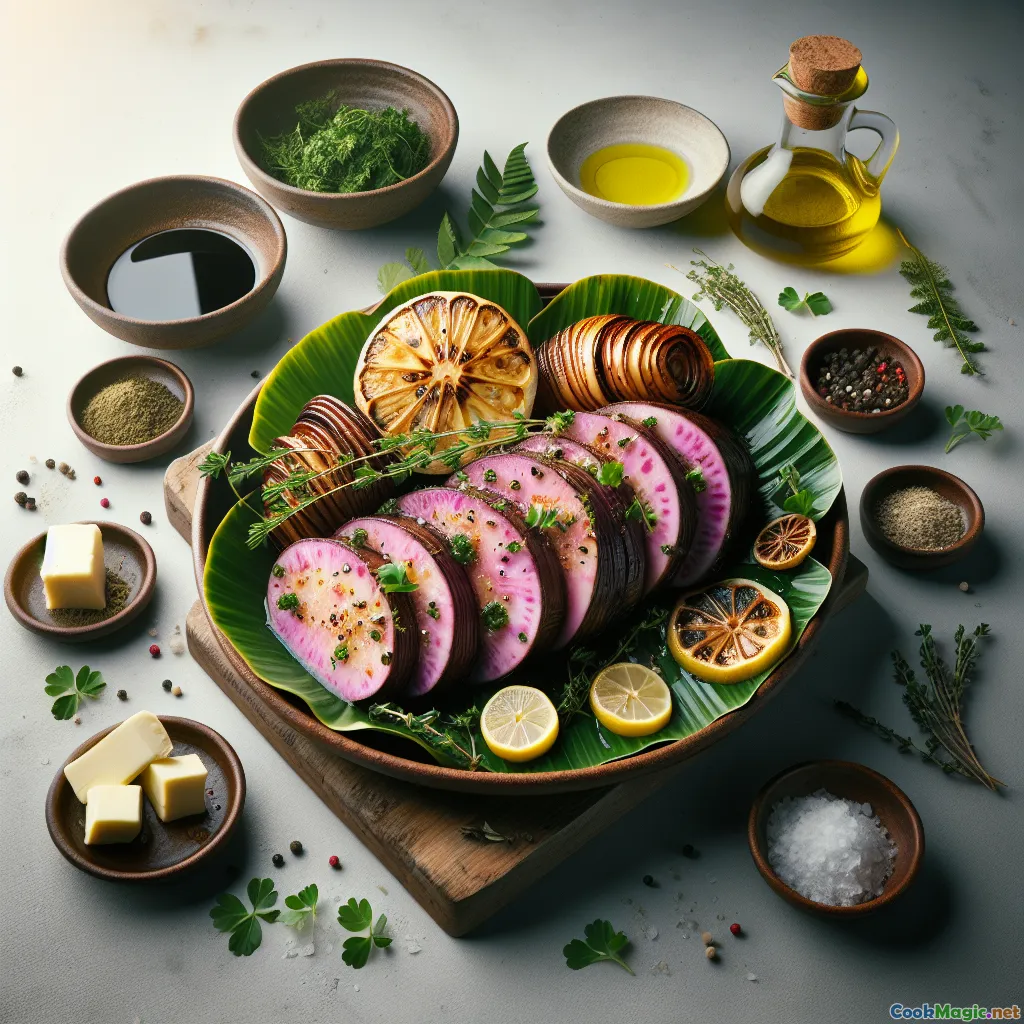

食材
营养
- 份量: 4
- 每份大小: 1盘(250克)
- Calories: 370 kcal
- Carbohydrates: 0 g
- Protein: 4 g
- Fat: 12 g
- Fiber: 7 g
- Sugar: 2 g
- Sodium: 650 mg
- Cholesterol: 8 mg
- Calcium: 65 mg
- Iron: 1.5 mg
制作步骤
-
1 - 准备芋头:
洗净、去皮,将芋头切成大小相同的大块。拍干表面,以确保烤制均匀。
-
2 - 腌制:
在一个大碗中,将芋头块与橄榄油、熏制海盐、黑胡椒拌匀,如使用可加入柠檬皮屑。腌制以获得最大风味。
-
3 - 准备香蕉叶:
快速在火焰上焯一下香蕉叶或在火上加热使其变软。擦干净并切成大块以便包裹。
-
4 - 为烤制做好准备:
在工作台面上摊开香蕉叶。把半量的百里香放在中间,把腌制过的芋头摆在上面,在上面点上黄油,撒上剩余的百里香,并把它打包成紧实的包裹。
-
5 - 洛沃式烤肉:
将烤箱预热至200°C(390°F)。把香蕉叶包放在烤盘上。烤70分钟,翻面一次,直到芋头变软并散发香气。
-
6 - 上菜:
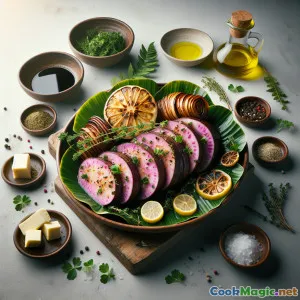
小心地打开包装,轻轻摆盘,淋上额外的橄榄油,并撒上切碎的欧芹。趁热享用,作为丰盛的主菜或配菜。
洗净、去皮,将芋头切成大小相同的大块。拍干表面,以确保烤制均匀。
在一个大碗中,将芋头块与橄榄油、熏制海盐、黑胡椒拌匀,如使用可加入柠檬皮屑。腌制以获得最大风味。
快速在火焰上焯一下香蕉叶或在火上加热使其变软。擦干净并切成大块以便包裹。
在工作台面上摊开香蕉叶。把半量的百里香放在中间,把腌制过的芋头摆在上面,在上面点上黄油,撒上剩余的百里香,并把它打包成紧实的包裹。
将烤箱预热至200°C(390°F)。把香蕉叶包放在烤盘上。烤70分钟,翻面一次,直到芋头变软并散发香气。
小心地打开包装,轻轻摆盘,淋上额外的橄榄油,并撒上切碎的欧芹。趁热享用,作为丰盛的主菜或配菜。
关于 Lovo 烤芋头盛宴:一个烟熏的岛屿传统 :的更多信息
Lovo Roasted Taro Feast: A Modern Island Comfort Delivered through English Flair
From the lush green islands of the Pacific comes the ancient art of lovo – an earth oven cooking style centered around smoking roots, seafood, and hearty vegetables in a slow-cooked marvel reminiscent of a grand campfire feast. Taro, a starchy and beloved root prized across the world for its nutty taste and silky-smooth flesh, is spotlighted here in this imaginative English twist: Lovo Roasted Taro Feast. Trading volcanic soil for the conventional stovetop and baking tray, this recipe pays homage to Fijian culture while applying familiar Western culinary elements, resulting in one of the most comforting, earthy, and hearty vegetarian mains currently found at the crossroads of cuisine.
The History and Tradition Behind Lovo and Taro
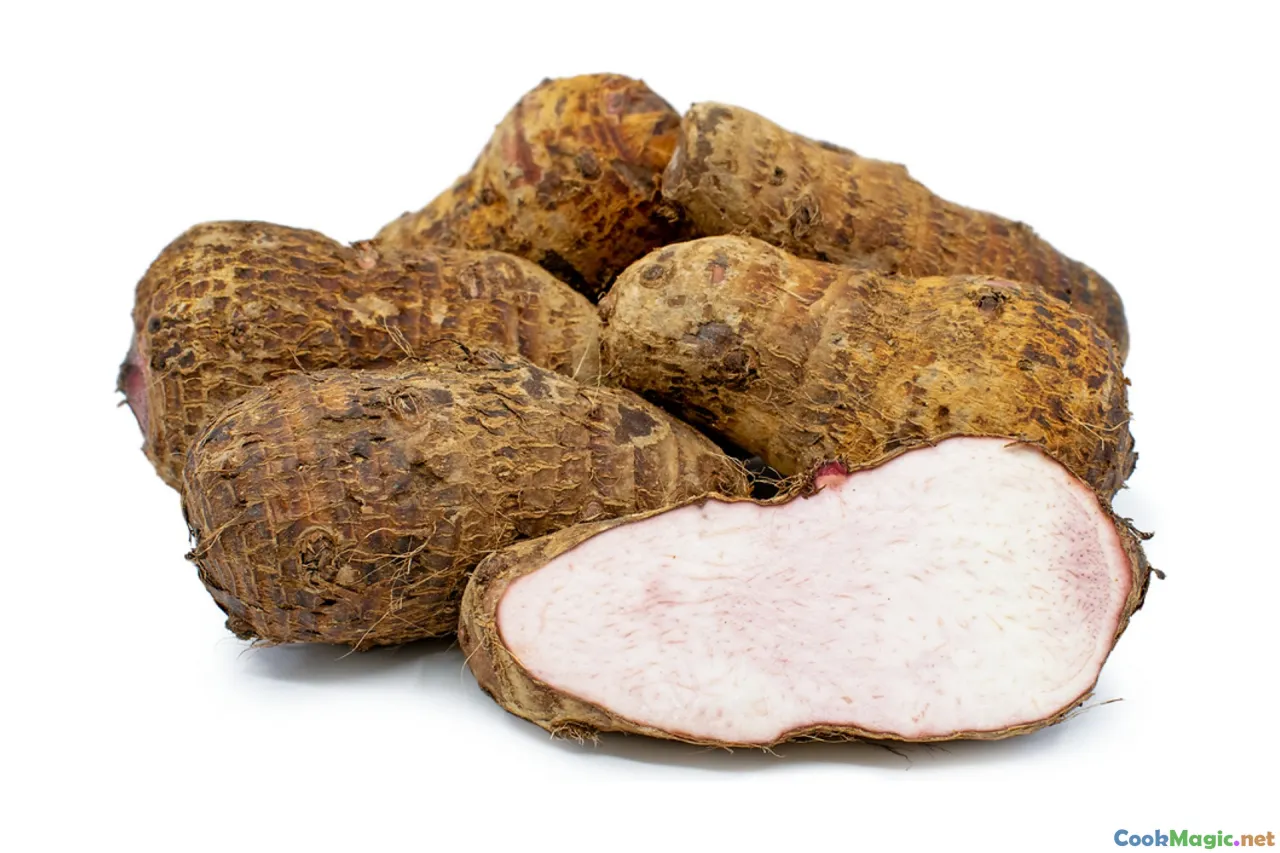
Fijian and wider Melanesian cuisine deeply celebrates the process of slow-cooking food over heated rocks in subterranean ovens buried beneath layers of banana and taro leaves. Historically, gatherings marked by lovo represent togetherness, story-exchange, and feast – not merely eating, but a ritual of patience and anticipation. Taro (known also as "cocoyam" or "dasheen") constitutes an essential energy food and is legendary for its uniquely dense, almost creamy texture when properly gentle-roasted or slow-steamed.
Modernizing the Lovo for the Home Kitchen
While not everyone has a volcanic rock oven or access to earth ovens, the technique of steaming and smoking within leafy parcels translates beautifully to a British or any global kitchen equipped with an oven. Banana leaves, sourced from specialty food markets or Asian groceries, import a gentle grassy perfume to replace the missing embers. Olive oil and infused thyme add English countryside flavors, morphing the native island formula into something soulful for a London Sunday lunch or rural gathering.
Tips, Notes, and Unique Touches
- Banana leaf prep: If unavailable, food-grade parchment or corn husks perform reliably, albeit with less aroma.
- Taro preparatory note: Don't skip drying well before roasting; this ensures textural perfection. Those unused to taro should note to avoid any with pink or purple blotches after cutting, as this hints at spoilage.
- Thyme vs. Rosemary: Classic lovo rarely deploys Western herbs; including them here sweetly acknowledges the British countryside.
- Smoky seasoning: The addition of British-style smoked sea salt, inspired by lovo's earthy vapor, replicates the gusty tang left behind by smoky embers.
- Pairing: Offer with herbed yogurt sauce or a lush watercress salad for further Anglo flavor blending.
- Culturally conscious: While this dish is a playful fusion, partake with awareness of lovo's origin as a communal rite.
Unique Aspects and Personal Thoughts:
What distinguishes Lovo Roasted Taro Feast from standard roasted root vegetables is how it transforms simplicity into spectacle: smoke, herbs, and slick green fragrance invite rustic theater to the table, encouraging guests to participate in the ceremonial unwrapping of piping parcels. More than a side, taro ascends to celebration status—a focus for vegetarian feasters and lovers of rare starches seeking the familiar hug of roasted potatoes made new.
Consider serving at countryside gatherings or rain-drenched autumn meals. With every mouthful earthy and moist, flecked with bursts of citrusess and perfume, this recipe roots you not just in place, but in the loving practice of globalism through food. Experiment by tucking other root treasures—parsnip or purple yam will also behave beautifully—for an engaging riff. Embracing humble taro's slow metamorphosis is an invitation to savor the deep connections found in both Pacific tradition and English hospitality.
In a world increasingly defined by borrowed customs and cross-cultural feasts, Lovo Roasted Taro Feast celebrates solidarity, innovation, and the elemental comfort found at the heart of human gatherings.