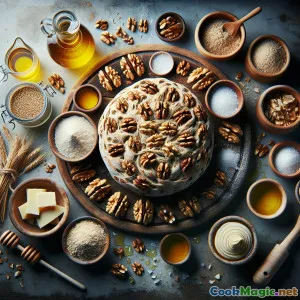
Bánh Mì Châu Phi Podhale Đen và Quả Hồ Tràm
(Emerald Podhale Rye & Walnut Country Bread)
(0 Đánh giá)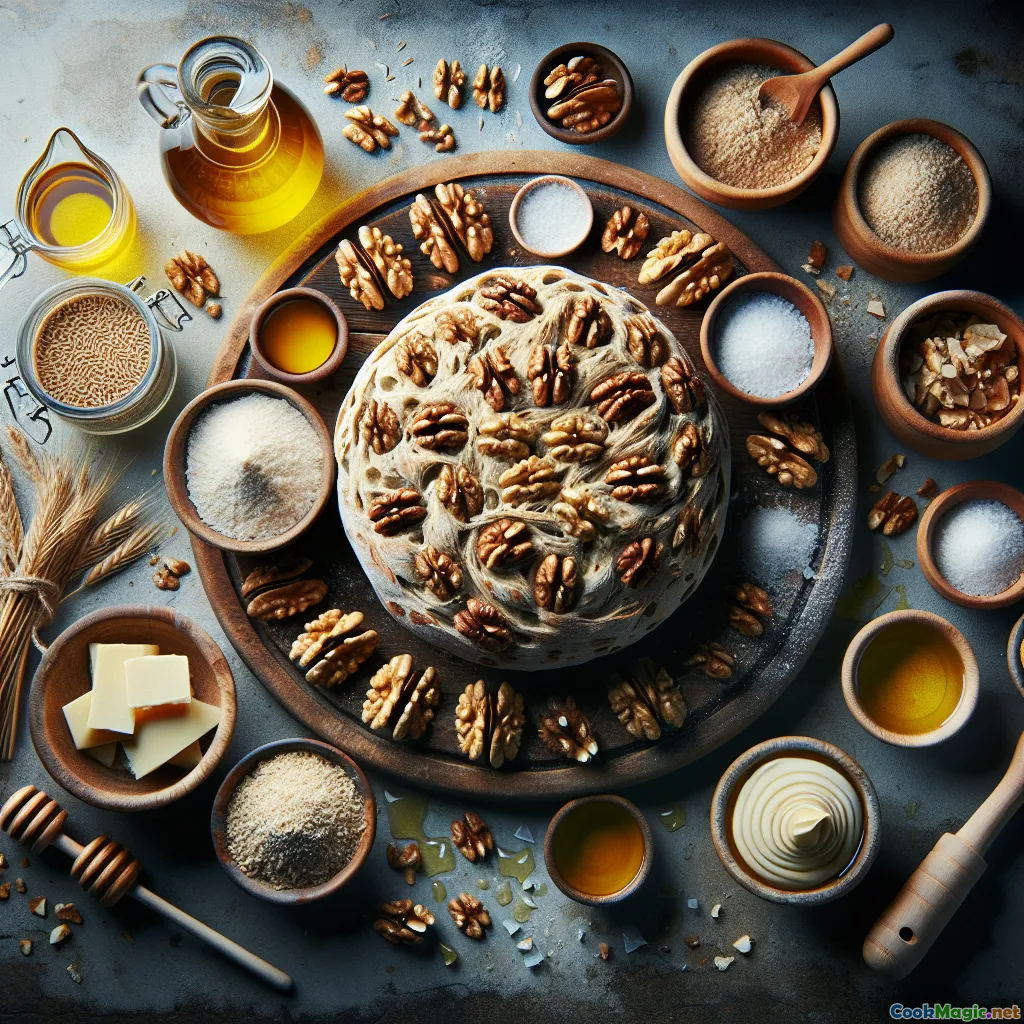


0
3,332
tháng 7 17, 2025
Báo cáo sự cố
Nguyên liệu
-
300 grams Bột mì đen
(Bột lúa mạch đen xay bằng đá hoặc lúa mạch đen nguyên cám)
-
200 grams Bột mì làm bánh mì
(Bột mì trắng có hàm lượng protein cao để tạo cấu trúc)
-
100 grams Lạc vỡ
(Thái nhỏ)
-
2 teaspoons Hạt thì là
(Tùy chọn nhưng truyền thống)
-
7 grams Men khô hoạt tính
(1 gói tiêu chuẩn)
-
10 grams Muối biển
(Muối biển mịn, ưu tiên loại tốt)
-
1 tablespoon Mật ong
(Thêm độ sâu và vị ngọt dịu; dùng xi rô cây phong làm chất thay thế.)
-
350 ml Nước ấm
(Khoảng 38–40°C để kích hoạt men nở.)
-
1 tablespoon Dầu ô liu
(Giúp duy trì độ ẩm và lên màu vỏ bánh)
(Bột lúa mạch đen xay bằng đá hoặc lúa mạch đen nguyên cám)
(Bột mì trắng có hàm lượng protein cao để tạo cấu trúc)
(Thái nhỏ)
(Tùy chọn nhưng truyền thống)
(1 gói tiêu chuẩn)
(Muối biển mịn, ưu tiên loại tốt)
(Thêm độ sâu và vị ngọt dịu; dùng xi rô cây phong làm chất thay thế.)
(Khoảng 38–40°C để kích hoạt men nở.)
(Giúp duy trì độ ẩm và lên màu vỏ bánh)
Dinh dưỡng
- Khẩu phần: 8
- Kích thước khẩu phần: 1/8 ổ bánh (khoảng 75 g)
- Calories: 224 kcal
- Carbohydrates: 39 g
- Protein: 6 g
- Fat: 5 g
- Fiber: 4 g
- Sugar: 2 g
- Sodium: 295 mg
- Cholesterol: 0 mg
- Calcium: 22 mg
- Iron: 1.4 mg
Hướng dẫn
-
1 - Kích hoạt Men:
Trộn men và mật ong (nếu dùng) vào nước ấm. Để yên trong 10 phút cho đến khi nổi bọt.
-
2 - Kết hợp các nguyên liệu khô:
Trong một bát lớn, trộn bột lúa mạch đen, bột mì làm bánh mì, muối và hạt caraway (nếu dùng).
-
3 - Nhào Bột:
Rót hỗn hợp men nở và dầu ôliu (nếu dùng) lên trên các nguyên liệu khô. Khuấy bằng thìa chắc cho đến khi hòa quyện.
-
4 - Thêm hạt óc chó, nhào:
Trộn quả óc chó. Đặt khối bột lên mặt bàn rải một lớp bột mì mỏng và nhào cho đến khi mịn (7–10 phút).
-
5 - Ủ Chữ Đầu Tiên:
Đặt bột vào một bát đã được quét dầu. Phủ kín và để nở ở nơi không có gió lùa cho đến khi bột tăng gấp đôi (khoảng 2 giờ).
-
6 - Định hình và ủ lần hai:
Đấm xẹp bột xuống, vê thành một chiếc bánh mì tròn. Đặt lên giấy nướng hoặc vào giỏ ủ có rắc bột. Phủ kín và để bột nở cho phồng lên, khoảng 1,5 giờ.
-
7 - Làm nóng lò:
Trong giai đoạn lên men cuối cùng, làm nóng lò ở 230°C (446°F) và để sẵn nồi gang có nắp ở bên trong.
-
8 - Khía và nướng:
Nhẹ nhàng chuyển bột nhào vào nồi gang Hà Lan nóng; rắc thêm bột mì lên trên và khía mặt trên. Đậy nắp và nướng 35 phút, sau đó mở nắp và hoàn tất nướng thêm 10 phút để có vỏ bánh dày.
-
9 - Làm nguội và phục vụ:
Lấy bánh ra, để nguội trên rack lưới ít nhất 30 phút trước khi cắt để hoàn thiện kết cấu.
Trộn men và mật ong (nếu dùng) vào nước ấm. Để yên trong 10 phút cho đến khi nổi bọt.
Trong một bát lớn, trộn bột lúa mạch đen, bột mì làm bánh mì, muối và hạt caraway (nếu dùng).
Rót hỗn hợp men nở và dầu ôliu (nếu dùng) lên trên các nguyên liệu khô. Khuấy bằng thìa chắc cho đến khi hòa quyện.
Trộn quả óc chó. Đặt khối bột lên mặt bàn rải một lớp bột mì mỏng và nhào cho đến khi mịn (7–10 phút).
Đặt bột vào một bát đã được quét dầu. Phủ kín và để nở ở nơi không có gió lùa cho đến khi bột tăng gấp đôi (khoảng 2 giờ).
Đấm xẹp bột xuống, vê thành một chiếc bánh mì tròn. Đặt lên giấy nướng hoặc vào giỏ ủ có rắc bột. Phủ kín và để bột nở cho phồng lên, khoảng 1,5 giờ.
Trong giai đoạn lên men cuối cùng, làm nóng lò ở 230°C (446°F) và để sẵn nồi gang có nắp ở bên trong.
Nhẹ nhàng chuyển bột nhào vào nồi gang Hà Lan nóng; rắc thêm bột mì lên trên và khía mặt trên. Đậy nắp và nướng 35 phút, sau đó mở nắp và hoàn tất nướng thêm 10 phút để có vỏ bánh dày.
Lấy bánh ra, để nguội trên rack lưới ít nhất 30 phút trước khi cắt để hoàn thiện kết cấu.
Thông tin thêm về: Bánh Mì Châu Phi Podhale Đen và Quả Hồ Tràm
Introduction
Podhale Rye and Walnut Rustic Bread is a tribute to rustic Eastern European country loaves, inspired by the earthy harvests and simple but profound home baking traditions of the Podhale region in southern Poland. This bread encapsulates Old World culinary wisdom—a time when bread was nourishment, centerpiece, and pride for rural families across Polish highlands.
The heady aroma of rye, pulsing with nutty sweetness from walnuts and a brush of caraway, harkens back to bread you’d encounter in mountain village markets or alongside cheese and mushroom stews shared at timber-clad inns. What makes this recipe unique is its blend of rich rye with wheat, providing an accessible crumb for modern bakers without losing Old Country character. The addition of walnuts not only amplifies texture but harnesses Podhale’s tradition of foraging for nuts and herbs.
Tips, Notes & Substitutions
- Flour: Always use the best-quality rye flour you can get; stone-ground gives an authentic, earthy taste and solid nutrition. In a pinch, dark rye can be blended with all-purpose, but ratios may need tweaking as rye absorbs more moisture.
- Nuts: Walnuts should be coarsely chopped; their visiting crunch provides dynamic mouthfeel in each bite. If walnuts aren’t available, hazelnuts (common to Carpathia) are a tasty substitute.
- Crust: For an extra crisp, crackly crust, bake the bread in a pre-heated Dutch oven and leave the lid off for the final 10 minutes for deeper color—and a mesmerizing aroma.
- Salt & Sweeteners: Finer salt disperses better; honey isn’t vital but disguises the sometimes-acidic rye and boosts browning. Maple syrup lends a smoky undertone.
- Caraway: While optional, caraway is time-honored in Central European rye loaves and lends an unmistakeable tingle and deformal bread-smell many Eastern Europeans associate with home.
History & Cultural Significance
In the foothills of the Tatra mountains, bread is more than a daily bake. Once a way of life for highlanders—shepherds, cheese makers, artisans—the Podhale region’s dark breads fueled their hard, windy, communal living. Grain had to be stretched; supplements like mashed potato, seeds, and sometimes whatever orchard windfall (namely walnuts) could enrich sparse cupboards. Sundays and harvest feasts still see loaves cross icons and prayer candlelight, a centerpiece of gratitude and togetherness.
This take on the Podhale loaf is a blend of tradition and modern comfort—combining enough wheat flour for a soft crumb with distinct rye tang, then adding encased, roasted walnuts that offer unexpected excitement as you slice through.
Personal Thoughts & Serving Ideas
This bread, while sublime warm and buttered, reaches its zenith when paired with smoked cheese (try Oscypek), thick honey, or cold mountain trout pâtés. Leftover slices transform into hearty toast or grids of rye-and-walnut salads. In winter, I love it next to borscht; in summer, simply torn apart under alpine wildflower meadows.
What’s magical is how the nuts caramelize as the bread bakes, scenting the crust and giving a depth not found in mass-produced loaves. It’s as deeply nested in Polish tradition as it is friendly to modern, health-focused kitchens that value fiber, ancient grains, their slow nutrition, and their careful stories.
Final Note
Bake this bread not just for its taste, but because its aroma alone can unite friends and neighbors for comfort and good talks. Both simple and sophisticated, the Podhale Rye and Walnut Rustic Bread invites you to slow down and savor.