Bánh mì mạch đen của quần đảo: Bánh ngọt có hạt theo phong cách Bắc Âu
(Archipelago Rye Loaf: Nordic Seeded Sweet Bread)
(0 Đánh giá)

0
107
tháng 12 14, 2025
Báo cáo sự cố
Nguyên liệu
-
350 grams Bột mì đen
(Use medium or light rye for balanced flavor and structure.)
-
150 grams Bột mì làm bánh mì
(Substitute whole wheat for a denser, earthier crumb.)
-
80 grams Lúa mạch đen nghiền thô (bột lúa mạch đen)
(Adds rustic texture; must be scalded before mixing.)
-
40 grams Hạt hướng dương
(Lightly toasted for extra nuttiness; reserve a pinch for topping.)
-
20 grams hạt lanh
(Golden or brown; boosts nutrition and texture.)
-
2 tsp Hạt thì là
(Classic Nordic aroma; adjust to taste or omit.)
-
7 grams Men instant
(One standard packet; active dry also works.)
-
10 grams muối biển mịn
(About 2 teaspoons; crucial for flavor.)
-
120 grams Mật mía đen
(Finnish dark syrup or black treacle are great alternatives.)
-
1 tbsp sirô mạch nha lúa mạch
(Enhances maltiness and color; use malt powder if preferred.)
-
20 grams Đường nâu
(Softens bitterness and deepens color; reduce for less sweetness.)
-
220 ml Nước ấm (40–45°C)
(For hydrating and blooming the yeast.)
-
150 ml Nước sôi
(To scald the cracked rye and soften seeds.)
-
200 ml Sữa chua
(Tenderizes crumb; milk + 1 tsp vinegar is a substitute.)
-
30 grams Bơ không muối, đã tan chảy
(Adds softness; a neutral oil also works.)
-
1 tsp Vỏ cam
(Bright citrus lift that complements molasses.)
-
1 tsp Cà phê hòa tan hoặc bột ca cao
(Deepens color; flavor remains subtle.)
-
2 tbsp Yến mạch cán
(For pan dusting or topping crunch.)
-
1 tbsp Dầu trung tính
(For greasing the loaf pan.)
(Use medium or light rye for balanced flavor and structure.)
(Substitute whole wheat for a denser, earthier crumb.)
(Adds rustic texture; must be scalded before mixing.)
(Lightly toasted for extra nuttiness; reserve a pinch for topping.)
(Golden or brown; boosts nutrition and texture.)
(Classic Nordic aroma; adjust to taste or omit.)
(One standard packet; active dry also works.)
(About 2 teaspoons; crucial for flavor.)
(Finnish dark syrup or black treacle are great alternatives.)
(Enhances maltiness and color; use malt powder if preferred.)
(Softens bitterness and deepens color; reduce for less sweetness.)
(For hydrating and blooming the yeast.)
(To scald the cracked rye and soften seeds.)
(Tenderizes crumb; milk + 1 tsp vinegar is a substitute.)
(Adds softness; a neutral oil also works.)
(Bright citrus lift that complements molasses.)
(Deepens color; flavor remains subtle.)
(For pan dusting or topping crunch.)
(For greasing the loaf pan.)
Dinh dưỡng
- Khẩu phần: 12
- Kích thước khẩu phần: 1 slice (70g)
- Calories: 220 kcal
- Carbohydrates: 0 g
- Protein: 6 g
- Fat: 6 g
- Fiber: 5 g
- Sugar: 8 g
- Sodium: 260 mg
- Cholesterol: 8 mg
- Calcium: 40 mg
- Iron: 2.2 mg
Hướng dẫn
-
1 - Scald the cracked rye:
Place cracked rye in a heatproof bowl. Pour in boiling water, stir, and cover. Let sit 15 minutes to soften and release starches.
-
2 - Bloom the yeast:
In a large bowl, whisk warm water with molasses and brown sugar. Sprinkle in yeast and let stand 8–10 minutes until frothy.
-
3 - Toast and prep seeds:
Lightly toast sunflower seeds in a dry pan until fragrant. Cool, then combine with flaxseeds; set aside a pinch for topping if desired.
-
4 - Mix Dry Ingredients:
In a separate bowl, combine rye flour, bread flour, salt, caraway, and instant coffee/cocoa if using. Whisk to evenly distribute.
-
5 - Combine wet components:
To the yeast mixture, add buttermilk, melted butter, orange zest, and barley malt syrup if using. Stir until smooth.
-
6 - Form the dough-batter:
Stir the scalded cracked rye and seed mix into the wet bowl. Add the dry mix in two additions. The dough will be thick, sticky, and spoonable—no kneading needed.
-
7 - First Rise:
Cover the bowl and let rise in a warm place for about 60 minutes, until puffed by 50–70%. Rye won’t double like wheat.
-
8 - Prepare the Pan:
Grease a 9×5-inch (23×13 cm) loaf pan with neutral oil. Dust with oats if desired to prevent sticking and add texture.
-
9 - Pan and smooth:
Scrape dough into the pan. Use a wet spatula to smooth the top. Sprinkle reserved seeds or oats for a rustic finish.
-
10 - Second Rise:
Cover lightly and proof 30–40 minutes, until the dough crowns just above the pan rim. Preheat oven to 205°C/400°F in the last 15 minutes.
-
11 - Bake:
Bake 15 minutes at 205°C/400°F, then reduce to 180°C/350°F and bake 35–40 minutes. The loaf should be deeply brown and reach 96°C/205°F internal.
-
12 - Cool and cure:
Cool 10 minutes in the pan, then turn onto a rack. Let cool at least 2 hours before slicing. Flavor deepens by day two.
Place cracked rye in a heatproof bowl. Pour in boiling water, stir, and cover. Let sit 15 minutes to soften and release starches.
In a large bowl, whisk warm water with molasses and brown sugar. Sprinkle in yeast and let stand 8–10 minutes until frothy.
Lightly toast sunflower seeds in a dry pan until fragrant. Cool, then combine with flaxseeds; set aside a pinch for topping if desired.
In a separate bowl, combine rye flour, bread flour, salt, caraway, and instant coffee/cocoa if using. Whisk to evenly distribute.
To the yeast mixture, add buttermilk, melted butter, orange zest, and barley malt syrup if using. Stir until smooth.
Stir the scalded cracked rye and seed mix into the wet bowl. Add the dry mix in two additions. The dough will be thick, sticky, and spoonable—no kneading needed.
Cover the bowl and let rise in a warm place for about 60 minutes, until puffed by 50–70%. Rye won’t double like wheat.
Grease a 9×5-inch (23×13 cm) loaf pan with neutral oil. Dust with oats if desired to prevent sticking and add texture.
Scrape dough into the pan. Use a wet spatula to smooth the top. Sprinkle reserved seeds or oats for a rustic finish.
Cover lightly and proof 30–40 minutes, until the dough crowns just above the pan rim. Preheat oven to 205°C/400°F in the last 15 minutes.
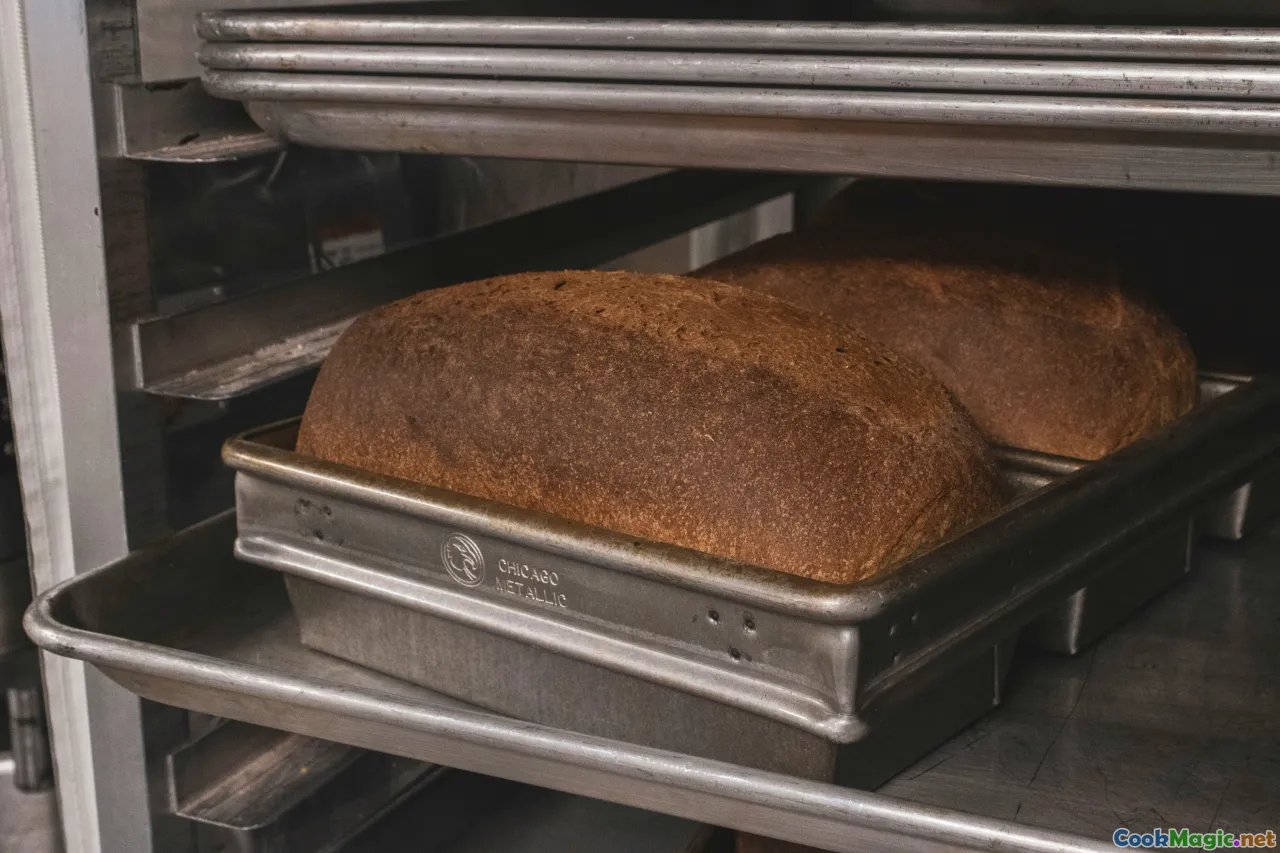
Bake 15 minutes at 205°C/400°F, then reduce to 180°C/350°F and bake 35–40 minutes. The loaf should be deeply brown and reach 96°C/205°F internal.
Cool 10 minutes in the pan, then turn onto a rack. Let cool at least 2 hours before slicing. Flavor deepens by day two.
Thông tin thêm về: Bánh mì mạch đen của quần đảo: Bánh ngọt có hạt theo phong cách Bắc Âu
Overview
Archipelago Rye Loaf is a tender, honeycombed rye bread inspired by Finland’s coastal archipelago, where bakers have long favored dark syrup, malt, and rye for loaves that keep beautifully and slice like a dream. This version celebrates those traditions with a modern, no‑knead method: a moist, spoonable dough; a patient rise; and a two‑stage bake that yields a glossy brown crust and a softly springy crumb. Molasses brings color and caramel notes, while seeds add wholesome texture. The result is equally happy under a thick swipe of cultured butter, smoked fish, or a slice of sharp cheese.
What Makes It Special
- Nordic sweetness: Molasses (or Finnish dark syrup) adds gentle sweetness that balances rye’s earthiness without turning the loaf into dessert.
- No‑knead ease: High hydration and rye’s natural stickiness make kneading unnecessary—stir, rise, and bake.
- Seeded character: Sunflower and flax give nutty pops and nutrition.
- Long-keeping: Like many Nordic breads, this loaf’s flavor improves a day after baking as the crumb sets and aromatics bloom.
Ingredient Notes
- Rye flour: Light or medium rye provides structure while staying tender. Dark rye gives more intensity but can make the loaf denser—adjust hydration if using.
- Cracked rye: Scalding it with boiling water pre‑gelatinizes starches, ensuring a moist crumb and preventing hard bits.
- Molasses vs. treacle: Either works; choose based on how bittersweet you like the finish. Barley malt syrup amplifies malt notes if you enjoy robust flavors.
- Buttermilk: A Nordic‑style dairy tang that softens rye’s edges and helps create a fine, sliceable crumb.
- Caraway: Traditional in many rye breads, but optional—some Finnish archipelago loaves skip it for a purer malt‑molasses profile.
Technique Tips
- Hydration is high and the dough behaves more like a batter. Grease or wet your spatula to smooth the top without tearing.
- Don’t overproof. Rye’s weaker gluten means it won’t spring as dramatically. Look for a 50–70% rise, not a doubling.
- Two‑stage bake: Starting hot sets the crust, then lowering the temperature cooks through without overbrowning. Aim for a 96°C/205°F internal temp.
- Resting matters. A 24‑hour rest after baking softens tannic notes and makes cleaner slices.
Serving Ideas
- Classic: Thick slices with butter and a sprinkle of flaky salt.
- Sea breeze: Top with cold‑smoked salmon, dill, lemon, and a smear of crème fraîche.
- Cheese board: Serve with aged Gouda, blue cheese, or a nutty Emmental.
- Morning routine: Toast with honey and berries; the molasses pairs beautifully with fruit.
- Open‑face lunches: Try smørrebrød‑style stacks with pickled cucumber, herring, or beetroot relish.
Variations
- Island Harvest: Fold in diced dried apricots or cranberries for a sweet contrast.
- Forest Spice: Add crushed coriander seed and a pinch of ground fennel for a Scandinavian spice profile.
- Hearty Wholegrain: Swap the bread flour for whole wheat and increase warm water by 15–20 ml.
- Oat Cap: Press rolled oats onto the oiled pan and loaf top for a crackly, toasty edge.
Make‑Ahead, Storage, and Freezing
- Store: Wrap tightly once cooled and keep at room temperature up to 4 days. Flavor actually peaks on day 2.
- Freeze: Slice, wrap well, and freeze up to 2 months. Toast slices straight from frozen.
- Refresh: If the crust softens, re‑crisp in a 170°C/340°F oven for 6–8 minutes.
Troubleshooting
- Gummy center: Bake longer or verify internal temperature. Allow a full cooling period so starches set.
- Dense loaf: Slight underproof or too much dark rye can do this. Give it a few more minutes of proofing next time or substitute 25–50 g rye with bread flour.
- Bitter finish: Reduce molasses slightly or add the optional orange zest to brighten.
- Crumbling: Weigh ingredients precisely, especially salt and liquids. A touch more water often helps.
Cultural Background
This loaf nods to Finnish “saaristolaisleipä”—archipelago bread—named for the brackish, island‑dotted waters where fishing villages and summer cottages cherish hearty, long‑keeping breads. Traditionally baked with dark syrup and sometimes malt, these loaves were practical: resilient on boat trips, delicious with smoked or pickled fish, and restorative in cold weather. The sweetness isn’t excess; it’s balance—the same way a touch of sugar in tomato sauce rounds acidity. Today, archipelago breads frequently appear during holidays and weekend brunches, offering a timeless link to coastal life and communal tables.
Why You’ll Love It
- Balanced flavor that plays well with savory or sweet toppings.
- Approachable method with professional results—no stand mixer or kneading required.
- Beautiful presentation: a mahogany crust, seed‑freckled crumb, and a perfume of malt and citrus.
Chef’s Notes
I like to mix the batter with a sturdy spatula and finish with a wet dough scraper to smooth the top. If time allows, bake in the evening and resist slicing until the next morning; the crumb will be silky and the knife will glide. The optional instant coffee or cocoa might seem unusual, but it’s a baker’s trick for depth of color without turning the loaf into chocolate bread.
Embrace the rhythm of slower baking—scald, stir, rise, and rest—and let this Archipelago Rye Loaf bring a little Nordic shoreline to your table.