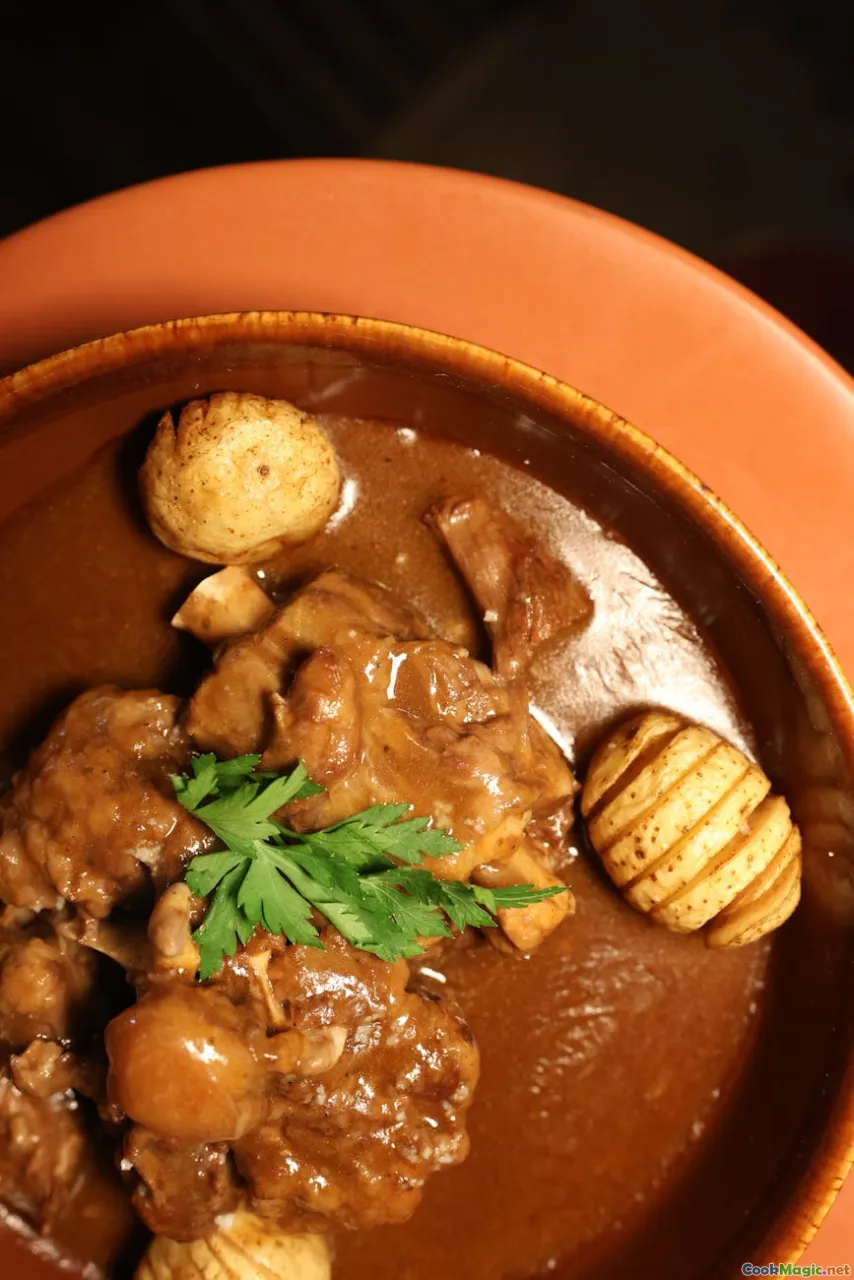
スモーランドのクロップカークスシチュー - スウェーデンの団子シチュー
(Smalandets Kroppkaksgryta - Swedish Dumpling Stew)
(0 レビュー)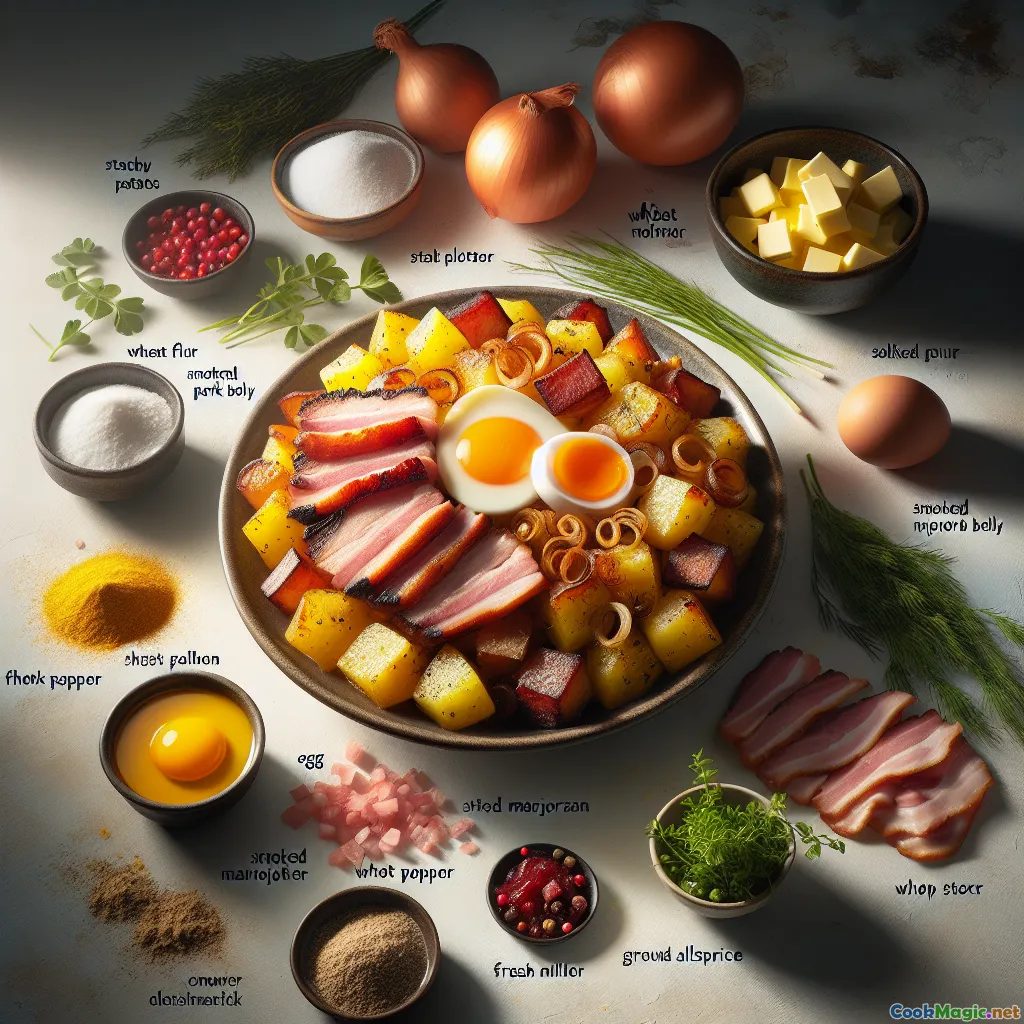
材料
-
600 grams デンプン質のじゃがいも
(皮をむき、粗くおろしたもの、例:Russet)
-
130 grams 小麦粉
(中力粉)
-
1 large 卵
(放し飼い推奨)
-
1.5 tsp 塩
-
175 grams スモークポークベリー
(角切りにする。あるいは、軽く塩味の豚肉を使う。)
-
1 medium 黄玉ねぎ
(細かく刻んだ)
-
0.5 tsp ホワイトペッパー
-
1 tsp 乾燥マジョラム
-
3 tbsp 新鮮なディル
(刻んだ)
-
2 tbsp 無塩バター
-
500 ml 全乳
-
750 ml チキンストック
(低ナトリウム)
-
0.25 tsp オールスパイス(粉末)
-
4 tbsp リンゴンベリージャム
(盛り付け用(任意))
(皮をむき、粗くおろしたもの、例:Russet)
(中力粉)
(放し飼い推奨)
(角切りにする。あるいは、軽く塩味の豚肉を使う。)
(細かく刻んだ)
(刻んだ)
(低ナトリウム)
(盛り付け用(任意))
栄養
- 分量: 4
- 1人分の量: 1杯(約300 g)
- Calories: 550 kcal
- Carbohydrates: 72 g
- Protein: 20 g
- Fat: 21 g
- Fiber: 6 g
- Sugar: 7 g
- Sodium: 1240 mg
- Cholesterol: 52 mg
- Calcium: 142 mg
- Iron: 3 mg
作り方
-
1 - じゃがいも団子の生地を準備する:
じゃがいもを細かくおろし、タオルで余分な水分を絞り取る。小麦粉、卵を混ぜ、塩を小さじ1入れて、柔らかく粘りのない生地を作る。別にしておく。
-
2 - 具材を準備する:
豚バラ肉と玉ねぎをバター大さじ1で、黄金色になるまで炒めます。白胡椒の半量、マジョラム、そして新鮮なディルの半量を加えて味を整えます。5分冷ましてください。
-
3 - 肉団子型:
湿らせた手で、ゴルフボール大の生地の塊を平らにし、豚肉と玉ねぎの具を小さじ1杯加え、包んで丸い餃子に密封します。生地がなくなるまで繰り返します。
-
4 - 餃子を茹でる:
塩水をたっぷり入れた大きな鍋を、沸騰させずに弱火で煮立てる。ダンプリングを少しずつ静かに落とし、浮いてくるまで茹でたら、さらに4–5分煮ます。皿に移して下さい。
-
5 - シチュー用ベース:
鍋を拭き取る。バター大さじ1を加え、弱火で温め、残りの白こしょう、オールスパイス(使う場合)、牛乳、鶏ガラスープを加える。沸騰させずに温め、塩は0.5小さじで味を整える。
-
6 - 材料を合わせてシチューを仕上げる:
シチューのベースにダンプリングを慎重に加え、さらに新鮮なディルを上にのせ、風味が馴染むまで少なくとも8分間温めてください。激しくかき混ぜないでください。
-
7 - サーブする:
スープをすくってボウルに盛り付け、ブロスとダンプリングを含めます。お好みで、リンゴンベリージャムをひとすくいのせ、さらにディルをのせてください。
じゃがいもを細かくおろし、タオルで余分な水分を絞り取る。小麦粉、卵を混ぜ、塩を小さじ1入れて、柔らかく粘りのない生地を作る。別にしておく。
豚バラ肉と玉ねぎをバター大さじ1で、黄金色になるまで炒めます。白胡椒の半量、マジョラム、そして新鮮なディルの半量を加えて味を整えます。5分冷ましてください。
湿らせた手で、ゴルフボール大の生地の塊を平らにし、豚肉と玉ねぎの具を小さじ1杯加え、包んで丸い餃子に密封します。生地がなくなるまで繰り返します。
塩水をたっぷり入れた大きな鍋を、沸騰させずに弱火で煮立てる。ダンプリングを少しずつ静かに落とし、浮いてくるまで茹でたら、さらに4–5分煮ます。皿に移して下さい。
鍋を拭き取る。バター大さじ1を加え、弱火で温め、残りの白こしょう、オールスパイス(使う場合)、牛乳、鶏ガラスープを加える。沸騰させずに温め、塩は0.5小さじで味を整える。
シチューのベースにダンプリングを慎重に加え、さらに新鮮なディルを上にのせ、風味が馴染むまで少なくとも8分間温めてください。激しくかき混ぜないでください。
スープをすくってボウルに盛り付け、ブロスとダンプリングを含めます。お好みで、リンゴンベリージャムをひとすくいのせ、さらにディルをのせてください。
スモーランドのクロップカークスシチュー - スウェーデンの団子シチュー :の詳細
Smalandets Kroppkaksgryta: A Homage to Swedish Comfort Dining
Few dishes are as satisfyingly hearty, historically rich, and imbued with cultural nuance as the humble Swedish kroppkaka—an incredibly unique potato dumpling traditionally filled with pork and onions. This recipe, Smalandets Kroppkaksgryta, adapts classic Småland kroppkakor into a soul-warming stew format, capturing the spirit of south-central Sweden’s homespun winter kitchen, where origins stem from agricultural ingenuity and a penchant for rich, earthly flavors.
The Story Behind Kroppkaka
Kroppkaka ("body cake") is itself an evocative name, hinting at sustenance during long, cold months when potatoes assumed center stage in every meal. In Småland, these pillowy dumplings, often specked with dill and allspice, take on a slightly sweet-and-savory manner. Traditionally, they are boiled and served simply with melted butter or, delightfully, with tart lingonberry preserves flashing their crimson on a white plate. It is common for communal kitchens to make ample quantities ahead for feasts or family gatherings.
A Unique Modern Twist: Turning Dumplings Into Stew
While conventional kroppkakor appear as individual dumplings, this recipe reimagines them nestled in a comforting, milky broth infused with herbs. Tender cubes of smoked pork create a meaty backbone; finishing with a hint of marjoram and sweet onion infuse deep flavors into every bite. The stew base is enriched subtly with stock and milk, reflecting Sweden's love of dairy, then brightened with fresh dill—a recurring theme in Swedish homes.
Cooking & Serving Tips
- Potatoes: Use starchy, floury potatoes for best texture; waxing potatoes lead to gluey dumplings.
- Squeezing: It's crucial to wring out as much liquid as possible from grated potatoes—this stops the dough becoming heavy or sodden.
- Shaping & Sealing: Keeping your hands lightly damp prevents sticking when forming dumplings. Be sure to seal tightly so none burst during simmering.
- Don’t Overboil: Simmer, not boil! Vigorous bubbling can break the dumplings apart.
- Lingonberry Jam: Always serve a spoonful for authentic flair—the tang offsets the richness beautifully.
- Layer in Your Own Touches: For a more lavish feast, some add chopped mushrooms or use game meats. For vegetarian twists, swap the pork filling with golden-fried oyster mushrooms and leeks.
Historical and Cultural Roots
The reliance on preserved meats and winter root vegetables is typical of old Swedish farmhouse kitchens trying to utilize ingredients beyond their fresh season. Before refrigeration, curing or lightly smoking pork belly was a wintertime necessity, and root vegetables like potatoes dominated the table. Småland and Gotland both have claims to variations of kroppkakor, with debate over usage of raw versus pre-boiled potatoes. This version stakes its claim as authentically Smålandish: raw potato dough, sweet pork, and a touch of dill.
Dairy and boiled meat were traditionally signs of hospitality in Sweden; offering kroppkakor was a mark of respect and generosity. Today, though store-bought versions abound, families frequently gather to produce kroppkakor for special occasions, holidays, or simply as a gesture of collective remembrance.
Personal Reflections & Unique Qualities
This stew warms not just the stomach but the heart—tender dumplings yield to a lilting bite of pork, while the herb-laden broth soothes with creamy mouthfeel and homey aromas reminiscent of rural kitchens. A shining testament to frugality turned into culinary brilliance, Smalandets Kroppkaksgryta reveals how everyday ingredients—potatoes, flour, onion, bits of cured pork—can become something simultaneously humble and extraordinary.
To prepare this dish is to participate in history: the repetitive motions of grating, seasoning, forming, and simmering reflect the way food has always been about showing care, keeping warm, and making the most of the pantry. Through this recipe, anyone can conjure—not just a hearty meal—but a little corner of Swedish winter, where the kitchen radiates fellowship and the landscape outside is painted in whites and golds.
“Mat är kultur, minnen och traditioner” (“Food is culture, memories, and traditions.”)
Try this broth-laden, dumpling-studded stew, and you’ll surely taste more than just potatoes and pork—you’ll savor Swedish hospitality at its core.