パプアニューギニアの風味を添えたピット焼き豚
(Pit Baked Pork with Papua New Guinea Flavors)
(0 レビュー)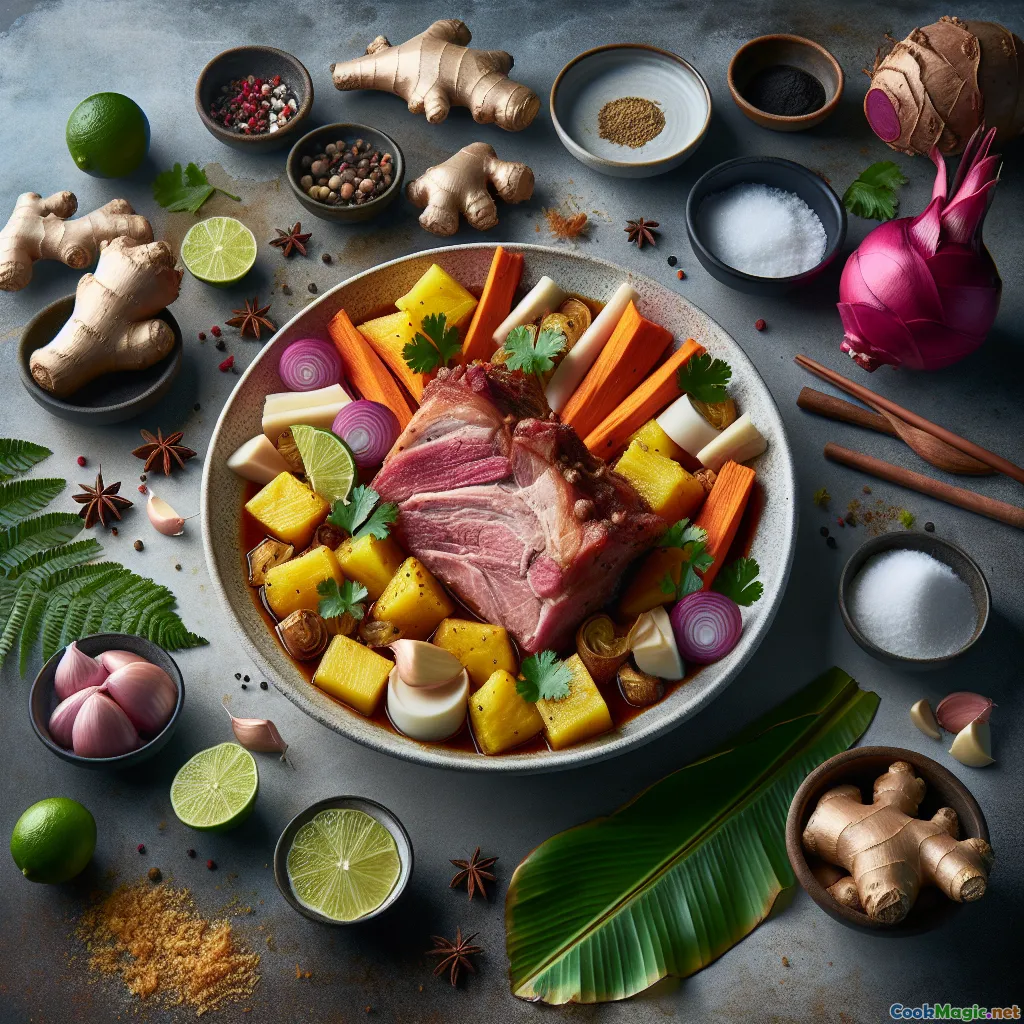


材料
-
2 kg 豚肩肉(骨付き)
(トリム済み、できれば放し飼い)
-
500 grams サツマイモ
(角切り)
-
350 grams タロイモ
(皮を剥いて刻んだ)
-
1 medium パイナップル
(芯を取り、角切りにした。)
-
6 whole ライムの葉
(新鮮または冷凍)
-
5 cm 生姜
(新鮮な、すりおろし)
-
6 whole ニンニクの cloves
(潰した)
-
200 ml ココナッツクリーム
(使用前に良く振ってください。)
-
2 tbsp コーシャソルト
-
1 tbsp ブラックペッパー
(挽きたて)
-
4 large sheets バナナの葉
(ピットまたは天板を敷く。)
-
1 bunch フレッシュコリアンダー
(飾り用に粗く刻んだ)
-
1 tbsp サトウキビ糖
(控えめな甘さのために)
-
2 whole レモングラスの stalks
(潰した)
(トリム済み、できれば放し飼い)
(角切り)
(皮を剥いて刻んだ)
(芯を取り、角切りにした。)
(新鮮または冷凍)
(新鮮な、すりおろし)
(潰した)
(使用前に良く振ってください。)
(挽きたて)
(ピットまたは天板を敷く。)
(飾り用に粗く刻んだ)
(控えめな甘さのために)
(潰した)
栄養
- 分量: 6
- 1人分の量: ボリューム満点の1人前(300 g)
- Calories: 630 kcal
- Carbohydrates: 48 g
- Protein: 36 g
- Fat: 32 g
- Fiber: 7 g
- Sugar: 14 g
- Sodium: 1120 mg
- Cholesterol: 110 mg
- Calcium: 92 mg
- Iron: 3.1 mg
作り方
-
1 - ピットを準備する(またはオーブン):
伝統的な穴が可能であれば、深さ約600 mmの穴を掘り、川石を敷き詰め、木材で火を起こします。石を1時間温めます。そうでない場合は、オーブンを180°C(356°F)に予熱し、大きなロースト皿をバナナの葉で敷きます。
-
2 - 豚肉をマリネする:
大きなボウルで、生姜、にんにく、ココナッツクリーム、塩、黒胡椒、ライムの葉、さとうきび糖(オプション)とレモングラスを混ぜます。豚肉によく擦り込んでください。20-30分休ませます。
-
3 - 層を組み立てる:
バナナの葉の上に、タロイモ、サツマイモ、パイナップルの角切りを層にします。その上にマリネした豚肉を置き、残ったマリネ液とバナナの葉の切れ端を周りに散らします。
-
4 - 焼くためのラップ:
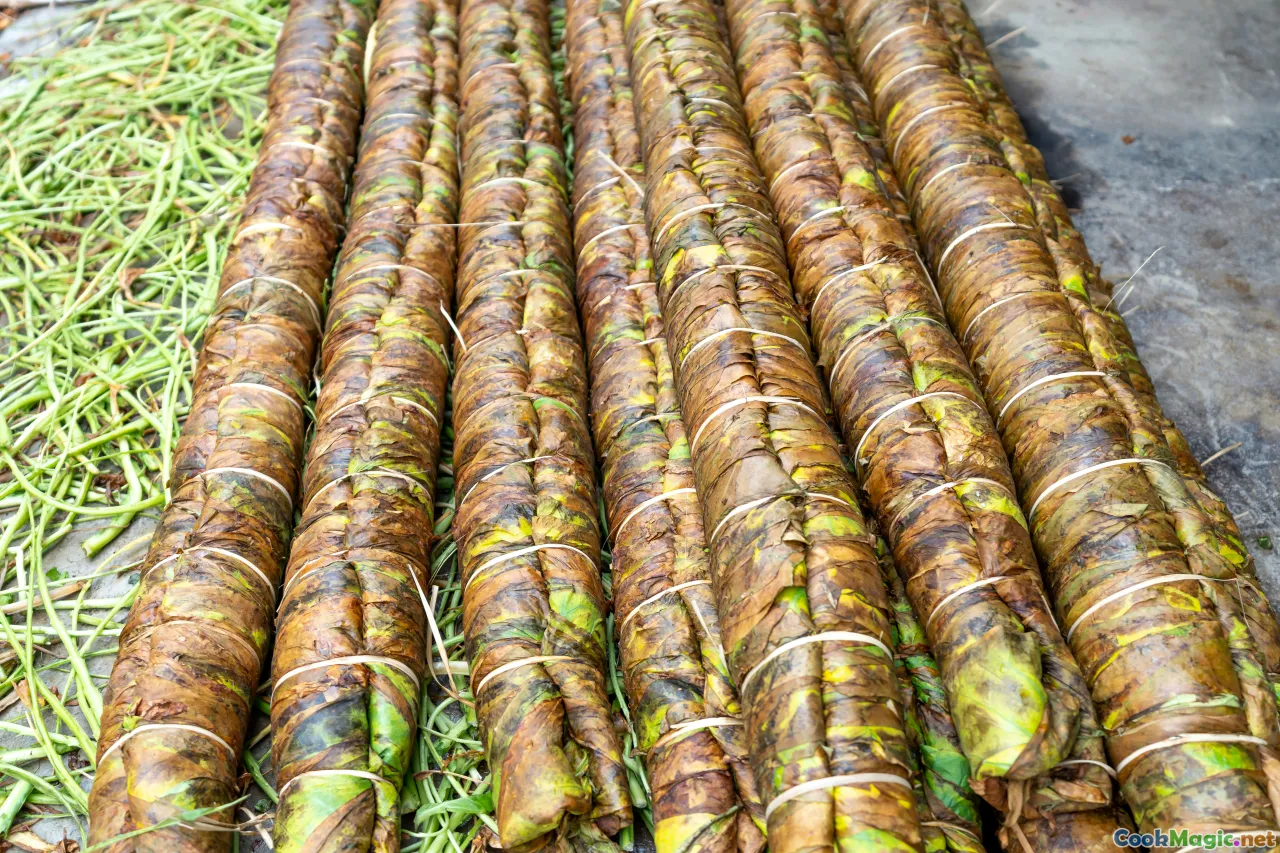
材料の周りをバナナの葉でぴったりと包みます。紐または枝で固定し、オーブンを使う場合はアルミホイルを追加してください。
-
5 - 地中に埋めて焼く:
穴の中では: 熱い石の上に束を並べ、土と熱い石で4時間たっぷりと覆います。オーブンでは: 蓋をしたまま3-4時間ローストします。均等に仕上げるため、途中で半分回してください。
-
6 - 仕上げと盛り付け:
バナナの葉を開いて、豚肉の柔らかさを確かめる(フォークが刺さるくらい柔らかくなるべきです)。豚肉を切り分け、野菜の上に盛り付け、フレッシュコリアンダーを添えてください。
伝統的な穴が可能であれば、深さ約600 mmの穴を掘り、川石を敷き詰め、木材で火を起こします。石を1時間温めます。そうでない場合は、オーブンを180°C(356°F)に予熱し、大きなロースト皿をバナナの葉で敷きます。
大きなボウルで、生姜、にんにく、ココナッツクリーム、塩、黒胡椒、ライムの葉、さとうきび糖(オプション)とレモングラスを混ぜます。豚肉によく擦り込んでください。20-30分休ませます。
バナナの葉の上に、タロイモ、サツマイモ、パイナップルの角切りを層にします。その上にマリネした豚肉を置き、残ったマリネ液とバナナの葉の切れ端を周りに散らします。
材料の周りをバナナの葉でぴったりと包みます。紐または枝で固定し、オーブンを使う場合はアルミホイルを追加してください。
穴の中では: 熱い石の上に束を並べ、土と熱い石で4時間たっぷりと覆います。オーブンでは: 蓋をしたまま3-4時間ローストします。均等に仕上げるため、途中で半分回してください。
バナナの葉を開いて、豚肉の柔らかさを確かめる(フォークが刺さるくらい柔らかくなるべきです)。豚肉を切り分け、野菜の上に盛り付け、フレッシュコリアンダーを添えてください。
パプアニューギニアの風味を添えたピット焼き豚 :の詳細
Mount Hagen Pit Baked Pork
Mount Hagen Pit Baked Pork is a culinary homage to the Earth oven (“mumu”) feasts deeply woven into Papua New Guinean highland life. Named after Mount Hagen—a fertile region humming with life, culture, and traditions—this impressive pork dish epitomizes communal feasting, respect for nature’s bounty, and indigenous inventiveness. Traditionally crafted for grand gatherings, the mumu not only cooks but transforms—the pork imbibes aromatic herbs and earthy essence through hours of gentle, pit-based steam-baking.
Origin & Cultural Significance
The concept of baking meat and tubers in earth pits predates written history and is celebrated throughout Oceania, including Hawaii’s ʻimu, New Zealand’s Māori hāngi, or the samurai earthen ovens of Japan. In Papua New Guinea, the mumu—named for the fashioning of hot stone-lined pits, layered with banana leaves—stands as a gastronomic and social centerpiece. Every aspect—stone selection, ingredient choice, fire and assembly order—is ceremonial, meant to foster kinship and celebrate shared bounty.
Mount Hagen, with its rolling, alluvial highlands, supplies earthy sweet potatoes (“kaukau”), starchy taros, and a whole spectrum of local greens, roots, and fruits. Pork remains especially prized, a marker of status and festivity—as well as economic wealth. Roasting it in a pit unleashes depths of flavor unattainable through modern means: fragrant steam perfumes flesh and vegetables while natural sugars caramelize against the hot stones.
Key Ingredients & Substitutions
The backbone of the dish is well-marbled pork shoulder or leg, marinated with an island blend of ginger, garlic, lime leaves, coconut cream, and hints of sugar cane. Locally, everything from ferns (“pitpit”) to wild greens and pandanus fruit may be included. When fresh banana leaves aren’t available, parchment paper and foil offer an urban compromise, though they cannot replicate the subtlety of roasted leaf aroma.
Fresh sweet potatoes and taro, both integral to the highland pantry, provide satisfying ballast and soak up pork drippings. Pineapple lends sweet acidity—a nod to the tropics’ abundant harvest. Coriander and lemongrass bring a freshness that cuts richness and aligns with regional flavor profiles. While pit-cooking imparts incomparable smokiness, an oven executed skillfully still delivers meltingly tender pork, steeped in savory-sweet juices.
Techniques, Tips & Notes
- If using a pit: Safety first—enlist help, be wary of hot stone placement, and tightly wrap that banana-leaf bundle!
- Oven method: Use ample banana leaves and double-wrap in foil to retain moisture before slow-roasting.
- Marinate as long as possible. At least 30 minutes infuses flavor but overnight is even better.
- Experiment: Slices of plantain, yams, or cassava give alternate root flavors. Spice the marinade with native bush pepper or hot chili if you wish.
- Smashing lemongrass stalks bruises their essential oils—don’t skip this step if you want citrusy undertones.
- Allow to rest post-baking before opening the parcel; this reabsorbs juices and ensures maximum savor.
History and Uniqueness
Mount Hagen itself hosts the famed cultural show—a gathering of tourists, tribes, and locals fiercely proud of their gastronomy. A ``pit baked pork'' centerpiece symbolizes hospitality, tradition, and ceremony. Visitors and home cooks alike are drawn to its harmony: lush vegetables, tropical fruits, the primal simplicity of fire, earth, and time fusing into nourishment.
With this recipe, urban kitchens can channel ancestral crafts while tucking into fork-tender pork, caramel-kissed vegetables, and savoring the magic born where nature, culture, and food converge. For the adventurous foodie, few dishes encapsulate such depth of place or purpose. Invite friends, cook together, play highland music, and serve with a side of warm storytelling—the essence of the Papua New Guinea mumu feast.
Personal thoughts: The Mount Hagen Pit Baked Pork is more than just a recipe—it’s an experience; a delicious taste of community, ceremony, and respect for the earth’s providence. Perfect for celebration, Sunday feasts, or any meal where food becomes a story.