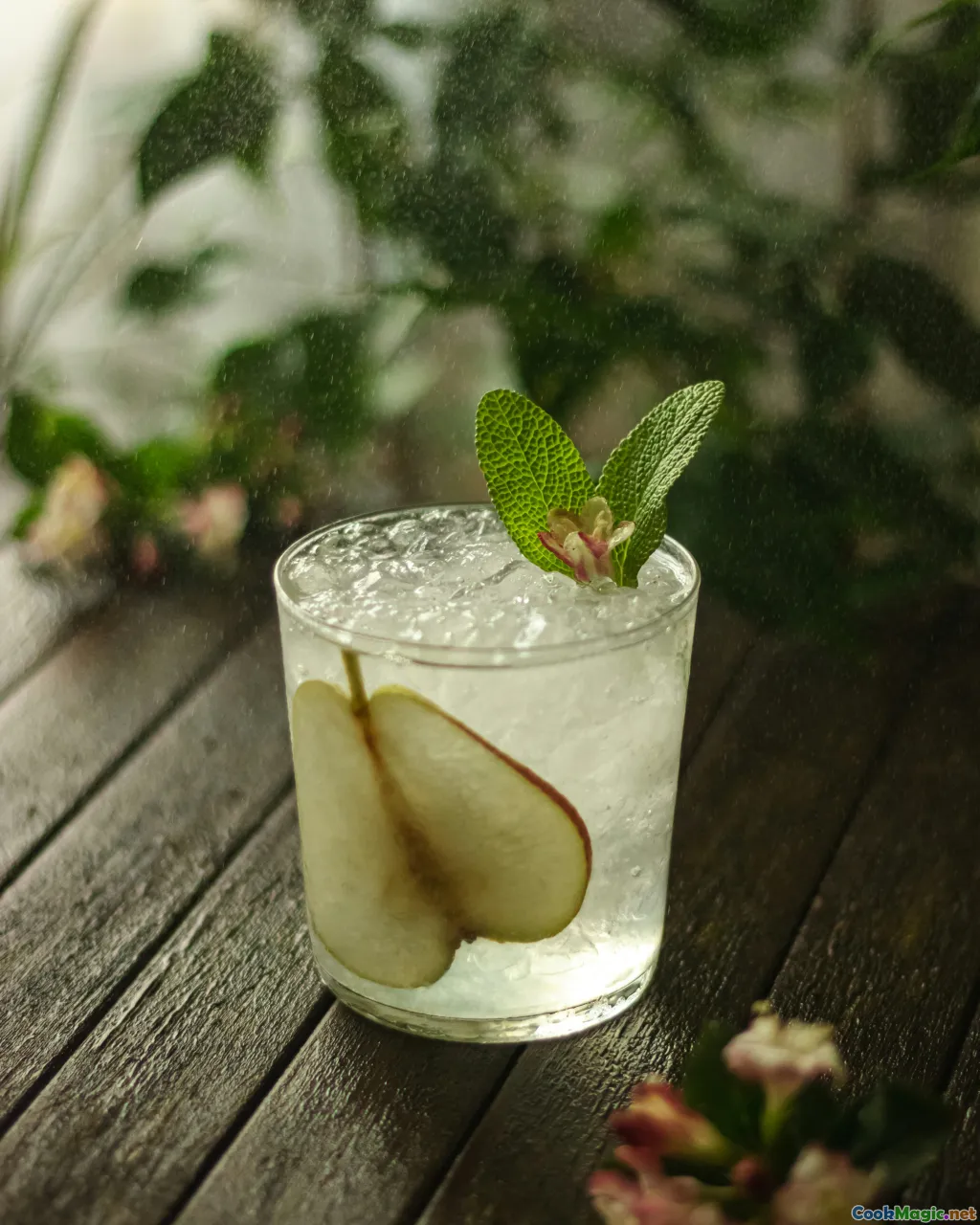
Gin-Cocktail mit Birne und Holunderblüten
(Veil of Eden: Pear-Elderflower Gin Cocktail)
(0 Bewertungen)


0
178
Dezember 04, 2025
Problem melden
Zutaten
-
45 ml London Dry Gin
(Choose a classic juniper-forward style)
-
15 ml Holunderblütenlikör
(St‑Germain or similar; cordial can substitute with sweetness adjusted)
-
30 ml Frischer Birnensaft
(Ripe, strained; Bartlett or Conference pears work well)
-
20 ml Trüber Apfelsaft
(Unfiltered for rounder texture)
-
15 ml Frischer Zitronensaft
(Strained to remove pulp)
-
20 ml Pasteurisiertes Eiweiß oder Aquafaba
(Aquafaba for vegan option; both produce a stable foam)
-
5 ml Zuckersirup (1:1)
(Adjust to fruit sweetness)
-
2 dashes Weißer Verjus oder Apfelessig
(Adds orchard brightness; go light)
-
3 slices Gurkenscheiben
(Fresh, seedless if possible; for muddling fragrance)
-
1 spray Absinth
(Glass rinse for herbal whisper)
-
8 pieces Eiswürfel
(Large, fresh, odor-free)
-
1 piece Gurkenschlauch
(For garnish; use a wide peeler)
-
1 piece Essbare Blüte oder Minzzweigspitze
(Optional garnish for a garden finish)
(Choose a classic juniper-forward style)
(St‑Germain or similar; cordial can substitute with sweetness adjusted)
(Ripe, strained; Bartlett or Conference pears work well)
(Unfiltered for rounder texture)
(Strained to remove pulp)
(Aquafaba for vegan option; both produce a stable foam)
(Adjust to fruit sweetness)
(Adds orchard brightness; go light)
(Fresh, seedless if possible; for muddling fragrance)
(Glass rinse for herbal whisper)
(Large, fresh, odor-free)
(For garnish; use a wide peeler)
(Optional garnish for a garden finish)
Nährwerte
- Portionen: 1
- Portionsgröße: 1 coupe (150 ml)
- Calories: 190 kcal
- Carbohydrates: 0 g
- Protein: 1 g
- Fat: 0 g
- Fiber: 0 g
- Sugar: 16 g
- Sodium: 5 mg
- Cholesterol: 0 mg
- Calcium: 10 mg
- Iron: 0.2 mg
Anweisungen
-
1 - Chill and prepare garnish:
Chill a coupe. Peel a long cucumber ribbon and keep it crisp in ice water. Assemble all ingredients and set up your shaker and strainer.
-
2 - Optional absinthe rinse:
Mist the chilled coupe with absinthe or add a few drops, swirl to coat, then discard excess. This adds a delicate herbal halo.
-
3 - Build the Cocktail:
In a shaker, lightly press the cucumber slices with a muddler to release aroma (do not pulverize). Add gin, elderflower liqueur, pear juice, apple juice, lemon juice, egg white or aquafaba, and optional simple syrup and verjus.
-
4 - Dry shake for a veil:
Seal the shaker without ice and shake vigorously for 15–20 seconds to emulsify and create a stable foam base.
-
5 - Shake with Ice:
Add fresh ice and shake hard for another 12–15 seconds until well-chilled and slightly diluted.
-
6 - Strain and set:
Double strain into the chilled coupe, catching cucumber solids. Let the drink sit 10–15 seconds so the foam rises into a smooth ‘veil.’
-
7 - Garnish and Serve:
Drape the cucumber ribbon over the rim so it falls like a curtain. Add an edible flower or mint tip. Serve immediately.
Chill a coupe. Peel a long cucumber ribbon and keep it crisp in ice water. Assemble all ingredients and set up your shaker and strainer.
Mist the chilled coupe with absinthe or add a few drops, swirl to coat, then discard excess. This adds a delicate herbal halo.
In a shaker, lightly press the cucumber slices with a muddler to release aroma (do not pulverize). Add gin, elderflower liqueur, pear juice, apple juice, lemon juice, egg white or aquafaba, and optional simple syrup and verjus.
Seal the shaker without ice and shake vigorously for 15–20 seconds to emulsify and create a stable foam base.
Add fresh ice and shake hard for another 12–15 seconds until well-chilled and slightly diluted.
Double strain into the chilled coupe, catching cucumber solids. Let the drink sit 10–15 seconds so the foam rises into a smooth ‘veil.’
Drape the cucumber ribbon over the rim so it falls like a curtain. Add an edible flower or mint tip. Serve immediately.
Mehr über: Gin-Cocktail mit Birne und Holunderblüten
Overview
Veil of Eden is a softly spoken yet captivating cocktail that leans into Britain’s orchard and hedgerow heritage. Built on a juniper-forward London dry gin, it weaves ripe pear, cloudy apple, and fragrant elderflower into a silken, garden-scented sip. A well-executed dry shake produces a luminous foam that drapes the drink like gossamer—hence the name. With a cucumber ribbon cascading over the rim and a restrained absinthe rinse, the aroma meets you before the first taste, conjuring spring lanes and early summer blooms.
Flavor profile
The first impression is delicate perfume: elderflower, cucumber, a whisper of anise if you opt for the absinthe rinse. On the palate, pear rounds the edges while cloudy apple adds a gentle rusticity. Fresh lemon rides in for brightness, keeping the liqueur’s sweetness honest. The gin’s juniper and citrus peel anchor everything with classic structure. The finish is cooling, green, and slightly floral—an elegant arc from orchard to hedgerow.
Key ingredients and notes
- London dry gin: A traditional choice underscores the British identity and maintains a clean backbone. Contemporary gins with cucumber or floral notes are welcome, but avoid overly sweet or perfumed bottles.
- Elderflower liqueur: Adds honeyed floral lift. If substituting elderflower cordial, reduce or omit the simple syrup and consider a tiny extra squeeze of lemon for balance.
- Pear and apple juices: Fresh, ripe pears (Bartlett or Conference) give body and fragrance; cloudy apple contributes pectin richness. Strain to remove pulp for a finer texture.
- Egg white or aquafaba: Both create the signature “veil.” Aquafaba keeps the drink vegan and is remarkably reliable; pasteurized egg white offers a slightly silkier mouthfeel.
- Verjus or cider vinegar: A few restrained dashes layer a green, grapey acidity that complements orchard fruit. Used correctly, it’s sensed more as brightness than sharpness.
Technique tips
- Dry shake thoroughly: Emulsification is key to the drink’s look and mouthfeel. Aim for 15–20 seconds before adding ice. If you prefer, try a reverse dry shake: shake with ice first, strain, then shake the liquid again without ice and strain to the glass.
- Ice matters: Use large, fresh cubes. Wet, melting ice or refrigerator odors will dull the aromatics and over-dilute the drink.
- Double strain: This ensures a satin surface and removes cucumber bits that could mar the foam.
- Garnish intentionally: The cucumber ribbon should drape like fabric. An edible flower or mint tip provides visual poetry without overpowering the nose.
Cultural context and inspiration
Elderflower cordial is a beloved British tradition, gathered from hedgerows when umbels bloom in late spring. Britain’s orchard heritage—particularly pears and apples—adds a pastoral backdrop. Gin, of course, is a British icon, and the London dry style anchors countless classics. Veil of Eden folds these elements together with modern craft-cocktail technique, creating a drink that feels both timeless and new. The name nods to the Edenic imagery of gardens in bloom and to the drink’s defining characteristic: a translucent, cloudlike cap that veils the surface.
Variations and substitutions
- Spirit swap: Try an English garden-style gin with cucumber notes for extra greenery, or a floral gin with chamomile. For a softer profile, split base with a dry vermouth (30 ml gin + 15 ml vermouth).
- Non-alcoholic: Use a quality zero-ABV “gin” alternative and replace elderflower liqueur with concentrated elderflower cordial. Keep lemon as written; you may not need the simple syrup.
- Fruit twist: Substitute quince juice for apple to lean deeper into orchard territory, or add a teaspoon of white grape juice in place of verjus.
- Herbal accent: Express a thin strip of cucumber peel over the foam or add a single torn basil leaf to the shake for a green snap.
Troubleshooting
- Foam too thin: Dry shake longer or use a spring (from a Hawthorne strainer) in the shaker. Verify your aquafaba is the thicker liquid from unsalted chickpeas.
- Too sweet: Reduce simple syrup or use cordial rather than liqueur judiciously; add 2–3 extra drops of lemon or verjus.
- Flat aromatics: Your ice may be watery, or your garnish tired. Use fresh herbs/flowers and large, clean ice.
Serving and pairing
Serve in a chilled coupe or a Nick & Nora for a tighter bouquet. Pair with delicate canapés, goat cheese and honey crackers, cucumber tea sandwiches, or a lightly salted almond mix. The drink’s gentle acidity and floral notes complement soft cheeses and fresh herbs beautifully.
Batching and make-ahead
Citrus and foam don’t batch perfectly, but you can prep a chilled base of gin, elderflower liqueur, pear, and apple (and optional verjus) up to 4 hours ahead. Shake individual servings with fresh lemon and egg white/aquafaba to order. For events, pre-ribbon cucumbers and store in ice water; pat dry before garnishing.
Final thoughts
Veil of Eden is a contemporary British-leaning cocktail that wears its refinement lightly. It’s not loud, but it lingers—aromatic, textural, and quietly romantic. With a few thoughtful tweaks to sweetness and acidity, it becomes a versatile signature serve for spring weddings, garden parties, or an intimate evening at home. The velvety cap, orchard fruit, and hedgerow florals together create a drink that’s as pleasurable to behold as it is to sip—a small, fragrant curtain lifting on your own private Eden.