Kaninchen im mährischen Wein geschmort mit Wurzelgemüse
(Moravian Wine-Braised Rabbit with Root Vegetables)
(0 Bewertungen)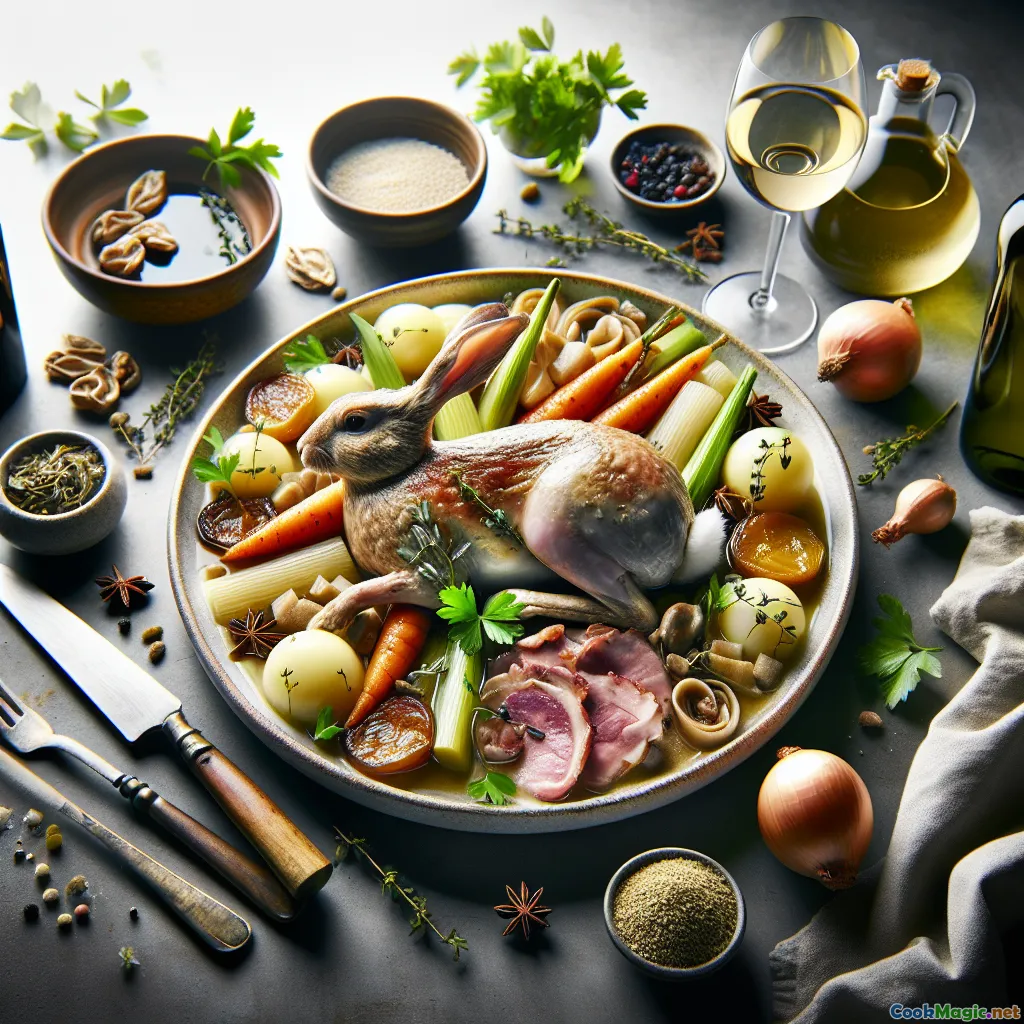

0
33
Dezember 26, 2025
Problem melden
Zutaten
-
1.5 kg Kaninchen, ganz, in Stücke zerteilt
(Ask the butcher to cut into 8 pieces; bone-in preferred for flavor.)
-
500 ml Mährischer trockener Weißwein
(Riesling (Ryzlink rýnský) or Grüner Veltliner; use any dry, crisp white.)
-
300 ml Hühnerbrühe
(Low-sodium preferred to better control seasoning.)
-
100 grams Geräucherter Speck (slanina), gewürfelt
(Or pancetta; adds smokiness and fat for browning.)
-
200 grams Zwiebel, dünn geschnitten
(Yellow onion for sweetness.)
-
150 grams Karotten (in Scheiben)
(Cut into 1 cm half-moons.)
-
120 grams Sellerieknolle (Selleriewurzel), gewürfelt
(Peel thoroughly; adds earthy depth.)
-
4 cloves Knoblauchzehen, gehackt
(Fresh garlic for aroma.)
-
2 tbsp Dijon-Senf
(Helps emulsify and season the sauce.)
-
1 tbsp Ganzkornsenf
(Adds texture and tang.)
-
2 leaves Lorbeerblätter
(Fragrant backbone of the braise.)
-
6 Berries Wacholderbeeren, leicht zerstoßen
(Classic with game; use sparingly.)
-
1 tsp Kümmelsamen
(Essential Czech flavor; toast briefly for better aroma.)
-
1 tsp Getrockneter Majoran
(Traditional herb for rabbit in Czech cooking.)
-
4 sprigs Frische Thymianzweige
(Pairs well with white wine; can substitute 1/2 tsp dried.)
-
80 grams Getrocknete Pflaumen, halbiert
(Optional Moravian touch for gentle sweetness.)
-
2 tbsp Ungesalzene Butter, weich
(For beurre manié to finish the sauce.)
-
1 tbsp Neutralöl
(Sunflower or canola for searing.)
-
1.5 tbsp Weißmehl
(Combine with butter to thicken the sauce.)
-
2 tbsp Glattblättrige Petersilie, gehackt
(Fresh finish.)
-
1 tsp Zitronenschale, fein gerieben
(Brightens the sauce at the end.)
-
2 tsp feines Meersalz
(Adjust to taste and stock’s salinity.)
-
1 tsp Frisch gemahlener schwarzer Pfeffer
(Season at multiple stages.)
(Ask the butcher to cut into 8 pieces; bone-in preferred for flavor.)
(Riesling (Ryzlink rýnský) or Grüner Veltliner; use any dry, crisp white.)
(Low-sodium preferred to better control seasoning.)
(Or pancetta; adds smokiness and fat for browning.)
(Yellow onion for sweetness.)
(Cut into 1 cm half-moons.)
(Peel thoroughly; adds earthy depth.)
(Fresh garlic for aroma.)
(Helps emulsify and season the sauce.)
(Adds texture and tang.)
(Fragrant backbone of the braise.)
(Classic with game; use sparingly.)
(Essential Czech flavor; toast briefly for better aroma.)
(Traditional herb for rabbit in Czech cooking.)
(Pairs well with white wine; can substitute 1/2 tsp dried.)
(Optional Moravian touch for gentle sweetness.)
(For beurre manié to finish the sauce.)
(Sunflower or canola for searing.)
(Combine with butter to thicken the sauce.)
(Fresh finish.)
(Brightens the sauce at the end.)
(Adjust to taste and stock’s salinity.)
(Season at multiple stages.)
Nährwerte
- Portionen: 4
- Portionsgröße: 1 Teller (350g)
- Calories: 610 kcal
- Carbohydrates: 0 g
- Protein: 48 g
- Fat: 35 g
- Fiber: 3 g
- Sugar: 7 g
- Sodium: 980 mg
- Cholesterol: 185 mg
- Calcium: 80 mg
- Iron: 4.8 mg
Anweisungen
-
1 - Marinate the rabbit:
Pat the rabbit pieces dry and season lightly with salt and pepper. In a nonreactive bowl, combine the rabbit with wine, bay leaves, thyme, and juniper. Marinate 30 minutes (or up to 2 hours chilled).
-
2 - Render bacon and brown meat:
Heat a heavy pot over medium heat. Add bacon and cook until it renders and crisps. Scoop out bacon; leave fat. Add oil if needed. Drain rabbit from marinade (reserve liquid) and pat dry. Brown rabbit in batches on all sides until deeply golden; set aside.
-
3 - Sweat the Aromatics:
In the same pot, add onion, carrot, and celeriac with a pinch of salt. Cook, stirring, until softened and lightly golden. Add garlic and caraway; cook 30 seconds until fragrant.
-
4 - Deglaze and Reduce:
Pour in the reserved wine marinade. Scrape up browned bits. Simmer 5 minutes to reduce alcohol and concentrate flavor.
-
5 - Braise low and slow:
Stir in chicken stock, Dijon, whole-grain mustard (if using), marjoram, prunes (if using), and reserved bacon. Return rabbit and any juices. Bring to a gentle simmer, cover, and cook on low heat until tender, about 65–75 minutes.
-
6 - Make beurre manié:
Mash softened butter with flour until smooth. This paste will thicken and glaze the sauce without lumps.
-
7 - Finish the sauce:
Remove rabbit to a warm plate. Whisk small knobs of beurre manié into the simmering liquid until lightly thickened and glossy. Add lemon zest (if using). Adjust salt and pepper.
-
8 - Warm through and garnish:
Return rabbit to the pot and warm gently in the sauce. Sprinkle with chopped parsley.
-
9 - Serve:
Serve rustic-style with Czech bread dumplings, buttered potatoes, or mashed potatoes to catch the sauce.
Pat the rabbit pieces dry and season lightly with salt and pepper. In a nonreactive bowl, combine the rabbit with wine, bay leaves, thyme, and juniper. Marinate 30 minutes (or up to 2 hours chilled).
Heat a heavy pot over medium heat. Add bacon and cook until it renders and crisps. Scoop out bacon; leave fat. Add oil if needed. Drain rabbit from marinade (reserve liquid) and pat dry. Brown rabbit in batches on all sides until deeply golden; set aside.
In the same pot, add onion, carrot, and celeriac with a pinch of salt. Cook, stirring, until softened and lightly golden. Add garlic and caraway; cook 30 seconds until fragrant.
Pour in the reserved wine marinade. Scrape up browned bits. Simmer 5 minutes to reduce alcohol and concentrate flavor.
Stir in chicken stock, Dijon, whole-grain mustard (if using), marjoram, prunes (if using), and reserved bacon. Return rabbit and any juices. Bring to a gentle simmer, cover, and cook on low heat until tender, about 65–75 minutes.
Mash softened butter with flour until smooth. This paste will thicken and glaze the sauce without lumps.
Remove rabbit to a warm plate. Whisk small knobs of beurre manié into the simmering liquid until lightly thickened and glossy. Add lemon zest (if using). Adjust salt and pepper.
Return rabbit to the pot and warm gently in the sauce. Sprinkle with chopped parsley.
Serve rustic-style with Czech bread dumplings, buttered potatoes, or mashed potatoes to catch the sauce.
Mehr über: Kaninchen im mährischen Wein geschmort mit Wurzelgemüse
Moravian Wine-Braised Rabbit: Story, Technique, and Tips
This dish blossoms from the rolling vineyards of Moravia, the eastern heartland of Czechia where cellar lanes weave through villages and crisp whites are poured with pride. Rabbit is a traditional farmhouse staple in the region, and when it meets the citrus-laced acidity of Moravian Riesling or Grüner Veltliner, something quietly magical happens: the meat turns tender and perfumed, and the sauce becomes bright, silky, and complex without heaviness. Bacon contributes smoke and body, root vegetables bring sweetness, and a whisper of marjoram and caraway plants the dish firmly in Czech culinary soil.
At its core, this is a braise—a technique as comforting as a Sunday kitchen. You first brown to build flavor, then you simmer slowly to transform tough connective tissue into gelatinous silk. The wine isn’t just a liquid; it’s the backbone, offering the right acidity to balance rabbit’s delicately gamey character and to dissolve browned bits into savory depth. Red wine can be wonderful with other game, but here a dry, aromatic white keeps the flavors lifted and precise.
Why the ingredients work together:
- Rabbit: Bone-in pieces release collagen and flavor, enriching the sauce naturally.
- Moravian white wine: High acidity and minerality penetrate the meat and clarify the sauce’s flavors.
- Bacon: Renders fat for searing, adds smoky savoriness, and rounds out the lean rabbit.
- Root vegetables: Onion, carrot, and celeriac lend sweetness, earth, and texture.
- Caraway and marjoram: Classic Czech signatures—caraway is assertive, so a little goes a long way; marjoram contributes gentle floral herbaceousness.
- Mustard: Emulsifies and brightens, aligning with the wine’s tang.
- Beurre manié: Butter and flour kneaded together for a glossy, lump-free finish.
Technique highlights:
- Marinating: Even a brief 30-minute soak in wine with bay, thyme, and juniper mellows any gaminess and seasons the meat from within. If wild rabbit is on the menu, extend to a couple of hours.
- Searing: Dry the rabbit well to avoid steaming. A confident golden crust pays dividends in the final sauce.
- Gentle simmer: Keep the braise to the barest bubble—rapid boiling can toughen meat and cloud the sauce.
- Progressive seasoning: Salt the vegetables lightly, taste after reducing the wine, then again at the finish. Layered seasoning is more nuanced than one big pinch.
- Finishing: A touch of lemon zest right at the end brightens the sauce, echoing the wine without making it sour.
Serving ideas:
- Houskové knedlíky (Czech bread dumplings) are the classic partner, acting like little sponges for the sauce.
- Buttery mashed potatoes, buttered new potatoes with parsley, or spaetzle also complement the dish beautifully.
- A side of braised red cabbage or simply dressed cucumber salad adds acidity and crunch.
Substitutions and variations:
- Meat: Bone-in chicken thighs can replace rabbit (braise ~45–55 minutes). Pork shoulder works too; cut into large chunks and extend the braise until tender.
- Wine: If Moravian bottles are scarce, use a dry Riesling, Grüner Veltliner, Pinot Blanc, or Sauvignon Blanc with crisp acidity. Avoid oaky Chardonnay.
- Aromatics: Swap celeriac for parsnip; include a stalk of celery if you prefer. Prunes are optional—they lend a gentle fruit note and help with gloss.
- Thickening: If you prefer a lighter consistency, skip the beurre manié and reduce the sauce further. For ultra-refined presentation, strain the sauce before returning the rabbit.
Make-ahead and storage:
- Like many braises, this tastes even better on day two. Chill quickly, then store covered for up to 3 days.
- Reheat gently at a low simmer to keep the meat supple. The dish freezes well (without parsley) for up to 2 months.
Wine and drink pairing:
- Serve with Moravian Riesling (Ryzlink rýnský), Welschriesling (Ryzlink vlašský), or Grüner Veltliner. The same wine you cook with is often the best match.
- Prefer red? A light, peppery Blaufränkisch can work, but the dish is designed to shine with white.
- Beer lovers: A crisp Czech lager cuts through the richness and echoes the region’s traditions.
Cultural notes: This style of cooking mirrors Moravia’s hospitality: practical, thrifty, and celebratory of local harvests. Rabbit, once raised in backyard hutches, was an accessible Sunday roast. The reliance on pantry herbs—caraway, marjoram—and the use of wine from nearby cellars is not just culinary sense; it is terroir on a plate. Today, the dish bridges homey comfort and restaurant polish, showing how Central European flavors can be both rustic and elegant.
Chef’s tips:
- Keep your simmer gentle; you’re coaxing tenderness, not rushing it.
- Taste the wine first—if it’s not good in a glass, it won’t be good in the pot.
- If the sauce tastes sharp, mount with a small knob of cold butter or a spoon of crème fraîche to round the edges.
- For a brighter finish, add a splash of wine vinegar instead of lemon zest; add off heat to preserve aroma.
Personal note: I love how this braise teaches patience. The aromas evolve from smoky and savory to floral and vinous as the minutes tick by. When you finally lift the lid and the sauce glints, you’ll understand why Moravian kitchens keep a bottle of white within reach—not just for the glass, but for the pot. It’s a recipe to gather around, to ladle generously, and to remember with a second slice of dumpling.