Geschmortes Hirschfleisch mit Büffelbeeren: Wild trifft Einheimisches Obst
(Buffaloberry Braised Venison: Wild Game Meets Native Fruit)
(0 Bewertungen)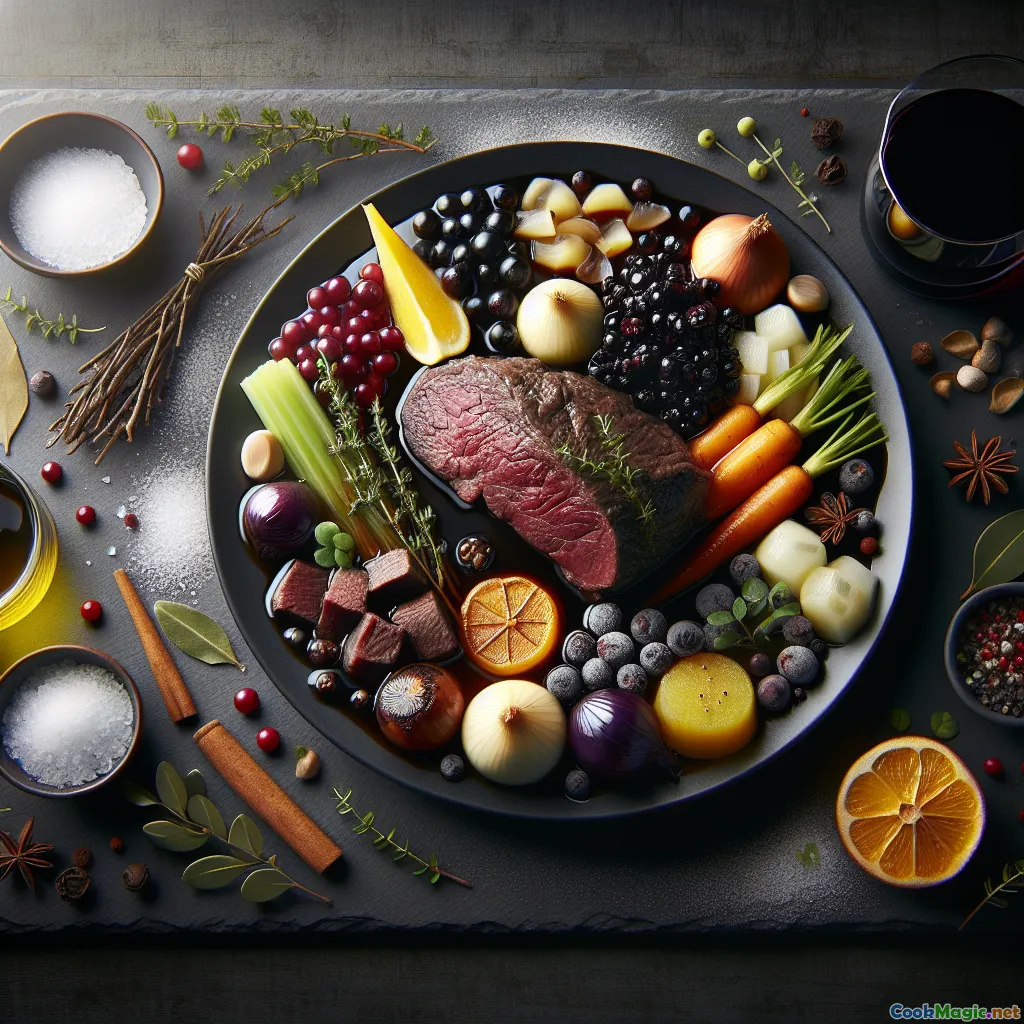
0
3,294
Juli 20, 2025
Problem melden
Zutaten
-
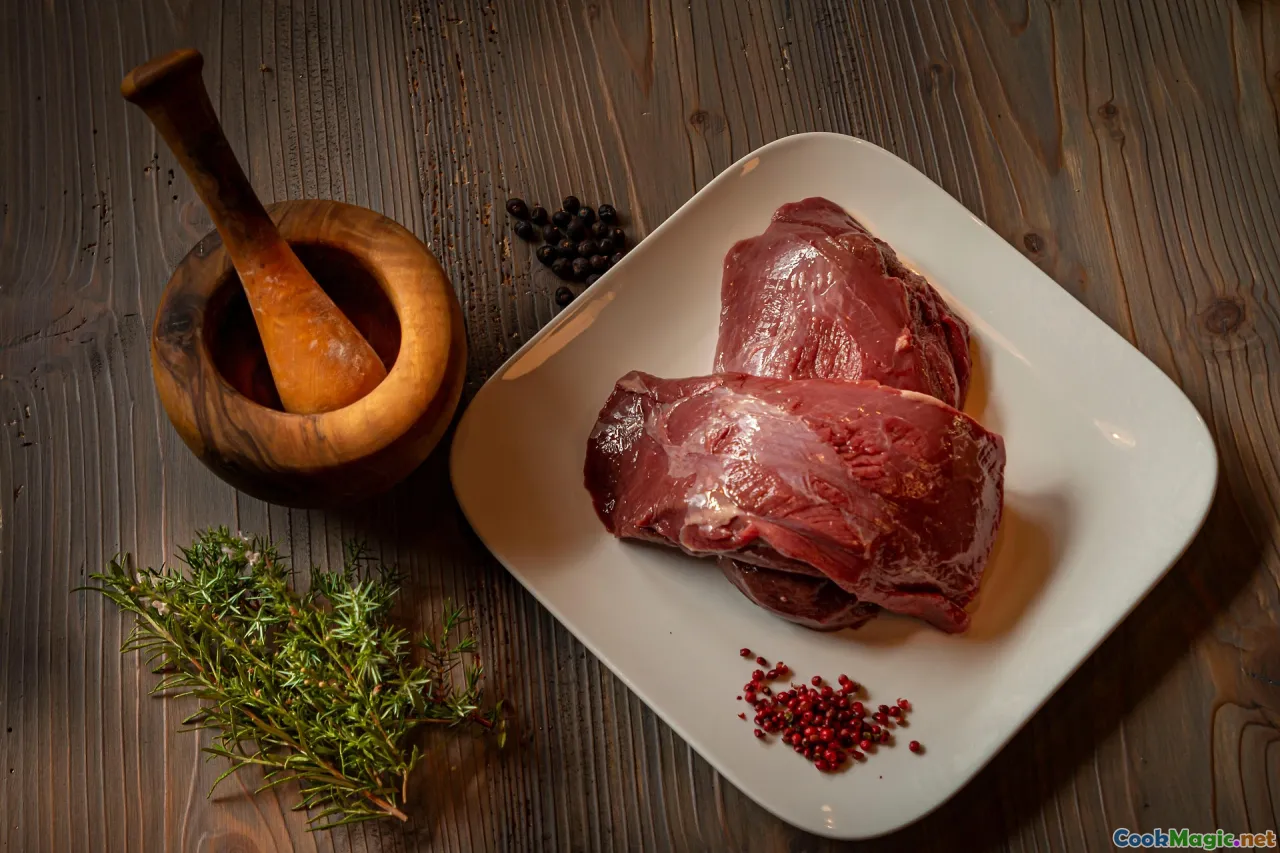
1.2 kilograms Hirschschulter oder -haxe
(Mit Knochen bevorzugt für einen tieferen Geschmack.)
-
250 grams Buffaloberries, frisch oder gefroren
(Rote Johannisbeere kann bei Nichtverfügbarkeit ersetzt werden.)
-
1 large Gelbe Zwiebel
(In Scheiben geschnitten)
-
4 pieces Knoblauchzehen
(Zerschlagen)
-
2 medium Karotte
(Grob gehackt)
-
2 pieces Selleriestangen
(Hacken)
-
8 pieces Wacholderbeeren
(Leicht zerstoßen, betone wilde Noten.)
-
350 ml Rotwein
(Ein herzhafter, trockener Typ)
-
500 ml Rind- oder Hirschbrühe
(Selbstgemacht, wenn möglich)
-
1 tbsp Ahornsirup
(Balanciert die Säure der Beeren)
-
2 tsp Apfelessig
-
2 pieces Lorbeerblätter
-
6 sprigs Frischer Thymian
-
2 tsp Salz
(Nach Geschmack anpassen)
-
1 tsp Schwarzer Pfeffer
(Frisch gemahlen)
-
2 tbsp Olivenöl
(Mit Knochen bevorzugt für einen tieferen Geschmack.)
(Rote Johannisbeere kann bei Nichtverfügbarkeit ersetzt werden.)
(In Scheiben geschnitten)
(Zerschlagen)
(Grob gehackt)
(Hacken)
(Leicht zerstoßen, betone wilde Noten.)
(Ein herzhafter, trockener Typ)
(Selbstgemacht, wenn möglich)
(Balanciert die Säure der Beeren)
(Nach Geschmack anpassen)
(Frisch gemahlen)
Nährwerte
- Portionen: 4
- Portionsgröße: 1 Teller (250g)
- Calories: 410 kcal
- Carbohydrates: 23 g
- Protein: 42 g
- Fat: 13 g
- Fiber: 4 g
- Sugar: 7 g
- Sodium: 950 mg
- Cholesterol: 112 mg
- Calcium: 62 mg
- Iron: 7.8 mg
Anweisungen
-
1 - Mariniere das Hirschfleisch:
Wildfleisch trocken tupfen. Rundherum mit 1 TL Salz und 1/2 TL schwarzem Pfeffer würzen. Mit einer halbierten Knoblauchzehe einreiben und bei Zimmertemperatur 30 Minuten ruhen lassen.
-
2 - Brate das Rehfleisch braun an.:
Erhitze Olivenöl in einem Dutch Oven bei mittlerer bis hoher Hitze. Brate Hirschfleisch rundherum an, ca. 4 Minuten pro Seite. Das Fleisch herausnehmen und beiseitelegen.
-
3 - Das Gemüse vorbereiten:
In derselben Pfanne Karotten, Sellerie und Zwiebel hinzufügen. 5 Minuten anbraten, dabei die braunen Röstaromen vom Pfannenboden lösen.
-
4 - Ablöschen und köcheln lassen:
Gießen Sie Wein hinein. Zum Kochen bringen, auf die Hälfte reduzieren, dann buffaloberries, Knoblauch, Wacholderbeeren, Thymian, Lorbeerblätter und Brühe einrühren. Danach das Rehfleisch wieder hinzufügen.
-
5 - Schmoren Sie das Hirschfleisch langsam:
Auf niedrige Hitze reduzieren, abdecken und im Ofen bei 150°C (300°F) 2–2,5 Stunden schmoren, oder bis das Fleisch auseinanderfällt.
-
6 - Buffaloberry-Glasur zubereiten:
Nehmen Sie das gekochte Rehfleisch heraus und stellen Sie es beiseite. Die Schmorflüssigkeit abseihen und wieder in einen Topf geben. Ahornsirup und Essig hinzufügen. Lassen Sie es köcheln, bis es glänzt, und reduzieren Sie es auf die Hälfte. Mit Salz abschmecken.
-
7 - Servieren und Garnieren:
Schneide oder zerrupfe Rehfleisch. Richte es mit gerösteten Wurzelgemüse an, beträufle es mit dem Beeren-Glasur und garniere mit frischen Thymianblättern, falls gewünscht.
Wildfleisch trocken tupfen. Rundherum mit 1 TL Salz und 1/2 TL schwarzem Pfeffer würzen. Mit einer halbierten Knoblauchzehe einreiben und bei Zimmertemperatur 30 Minuten ruhen lassen.
Erhitze Olivenöl in einem Dutch Oven bei mittlerer bis hoher Hitze. Brate Hirschfleisch rundherum an, ca. 4 Minuten pro Seite. Das Fleisch herausnehmen und beiseitelegen.
In derselben Pfanne Karotten, Sellerie und Zwiebel hinzufügen. 5 Minuten anbraten, dabei die braunen Röstaromen vom Pfannenboden lösen.
Gießen Sie Wein hinein. Zum Kochen bringen, auf die Hälfte reduzieren, dann buffaloberries, Knoblauch, Wacholderbeeren, Thymian, Lorbeerblätter und Brühe einrühren. Danach das Rehfleisch wieder hinzufügen.
Auf niedrige Hitze reduzieren, abdecken und im Ofen bei 150°C (300°F) 2–2,5 Stunden schmoren, oder bis das Fleisch auseinanderfällt.
Nehmen Sie das gekochte Rehfleisch heraus und stellen Sie es beiseite. Die Schmorflüssigkeit abseihen und wieder in einen Topf geben. Ahornsirup und Essig hinzufügen. Lassen Sie es köcheln, bis es glänzt, und reduzieren Sie es auf die Hälfte. Mit Salz abschmecken.
Schneide oder zerrupfe Rehfleisch. Richte es mit gerösteten Wurzelgemüse an, beträufle es mit dem Beeren-Glasur und garniere mit frischen Thymianblättern, falls gewünscht.
Mehr über: Geschmortes Hirschfleisch mit Büffelbeeren: Wild trifft Einheimisches Obst
Buffaloberry Braised Venison: A Wildly Elegant American Classic
Venison, a staple of North American forests and plains, has been a source of nourishment for Indigenous peoples, frontiersmen, and rural families for centuries. Its naturally lean qualities and deep, earthy flavor set it apart from conventional red meats, offering both a healthy protein and a connection to tradition. In 'Buffaloberry Braised Venison', these hunting grounds meet the tangled thickets: buffaloberries, a dazzling tart fruit often foraged from wild shrubbery across North America's prairies, infuse this dish with vibrant acidity and subtle sweetness—a pairing celebrated in Native American cooking.
History & Cultural Significance
Buffaloberries (Shepherdia argentea or Shepherdia canadensis) were prized by indigenous peoples, particularly on the Great Plains and in the northern Rockies. Both venison and buffaloberries evoke traditions of sustainability and respect for the land. Historically, such recipes arose from necessity; the isolation of rural America meant innovation and use of wild larders. Today, weaving these wild ingredients into modern cuisine becomes an act of culinary preservation—of flavor and heritage alike.
Unique Aspects
Unlike sweet glazes or overwhelmingly fruity reductions, the tartness of buffaloberry allows the wild notes of braised venison to shine, rather than masking them. The red wine and maple syrup bring structure and subtle sweetness, lending the final sauce a lush, garnet hue that feels festive for special gatherings. Meanwhile, using whole juniper and thyme preserves a primal, wild dimension unique to game cookery.
Cooking Tips
- Venison cuts: Shank or shoulder are ideal for braising given their collagen-rich structure, ensuring the meat becomes meltingly tender.
- Finding buffaloberries: Look for specialty foragers, online suppliers, or attend wild-harvested fruit markets in late summer or autumn. Red currants are the best substitute if you can't source them.
- Stock options: Prefer homemade or high-quality low sodium for the most controlled flavors.
- Accompaniment: Serve atop a bed of fire-roasted root vegetables, silky mashed potatoes, or wild rice for a rustic tableau.
- Make ahead: The dish improves overnight. Gently reheat for maximum tenderness and concentrated flavor.
Personal Thoughts
Preparing Buffaloberry Braised Venison is an homage to a time-honored relationship between nature, sustenance, and family. Slow cooking transforms the often tough game cut into a marvel of melt-in-your-mouth richness, balanced by the zing of an uncommon native fruit that's criminally underused today. The process—aromatic with alliums and herbs, deeply hued, quietly simmering for hours while anticipation builds—echoes family gatherings, seasonal ritual, and a communion with the wild world around us.
For any adventurous home cook, this recipe expands the kitchen's vocabulary with flavors direct from North America's wilderness—truly a living story on the plate. The tang of buffaloberry, mingling with woodsy juniper and thyme, pushes boundaries and entices conversation. Taking a small risk on unfamiliar ingredients leads to extraordinary, memorable meals.
Final Note
Whether you're a hunter eager to honor your venison, a gardener working with wild-harvested berries, or a cook seeking a taste of the plains' wild bounties, this recipe offers both a grounding in history and a flight of luxurious, primal flavor. It's old and new, humble and bold—a true frontier dish for contemporary tables.