娘惹风味蓝蝶豆花椰浆饭盛宴
(Peranakan Blue Pea Nasi Lemak Feast)
(0 评论)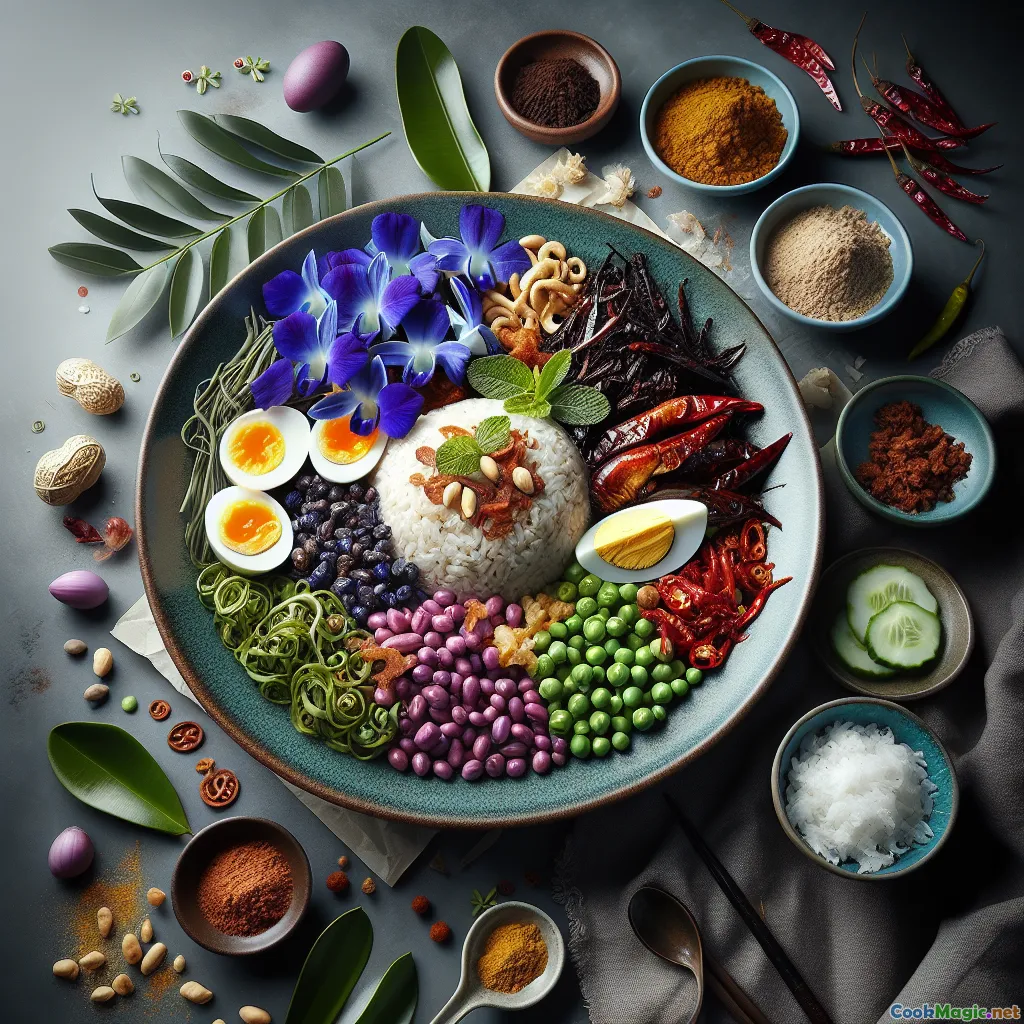
食材
-
380 grams 香米
(Rinse until water runs clear; drain well)
-
300 ml 椰奶
(Full-fat for best aroma)
-
295 ml 水
(Divided: 250 ml for blue pea infusion, 45 ml for tamarind)
-
10 grams 干燥蝶豆花
(Also called blue pea; adjust for deeper color)
-
3 pieces 香兰叶
(Knotted; remove before serving)
-
1.5 tsp 细盐
(Divided between rice and sambal)
-
20 grams 干红辣椒
(Deseeded and soaked until soft)
-
2 pieces 新鲜红辣椒
(For brightness and heat)
-
150 grams 青葱
(去皮并粗略切碎)
-
12 grams 大蒜
(About 4 cloves)
-
5 grams Belacan(虾酱)
(Lightly toasted; omit for vegetarian)
-
1 tbsp 罗望子酱
(Mix with 45 ml warm water)
-
20 grams 棕榈糖(gula melaka)
(Grated; substitute brown sugar if needed)
-
3 tbsp 中性油
(For sambal frying)
-
120 grams 干小鱼 (ikan bilis)
(Rinsed, drained, and patted dry)
-
80 grams 烤花生
(无盐,优先使用无盐)
-
200 grams 黄瓜
(切成半月形)
-
4 pieces 鸡蛋
(Hard-boiled)
-
250 ml 油炸用油
(For anchovies (and optional chicken))
-
400 grams 鸡腿
(Boneless; optional protein side)
-
1 tsp 姜黄粉
(For optional chicken seasoning)
-
0.5 tsp 白胡椒
(For optional chicken seasoning)
-
4 pieces 青柠檬楔
(用于上菜)
(Rinse until water runs clear; drain well)
(Full-fat for best aroma)
(Divided: 250 ml for blue pea infusion, 45 ml for tamarind)
(Also called blue pea; adjust for deeper color)
(Knotted; remove before serving)
(Divided between rice and sambal)
(Deseeded and soaked until soft)
(For brightness and heat)
(去皮并粗略切碎)
(About 4 cloves)
(Lightly toasted; omit for vegetarian)
(Mix with 45 ml warm water)
(Grated; substitute brown sugar if needed)
(For sambal frying)
(Rinsed, drained, and patted dry)
(无盐,优先使用无盐)
(切成半月形)
(Hard-boiled)
(For anchovies (and optional chicken))
(Boneless; optional protein side)
(For optional chicken seasoning)
(For optional chicken seasoning)
(用于上菜)
营养
- 份量: 4
- 每份大小: 1盘 (350克)
- Calories: 780 kcal
- Carbohydrates: 0 g
- Protein: 24 g
- Fat: 38 g
- Fiber: 6 g
- Sugar: 12 g
- Sodium: 950 mg
- Cholesterol: 215 mg
- Calcium: 120 mg
- Iron: 3.8 mg
制作步骤
-
1 - Make blue pea infusion:
Pour 250 ml boiling water over dried butterfly pea flowers. Steep 10 minutes, then strain and reserve the vivid blue liquid.
-
2 - Rinse and set rice:
Rinse jasmine rice several times until water runs clear. Drain well to prevent mushy grains.
-
3 - Cook the blue coconut rice:
Combine rinsed rice, coconut milk (300 ml), 200 ml of blue pea infusion, 1 tsp salt, and knotted pandan in a rice cooker or pot. Cook until fluffy. Reserve extra blue infusion to adjust color if desired.
-
4 - Prep chilies for sambal:
Soak dried chilies in hot water until pliable, then drain. Roughly chop fresh chilies, shallots, and garlic.
-
5 - Blend sambal paste:
Blend dried and fresh chilies with shallots and garlic into a smooth paste. Add a splash of water if needed to help the blades catch.
-
6 - Fry sambal base:
Heat 3 tbsp oil over medium. Stir-fry the chili paste 6–8 minutes until fragrant and oil separates. Add belacan and cook 1–2 minutes more.
-
7 - Season and simmer sambal:
Mix tamarind paste with 45 ml warm water. Add to sambal with palm sugar and 1/2 tsp salt. Simmer gently 5–8 minutes until glossy and jammy. Adjust sweetness, salt, or tang.
-
8 - Fry anchovies:
Heat frying oil to medium. Fry dried anchovies in batches 2–3 minutes until crisp and golden. Drain on paper towels; lightly salt if needed.
-
9 - Toast peanuts:
Dry-toast roasted peanuts in a pan over low heat 1–2 minutes to refresh aroma. Set aside.
-
10 - Boil and peel eggs:
Boil eggs 8–9 minutes for firm yolks. Cool in cold water, peel, and halve.
-
11 - Optional turmeric chicken:
Season chicken with turmeric, white pepper, and a pinch of salt. Pan-fry in a little oil 3–4 minutes per side until cooked through and golden.
-
12 - Fluff, plate, and serve:
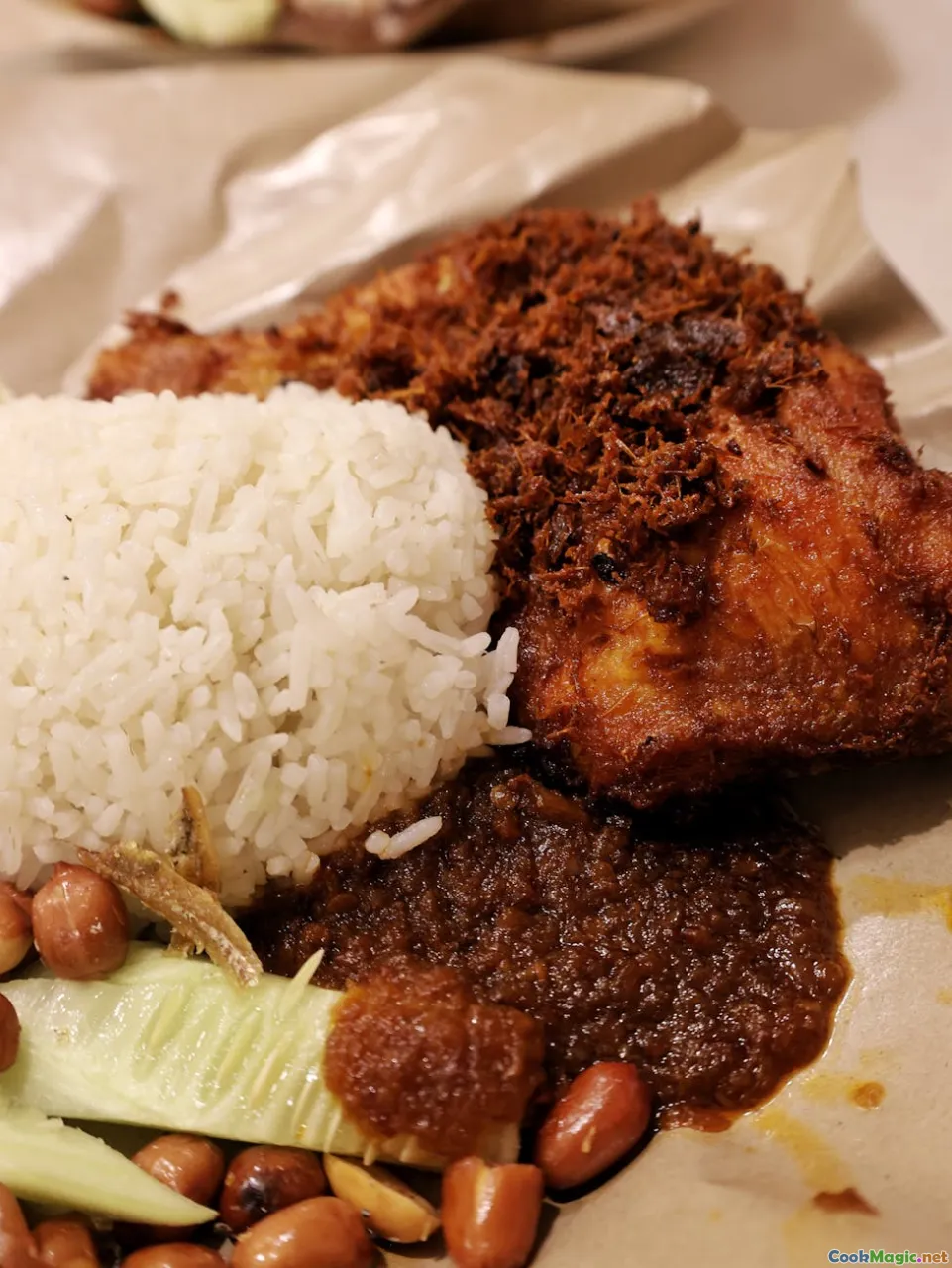
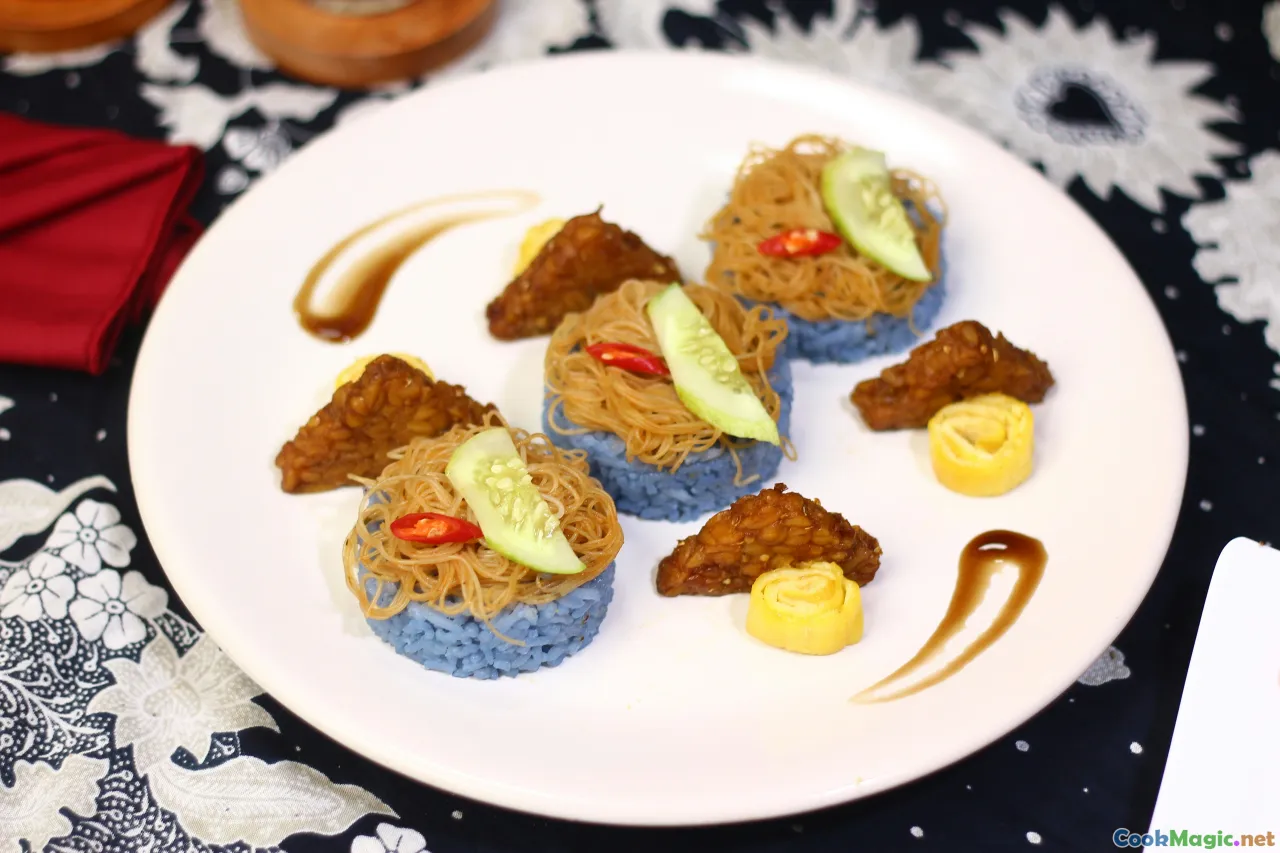
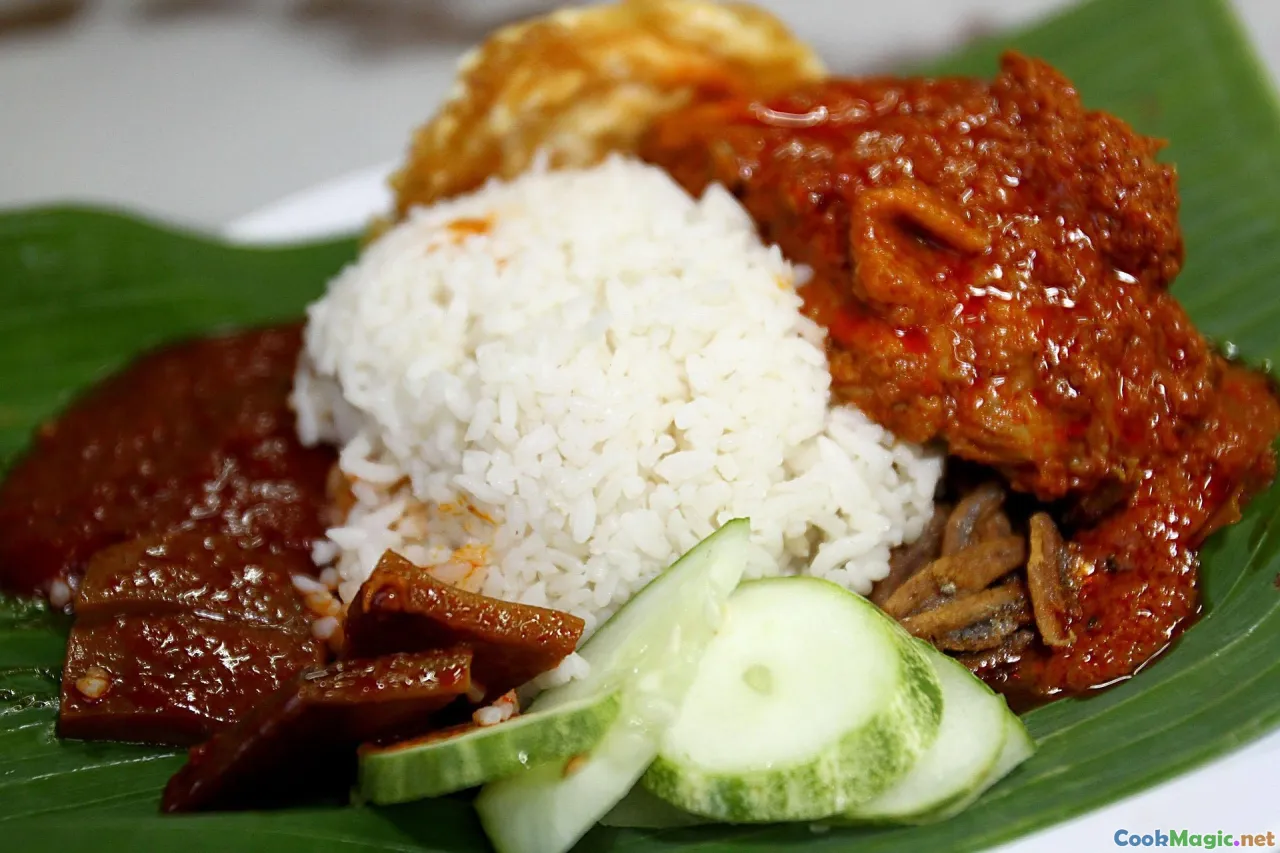
Discard pandan; fluff rice. Plate a mound of blue rice with sambal, crispy anchovies, peanuts, cucumber, and egg halves. Add optional chicken and lime wedges.
Pour 250 ml boiling water over dried butterfly pea flowers. Steep 10 minutes, then strain and reserve the vivid blue liquid.
Rinse jasmine rice several times until water runs clear. Drain well to prevent mushy grains.
Combine rinsed rice, coconut milk (300 ml), 200 ml of blue pea infusion, 1 tsp salt, and knotted pandan in a rice cooker or pot. Cook until fluffy. Reserve extra blue infusion to adjust color if desired.
Soak dried chilies in hot water until pliable, then drain. Roughly chop fresh chilies, shallots, and garlic.
Blend dried and fresh chilies with shallots and garlic into a smooth paste. Add a splash of water if needed to help the blades catch.
Heat 3 tbsp oil over medium. Stir-fry the chili paste 6–8 minutes until fragrant and oil separates. Add belacan and cook 1–2 minutes more.
Mix tamarind paste with 45 ml warm water. Add to sambal with palm sugar and 1/2 tsp salt. Simmer gently 5–8 minutes until glossy and jammy. Adjust sweetness, salt, or tang.
Heat frying oil to medium. Fry dried anchovies in batches 2–3 minutes until crisp and golden. Drain on paper towels; lightly salt if needed.
Dry-toast roasted peanuts in a pan over low heat 1–2 minutes to refresh aroma. Set aside.
Boil eggs 8–9 minutes for firm yolks. Cool in cold water, peel, and halve.
Season chicken with turmeric, white pepper, and a pinch of salt. Pan-fry in a little oil 3–4 minutes per side until cooked through and golden.
Discard pandan; fluff rice. Plate a mound of blue rice with sambal, crispy anchovies, peanuts, cucumber, and egg halves. Add optional chicken and lime wedges.
关于 娘惹风味蓝蝶豆花椰浆饭盛宴 :的更多信息
Peranakan Blue Pea Nasi Lemak: A Jewel-Toned Classic
Nasi lemak is a beloved Malaysian staple—a harmony of coconut-perfumed rice, fiery sambal, and a constellation of textures from crisp anchovies and peanuts to cooling cucumber and jammy eggs. This Peranakan-inspired rendition adds a visual flourish by tinting the rice with the natural, sapphire hue of butterfly pea flowers. The result is a plate that is as striking as it is deeply comforting.
What makes it Peranakan?
Peranakan (also called Nyonya) cuisine reflects the cultural interweaving of Chinese immigrants and the Malay world, notably in the Straits settlements of Malacca and Penang as well as Singapore. It’s characterized by meticulous techniques, aromatic herbs like pandan and kaffir lime, and an intricate balance of sweet, sour, spicy, and umami. While nasi lemak is not exclusively Peranakan, the use of butterfly pea—a flower celebrated across Southeast Asia for its color and gentle earthiness—brings a Peranakan sensibility for elegance and detail to this national favorite.
Flavor architecture
- Coconut rice: Jasmine rice is simmered with full-fat coconut milk and pandan leaves. The butterfly pea infusion adds a subtle, tea-like note and a naturally blue color without altering the classic fragrance.
- Sambal: The soul of the dish. A slow-fried chili paste becomes glossy and jammy, with a base of shallots and garlic, depth from belacan (shrimp paste), and rounded sweetness from gula melaka (palm sugar). Tamarind provides tang that lifts the richness of the coconut rice.
- Essential sides: Crispy ikan bilis (dried anchovies), roasted peanuts, cool cucumber, and eggs—simple elements that provide crunch, freshness, and satisfaction.
Tips for success
- Rice texture matters: Rinse rice thoroughly and drain well to avoid mushiness. For 380 g of rice, the combined liquid should hover around 450–520 ml depending on your rice and cooker. If your rice tends to be soft, use a touch less liquid.
- Color control: Butterfly pea intensity varies. Start with a strong infusion, then add 150–200 ml of it to the pot. If the rice finishes paler than you’d like, steam in a splash more warmed infusion and fluff.
- Sambal alchemy: Fry the chili paste until the oil separates (pecah minyak). This prevents a raw bite and develops sweetness. Balance is key—adjust palm sugar, salt, and tamarind until the sambal tastes complex and rounded.
- Crisp anchovies: Rinse briefly to remove excess salt, then dry completely before frying. Fry in small batches at medium heat for shatter-crisp results without burning.
- Make-ahead: The sambal keeps 1–2 weeks refrigerated and freezes well. Rice is best fresh, but you can re-steam gently. Keep anchovies and peanuts airtight at room temperature to maintain crunch.
- Vegetarian-friendly: Omit belacan and anchovies. Use mushroom “ikan bilis” (thin-fried shiitake), tempeh, or tofu puffs for protein and texture.
- Equipment flexibility: A rice cooker makes this nearly foolproof. On the stovetop, use a heavy pot, simmer gently, and rest the rice covered 10 minutes before fluffing.
Cultural notes and cousins
Blue rice may evoke nasi kerabu (a Kelantanese specialty also colored with butterfly pea), but the flavor profiles differ. Nasi lemak centers on coconut richness and sambal heat, whereas nasi kerabu is herb-forward and served with a bouquet of raw greens and fermented fish sauce. This Peranakan blue rendition honors visual tradition while staying true to the spirit of nasi lemak: an everyday meal elevated by detail and care.
Serving and pairing ideas
- Protein add-ons: Fried turmeric chicken, grilled mackerel, sambal sotong (squid), or otak-otak (spiced fish cake) make it feast-worthy.
- Acidity and freshness: A squeeze of lime brightens the plate. Fresh pineapple or pickled vegetables also cut through richness.
- Drinks: A glass of iced kopi or teh tarik is classic; for a modern twist, a cold chrysanthemum tea complements the floral notes.
Troubleshooting
- Rice too pale: Your infusion may be weak or you added too little. Steep longer or increase flower quantity next time; gently steam in a bit more infusion now.
- Sambal too spicy: Add more palm sugar and a little extra tamarind water; stir in a teaspoon of coconut milk for softness.
- Anchovies soggy: They weren’t dry enough or oil wasn’t hot. Re-crisp by refrying briefly or toasting in a hot dry pan.
Why this recipe is special
It celebrates color, heritage, and the beauty of balance. The blue hue draws you in, but it’s the interplay—creamy rice, sticky-sweet-spicy sambal, brittle anchovies, buttery peanuts, crisp cucumber, and tender eggs—that keeps you captivated. Cooking it at home gives you control over every dimension, from the intensity of the dye to the sambal’s sweetness and the precise crunch you crave. As you plate it, you’re participating in a living culinary story—one that spans seas, generations, and the warm, convivial tables of the Straits Chinese community.