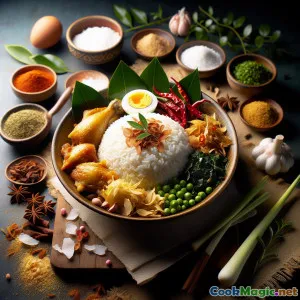
감칠맛 나는 솔로 코코넛 라이스
(Savory Solo Coconut Rice Delight)
(0 리뷰)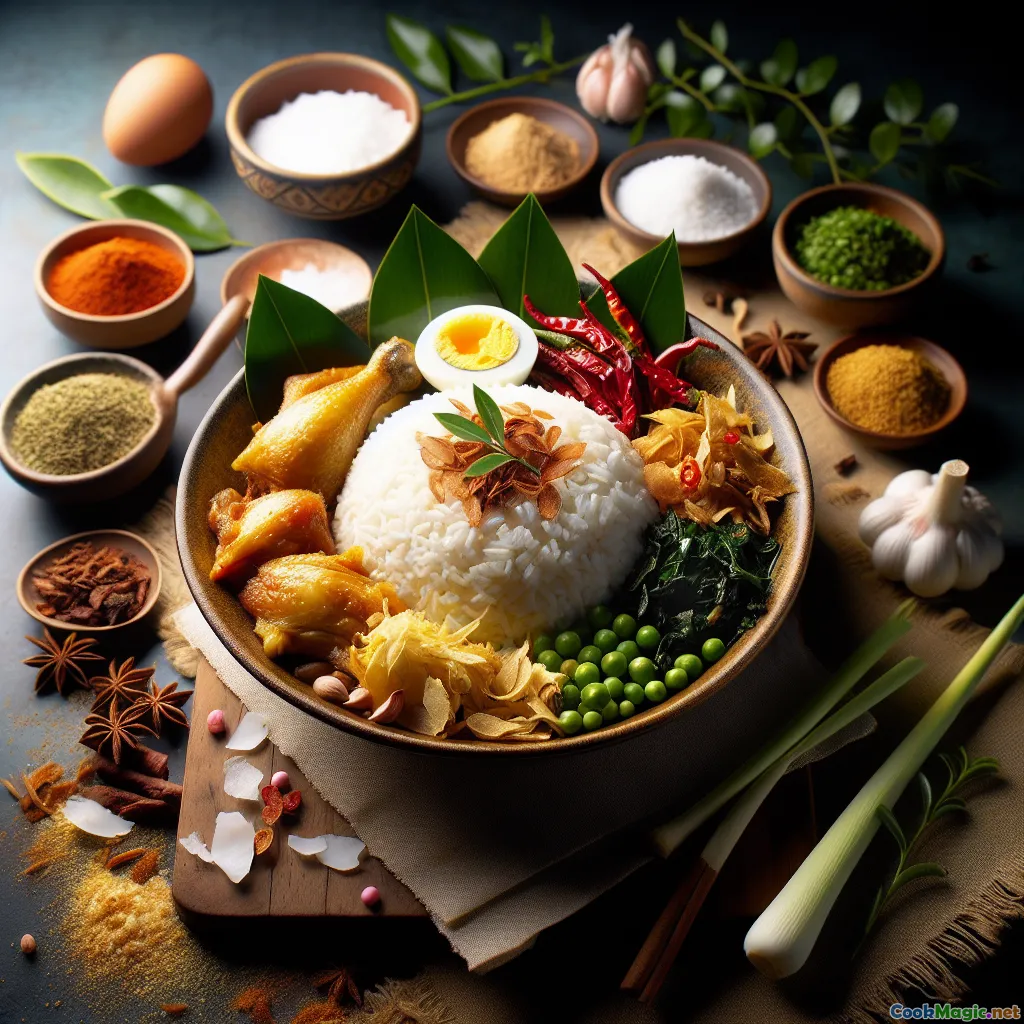

재료
-
300 grams 자스민 쌀
(가능하면 정통 인도네시아산 품종을 사용하십시오.)
-
400 ml 코코넛 밀크
(맛의 풍미를 위해 진한 1차 압착유를 사용하세요.)
-
200 ml 물
-
300 grams 닭 허벅지
(뼈 없이, 큼직하게 썬)
-
2 leaves 판단 잎
(향기를 위해 매듭으로 묶다)
-
2 stalks 레몬그라스
(타박상 입은 채로 묶은)
-
2 leaves 월계수 잎
(가급적 인도네시아산 월계수 잎을 사용하세요.)
-
2 cm piece 갈랑갈
(멍든)
-
4 cloves 샬롯
(얇게 썬)
-
2 cloves 마늘
(다진)
-
1 tsp 소금
(맛에 맞게 조절하세요)
-
1 tsp 설탕
(갈색화와 풍미의 균형)
-
2 whole 삶은 달걀
(토핑용)
-
100 grams 튀긴 템페
(토핑용)
-
4 tbsp 세룬덩 (볶은 코코넛 가루)
(장식용)
-
2 tbsp 튀긴 양파
(장식용)
-
2 whole 청양고추
(더 매운 맛을 위해)
(가능하면 정통 인도네시아산 품종을 사용하십시오.)
(맛의 풍미를 위해 진한 1차 압착유를 사용하세요.)
(뼈 없이, 큼직하게 썬)
(향기를 위해 매듭으로 묶다)
(타박상 입은 채로 묶은)
(가급적 인도네시아산 월계수 잎을 사용하세요.)
(멍든)
(얇게 썬)
(다진)
(맛에 맞게 조절하세요)
(갈색화와 풍미의 균형)
(토핑용)
(토핑용)
(장식용)
(장식용)
(더 매운 맛을 위해)
영양 정보
- 인분: 4
- 1인분 크기: 1접시 (250g)
- Calories: 550 kcal
- Carbohydrates: 65 g
- Protein: 16 g
- Fat: 22 g
- Fiber: 4 g
- Sugar: 5 g
- Sodium: 580 mg
- Cholesterol: 70 mg
- Calcium: 80 mg
- Iron: 3 mg
조리법
-
1 - 향신료 준비하기:
판다난 잎, 레몬그라스, 갈랑갈을 으깨세요. 샬롯은 얇게 썰고 마늘은 다지세요.
-
2 - 샬롯과 마늘을 볶으세요:
두툼한 바닥의 냄비에 기름을 살짝 두르고 샬롯과 마늘이 향이 올라올 때까지 노릇해질 때까지 볶으세요.
-
3 - 향신료 추가:
냄비에 판다나 잎, 레몬그라스, 월계잎, 으깬 갈랑갈을 넣으세요. 향이 나도록 잠깐 볶아주세요.
-
4 - 밥과 코코넛 밀크를 섞으세요.:
냄비에 재스민 쌀, 코코넛 밀크, 물을 넣습니다. 소금(필요하면 설탕도 함께)을 넣고 잘 저어 섞으세요.
-
5 - 쌀을 약한 불에서 끓이세요:
혼합물을 은은한 끓임으로 올려 끓이십시오. 냄비를 덮고 불을 줄여 쌀이 액체를 흡수하고 부드러워질 때까지 약 20–25분 정도 조리하십시오. 눌지 않도록 가끔 저어 주세요.
-
6 - 닭고기 추가(선택 사항):
닭고기를 사용하는 경우, 조리 도중 쌀 속에 닭고기 조각을 살짝 밀어 넣으세요. 뚜껑을 덮고 완전히 익을 때까지 찜해 주세요.
-
7 - 토핑 준비하기:
계란은 완숙으로 삶고, 템페를 황금빛이 날 때까지 볶고, 코코넛 플레이크를 토스트해 serundeng를 만듭니다(미리 만들어진 것을 사용하지 않는 경우). 고명은 따로 두세요.
-
8 - 플레이팅하고 서빙하기:
밥알을 고슬고슬 풀고 향을 제거합니다. 접시에 담아 각 인분에 계란, 템페, serundeng, 튀긴 샬롯, 그리고 풋고추를 얹어 제공합니다.
판다난 잎, 레몬그라스, 갈랑갈을 으깨세요. 샬롯은 얇게 썰고 마늘은 다지세요.
두툼한 바닥의 냄비에 기름을 살짝 두르고 샬롯과 마늘이 향이 올라올 때까지 노릇해질 때까지 볶으세요.
냄비에 판다나 잎, 레몬그라스, 월계잎, 으깬 갈랑갈을 넣으세요. 향이 나도록 잠깐 볶아주세요.
냄비에 재스민 쌀, 코코넛 밀크, 물을 넣습니다. 소금(필요하면 설탕도 함께)을 넣고 잘 저어 섞으세요.
혼합물을 은은한 끓임으로 올려 끓이십시오. 냄비를 덮고 불을 줄여 쌀이 액체를 흡수하고 부드러워질 때까지 약 20–25분 정도 조리하십시오. 눌지 않도록 가끔 저어 주세요.
닭고기를 사용하는 경우, 조리 도중 쌀 속에 닭고기 조각을 살짝 밀어 넣으세요. 뚜껑을 덮고 완전히 익을 때까지 찜해 주세요.
계란은 완숙으로 삶고, 템페를 황금빛이 날 때까지 볶고, 코코넛 플레이크를 토스트해 serundeng를 만듭니다(미리 만들어진 것을 사용하지 않는 경우). 고명은 따로 두세요.
밥알을 고슬고슬 풀고 향을 제거합니다. 접시에 담아 각 인분에 계란, 템페, serundeng, 튀긴 샬롯, 그리고 풋고추를 얹어 제공합니다.
감칠맛 나는 솔로 코코넛 라이스 :에 대한 자세한 정보
Nasi Liwet Solo Gurih: A Journey Into Java’s Rice Traditions
Summary
Nasi Liwet Solo Gurih is the epitome of Solo’s comfort food—rich, fragrant, and deeply artisanal. This savory rice dish, whose origins hail from the city of Solo (Surakarta) on the island of Java, takes humble white rice and transforms it into a festive centerpiece through the masterful layering of coconut milk and aromatic herbs. Every bite tells a story—creamy from the coconut, fresh from lemongrass and pandan, and earthy from the optional protein toppings.
History & Cultural Significance
Nasi liwet itself dates back centuries as both royal cuisine and humble home fare. Particularly in Solo, the dish gained traction as a favorite for communal meals and village celebrations. The secret lies in the sacred trinity of pandan, lemongrass, and coconut milk—a legacy from the Javanese philosophy of rukun (harmony) reflected through food. Traditionally, nasi liwet is enjoyed on banana leaves, eaten by hand, and shared amidst conversation. In Javanese culture, food is not just sustenance—it’s an invitation to togetherness.
For specific communities—like the Sesaji Dalem ceremonies—binding the kitchen smells of coconut and pandan into rice is tribute to ancestors and an act of celebration. Served most authentically with toppings like hard-boiled eggs, opor ayam (coconut chicken), tofu, tempeh, and serundeng, the dish is wonderfully adaptable across generations.
Unique Aspects
One of the most distinguishing features of Solo nasi liwet is the sticky, almost risotto-like texture. Unlike plain steamed rice, the grains slowly absorb the rich, spiced coconut milk, the flavor steeped through the aromatics for a truly soothing eating experience. Layers of fried toppings—tempeh, serundeng (toasted and spiced coconut), and crispy shallots—offer big contrasts in both flavor and texture.
Another Quintessential detail? The use of pandan and lemongrass. Pandan imparts a unique, sweet-floral scent that lifts the whole pot, while lemongrass’s citrus notes cut through the coconut’s intensity. If original daun salam (Indonesian bay leaves) can be found, they add a subtle earthy note otherwise missing from "regular" bay leaves.
Tips & Substitutions
- If jasmine or medium-grain rice isn’t available, sushi rice (rinsed) offers a similarly sticky result.
- Substitute chicken with mushrooms or tofu for a vegetarian adaptation.
- Store-bought fried onions save time, though making them fresh enhances authenticity.
- Do not skip pandan leaf if possible—it’s central for fragrance!
- Make in a rice cooker by combining all ingredients (apart from proteins), switching to 'cook' mode, and stirring after 10-15 minutes.
Serving
Nasi Liwet is best enjoyed hot, ladled onto banana leaves if available, and topped with whatever proteins or sambals fit your tastes. It pairs excellently with labu siam (chayote stew) and simple cucumber pickles for additional freshness.
Personal Thoughts
Every pot conjures a time-travel to Solo at dawn: the sizzle of spices, temple bells, and neighbors offering a shared meal. Try presenting the dish this way next communal gathering; its subtle warmth will garner surprise and delight. It’s food at its most unifying—proof that even the simplest grain, when honored and elevated, can tell a whole city’s story.