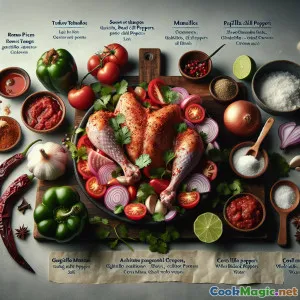
훈제 Kak'ik 수프: 과테말라의 매운 칠면조 스튜
(Smoky Kak'ik Soup: Guatemala's Spicy Turkey Stew)
(0 리뷰)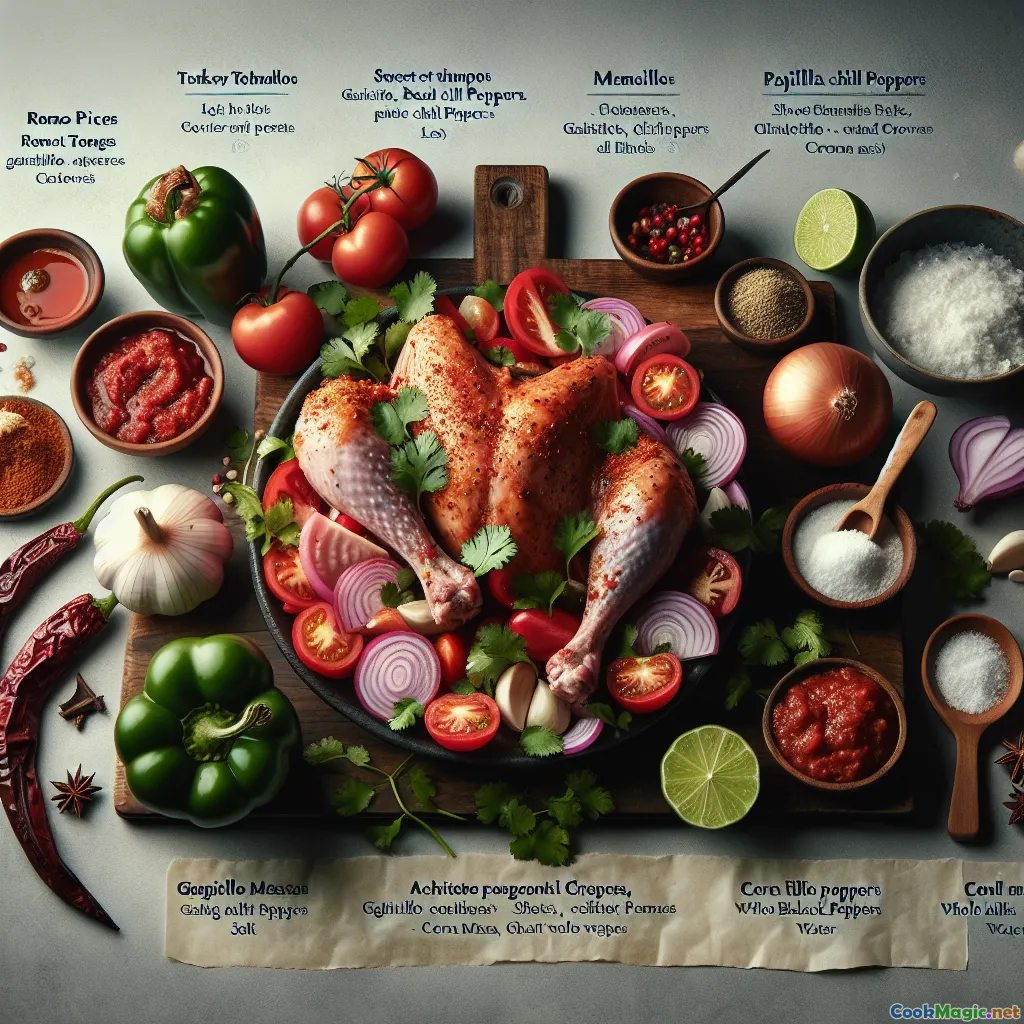


재료
-
1.2 kg 칠면조 조각(다리, 허벅지, 날개)
(피부가 있는 조각 또는 전체 작은 칠면조, 손질된 상태)
-
4 medium 로마 토마토
(신선한, 잘 익은)
-
3 medium 토마티야
(껍질 벗기고 헹군)
-
1 large 달콤한 빨간 피망
(대충 다진)
-
2 tbsp 아치오테 페이스트
(진한 색과 흙 같은 풍미를 위해)
-
2 whole 과히요 고추
(씨와 줄기를 제거한)
-
1 whole 파실라 칠리 페퍼
(씨와 줄기를 제거한)
-
6 whole 마늘 쪽
(껍질 벗긴)
-
1 large 백양파
(다진)
-
1 bunch 고수
(장식을 위해 잎을 몇 개 남겨두세요)
-
1 small handful 민트
(가능하면 현지 '히에르바 부에나')
-
5 pieces 전분 올스파이스 베리
(선택 사항, 따뜻한 느낌을 더함)
-
4 tbsp 옥수수 마사
(걸쭉하게 하거나 옥수수 가루를 대체하는 용도)
-
6 pieces 라임 조각
(서빙용)
-
2 tsp 소금
(취향에 따라)
-
1 tsp 통후추
(신선하게 깨진)
-
2.5 liters 물
(집에서 만든 칠면조/닭 육수(가능한 경우))
(피부가 있는 조각 또는 전체 작은 칠면조, 손질된 상태)
(신선한, 잘 익은)
(껍질 벗기고 헹군)
(대충 다진)
(진한 색과 흙 같은 풍미를 위해)
(씨와 줄기를 제거한)
(씨와 줄기를 제거한)
(껍질 벗긴)
(다진)
(장식을 위해 잎을 몇 개 남겨두세요)
(가능하면 현지 '히에르바 부에나')
(선택 사항, 따뜻한 느낌을 더함)
(걸쭉하게 하거나 옥수수 가루를 대체하는 용도)
(서빙용)
(취향에 따라)
(신선하게 깨진)
(집에서 만든 칠면조/닭 육수(가능한 경우))
영양 정보
- 인분: 6
- 1인분 크기: 큰 그릇 1개 (~350ml)
- Calories: 450 kcal
- Carbohydrates: 0 g
- Protein: 57 g
- Fat: 15 g
- Fiber: 6 g
- Sugar: 7 g
- Sodium: 780 mg
- Cholesterol: 125 mg
- Calcium: 78 mg
- Iron: 3.2 mg
조리법
-
1 - 고추와 야채 준비하기:
가열된 마른 프라이팬(코말)에서 가볍게 과히요와 파실야 칠리를 향이 날 때까지 태우지 않도록 살짝 구워줍니다. 불에서 내리고 따뜻한 물에 10분간 담가 부드럽게 만듭니다.
-
2 - 볶음 향신료:
같은 뜨거운 프라이팬에서 토마토, 토마틸로, 마늘, 양파, 피망을 잘 타서 약간 검게 될 때까지 굽고, 고루 굽히기 위해 필요에 따라 뒤집어 주세요. 불에서 내리고 따로 둡니다.
-
3 - 베이스 혼합:
블렌더에 부드럽게 만든 칠리, 그을린 채소, 아치오테 페이스트, 검은 후추, 향신료(사용하는 경우)와 물 1컵을 넣어주세요. 매우 부드럽고 걸쭉한 페이스트가 될 때까지 블렌딩하세요.
-
4 - 칠면조를 갈색으로 굽기:
큰 무거운 냄비에 기름을 약간 두르고 가열하세요. 칠면조 조각을 모든 면이 노릇하게 익도록 구워 깊은 맛을 냅니다. 필요에 따라 여분의 기름을 제거하세요.
-
5 - 칠면조를 끓이기:
믹서에 간 칠리 페이스트를 칠면조 냄비에 넣으세요. 남은 물(또는 육수)을 붓고, 소금을 넣으세요. 끓기 시작하면 불을 줄이고 뚜껑을 덮어 60분간 끓이면서 칠면조가 부드러워지고 육수가 풍부한 색깔이 될 때까지 조리하세요.
-
6 - 허브와 반죽을 추가하세요:
옥수수 가루를 약간의 육수와 섞어 부드러운 반죽을 만드세요. 고수, 민트, 그리고 가루 혼합물을 수프에 넣으세요. 약한 불에서 10분 더 끓여서 살짝 걸쭉해지고 향이 배이도록 합니다.
-
7 - 장식 및 제공:
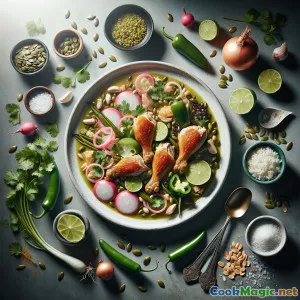
소금의 간을 맞추고 필요하면 조절하세요. 큰 그릇에 뜨겁게 담아 각 그릇에는 충분한 칠면조 고기 조각, 풍부한 육수, 신선한 고수, 그리고 짜내기 위한 라임 조각을 함께 제공합니다.
가열된 마른 프라이팬(코말)에서 가볍게 과히요와 파실야 칠리를 향이 날 때까지 태우지 않도록 살짝 구워줍니다. 불에서 내리고 따뜻한 물에 10분간 담가 부드럽게 만듭니다.
같은 뜨거운 프라이팬에서 토마토, 토마틸로, 마늘, 양파, 피망을 잘 타서 약간 검게 될 때까지 굽고, 고루 굽히기 위해 필요에 따라 뒤집어 주세요. 불에서 내리고 따로 둡니다.
블렌더에 부드럽게 만든 칠리, 그을린 채소, 아치오테 페이스트, 검은 후추, 향신료(사용하는 경우)와 물 1컵을 넣어주세요. 매우 부드럽고 걸쭉한 페이스트가 될 때까지 블렌딩하세요.
큰 무거운 냄비에 기름을 약간 두르고 가열하세요. 칠면조 조각을 모든 면이 노릇하게 익도록 구워 깊은 맛을 냅니다. 필요에 따라 여분의 기름을 제거하세요.
믹서에 간 칠리 페이스트를 칠면조 냄비에 넣으세요. 남은 물(또는 육수)을 붓고, 소금을 넣으세요. 끓기 시작하면 불을 줄이고 뚜껑을 덮어 60분간 끓이면서 칠면조가 부드러워지고 육수가 풍부한 색깔이 될 때까지 조리하세요.
옥수수 가루를 약간의 육수와 섞어 부드러운 반죽을 만드세요. 고수, 민트, 그리고 가루 혼합물을 수프에 넣으세요. 약한 불에서 10분 더 끓여서 살짝 걸쭉해지고 향이 배이도록 합니다.
소금의 간을 맞추고 필요하면 조절하세요. 큰 그릇에 뜨겁게 담아 각 그릇에는 충분한 칠면조 고기 조각, 풍부한 육수, 신선한 고수, 그리고 짜내기 위한 라임 조각을 함께 제공합니다.
훈제 Kak'ik 수프: 과테말라의 매운 칠면조 스튜 :에 대한 자세한 정보
Kak'ik de Quetzaltenango: A Fiery, Aromatic Classic from the Guatemalan Highlands
Kak'ik is one of the jewels of Guatemalan cuisine, perched proudly on tables during family celebrations and festive occasions in the country’s western highlands, especially around Quetzaltenango (also called Xela). At first glance, it appears to be a simple “turkey stew,” but unpacking a single bowl reveals the rich history, vibrant ingredients, and stubborn Mayan traditions that have survived centuries of change.
Historical & Cultural Significance
Kak'ik (pronounced kahk-eek) traces its roots to the ancient Mayan people, who settled in Guatemala well before the Spanish conquest. The name itself derives from the Q’eqchi’ Mayan language: 'kak' meaning “red” and 'ik' meaning “hot, or spicy.” Although now spread across many regions, it remains particularly meaningful in Quetzaltenango, where indigenous Cakchiquel and Mam communities craft their brothy staple much as their ancestors once did—wood-fire, clay pots, and all.
Traditionally, Kak’ik uses wild turkey or 'chompipe,' an animal with deep ritual and culinary value. The bright scarlet color, imparted by heaps of luscious ripe tomatoes, annatto (achiote), and chilis, recalls strength and sacrifice.
What Makes This Version Unique?
- Layered Smokiness: Step one is the subtle toasting and charring of chilis and vegetables, a classic Mayan technique lending unparalleled depth.
- Aromatic Thickeners: By swirling masa (corn dough) in at the end, the broth gains a pleasing, silky body, echoing Guatemalan tortillas. This version uses fresh cilantro and native mint—bold and fragrant.
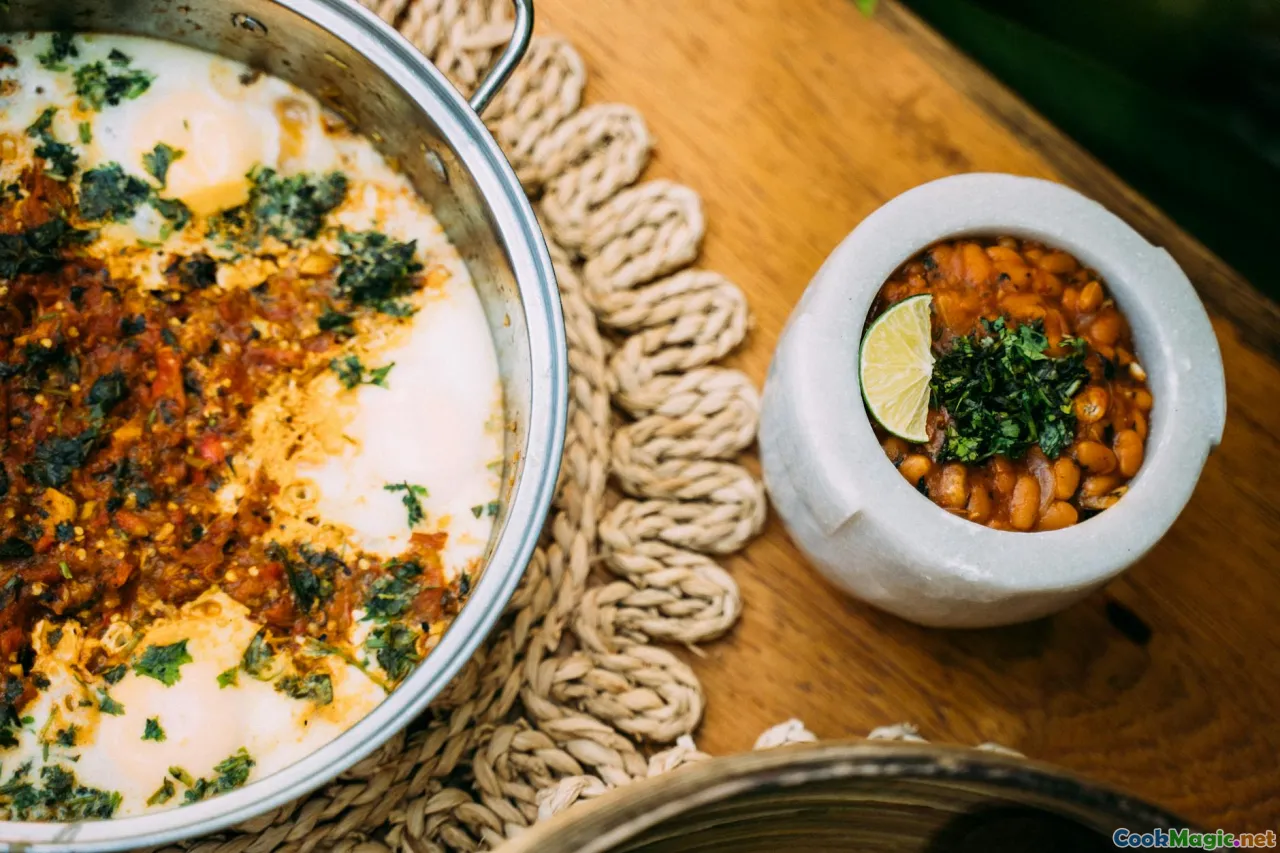
- Rustic Presentation: Each bowl boasts a meaty turkey chunk surrounded by a sunset-red broth, sometimes eaten with 'tamales de masa' or simple white rice on the side.
Substitutes, Serving, and Tips
- Use chicken if turkey is unavailable, but the wilder gaminess of turkey is more traditional and flavorful.
- Toltec and Mayan recipes use native 'hierba santa' instead of mint—seek it out for a truly authentic fragrance.
- Adjust chili quantity for a milder or feistier soup.
- Leftovers can be refrigerated up to 3 days; flavors deepen substantially overnight.
Perfect Pairings
Guatemalan corn tortillas or a classic rice side (‘arroz blanco’) turn Kak’ik into a hearty main. For festivals, locals pour it into large bowls and gather family together—every bite is connective, memorable.
Personal Thoughts
Cooking Kak'ik is like traveling in both time and place. The scents—spicy, smoky, and green—waft through the kitchen, teaching patience and respect for Maya culinary ritual. Many Guatemalan cooks say, “A soup isn’t ready until it’s shared.”
So treat Kak'ik de Quetzaltenango as more than a weekend culinary project; see it as a stew layered with history, community, and flavor. Whether you're seeking warmth, a taste of Central America, or the magic of Mayan food technology, this recipe is your gateway to a singular, spicy tradition.