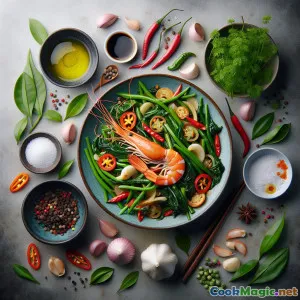
보르네오 정글 고사리: 야생의 맛 볶음
(Borneo Jungle Fern: Stir-Fried Wild Delight)
(0 리뷰)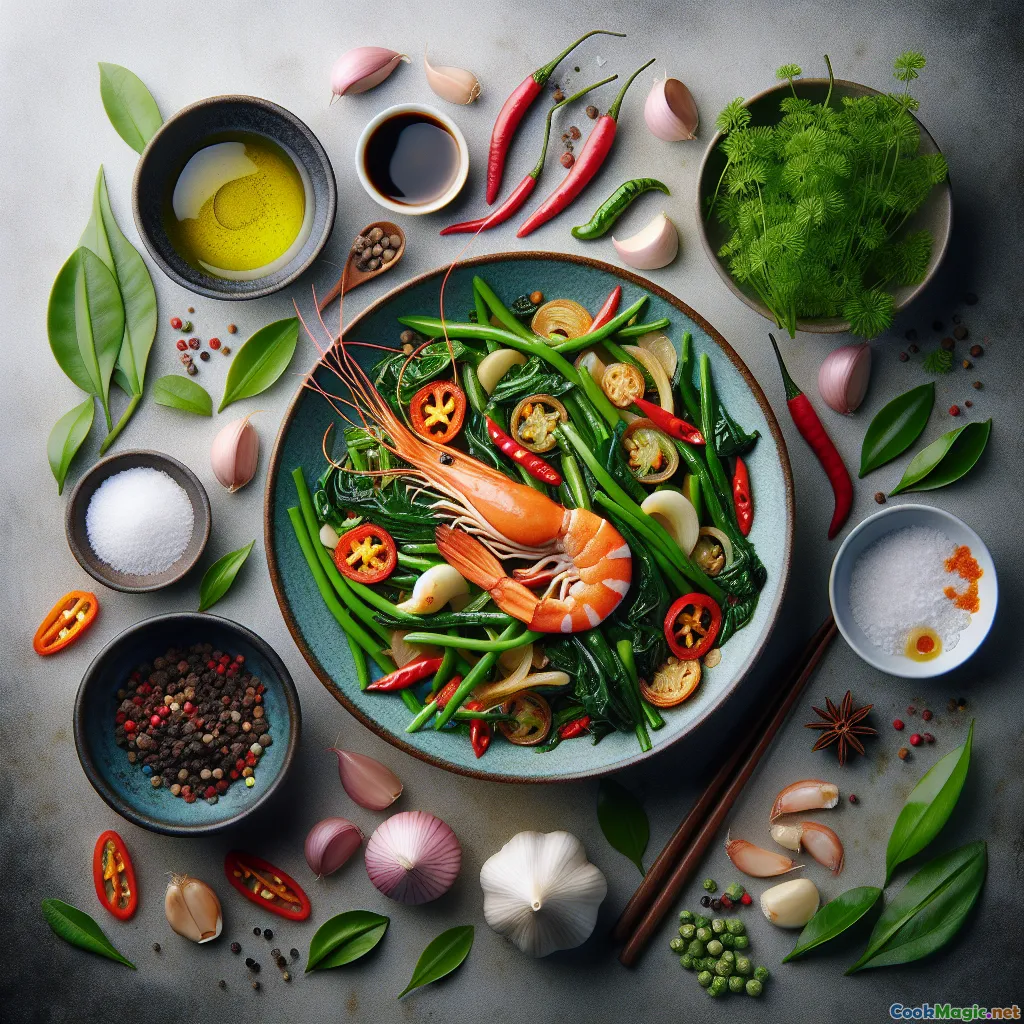

재료
-
200 grams 정글 고사리 새순 (pucuk paku)
(철저히 씻으세요. 없으면 fiddlehead ferns로 대체하십시오.)
-
3 small 샬롯
(얇게 썬)
-
2 cloves 마늘 쪽
(으깨거나 다진)
-
1 piece 고추
(씨를 제거하고 얇게 썰어 취향에 맞게 조절하세요.)
-
80 grams 신선한 강가 새우
(껍질을 벗기고 깨끗이 씻으세요; 채식주의자용에는 생략하세요)
-
100 ml 멸치 육수
(또는 닭 육수/야채 육수)
-
1 tbsp 간장
(간을 맞추려면 연한 간장을 사용하세요.)
-
1/4 tsp 소금
(맛에 따라 간을 맞추세요)
-
1/8 tsp 흰 후추
(맛에 따라)
-
2 tbsp 요리용 기름
(가능하면 땅콩 기름이나 식물성 기름.)
(철저히 씻으세요. 없으면 fiddlehead ferns로 대체하십시오.)
(얇게 썬)
(으깨거나 다진)
(씨를 제거하고 얇게 썰어 취향에 맞게 조절하세요.)
(껍질을 벗기고 깨끗이 씻으세요; 채식주의자용에는 생략하세요)
(또는 닭 육수/야채 육수)
(간을 맞추려면 연한 간장을 사용하세요.)
(맛에 따라 간을 맞추세요)
(맛에 따라)
(가능하면 땅콩 기름이나 식물성 기름.)
영양 정보
- 인분: 2
- 1인분 크기: 1 그릇 (300g)
- Calories: 175 kcal
- Carbohydrates: 16 g
- Protein: 9 g
- Fat: 7 g
- Fiber: 5 g
- Sugar: 4 g
- Sodium: 670 mg
- Cholesterol: 38 mg
- Calcium: 68 mg
- Iron: 3.1 mg
조리법
-
1 - 고사리와 재료를 준비하세요:
고사리 줄기를 깨끗이 씻어 5cm 길이로 자른다. 샬롯, 마늘, 고추를 손질해 얇게 썰어 따로 두고. 사용할 경우 새우를 손질한다.
-
2 - 향채 볶음:
중간 불에서 웍에 기름을 달군다. 샬롯과 마늘을 넣고 향이 올라오고 연하게 황금빛이 될 때까지 볶는다.
-
3 - 고추와 해산물을 추가하세요:
얇게 썬 빨간 고추와 새우 조각을 넣으세요. 기름에 풍미가 배도록 1분간 빠르게 볶으세요.
-
4 - 고사리를 넣으세요:
불을 높이고 자른 고사리 줄기를 넣으세요. 향기로운 기름으로 고루 코팅되도록 재빨리 버무리세요.
-
5 - 양념하고 찌다:
멸치 육수를 붓고 간장, 소금, 선택적으로 백후추를 넣으세요. 한 분 더 볶은 뒤 뚜껑을 덮고 1분 증기로 찌듯이 익혀 방금까지 부드럽지만 여전히 생생한 색감을 남깁니다.
-
6 - 완료하고 제공하기:
뚜껑을 제거하고 다시 버무린 다음 맛을 보고 간을 맞추세요. 뜨겁게 사이드나 메인으로 찐 밥과 함께 서빙하세요.
고사리 줄기를 깨끗이 씻어 5cm 길이로 자른다. 샬롯, 마늘, 고추를 손질해 얇게 썰어 따로 두고. 사용할 경우 새우를 손질한다.
중간 불에서 웍에 기름을 달군다. 샬롯과 마늘을 넣고 향이 올라오고 연하게 황금빛이 될 때까지 볶는다.
얇게 썬 빨간 고추와 새우 조각을 넣으세요. 기름에 풍미가 배도록 1분간 빠르게 볶으세요.
불을 높이고 자른 고사리 줄기를 넣으세요. 향기로운 기름으로 고루 코팅되도록 재빨리 버무리세요.
멸치 육수를 붓고 간장, 소금, 선택적으로 백후추를 넣으세요. 한 분 더 볶은 뒤 뚜껑을 덮고 1분 증기로 찌듯이 익혀 방금까지 부드럽지만 여전히 생생한 색감을 남깁니다.
뚜껑을 제거하고 다시 버무린 다음 맛을 보고 간을 맞추세요. 뜨겁게 사이드나 메인으로 찐 밥과 함께 서빙하세요.
보르네오 정글 고사리: 야생의 맛 볶음 :에 대한 자세한 정보
Borneo Jungle Fern Stir Fry: An Adventure on a Plate
A Journey to the Rainforest
The Borneo Jungle Fern Stir Fry, also known in local dialects as “Pucuk Paku Goreng,” is more than an average meal—it is an exhilarating march through lush equatorial jungles, distilled into vibrant, edible art. The featured hero is the edible fern shoot, abundant in the riverbanks and lowlands of Borneo’s magnificent rainforest, representing both the culinary heritage and ecosystem of the region. Burstingly green, with a subtle, earthy flavor and crisp bite, jungle fern brings a relevance and sense of place rarely found in world cuisine.
Cultural Resonance and Origins
On the island of Borneo—shared by Malaysia, Indonesia, and Brunei—the jungle is both protector and provider. Indigenous groups like the Iban and Dayak have relied on the forest’s wild bounty for millennia, foraging ferns at the onset of the wet season or after the customary burn. The ferns, usually of the Diplazium esculentum or Stenochlaena palustris genera, are harvested in youthful, fistful coils called fiddleheads or 'pucuk.'
Stir-frying with locally caught fresh river prawns and often anchovy stock is a way of honoring both the land and water’s bounty. This preparation employs minimal oil and high heat to protect the verdant hue and snap—distinctly different from the protracted simmering associated with leafy greens elsewhere.
Culinary Aspects and Tips
The dish calls for only a brief cook—overdoing it results in wilted, mushy shoots, so speed with precision is key! Thai or Vietnamese fiddlehead ferns can replace the Bornean variety if you’re foraging beyond Southeast Asia. The prawns lend subtle sweetness, but the dish sings just as well in vegetarian hands—opt instead for full rich mushroom stock or a pinch more soy sauce.
Soy sauce and fresh aromatics—garlic, shallots, and chili—bring savory balance, while the stories written on each plate evoke centuries-old retreat to mist-wrapped village kitchens. Peanut oil is traditionally favored for flavor, but any neutral, high-heat oil works just as well.
Serving Suggestions
Dished up beside fragrant steamed rice and perhaps with sambal belacan at the side, this stir fry happily steps up as a shared side or a vegan main. Households often feature this simply alongside grilled fish or chicken. The texture of the greens—between delicate asparagus and crisp green beans—pairs beautifully with other punchy Southeast Asian flavors.
Nutritional Value
Low in calories but packed with fiber, vitamins, and antioxidants, jungle fern is not just delicious but part of Borneo communities’ longevity. A serving supplies a surprising portion of your daily iron and calcium—a thunderous bonus considering how delicate it seems on the plate. The addition of prawns raises the protein count while keeping the dish light. Those watching sodium can use low-salt soy or limit stocks.
Personal Thoughts, Uniqueness, & Sustainability
My favorite aspect of this recipe is its wildness. It is both humble and intensely exotic; each bite is at once familiar, reminiscent of spring asparagus, and at the same time bold with earthy jungle notes. Cooking Borneo Jungle Fern Stir Fry is using taste to travel—the sort of food experience that builds connection to a place and its people, even half a world away.
And from a sustainability point of view, foraging wild greens encourages biodiversity and honors indigenous green knowledge about what is abundant and edible. (Do, of course, make sure to correctly identify edible species if foraging!) The dish itself is flexible, tying together harvested proteins, simple aromatics, and wild produce—a fitting tribute to both the local palate and the richness of the land.
Conclusion & Serving Notes
To make this at home, be bold: seek fiddlehead ferns at Asian markets, or substitute with other crisp, green wild or farmed shoots. And dare to stir-fry with joy gust. With every aromatic sizzle and every jewel-green fern frond, let your imagination meander the Borneo rainforest canopy, sitting at a rustic wooden table imbued with adventure and ancient wisdom.
Suitable as a standout dish for dinner parties, adventurous home cooks, or anyone wishing to meet nature at the table—this is a plateful of stories and wild spirit, forged in a simple wok in twenty minutes or less.