네팔식 매콤한 감자와 대나무 순 커리
(Zesty Nepali Potato-Bamboo Shoot Curry)
(0 리뷰)

재료
-
2 tbsp 겨자기름
(Smoky Nepali flavor; substitute neutral oil if needed)
-
0.5 tsp 메티 시드 (methi)
(Temper until nearly black for nutty aroma)
-
1 tsp 쿠민 씨앗
(Bloom in hot oil for depth)
-
2 pcs 말린 빨간 고추
(Break to release heat; adjust to taste)
-
1 pc 월계수 잎
(Adds warm aroma)
-
150 grams 양파, 잘게 다진 것
(About 1 medium)
-
4 cloves 다진 마늘
(신선하게 다져 최고의 풍미를 위해)
-
1 tbsp 생강 (강판에 간)
(Bright, peppery lift)
-
1 tsp 강황 가루
(Color and earthy warmth)
-
2 tsp 간 고수
(Citrusy backbone to the curry)
-
1 tsp 갈은 커민
(Reinforces seed aroma)
-
200 grams 잘게 썬 토마토
(Ripe and juicy preferred)
-
500 grams 껍질을 벗긴 2cm 큐브로 자른 감자
(Waxy or all-purpose potatoes)
-
200 grams 발효 대나무 순(타마), 씻은
(Rinse to control sourness/aroma)
-
240 grams 삶은 검은눈콩(bodi), 물기를 제거
(About 1½ cups; canned or home-cooked)
-
1 pc 초록 고추, 얇게 썬 것
(Adjust for heat)
-
0.5 tsp Timur (사천 후추, 네팔산)
(Citrusy tingle; crush just before using)
-
0.13 tsp 아사포에티다 (Hing)
(Pinch; enhances savoriness)
-
8 grams 소금
(맛에 맞게 조절하세요)
-
750 ml 야채 육수(또는 물)
(For a stew-like consistency)
-
1 tbsp 레몬 주스
(Balances sourness of tama)
-
2 tbsp 신선한 고수 (다진)
(장식 및 신선함을 위해)
-
2 tbsp 얇게 썬 대파
(Fresh finish)
-
1 tsp 볶은 참기름
(Optional finishing drizzle; keeps it vegan)
-
0.25 tsp 신선하게 갈은 검은 후추
(맛에 따라)
(Smoky Nepali flavor; substitute neutral oil if needed)
(Temper until nearly black for nutty aroma)
(Bloom in hot oil for depth)
(Break to release heat; adjust to taste)
(Adds warm aroma)
(About 1 medium)
(신선하게 다져 최고의 풍미를 위해)
(Bright, peppery lift)
(Color and earthy warmth)
(Citrusy backbone to the curry)
(Reinforces seed aroma)
(Ripe and juicy preferred)
(Waxy or all-purpose potatoes)
(Rinse to control sourness/aroma)
(About 1½ cups; canned or home-cooked)
(Adjust for heat)
(Citrusy tingle; crush just before using)
(Pinch; enhances savoriness)
(맛에 맞게 조절하세요)
(For a stew-like consistency)
(Balances sourness of tama)
(장식 및 신선함을 위해)
(Fresh finish)
(Optional finishing drizzle; keeps it vegan)
(맛에 따라)
영양 정보
- 인분: 4
- 1인분 크기: 1 그릇 (300g)
- Calories: 300 kcal
- Carbohydrates: 0 g
- Protein: 7 g
- Fat: 8 g
- Fiber: 10 g
- Sugar: 6 g
- Sodium: 620 mg
- Cholesterol: 0 mg
- Calcium: 120 mg
- Iron: 3 mg
조리법
-
1 - Prep and Rinse Tama:
Drain and rinse fermented bamboo shoots to mellow the funk and saltiness. Cube potatoes, chop onions and tomatoes, mince garlic, and grate ginger. Measure spices.
-
2 - Heat and Temper Spices:
Heat mustard oil over medium. Add fenugreek seeds until deep brown, then cumin seeds, dried chilies, and bay leaf. Stir until aromatic, about 30–45 seconds.
-
3 - Soften Onions:
Add onions with a pinch of salt; cook until translucent and lightly golden, stirring to avoid burning the tempered spices.
-
4 - Bloom aromatics:
Stir in garlic and ginger for 30 seconds. Add turmeric, ground coriander, ground cumin, and asafoetida (if using). Cook until a paste forms and smells toasty.
-
5 - Tomato base:
Add tomatoes; cook down until thick and glossy, oil separating at edges. This forms the curry’s masala base and prevents a raw spice taste.
-
6 - Introduce Potatoes and Tama:
Add potatoes and bamboo shoots; stir-fry with the masala to coat evenly, letting flavors cling to the surfaces.
-
7 - Simmer with Peas:
Pour in stock or water and add black-eyed peas. Season with salt. Bring to a gentle boil, then simmer uncovered until potatoes are tender and the broth tastes cohesive.
-
8 - Finish and brighten:
Stir in lemon juice, sliced green chili, and crushed timur. Taste and adjust salt and acidity. Swirl in sesame oil if using.
-
9 - Garnish and Rest:
Turn off heat. Rest 5 minutes to settle flavors. Garnish with cilantro and scallions, crack black pepper on top, and serve hot.
Drain and rinse fermented bamboo shoots to mellow the funk and saltiness. Cube potatoes, chop onions and tomatoes, mince garlic, and grate ginger. Measure spices.
Heat mustard oil over medium. Add fenugreek seeds until deep brown, then cumin seeds, dried chilies, and bay leaf. Stir until aromatic, about 30–45 seconds.
Add onions with a pinch of salt; cook until translucent and lightly golden, stirring to avoid burning the tempered spices.
Stir in garlic and ginger for 30 seconds. Add turmeric, ground coriander, ground cumin, and asafoetida (if using). Cook until a paste forms and smells toasty.
Add tomatoes; cook down until thick and glossy, oil separating at edges. This forms the curry’s masala base and prevents a raw spice taste.
Add potatoes and bamboo shoots; stir-fry with the masala to coat evenly, letting flavors cling to the surfaces.
Pour in stock or water and add black-eyed peas. Season with salt. Bring to a gentle boil, then simmer uncovered until potatoes are tender and the broth tastes cohesive.
Stir in lemon juice, sliced green chili, and crushed timur. Taste and adjust salt and acidity. Swirl in sesame oil if using.
Turn off heat. Rest 5 minutes to settle flavors. Garnish with cilantro and scallions, crack black pepper on top, and serve hot.
네팔식 매콤한 감자와 대나무 순 커리 :에 대한 자세한 정보
Aloo Tama Tarkari Essence
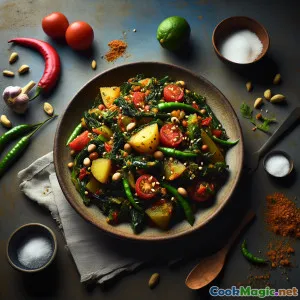
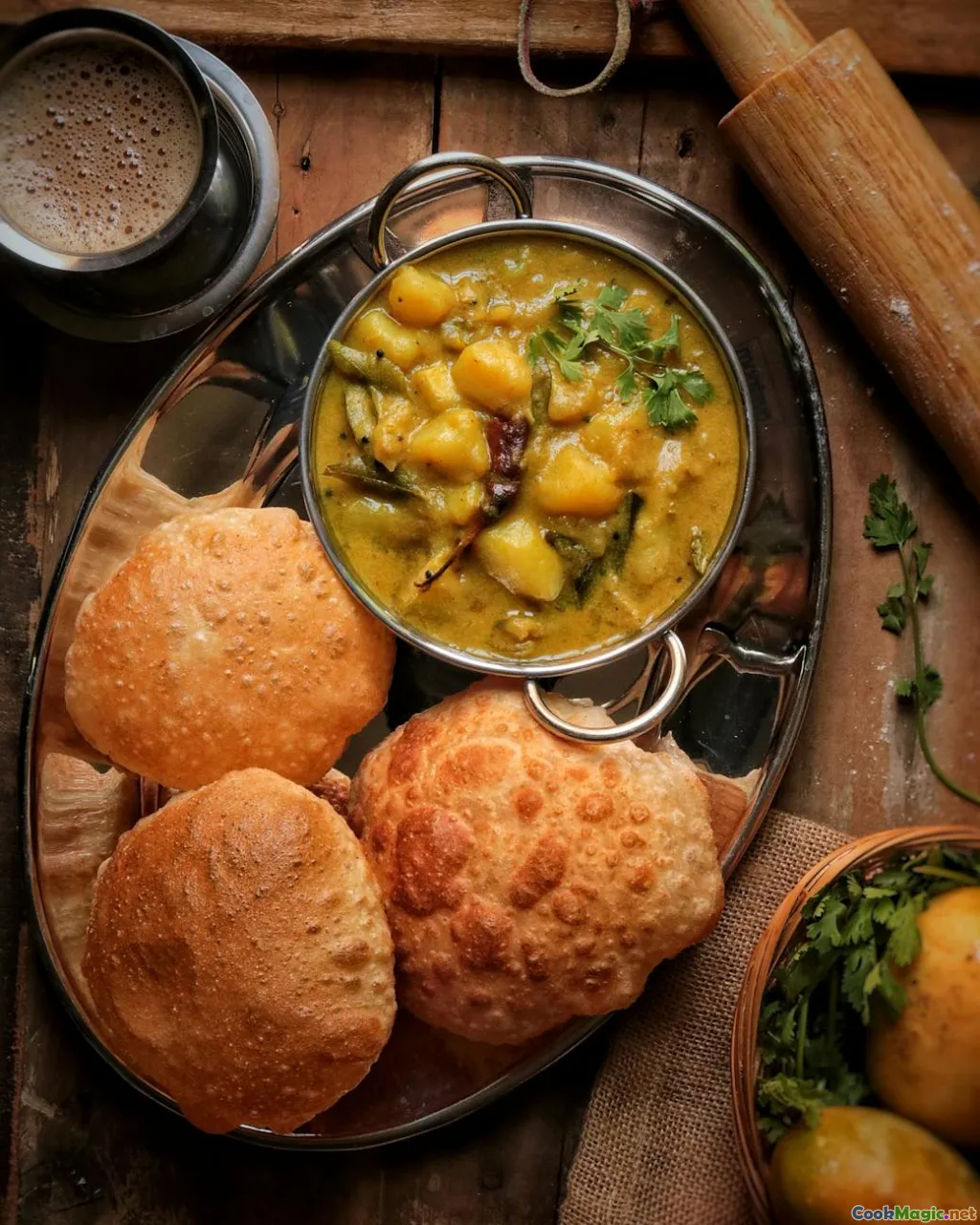
Aloo Tama is one of Nepal’s most beloved home-style dishes, celebrated for its bright tang and rustic comfort. At its heart are two humble ingredients: aloo (potatoes) and tama (fermented bamboo shoots). This curry fuses earthy tubers with a lively, slightly sour backbone from tama, rounded by a carefully tempered blend of spices. The result is a warming, aromatic bowl that’s as satisfying on a weeknight as it is spectacular at a festive spread.
What Makes This Version Special
This “Essence” rendition leans into clarity of flavor—each step is designed to build layers without muddling the broth. Tempering fenugreek and cumin in mustard oil gives the curry its signature Nepali smokiness. Tomatoes are cooked down into a glossy masala base to avoid raw notes. Finishing with timur (Nepalese Sichuan pepper) and lemon brings a tingly citrus lift that brightens the fermented bamboo’s funk. Black-eyed peas contribute creaminess, protein, and a gentle sweetness that balances the dish.
Ingredient Spotlight
- Tama (fermented bamboo shoots): Funky, sour, and fragrant. Rinsing is essential to control intensity; adjust to your taste.
- Mustard oil: Provides unmistakable Nepali character. Heat until just shimmering for a softer bite, or to the smoking point for bolder pungency (then briefly cool before tempering).
- Fenugreek seeds: Tempered until nearly black for a nutty aroma. Undercooked methi can taste bitter; properly tempered, it’s hauntingly aromatic.
- Timur: A citrusy, tongue-tingling pepper that harmonizes with tama’s tang. Use sparingly—its numbing zing is potent.
- Black-eyed peas (bodi): Traditional and texturally perfect; they soak up the broth and add body.
Technique Tips
- Control the sour: Rinse tama briefly for a pronounced funk, or soak 5 minutes for a softer profile. You can even sauté it for an extra minute with the masala to mellow the aroma.
- Bloom spices fully: Look for the oil to separate from the tomato masala—this signals a cooked base and prevents grainy spices.
- Consistency: Add stock gradually for a stew-like texture. For a soupier variation, splash in an extra 100–150 ml of hot water.
- Balance: Finish with lemon juice off the heat to preserve brightness. Salt should be added after tasting with tama, which can carry salt from fermentation.
Serving Suggestions
- Serve with steamed rice (bhat) or thickened millet porridge for a hearty, gluten-free plate.
- Pair with a quick cucumber-tomato achar or a squeeze of lime to amplify the refreshing notes.
- A side of sautéed mustard greens or spinach brings a pleasing, slightly bitter counterpoint.
Variations
- Newari-Style Heat: Double the dried chilies and add a teaspoon of chili powder with the turmeric for a bolder finish.
- Lentil Swap: Replace black-eyed peas with cooked chickpeas or mixed lentils; adjust simmer time as needed.
- Tomato-Free: For a more old-school profile, skip tomatoes and sour with extra tama and lemon; add a pinch more turmeric for color.
- Non-Vegan Finish: A small knob of ghee whisked in at the end adds roundness (optional if you’re not keeping it vegan).
Make-Ahead and Storage
- The curry tastes even better the next day as the potatoes and peas absorb the broth. Cool quickly, refrigerate up to 3 days, or freeze up to 2 months (omit the fresh herbs until serving).
- Reheat gently; if thick, loosen with hot stock or water. Refresh with a squeeze of lemon and a pinch of timur.
Cultural Notes and History
Aloo Tama, often paired with bodi, is a staple across Nepal and particularly cherished in Newar cuisine. Nepal’s diverse elevations foster a tradition of fermentation to preserve seasonal abundance—tama is a vivid example, offering nutrition and lively complexity long before refrigeration. The curry reflects a broader Himalayan sensibility: bold aromatics, smart sourness, and pragmatic, nutrient-dense combinations built for mountain life.
Troubleshooting
- Too sour or funky: Add a small boiled potato and simmer; starch will absorb sharpness. A teaspoon of tomato paste can also balance acidity.
- Bitter edge: Ensure fenugreek was darkened enough and onions were not scorched. A pinch of sugar (optional) can round any lingering bitterness.
- Flat flavor: Finish with lemon, fresh cilantro, and a sprinkle of timur. Salt may also need a nudge—taste after resting.
Sustainability Notes
Choose sustainably harvested bamboo shoots when possible, and opt for local potatoes and seasonal herbs. Black-eyed peas cook quickly and are lower-energy legumes, making this dish both eco-conscious and pantry-friendly.
A bowl of Aloo Tama Tarkari Essence is a journey through Nepal’s culinary soul—bright, soulful, and quietly complex. With a few smart techniques and quality ingredients, you’ll bring the Himalayas’ comforting tang right to your table.