ロイヤルラジャスタン白羊肉カレーの公開
(Royal Rajasthani White Mutton Curry Unveiled)
(0 レビュー)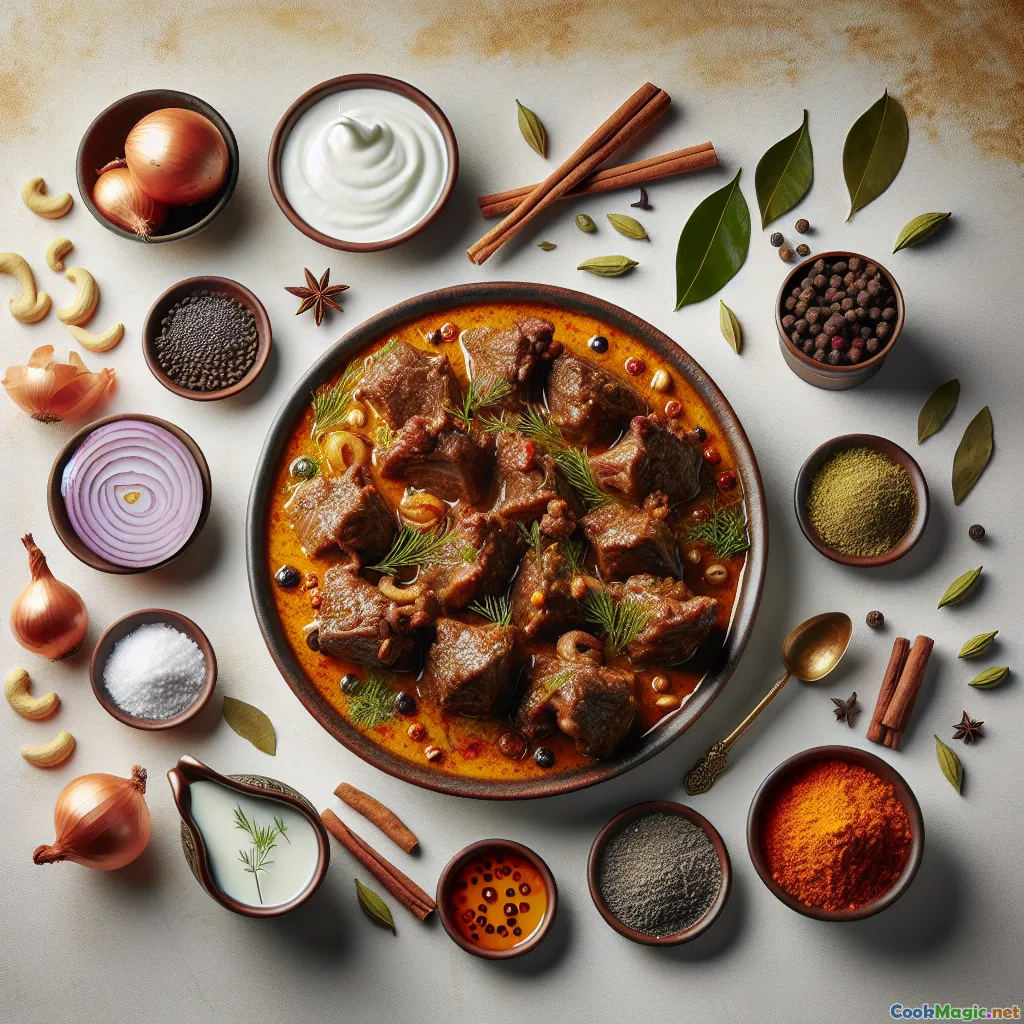
材料
-
600 grams 子羊肉(骨付き)
(中くらいのサイズのものをお願いします。可能であれば有機栽培のものを使用してください。)
-
2 medium 玉ねぎペースト
(白い玉ねぎが好まれ、細かくピューレ状に。)
-
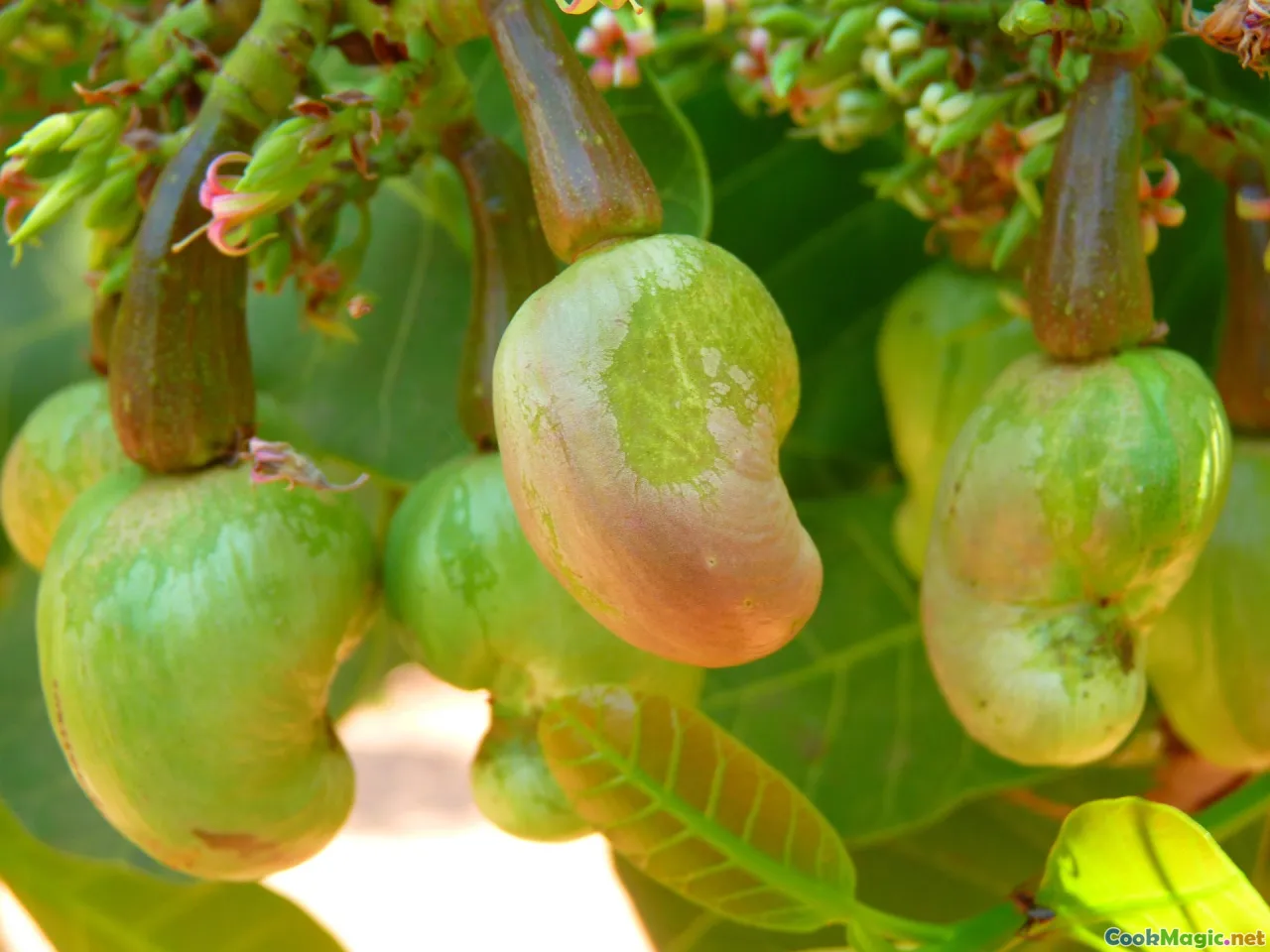
60 grams カシューナッツ
(浸して滑らかなペーストになるまで挽く。)
-
20 grams ケシの実
(浸して挽いたもので、王室のグレービーにたっぷりと使われます。)
-
120 grams フレッシュヨーグルト
(脂肪分の多い生クリーム、よく泡立てる。)
-
3 tbsp ギー(澄ましバター)
(本格的な風味。油を大さじ1杯で置き換えることができます。)
-
4 pieces グリーンカルダモンのさや
-
3 pieces クローブ
-
1 inch piece シナモンスティック
-
6 pieces 黒胡椒の粒
-
1 piece ローリエの葉
-
2 tbsp 生姜とニンニクのペースト
(新鮮、できれば自家製。)
-
100 ml ミルク
(クリーミーさを加える。)
-
1 tsp ホワイトペッパーパウダー
(色がつかないように加熱する。)
-
1 pinch ナツメグ
(すりたて、任意だが推奨。)
-
1 tsp クェラウォーター
(芳香で花のようなノートには、ローズウォーターを代用できます。)
塩, to taste
-
2 tbsp フレッシュクリーム
(仕上げのために。)
-
2 sheets 銀箔(varq)
(王室向けの飾り付け。利用できない場合は省略してください。)
-
1 tbsp 新鮮コリアンダーの葉
(細かく刻んだもの、飾り用。)
(中くらいのサイズのものをお願いします。可能であれば有機栽培のものを使用してください。)
(白い玉ねぎが好まれ、細かくピューレ状に。)
(浸して滑らかなペーストになるまで挽く。)
(浸して挽いたもので、王室のグレービーにたっぷりと使われます。)
(脂肪分の多い生クリーム、よく泡立てる。)
(本格的な風味。油を大さじ1杯で置き換えることができます。)
(新鮮、できれば自家製。)
(クリーミーさを加える。)
(色がつかないように加熱する。)
(すりたて、任意だが推奨。)
(芳香で花のようなノートには、ローズウォーターを代用できます。)
(仕上げのために。)
(王室向けの飾り付け。利用できない場合は省略してください。)
(細かく刻んだもの、飾り用。)
栄養
- 分量: 4
- 1人分の量: 1 ボウル (250g)
- Calories: 550 kcal
- Carbohydrates: 21 g
- Protein: 32 g
- Fat: 37 g
- Fiber: 2.5 g
- Sugar: 6 g
- Sodium: 740 mg
- Cholesterol: 110 mg
- Calcium: 140 mg
- Iron: 3.2 mg
作り方
-
1 - マトンをきれいにして下ごしらえをする:
ラム肉の塊を洗い、十分に水気を拭き取ってください。別に取っておいてください。ぬるま湯でケシの実とカシューナッツを浸し、ペースト状になるようにしてください。
-
2 - ペーストを混ぜる:
浸水させたカシューナッツとケシの実を、水を少し加えて滑らかなペーストになるまで挽く。別々に、白玉ねぎをピューレ状にする。
-
3 - 丸ごとのスパイスを炒める:
ギーを重い鍋で熱します。カルダモン、クローブ、シナモン、黒胡椒、ローリエを加えます。香りが立つまで、じゅうじゅうと音を立てて炒めます。
-
4 - 玉ねぎとヨーグルトの混合物:
玉ねぎペーストを加え、香りが穏やかになり、混ざりが半透明になるまで弱火で煮る。しょうがとにんにくのペーストを加え、やや黄金色になるまで炒める。ヨーグルトを混ぜ入れ、油が分離するまで弱火で煮る。
-
5 - ラム肉をこんがり焼いて封じる:
フライパンに羊肉の角切りを入れ、強火で数分、全体がこんがり色づくまで焼く。
-
6 - ナッツペーストと香辛料を加える:
カシューナッツとケシの実のペーストを加え、塩、白胡椒、そしてナツメグをひとつまみ。全体がなじむまで弱火で5〜6分混ぜてください。
-
7 - 完璧に煮込む:
牛乳を注ぎ、約1.5カップの水を加える。ふたをして弱火で50–60分煮込み、羊肉がとろけるように柔らかくなり、煮汁がとろりとしたら出来上がり。
-
8 - 仕上げ:
火を止めてください。生クリームを混ぜ、香り付けのために kewra 水をやさしく混ぜ込みます。塩味を味見してください。
-
9 - 飾り付けと盛り付け:
木べらで取り分けて盛り付け用の皿に移し、きらめく銀箔を敷き、刻んだコリアンダーを散らします。熱いうちに、シーマル(Sheermal)または香り高いご飯と一緒にお召し上がりください。
ラム肉の塊を洗い、十分に水気を拭き取ってください。別に取っておいてください。ぬるま湯でケシの実とカシューナッツを浸し、ペースト状になるようにしてください。
浸水させたカシューナッツとケシの実を、水を少し加えて滑らかなペーストになるまで挽く。別々に、白玉ねぎをピューレ状にする。
ギーを重い鍋で熱します。カルダモン、クローブ、シナモン、黒胡椒、ローリエを加えます。香りが立つまで、じゅうじゅうと音を立てて炒めます。
玉ねぎペーストを加え、香りが穏やかになり、混ざりが半透明になるまで弱火で煮る。しょうがとにんにくのペーストを加え、やや黄金色になるまで炒める。ヨーグルトを混ぜ入れ、油が分離するまで弱火で煮る。
フライパンに羊肉の角切りを入れ、強火で数分、全体がこんがり色づくまで焼く。
カシューナッツとケシの実のペーストを加え、塩、白胡椒、そしてナツメグをひとつまみ。全体がなじむまで弱火で5〜6分混ぜてください。
牛乳を注ぎ、約1.5カップの水を加える。ふたをして弱火で50–60分煮込み、羊肉がとろけるように柔らかくなり、煮汁がとろりとしたら出来上がり。
火を止めてください。生クリームを混ぜ、香り付けのために kewra 水をやさしく混ぜ込みます。塩味を味見してください。
木べらで取り分けて盛り付け用の皿に移し、きらめく銀箔を敷き、刻んだコリアンダーを散らします。熱いうちに、シーマル(Sheermal)または香り高いご飯と一緒にお召し上がりください。
ロイヤルラジャスタン白羊肉カレーの公開 :の詳細
Safed Maas Sheherwali Style: A Regal Heritage on Every Plate
Introduction & History
Safed Maas Sheherwali Style is not simply a dish; it epitomizes the confluence of Rajasthani royalty and unique Sheherwali Jain cultural influences that thrived in Murshidabad—once Bengal's seat of power and multicultural splendor. Traditionally, 'Safed Maas' in Rajasthan signifies a mutton curry solely bathed in white gravies, eschewing red chilies and vibrant spice blends for slivers of subtlety and aromatics. The Sheherwali community, celebrated for their mercantile nous and discerning finesse, reflected their regal opulence in banquets interwoven with Mughal and Marwari essence.
What Sets Sheherwali Safed Maas Apart?
This rendition’s reverent homage to timeless princely kitchens lies in its orchestral balance: a medley of nuts—cashew and poppy seed paste—enrich the velvety gravy, harmonizing with mellow yogurt, floral spices, and an occasional kiss of rose. Unlike the fiery red gravies, this one seeks a gentle elegance, letting the tender mutton and creamy sauce sing. What truly distinguishes the Sheherwali style is:
- Refusal to use regular red chili, turmeric, or harsh garam masala.
- Joyous embrace of mild white pepper, aromatics, nuts, and flower essences.
- Frequent use of a touch of floral (often kewra or rose) water for fragrant finish.
- Optional application of shimmering silver leaf (‘varq’) for special feasts.
Cooking Secrets, Tips, & Personal Notes
Meat Selection: How the mutton is cut matters. Choose pieces with bone—the slow, hour-long simmer is what yields a gravy bursting with flavor and the supremely tender characteristic of no-nonsense regal curries.
Cashew-Poppy Paste: Ensure both nuts and seeds are soaked for at least half an hour to ensure smoothest grinding. A fine, velvety paste prevents grittiness in that prized white gravy.
The Aromatic Difference: Frying whole spices in ghee initiates the dish’s symphony. Control the flame and sauté aromatics gently to repel bitterness from onions and garlic.
Milk & Yogurt Marriage: To master a shamelessly lush yet subtle sauce, you must balance milk and yogurt, whisking slowly into the base to avoid curdling.
Garnishing with Class: For formal occasions, delicate sheets of edible silver leaf leave a striking impression and hint at the aristocratic table.
Accompaniments: Sheherwali Safed Maas is customarily enjoyed with sheermal (sweet saffron flatbread), soft naans, or plain fragrant basmati. When seeking contrast, jeera rice punctuates the meal’s richness.
If you crave a vegetarian tweak, simply substitute paneer chunks or boiled potatoes and use the core technique.
Cultural Significance
Though Sheherwali cuisine for the most part follows Jain vegetarian laws, at grand social functions or interactions with the Rajasthani nobility, such royal celebratory non-veg dishes were nuanced for a gentle, extravagant palate. Carefully balanced spices and an absence of overbearance honor ancient codes of hospitality, appeasing both privilege and probity. They stand as a testament to the meld of Jain thought, royal opulence, and Mughal artistry.
Final Musings & Aspects
If you seek to wow guests with an unforgettable feast in a velvet white, this dish will become a party centerpiece. It’s a paean to delicate flavors over unrestrained heat. Its silken texture—lavished with nuts and milk—soothes, yet leaves a savory trailing note, gently coaxed upward by keora’s floral finish.
For best results:
- commit to slow-cooking;
- be gentle when adding milk or yogurt;
- don’t skip the little musk of nutmeg or the sweet floral note at the end.
Whether for a winter gathering or a festive thali, Safed Maas Sheherwali Style will transport your table across time, drawing every guest into a world where flavor, refinement, and festivity reign.