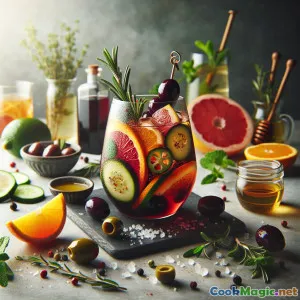
地中海オリーブ畑の柑橘とハーブ風味のサングリア
(Olive Orchard Citrus-Herb Sangria)
(0 レビュー)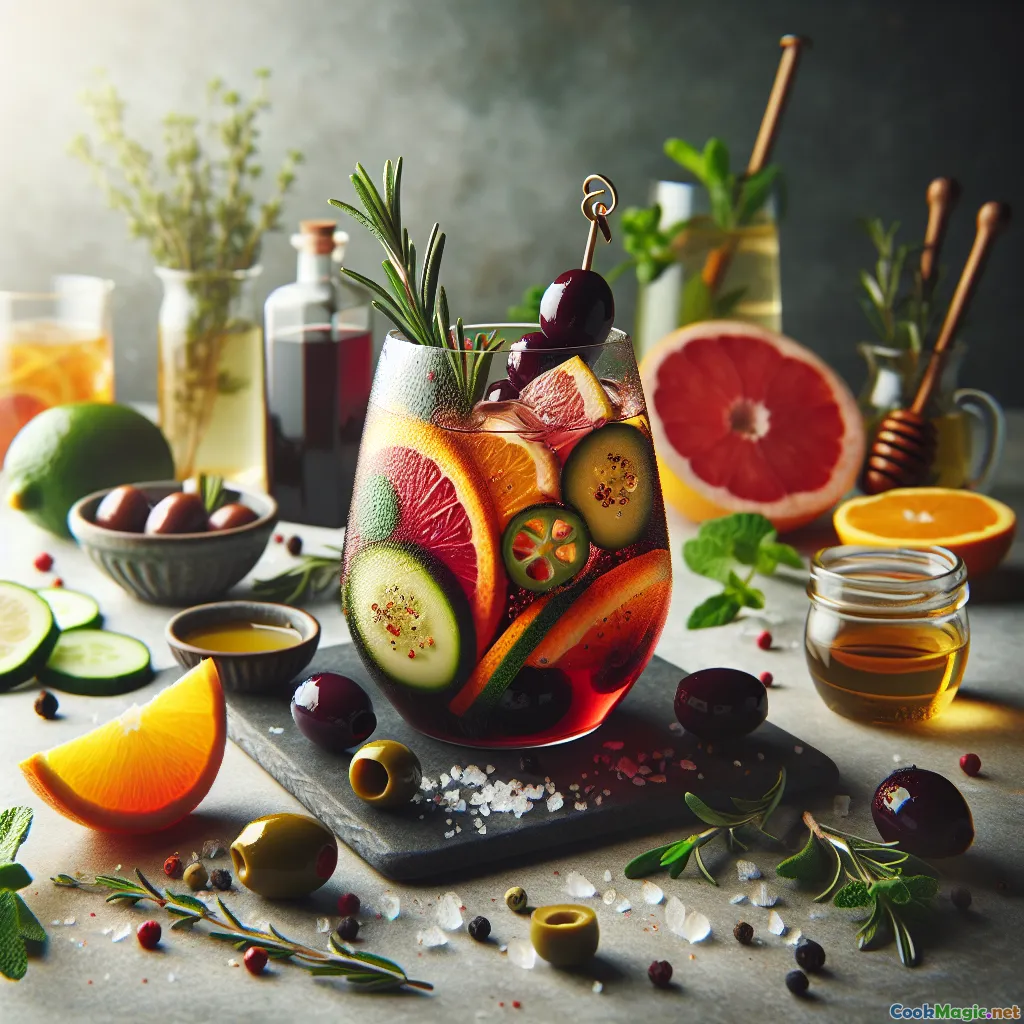
材料
-
750 ml スペイン産ドライ赤ワイン(Tempranillo または Garnacha)
(Choose a fruit-forward, medium-bodied style)
-
120 ml Dry vermouth
(Adds botanical depth; use Spanish vermouth if available)
-
90 ml オレンジリキュール(例:Cointreau)
(For citrusy sweetness and aroma)
-
30 ml グリーンオリーブの塩水
(Use from Castelvetrano or Spanish Manzanilla olives)
-
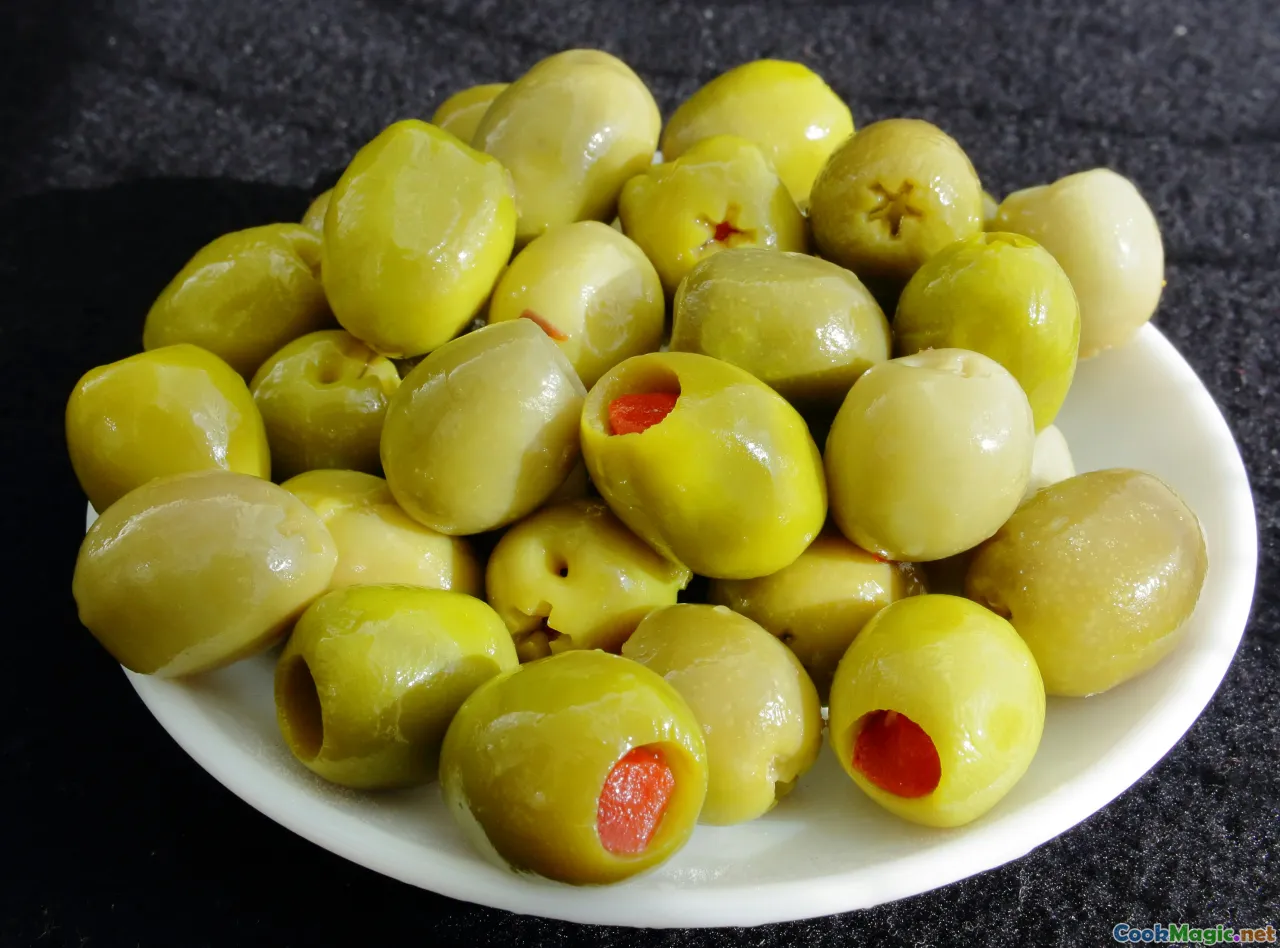
80 grams Castelvetranoオリーブ、種を除いて半分にしたもの
(Mild, buttery olives keep flavors balanced)
-
1 medium オレンジ、薄く輪切りにした
(Scrub well; keep peel on for oils)
-
1 small レモン、薄く輪切りにしたもの
(Adds bright acidity)
-
1 small グレープフルーツ、薄い半月状スライス
(Ruby red preferred for color and aroma)
-
0.5 medium きゅうりの薄切り
(Cool, garden freshness)
-
2 sprigs フレッシュローズマリーの枝
(Earthy, piney lift)
-
4 sprigs フレッシュタイムの小枝
(Light herbal nuance)
-
8 leaves 新鮮なミントの葉
(Fragrant top note)
-
30 ml 蜂蜜
(Or agave syrup for a vegan option)
-
500 ml よく冷えた炭酸水
(Adds lift without excess sweetness)
-
3 drops エクストラバージンオリーブオイル
(Fragrant sheen; use a peppery Spanish EVOO)
-
1 pinch 海塩
(Balances sweetness and emphasizes citrus)
-
1 pinch クラッキングブラックペッパー
(Aromatic edge; add to taste)
-
4 cups 氷のキューブ
(Large cubes melt slower)
(Choose a fruit-forward, medium-bodied style)
(Adds botanical depth; use Spanish vermouth if available)
(For citrusy sweetness and aroma)
(Use from Castelvetrano or Spanish Manzanilla olives)
(Mild, buttery olives keep flavors balanced)
(Scrub well; keep peel on for oils)
(Adds bright acidity)
(Ruby red preferred for color and aroma)
(Cool, garden freshness)
(Earthy, piney lift)
(Light herbal nuance)
(Fragrant top note)
(Or agave syrup for a vegan option)
(Adds lift without excess sweetness)
(Fragrant sheen; use a peppery Spanish EVOO)
(Balances sweetness and emphasizes citrus)
(Aromatic edge; add to taste)
(Large cubes melt slower)
栄養
- 分量: 6
- 1人分の量: 1グラス(200 ml)
- Calories: 230 kcal
- Carbohydrates: 0 g
- Protein: 0.6 g
- Fat: 2.5 g
- Fiber: 1 g
- Sugar: 17 g
- Sodium: 260 mg
- Cholesterol: 0 mg
- Calcium: 35 mg
- Iron: 0.8 mg
作り方
-
1 - Chill tools and ingredients:
Chill the wine, vermouth, sparkling water, pitcher, and serving glasses to ensure a crisp, refreshing pour.
-
2 - Prep citrus and produce:
Rinse and thinly slice the orange, lemon, grapefruit, and cucumber. Halve and pit the olives if not pre-pitted.
-
3 - Build the herb-olive base:
In a large chilled pitcher, add rosemary, thyme, mint, honey, sea salt, and olive brine. Gently muddle 6–8 presses to bruise herbs and dissolve honey without tearing leaves.
-
4 - Add fortified and base wines:
Pour in dry vermouth and the red wine. Stir slowly to integrate the honey-herb mixture with the wine’s fruit and the brine’s savory edge.
-
5 - Layer fruit and olives:
Fold in the orange, lemon, grapefruit, cucumber, and halved olives. Stir gently to avoid over-extracting bitterness from peels.
-
6 - Infuse and Chill:
Cover and refrigerate for at least 1 hour. This resting time melds citrus oils, herbs, and olive notes into a unified, fragrant sangria.
-
7 - Finish with sparkle and aromatics:
Just before serving, add the sparkling water for lift. If using, add 2–3 drops of extra-virgin olive oil and a pinch of cracked pepper; stir once or twice.
-
8 - Serve:
Fill glasses with ice. Pour the sangria, ensuring some fruit and olives in each glass. Garnish with a small rosemary sprig or an olive-citrus skewer if desired.
Chill the wine, vermouth, sparkling water, pitcher, and serving glasses to ensure a crisp, refreshing pour.
Rinse and thinly slice the orange, lemon, grapefruit, and cucumber. Halve and pit the olives if not pre-pitted.
In a large chilled pitcher, add rosemary, thyme, mint, honey, sea salt, and olive brine. Gently muddle 6–8 presses to bruise herbs and dissolve honey without tearing leaves.
Pour in dry vermouth and the red wine. Stir slowly to integrate the honey-herb mixture with the wine’s fruit and the brine’s savory edge.
Fold in the orange, lemon, grapefruit, cucumber, and halved olives. Stir gently to avoid over-extracting bitterness from peels.
Cover and refrigerate for at least 1 hour. This resting time melds citrus oils, herbs, and olive notes into a unified, fragrant sangria.
Just before serving, add the sparkling water for lift. If using, add 2–3 drops of extra-virgin olive oil and a pinch of cracked pepper; stir once or twice.
Fill glasses with ice. Pour the sangria, ensuring some fruit and olives in each glass. Garnish with a small rosemary sprig or an olive-citrus skewer if desired.
地中海オリーブ畑の柑橘とハーブ風味のサングリア :の詳細
Mediterranean Olive Orchard Sangria
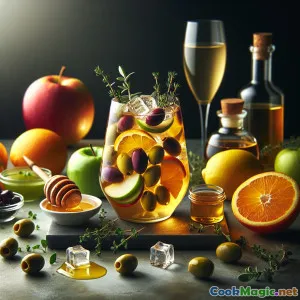
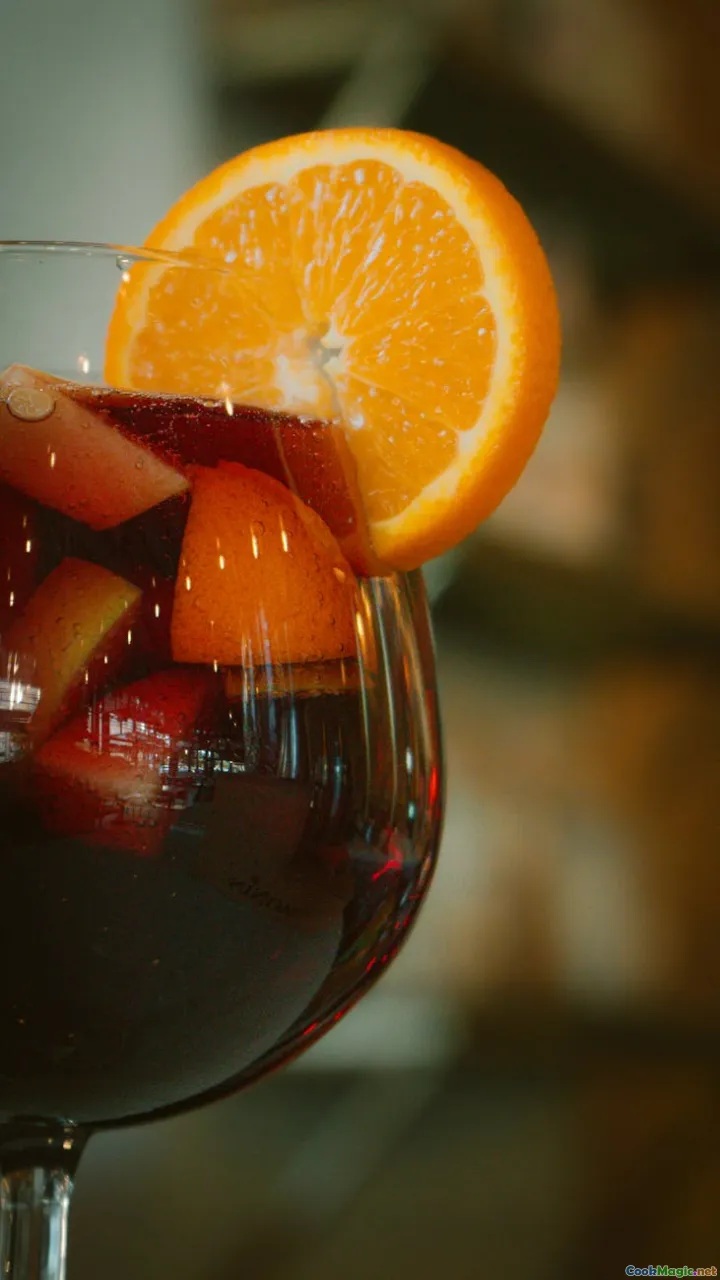
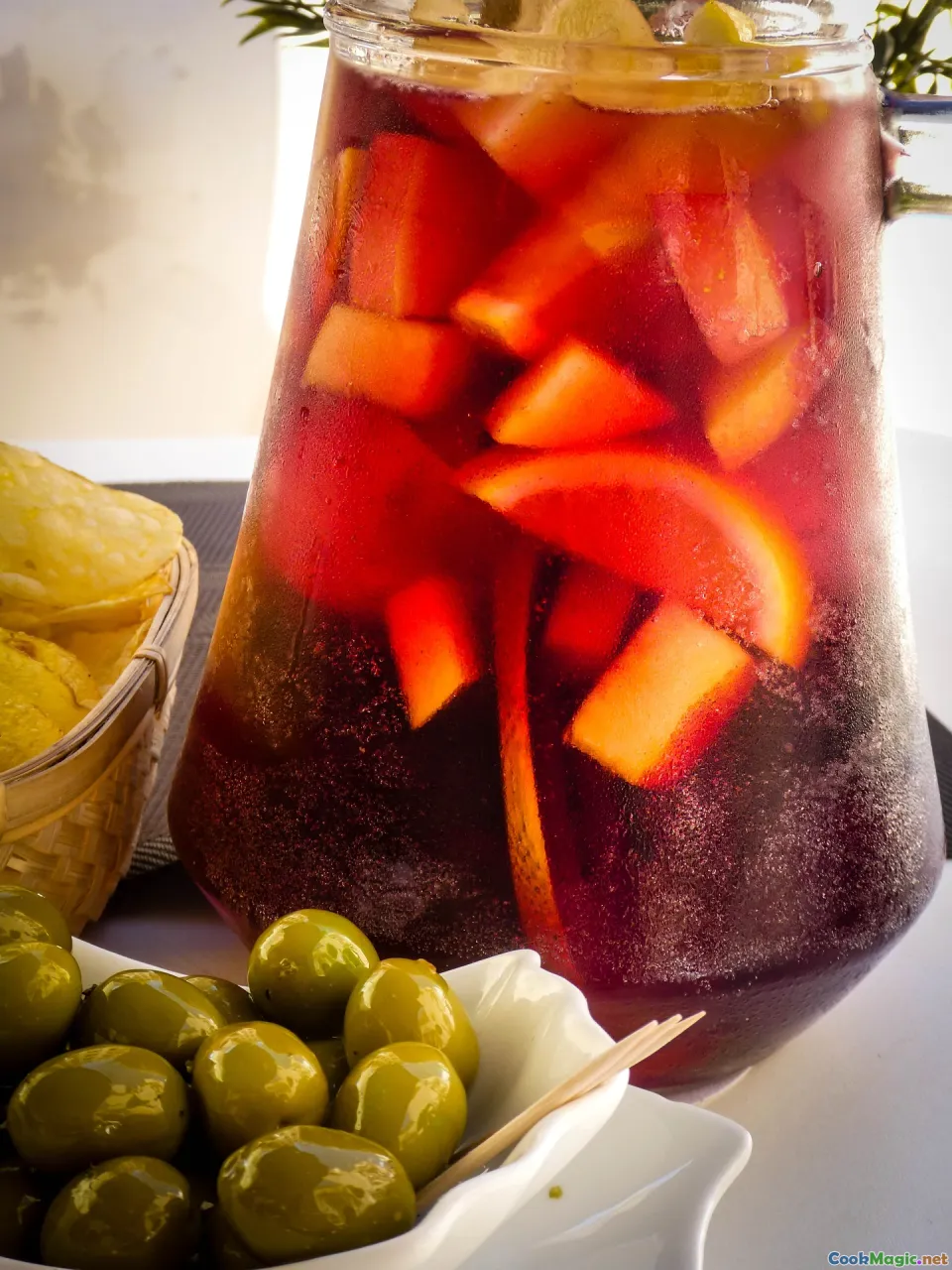
Sangria is one of Spain’s most convivial exports, a joyful pitcher drink that blends wine, fruit, and a splash of something aromatic. Mediterranean Olive Orchard Sangria leans into the region’s sunlit pantry—olives, herbs, and citrus—to create a savory-scented, sparkling take that is both surprising and unmistakably coastal. The result is an elegant balance of fruit-forward red wine, briny brightness from green olives and their brine, and a garden bouquet from rosemary, thyme, and mint. Sparkling water stretches and lightens the texture, while a whisper of extra-virgin olive oil adds a perfumed sheen that glides across the palate.
Why this works
- Savory-sweet harmony: Sweetness (honey and orange liqueur) meets savory salinity (olive brine) for a rounded, food-friendly profile. A small pinch of sea salt magnifies the citrus and berry notes in the wine, much like finishing salt does for dessert.
- Botanical layering: Dry vermouth’s herbs echo rosemary and thyme, threading botanical complexity throughout the drink.
- Textural contrast: Cucumbers and olives bring crispness and bite among the softer citrus slices. A drop or two of olive oil adds silk without heaviness, reminiscent of a perfumer’s top note.
Flavor profile
Expect ripe cherry, blood orange, and grapefruit from the wine and citrus, lifted by mint’s coolness and rosemary’s piney edge. The olive brine contributes a delicate salinity—think more “sea breeze” than martini. Sparkling water finishes each sip with refreshing effervescence.
Tips & notes
- Choose the wine: A fruit-forward, medium-bodied Spanish red like Tempranillo or Garnacha is ideal. Avoid heavily oaked or high-tannin wines, which can turn bitter with citrus peels.
- Use gentle muddling: Bruise herbs just enough to release aroma; aggressive muddling can add harshness.
- Control salinity: Start with the indicated amount of olive brine and a small pinch of sea salt; you can add more brine after chilling if you crave extra brininess.
- Chill time matters: A 1-hour infusion melds flavors; for a deeper herbal note, chill up to 4 hours. Add sparkling water only at serving to retain bubbles.
- Presentation: Skewer a halved olive with a folded grapefruit segment for a playful, savory garnish. A rosemary sprig doubles as both garnish and aromatic cue.
- Make it vegan: Swap honey with agave syrup or a simple syrup. The sangria remains vibrant and balanced.
- Adjust sweetness: If your citrus is very tart, add 10–15 ml more honey or simple syrup after tasting post-chill.
Pairing ideas
This savory-leaning sangria shines with tapas: marinated anchovies (boquerones), pan con tomate, grilled shrimp, garlicky mushrooms, or a board with manchego, almonds, and quince paste. It also flatters picnic fare like herbed roast chicken, salad niçoise, or a tomato-cucumber salad with feta and oregano.
History and cultural significance
Sangria’s roots trace to Iberia’s tradition of blending wine with fruit, spices, and water—a practical approach to flavor and safety in earlier centuries. The modern pitcher we know gained international attention at the 1964 New York World’s Fair, where Spain’s pavilion popularized the crimson, fruit-studded drink. This Mediterranean riff honors that lineage while nodding to the coastal pantry that defines the region: olives and fragrant herbs. In many Mediterranean kitchens, citrus, olive oil, and herbs are not separate accents but a language—used together to coax brightness, structure, and soul. By inviting olives into sangria, we bridge bar and pantry in a way that feels both novel and authentic to place.
Unique aspects
- Olive brine as seasoning: Borrowed from savory mixology, a measured splash of brine sharpens fruit notes without making the drink taste overtly salty.
- A finishing oil: A few drops of peppery extra-virgin olive oil act like a cologne—noticed more by the nose than the tongue, creating a luxurious mouthfeel.
- Herb trio synergy: Rosemary provides pine, thyme offers earth, and mint keeps the profile refreshing. Together, they weave into the botanicals of dry vermouth for layered complexity.
Make-ahead and scaling
Assemble the base up to 4 hours ahead without the sparkling water. Keep chilled, then finish with bubbles just before serving. For a crowd, double the recipe in two pitchers to maintain quick chilling and easy pouring.
Troubleshooting
- Too bitter: Remove citrus after 2–3 hours to avoid peel over-extraction. Stir in a splash more orange liqueur or simple syrup.
- Too salty: Add more ice and sparkling water; a squeeze of fresh orange helps rebalance.
- Too sweet: Increase olive brine by 5–10 ml and add a few more cucumber slices for a crisp, dry impression.
Mediterranean Olive Orchard Sangria is ideal for al fresco evenings, where the air smells faintly of rosemary bushes warming in the sun. It’s familiar enough to please sangria fans yet inventive enough to spark conversation—proof that the Mediterranean pantry, in all its simplicity, still has delicious surprises to share.