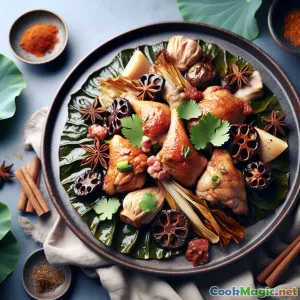
Angsa Teochew dingin dipoché dalam gelatin kedelai
(Teochew Cold Poached Goose in Soy Jelly)
(0 Ulasan)


0
200
November 24, 2025
Laporkan Masalah
Bahan
-
2500 grams Angsa utuh, bersih
(Young goose preferred; large duck can substitute)
-
15 grams Garam kosher
(For rubbing the skin and cavity)
-
60 ml Anggur Shaoxing
(Aromatic rice wine for poaching stock)
-
2500 ml Air
(Base for the soy master stock)
-
250 ml Kecap kedelai ringan
(Brings salinity and umami without darkening too much)
-
60 ml Kecap kedelai hitam
(Adds color and caramel notes)
-
40 grams Gula batu
(Balances soy and spices; substitute granulated sugar)
-
4 stalks Bawang Daun
(Bruised to release aroma)
-
50 grams Jahe
(Unpeeled, thick slices)
-
3 pieces Bunga lawang
(Fragrant spice for the master stock)
-
1 piece Batang kayu manis Cassia
(About 7–8 cm length)
-
4 cengkeh cengkeh
(Warm spice backbone; use sparingly)
-
1 tsp Biji lada putih
(Light pepperiness, classic Teochew profile)
-
1 piece Kulit jeruk mandarin kering (chenpi)
(Rinse and soak 5 minutes to soften)
-
20 grams Galangal (jahe pasir), iris tipis
(Adds citrusy heat; optional but traditional in some regions)
-
10 grams agar-agar bubuk
(For a clean, firm soy jelly; use 12g in hot climates)
-
800 ml Kaldu induk angsa yang dipesan
(Strained and defatted, from poaching above)
-
15 ml Cuka beras
(Brightens the jelly; adjust to taste)
-
5 ml Minyak wijen panggang
(For final aromatic gloss)
-
50 grams Daun sawi asin (kiam chye), diiris tipis
(Rinse briefly to reduce saltiness)
-
30 ml Minyak cabai Chiu Chow
(Saus celup)
-
15 ml cuka beras hitam
(Saus celup)
-
2 cloves Bawang putih cincang halus
(Saus celup)
-
2 grams Gula
(Pinch to balance the dip)
-
5 ml Saus ikan
(Optional depth for dipping sauce)
-
1000 grams Es
(For an ice bath to chill goose quickly)
-
15 ml Minyak netral
(Optional, to briefly sizzle garlic garnish)
(Young goose preferred; large duck can substitute)
(For rubbing the skin and cavity)
(Aromatic rice wine for poaching stock)
(Base for the soy master stock)
(Brings salinity and umami without darkening too much)
(Adds color and caramel notes)
(Balances soy and spices; substitute granulated sugar)
(Bruised to release aroma)
(Unpeeled, thick slices)
(Fragrant spice for the master stock)
(About 7–8 cm length)
(Warm spice backbone; use sparingly)
(Light pepperiness, classic Teochew profile)
(Rinse and soak 5 minutes to soften)
(Adds citrusy heat; optional but traditional in some regions)
(For a clean, firm soy jelly; use 12g in hot climates)
(Strained and defatted, from poaching above)
(Brightens the jelly; adjust to taste)
(For final aromatic gloss)
(Rinse briefly to reduce saltiness)
(Saus celup)
(Saus celup)
(Saus celup)
(Pinch to balance the dip)
(Optional depth for dipping sauce)
(For an ice bath to chill goose quickly)
(Optional, to briefly sizzle garlic garnish)
Nutrisi
- Porsi: 6
- Ukuran Porsi: 6 goose slices + 3 soy jelly cubes (180g)
- Calories: 420 kcal
- Carbohydrates: 0 g
- Protein: 35 g
- Fat: 25 g
- Fiber: 1 g
- Sugar: 4 g
- Sodium: 1200 mg
- Cholesterol: 160 mg
- Calcium: 40 mg
- Iron: 3 mg
Instruksi
-
1 - Dry-brine and prepare goose:
Pat the goose dry. Rub inside and out with kosher salt. Let sit while you prepare aromatics; this firms the skin and seasons the meat.
-
2 - Blanch to clean:
Bring a large pot of water to a boil. Lower goose in for 2–3 minutes to release impurities. Rinse under cool water and pat dry.
-
3 - Build soy master stock:
In a stockpot, combine 2500 ml water, light and dark soy sauces, Shaoxing wine, rock sugar, scallions, ginger, star anise, cassia, cloves, white peppercorns, and chenpi (plus galangal if using). Bring to a gentle boil, then lower to a tremble.
-
4 - Poach the goose gently:
Submerge goose breast-side down. Maintain 82–88°C, avoiding a full boil. Poach 60–75 minutes, rotating halfway, until the thickest part reaches 68–70°C.
-
5 - Steep and chill:
Turn off heat and steep 20–30 minutes for deeper flavor. Transfer goose to an ice bath to tighten skin and stop cooking. Drain and refrigerate uncovered to air-dry.
-
6 - Strain and defat stock:
Strain the master stock through a fine sieve. Skim fat. Measure 800 ml for jelly; cool slightly. Reserve remaining stock for storage or future braises.
-
7 - Season and bloom agar:
Whisk agar-agar into the 800 ml warm stock. Add rice vinegar if using. Bring to a steady simmer for 2 minutes, whisking to fully hydrate agar.
-
8 - Set soy jelly:
Pour hot soy-agar mixture into a shallow tray (1.5–2 cm depth). Cool to room temp, then chill until fully set and glassy, about 2 hours.
-
9 - Debone and slice goose:
Using a sharp boning knife, remove breasts and legs, pulling away large bones. Slice meat across the grain into neat, thin slices for serving cold.
-
10 - Mix dipping sauce:
Combine Chiu Chow chili oil, black rice vinegar, minced garlic, pinch of sugar, and fish sauce if using. Adjust heat and acidity to taste.
-
11 - Plate with jelly and garnish:
Cut soy jelly into cubes or diamonds. Arrange goose slices slightly overlapping. Add jelly pieces, scatter preserved mustard greens, and drizzle a few drops of sesame oil.
-
12 - Final chill and serve:
Chill the assembled platter 15–25 minutes for best texture. Serve cold with the dipping sauce on the side.
Pat the goose dry. Rub inside and out with kosher salt. Let sit while you prepare aromatics; this firms the skin and seasons the meat.
Bring a large pot of water to a boil. Lower goose in for 2–3 minutes to release impurities. Rinse under cool water and pat dry.
In a stockpot, combine 2500 ml water, light and dark soy sauces, Shaoxing wine, rock sugar, scallions, ginger, star anise, cassia, cloves, white peppercorns, and chenpi (plus galangal if using). Bring to a gentle boil, then lower to a tremble.
Submerge goose breast-side down. Maintain 82–88°C, avoiding a full boil. Poach 60–75 minutes, rotating halfway, until the thickest part reaches 68–70°C.
Turn off heat and steep 20–30 minutes for deeper flavor. Transfer goose to an ice bath to tighten skin and stop cooking. Drain and refrigerate uncovered to air-dry.
Strain the master stock through a fine sieve. Skim fat. Measure 800 ml for jelly; cool slightly. Reserve remaining stock for storage or future braises.
Whisk agar-agar into the 800 ml warm stock. Add rice vinegar if using. Bring to a steady simmer for 2 minutes, whisking to fully hydrate agar.
Pour hot soy-agar mixture into a shallow tray (1.5–2 cm depth). Cool to room temp, then chill until fully set and glassy, about 2 hours.
Using a sharp boning knife, remove breasts and legs, pulling away large bones. Slice meat across the grain into neat, thin slices for serving cold.
Combine Chiu Chow chili oil, black rice vinegar, minced garlic, pinch of sugar, and fish sauce if using. Adjust heat and acidity to taste.
Cut soy jelly into cubes or diamonds. Arrange goose slices slightly overlapping. Add jelly pieces, scatter preserved mustard greens, and drizzle a few drops of sesame oil.
Chill the assembled platter 15–25 minutes for best texture. Serve cold with the dipping sauce on the side.
Informasi Lebih Lanjut: Angsa Teochew dingin dipoché dalam gelatin kedelai
Overview
Teochew Cold Poached Goose in Soy Jelly is a celebration of restraint and precision—the kind of dish that whispers rather than shouts. In classic Teochew cooking, clarity of flavor and a respect for natural sweetness are essential. This recipe delivers silky, chilled goose slices, lightly perfumed by a refined soy master stock, paired with translucent cubes of soy jelly (aspic) that echo the poaching liquid’s aroma. Everything is served cold, accompanied by a punchy Chiu Chow chili-vinegar dip and a crisp garnish of preserved mustard greens.
A Little History and Cultural Context
Teochew (Chaozhou) cuisine hails from eastern Guangdong, China, and is known for its seafood, delicate seasoning, and mastery of cold dishes. Goose is a regional icon: you’ll see glass cases of glossy, mahogany birds in Teochew eateries, where meats are gently poached in a seasoned broth (lu shui) and then cooled to set textures and concentrate flavors. While the master stock can be decades old in traditional kitchens—constantly replenished and revered—this home-friendly version builds a fragrant base that you can keep and reuse, enriching each future batch of poultry or offal.
The soy jelly speaks to a broader Chinese love for aspic and delicate gels—textures that are especially prized in hot weather. Using agar-agar (a seaweed-based gelling agent) instead of gelatin gives a beautifully clear, firm set that stays stable at room temperature. This means your jelly won’t weep on a banquet table or lose its bite under warm lights.
Why This Dish Works
- Gentle heat protects the goose’s tight-grained meat, yielding a custardy texture under the skin.
- A balanced master stock—light and dark soy, sugar, Shaoxing wine, and quietly layered spices—seasons without disguising the bird’s character.
- Serving cold sharpens definition: clean slices, a taut skin, and a subtle sheen, punctuated by the cool, springy jelly.
Tips for Success
- Temperature discipline: Keep the poach at 82–88°C. A rolling boil tightens meat fibers and clouds the stock. If you lack a thermometer, look for small, lazy bubbles and gentle steam.
- Skin tautness: Ice-bath the goose right after steeping and air-dry it uncovered in the fridge. This keeps the skin glossy and prevents tackiness.
- Clear stock: Blanching the bird for 2–3 minutes removes impurities that would muddy the broth and jelly.
- Agar 101: Agar must be simmered for 1–2 minutes to hydrate. It sets at room temp and stays firm when warm—perfect for buffets. If you prefer a more wobble-prone gel, use 1.5% leaf gelatin by weight instead, but keep it cold.
- Knife work: Slice against the grain in thin, even pieces. Teochew plates celebrate geometry—arrange meat in tidy rows with jelly diamonds for visual rhythm.
Substitutions and Variations
- Duck: If goose is hard to find, a 2–2.2 kg duck poaches beautifully in the same master stock, with a shorter cook by 10–15 minutes.
- Aromatics: Chenpi adds citrus depth; if unavailable, a wide strip of fresh orange peel (pith removed) is a fine substitute. Galangal brings warm citrus heat; ginger alone works well too.
- Jelly flavor: For a brighter profile, add a dash of rice vinegar to the jelly. For sweetness, increase rock sugar slightly. For extra savoriness, a splash of top-quality fish sauce can be transformative.
- Garnish: Preserved mustard greens provide crunch and salinity. You can also garnish with thin cucumber, blanched peanuts, or a scattering of fried shallots.
Make-Ahead and Storage
- The goose: Poach the day before; chill uncovered to dry the skin, then cover once the surface is tack-free. Slice just before serving.
- The jelly: Set it a day in advance, keep chilled, and cut to shape when plating.
- Master stock: Cool quickly, strain, and refrigerate for up to 5 days or freeze for 3 months. Skim any fat cap and save it for stir-fries or confit-style potatoes.
Serving Notes
This dish lives in the opening arc of a banquet—an elegant cold platter that invites slow conversation. Pair with crisp pickles, a light soup, and steamed rice. The dipping sauce should be bright and assertive, yet balanced: the heat from chili oil, the depth of black vinegar, and a tiny pinch of sugar to round the edges.
Personal Thoughts
The first bite should feel like a study in contrasts: cool, supple meat; taut skin; and jelly that trembles just slightly before snapping cleanly. It’s food that rewards attention to detail rather than heavy embellishment. If you keep your temperatures gentle, your stock clear, and your plating orderly, you’ll find the spirit of Teochew cuisine right there on the plate—quiet confidence, honest flavor, and textures that feel both refined and deeply comforting.