Hidangan Sagu Manis Daun Murta yang Lezat
(Myrtle Leaf Sweet Sago Delight)
(0 Ulasan)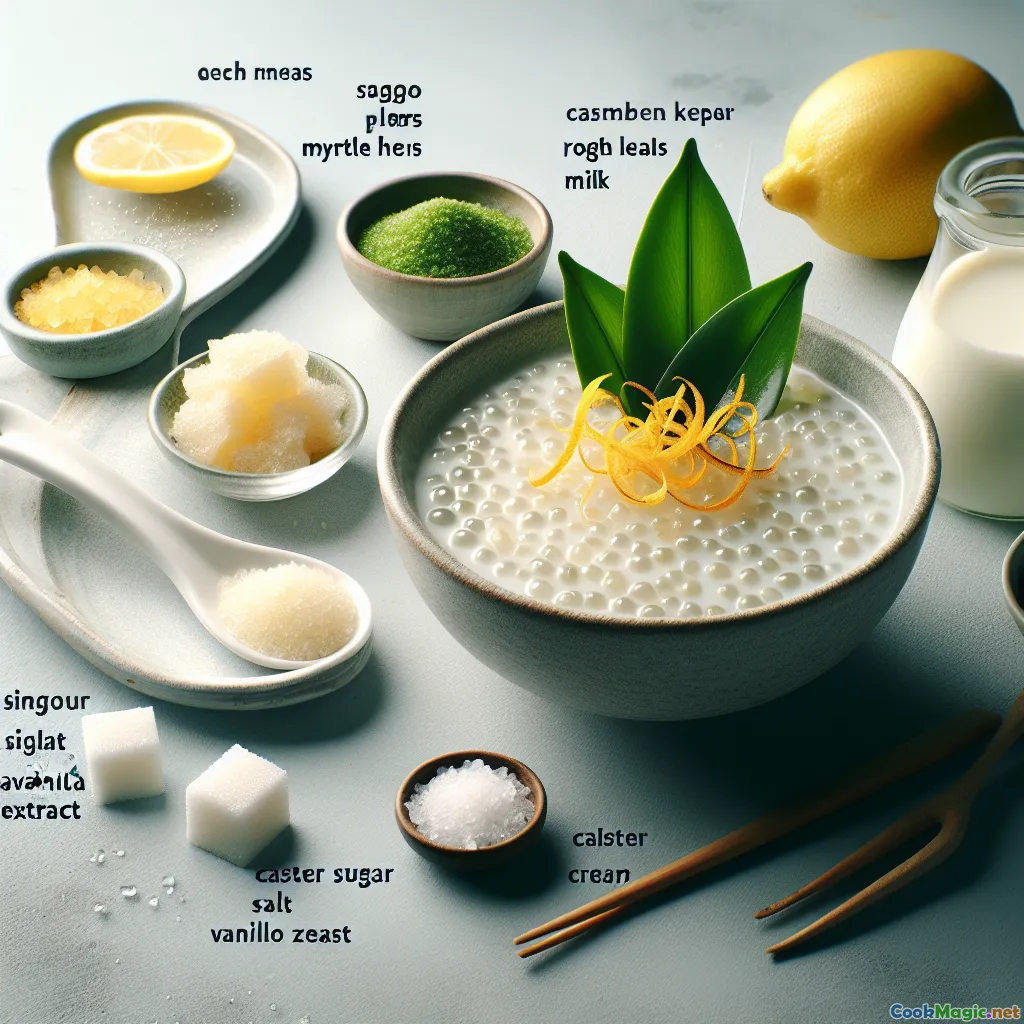

0
1,175
Juli 17, 2025
Laporkan Masalah
Bahan
-
100 grams Mutiara Sago
(Alternatif: butiran tapioka kecil)
-
600 ml Susu
(Susu full-cream untuk kelembutan krim, susu nabati juga bisa.)
-
5 leaves Daun melati
(Segar, murta Inggris lebih disukai.)
-
60 grams Gula caster
(Sesuaikan dengan selera)
-
1/8 tsp Garam
(menonjolkan rasa manis)
-
60 ml Krim cair tunggal
(Teteskan untuk rasa yang lebih kaya)
-
1 tsp Ekstrak vanili
(Menyeimbangkan cita rasa)
-
1/2 tsp Kulit lemon
(Untuk hiasan dan kecerahan warna)
(Alternatif: butiran tapioka kecil)
(Susu full-cream untuk kelembutan krim, susu nabati juga bisa.)
(Segar, murta Inggris lebih disukai.)
(Sesuaikan dengan selera)
(menonjolkan rasa manis)
(Teteskan untuk rasa yang lebih kaya)
(Menyeimbangkan cita rasa)
(Untuk hiasan dan kecerahan warna)
Nutrisi
- Porsi: 4
- Ukuran Porsi: 1 mangkuk (180g)
- Calories: 245 kcal
- Carbohydrates: 44 g
- Protein: 6 g
- Fat: 6 g
- Fiber: 0.7 g
- Sugar: 19 g
- Sodium: 90 mg
- Cholesterol: 20 mg
- Calcium: 180 mg
- Iron: 0.2 mg
Instruksi
-
1 - Seduh susu dengan murta:
Hangatkan susu secara perlahan di atas api kecil. Tambahkan daun myrtle dan didihkan perlahan selama 10 menit; jangan didihkan. Angkat dari api ketika aromanya ringan, dan buang daun-daunnya.
-
2 - Persiapkan Butiran Sago:
Bilas mutiara sagu dengan air dingin, aduk perlahan agar tidak menggumpal. Tiriskan dengan baik.
-
3 - Masak sagu dalam susu yang diinfus dengan Myrtle:
Tambahkan sago yang telah dibilas ke dalam susu yang telah diinfus. Masak perlahan dengan api sedang-kecil sambil terus diaduk hingga butiran sago menjadi tembus pandang — sekitar 20 menit.
-
4 - Memaniskan dan meningkatkan cita rasa:
Tambahkan gula halus, garam, ekstrak vanili (jika digunakan), dan aduk hingga larut. Sesuaikan tingkat kemanisan sesuai selera.
-
5 - Sajikan dan Hias:
Bagilah puding ke dalam mangkuk. Siramkan dengan krim dan taburi parutan kulit lemon di atasnya. Sajikan hangat untuk kenyamanan atau dingin untuk menyegarkan.
Hangatkan susu secara perlahan di atas api kecil. Tambahkan daun myrtle dan didihkan perlahan selama 10 menit; jangan didihkan. Angkat dari api ketika aromanya ringan, dan buang daun-daunnya.
Bilas mutiara sagu dengan air dingin, aduk perlahan agar tidak menggumpal. Tiriskan dengan baik.
Tambahkan sago yang telah dibilas ke dalam susu yang telah diinfus. Masak perlahan dengan api sedang-kecil sambil terus diaduk hingga butiran sago menjadi tembus pandang — sekitar 20 menit.
Tambahkan gula halus, garam, ekstrak vanili (jika digunakan), dan aduk hingga larut. Sesuaikan tingkat kemanisan sesuai selera.
Bagilah puding ke dalam mangkuk. Siramkan dengan krim dan taburi parutan kulit lemon di atasnya. Sajikan hangat untuk kenyamanan atau dingin untuk menyegarkan.
Informasi Lebih Lanjut: Hidangan Sagu Manis Daun Murta yang Lezat
Myrtle Leaf Sweet Sago: The Unfolding Story and Sensory Experience
There is something whimsical and poetic about English cookery—especially when classic ingredients are interpreted through a unique, perhaps forgotten, botanical such as the myrtle leaf. 'Myrtle Leaf Sweet Sago' is an exploration into both nostalgia and novelty. It's rooted in the British love for creamy puddings, but gently uplifted by the delicate floral and camphoraceous notes of myrtle, a shrub that has graced English gardens for centuries but rarely appeared in modern cuisine.
Sago and Its British Place
Sago, a staple in Victorian-era English kitchens, comes from the pith of tropical palms but found enthusiastic adoption across northern Europe in the 1800s, especially for gently sweeted, custardy desserts. Originally perceived as both exotic and nutritious, its jelly-like appearance made it a favorite for textured puddings. The mystique of sago lies in its transformation: opaque, tasteless pearls that swell with the flavors of whatever they're paired with.
Why Myrtle?
Myrtle (Myrtus communis) is not only an evergreen symbol of love and peace in British wedding lore but also lends a nuanced aroma somewhere between eucalyptus and rose. Its restrained pine-and-lemon subtleties delicately scent the infused milk, evocative of dew-soaked mornings in English manor gardens. While mainstream British desserts typically turn to spices such as nutmeg or cinnamon, the use of fresh myrtle offers something distinctly memorable and, above all, uniquely English.
Technical Tips and Preparation Insights
- Infusing the Milk: The key to unlocking myrtle’s charm is understated infusion. Heating its leaves gently in milk extracts a mysterious but not overwhelming flavor. Don't boil, as high heat destroys the more volatile aromatic compounds—the flavors should hover, not assert.
- Don’t Rush the Sago: Stirring is essential—but gently! Never let the mixture catch on the pan, but don't whisk vigorously either. Sago pearls should transition to delicate sheerness without disintegration. It’s a meditative process: slow, patient, and reflective of English kitchen tradition.
- Customizing Texture & Taste: Vary the ratio of milk to sago for your ideal pudding density. Add more cream for luxurious mouthfeel, adjust warmth of flavors using more or less lemon zest.
Serving: Traditions and Adaptations
Serve warm for a proper English winter tea, swaddled in a tartan blanket, or chill overnight to accent warm-weather gatherings—its intrinsic delicacy makes it suitable for both. Cream (whether dairy or thick coconut, for a creative bend), brings further richness. Lemon zest, a nod to English kitchen gardens, brightens each bite.
A Few Cultural Notes
Though myrtle’s historical connotations are strong in the wedding world and in perfumery, its place on the plate has been nearly lost, overshadowed by more conventional dessert herbs. As such, this dish bridges past and present: crafted for a thoughtful gathering, an afternoon tea scattered with violets, or even as a talking piece at a modern English dinner party.
Personal Thoughts
'Myrtle Leaf Sweet Sago' emerged from the mingling of curiosity and reverence. I relish recipes where a simple ingredient—here, sago—serves as a gentle canvas for lyric flavors. Even those hesitant about floral notes find the subtlety here beguiling rather than overwhelming. I encourage you to celebrate the little-remembered, to let both memory and experiment join you at the table. After all, English cuisine’s real allure is ever in its innovations as much as its continuity.
In summary: This is a condensed taste of English countryside, both soothingly familiar and vividly unique. Try it when you wish for comfort, or when you wish to astound—either way, it’s a culinary letter sent straight from England’s fragrant hedgerows.