काकाओ के तीखेपन के साथ मसालेदार पिस्को स्टाउट
(Spiced Pisco Stout With Cacao Heat)
(0 समीक्षाएँ)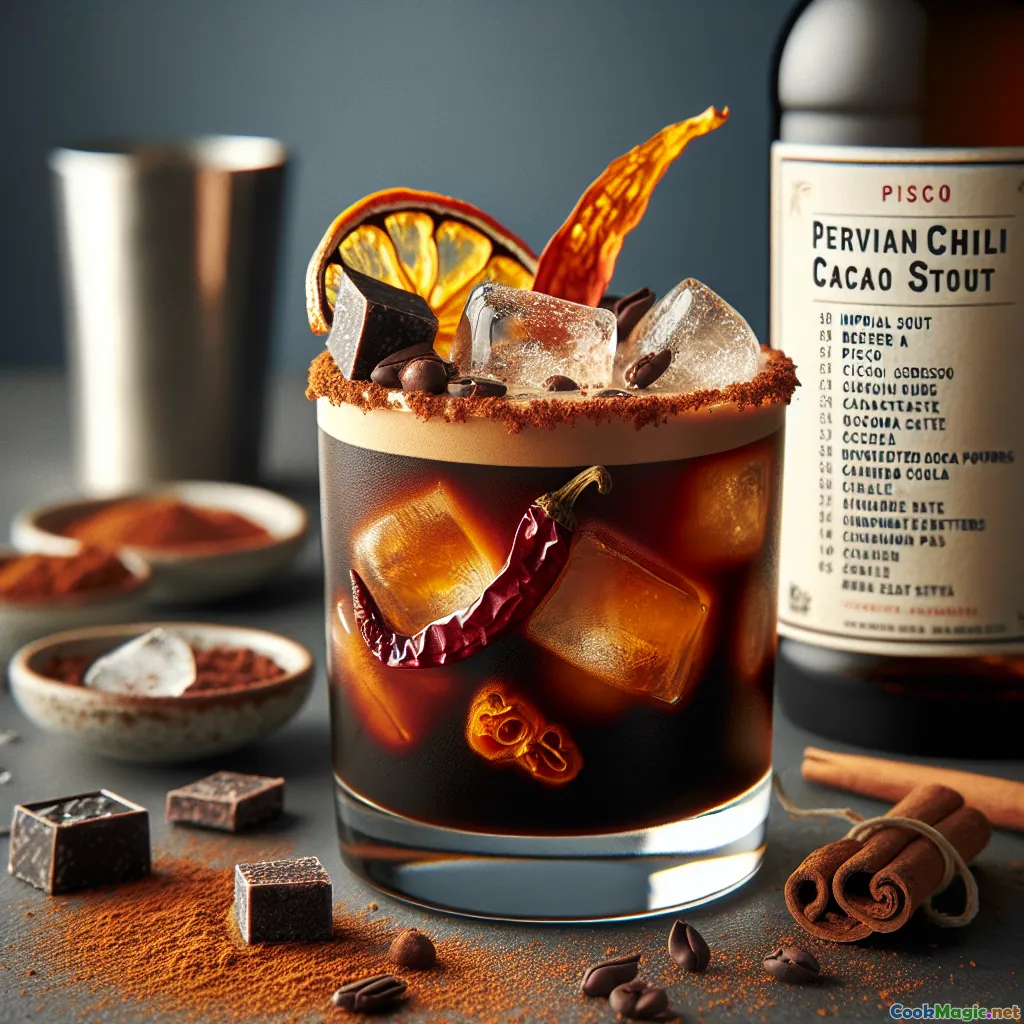


सामग्री
-
355 ml इम्पीरियल स्टाउट बीयर
(Use a chocolate or oatmeal stout; well-chilled)
-
90 ml पिस्को (Quebranta या Acholado)
(Peruvian grape brandy; quebranta is classic)
-
100 grams दानेदार चीनी
(For chili-cacao syrup)
-
120 ml पानी
(Filtered, for syrup)
-
30 grams कोकोआ निब्स
(तेल छोड़ने के लिए हल्के से कुचलें)
-
1 tbsp बिना चीनी वाला कोको पाउडर
(Dutch-processed for smoother body)
-
1 tsp अजी अमारिलो पेस्ट
(Adjust to preferred heat; sub thin slices of fresh ají)
-
1 stick दालचीनी की छड़ी
(Peruvian canela if available)
-
1 strip संतरे की छिलका
(Wide peel, avoid bitter pith)
-
60 ml ठंडा ब्रू कॉफी या मजबूत एस्प्रेसो, ठंडा किया हुआ
(Adds roasty backbone)
-
6 dashes चॉकलेट या Mole बिटर्स
(Or combine 4 dashes Angostura + 2 dashes mole bitters)
-
1 tsp धूम्रपान किया हुआ समुद्री नमक
(For optional rim)
-
8 cubes बर्फ के टुकड़े
(Large, fresh cubes melt slower)
-
2 twists संतरे के छिलके के मोड़
(सजावट के लिए)
-
1 tbsp काकाओ निब्स (गार्निश)
(Crushed, for a subtle crunch)
-
2 slices सूखे ají amarillo स्लाइस
(Thin wheels for garnish)
(Use a chocolate or oatmeal stout; well-chilled)
(Peruvian grape brandy; quebranta is classic)
(For chili-cacao syrup)
(Filtered, for syrup)
(तेल छोड़ने के लिए हल्के से कुचलें)
(Dutch-processed for smoother body)
(Adjust to preferred heat; sub thin slices of fresh ají)
(Peruvian canela if available)
(Wide peel, avoid bitter pith)
(Adds roasty backbone)
(Or combine 4 dashes Angostura + 2 dashes mole bitters)
(For optional rim)
(Large, fresh cubes melt slower)
(सजावट के लिए)
(Crushed, for a subtle crunch)
(Thin wheels for garnish)
पोषण
- परोसने की संख्या: 2
- सेवा आकार: 1 chilled glass (250 ml)
- Calories: 240 kcal
- Carbohydrates: 0 g
- Protein: 1 g
- Fat: 1 g
- Fiber: 1 g
- Sugar: 14 g
- Sodium: 90 mg
- Cholesterol: 0 mg
- Calcium: 25 mg
- Iron: 1.5 mg
निर्देश
-
1 - Make chili-cacao syrup:
In a small pot, combine water and sugar over low heat. Stir to dissolve, then add cacao nibs, cocoa powder, ají amarillo paste, cinnamon stick, and orange peel. Simmer gently 5 minutes, turn off heat, and let steep 5 minutes. Strain through a fine mesh or coffee filter and cool completely.
-
2 - Chill beer and glassware:
Place your serving glasses and the stout in the freezer for 5 minutes to ensure maximum froth and a silky pour. Keep pisco and syrup chilled if possible.
-
3 - Optional smoked-salt rim:
Lightly moisten the rim of each chilled glass with an orange peel. Dip the outer edge into smoked sea salt, tapping off excess to avoid oversalting the drink.
-
4 - Build and shake the base:
In a shaker, add pisco, 45 ml chili-cacao syrup, cooled coffee, and bitters. Add ice and shake briskly for about 10 seconds to chill and dilute without over-dilution.
-
5 - Combine with Stout:
Double-strain the shaken base into the prepared glass. Tilt the glass and gently pour in half the stout per glass, letting the beer roll in to preserve a creamy head. Give one gentle stir.
-
6 - Garnish and Serve:
Express orange oils from a fresh peel over the drink, then garnish with the twist. Optionally sprinkle crushed cacao nibs and perch a dried ají slice on the rim.
-
7 - Taste and Adjust:
Sip and adjust sweetness or heat: add a barspoon of syrup for more body, or a drop of ají paste for extra warmth. Serve immediately while cold and effervescent.
In a small pot, combine water and sugar over low heat. Stir to dissolve, then add cacao nibs, cocoa powder, ají amarillo paste, cinnamon stick, and orange peel. Simmer gently 5 minutes, turn off heat, and let steep 5 minutes. Strain through a fine mesh or coffee filter and cool completely.
Place your serving glasses and the stout in the freezer for 5 minutes to ensure maximum froth and a silky pour. Keep pisco and syrup chilled if possible.
Lightly moisten the rim of each chilled glass with an orange peel. Dip the outer edge into smoked sea salt, tapping off excess to avoid oversalting the drink.
In a shaker, add pisco, 45 ml chili-cacao syrup, cooled coffee, and bitters. Add ice and shake briskly for about 10 seconds to chill and dilute without over-dilution.
Double-strain the shaken base into the prepared glass. Tilt the glass and gently pour in half the stout per glass, letting the beer roll in to preserve a creamy head. Give one gentle stir.
Express orange oils from a fresh peel over the drink, then garnish with the twist. Optionally sprinkle crushed cacao nibs and perch a dried ají slice on the rim.
Sip and adjust sweetness or heat: add a barspoon of syrup for more body, or a drop of ají paste for extra warmth. Serve immediately while cold and effervescent.
काकाओ के तीखेपन के साथ मसालेदार पिस्को स्टाउट :के बारे में ज़्यादा जानकारी
Story and concept
Peruvian Chili Cacao Stout is a spirited mash-up that celebrates three pillars of Peruvian flavor: pisco, cacao, and ají amarillo. Instead of masking the roast and chocolate notes of stout with sweetness alone, this drink amplifies them using a quick chili-cacao syrup. The result is a beer cocktail that drinks like a dessert you did not see coming: bittersweet, gently spicy, aromatic with orange and cinnamon, and capped with the velvet foam only a good stout can produce.
This recipe is designed for those who love balance. The pisco’s fruit and grape skin character acts as a bridge between the stout’s roasted grains and the cacao’s bittersweet depth. Ají amarillo brings sunny heat without overwhelming the palate. The optional smoked salt rim echoes the stout’s roasted notes and underlines the sweetness, much like salt on dark chocolate.
Flavor profile
- Aroma: Bitter cocoa, orange oil, faint spice, roasted coffee.
- Palate: Silky stout body, bittersweet cacao, bright pisco fruit, measured chili warmth, whisper of smoke.
- Finish: Long and layered, with lingering chocolate and citrus oils.
Ingredient notes
- Stout: Choose a chocolatey, oatmeal, or milk-adjacent stout with moderate bitterness. Imperial strength works, but keep the pour cold to avoid thinning. Nitro stout will give you extra silk but slightly less roasty edge.
- Pisco: Quebranta is classic for structure and subtle nuttiness; acholado lends more fruit. Either will stand up to the cacao.
- Ají amarillo: Peru’s beloved chili offers sunshiny fruit and medium heat. Paste is convenient and consistent. Start small and scale heat to your comfort.
- Cacao forms: Nibs provide natural oils and complex aroma, while a little cocoa powder boosts body and color. Straining well keeps the cocktail clean.
- Bitters: Chocolate or mole bitters deepen the cocoa theme. If you cannot source them, mix Angostura with a dash of orange bitters.
Technique tips
- Syrup extraction: Keep the simmer gentle. Overboiling can drive off delicate cacao aromatics and push bitter tannins. A brief steep after heat-off coaxes flavor without harshness.
- Chill everything: Cold beer, cold glass, and a properly chilled base keep the stout plush and maintain a creamy head.
- The roll-in pour: Tilt the glass and drizzle the stout down the side. This preserves carbonation and texture while gently blending with the shaken base.
- Rim restraint: Salt should kiss only the outside rim so each sip is balanced, not briny.
Substitutions and variations
- Heat swap: Ají limo brings a sharper, citrusy heat; use half as much. Ancho offers smoky sweetness with less burn.
- Spirit swap: For a darker, woodier profile, split the pisco with a splash of aged rum. For a lighter drink, reduce pisco by 15 ml per serving.
- Non-alcoholic path: Use a zero-alcohol stout, replace pisco with a non-alc cane or grape spirit, and keep the syrup and bitters (ensure bitters are non-alcoholic or use a few drops of vanilla plus cacao extract).
- Dairy-like richness: A barspoon of condensed milk stirred into the syrup base delivers a Peruvian café vibe; strain well and note added sweetness.
Serving and pairing
Serve ice-cold in a chilled stemmed glass or a sturdy rocks glass. Pair with salted dark chocolate, orange shortbread, or crunchy cancha corn. The drink shines after dinner, but its balanced bitterness also suits rich mains like adobo or lomo saltado.
Cultural thread
Peru sits at the cradle of cacao’s Andean foothills, with native varieties prized for fruity, floral complexity. Ají amarillo is a culinary emblem, found in everything from ceviche sauces to hearty stews. Pisco, the national spirit, binds these flavors through its fragrant grape character. Peruvian Chili Cacao Stout celebrates this trio by translating them into a modern cocktail format that respects tradition while exploring new textures.
Make-ahead and storage
The chili-cacao syrup keeps 2 weeks refrigerated in a clean bottle. Shake before use; cacao solids can settle. For a party, pre-batch the pisco, syrup, coffee, and bitters; chill thoroughly and pour over ice, then top each glass with stout just before serving.
Troubleshooting
- Too bitter: Your syrup steeped too long. Shorten the steep next time and add a pinch more sugar to the syrup. A touch more pisco can also round out bitterness.
- Too spicy: Cut the ají paste in half, or split the syrup batch and blend with plain simple syrup to temper heat.
- Flat head: Beer or glass was too warm, or the pour was too aggressive. Re-chill and pour with a gentle roll.
Why it works
Bittersweet stout and cacao share roasted Maillard notes. Pisco’s clean fruit lifts the mid-palate while ají amarillo adds an aromatic glow rather than blunt fire. The smoked salt and orange oils finish the illusion of a plated dessert, crafted into a glass.