Súp Tần Thảo Scotland Đặc Trưng Với Rễ Và Rau Củ
(Hearty Scottish Thistle & Root Vegetable Soup)
(0 Đánh giá)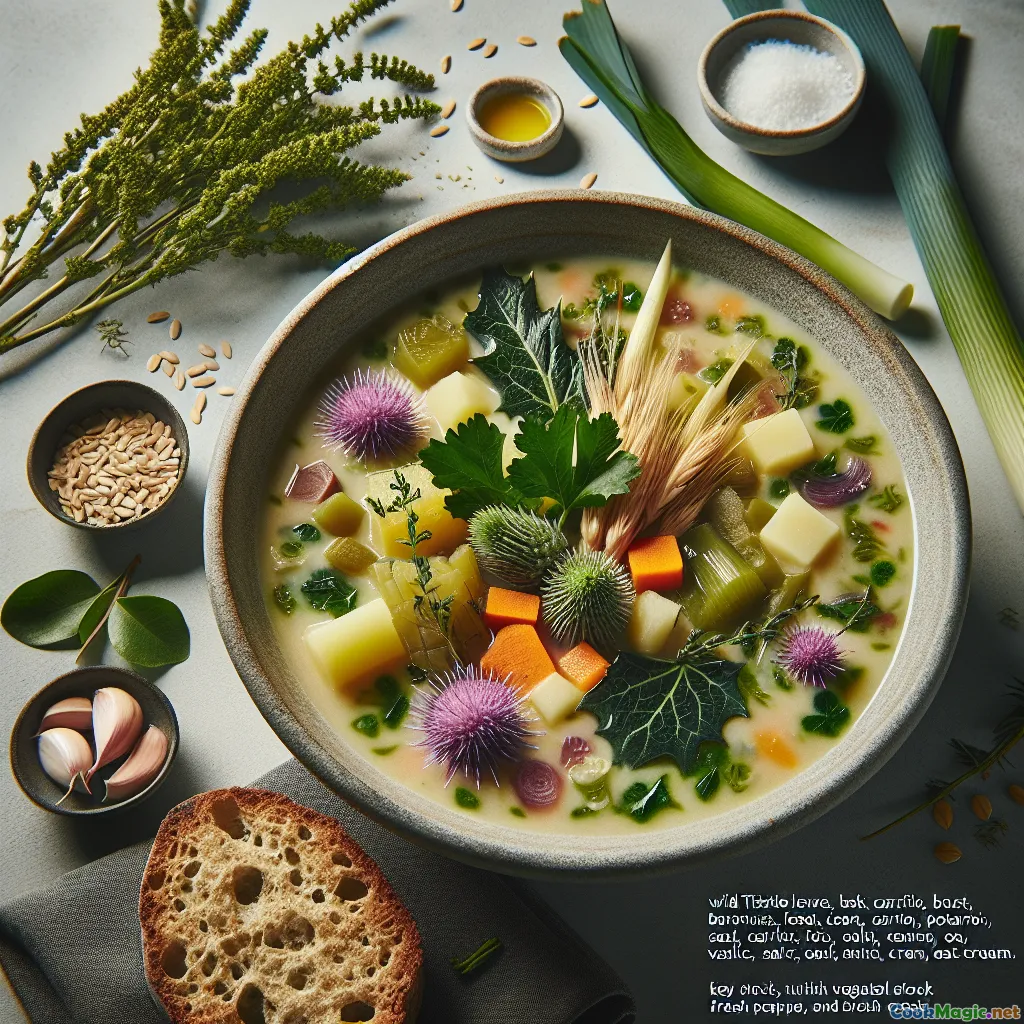

0
987
tháng 7 13, 2025
Báo cáo sự cố
Nguyên liệu
-
100 grams Lá cỏ xước hoang dã
(Nhặt sạch gai, ngâm và cắt tỉa; mầm tần ô non từ khu vực an toàn, không có thuốc trừ sâu là lý tưởng)
-
80 grams Hạt đại mạch
(Lúa mạch tròn khuyên dùng)
-
1 medium Hẹ
(Rửa sạch và cắt lát)
-
2 medium Cà rốt
(Cắt hạt lựu)
-
1 medium Cần tây
(Cắt nhỏ; thêm vị ngọt đặc trưng của cao nguyên)
-
1 large Khoai tây
(Gọt vỏ và cắt thành khối)
-
1200 ml Nước dùng rau củ
(Có thể thay thế nước dùng gà bằng phiên bản không chay)
-
2 cloves Tỏi
(Băm nhỏ mịn)
-
3 sprigs Hương Thì Là Tươi
(hoặc 1 muỗng cà phê hương thảo khô)
-
1 tsp Muối
-
0.5 tsp Hạt tiêu đen
(Tán mịn tươi, ưu tiên)
-
60 ml Kem yến mạch
(Thêm độ béo, sử dụng kem sữa nếu thích)
-
2 tbsp Ngò tươi
(Băm nhỏ, để trang trí)
-
4 slices Bánh Bannock
(Món ăn kèm truyền thống của Scotland)
(Nhặt sạch gai, ngâm và cắt tỉa; mầm tần ô non từ khu vực an toàn, không có thuốc trừ sâu là lý tưởng)
(Lúa mạch tròn khuyên dùng)
(Rửa sạch và cắt lát)
(Cắt hạt lựu)
(Cắt nhỏ; thêm vị ngọt đặc trưng của cao nguyên)
(Gọt vỏ và cắt thành khối)
(Có thể thay thế nước dùng gà bằng phiên bản không chay)
(Băm nhỏ mịn)
(hoặc 1 muỗng cà phê hương thảo khô)
(Tán mịn tươi, ưu tiên)
(Thêm độ béo, sử dụng kem sữa nếu thích)
(Băm nhỏ, để trang trí)
(Món ăn kèm truyền thống của Scotland)
Dinh dưỡng
- Khẩu phần: 4
- Kích thước khẩu phần: 1 bát (300ml)
- Calories: 210 kcal
- Carbohydrates: 38 g
- Protein: 6 g
- Fat: 3 g
- Fiber: 8 g
- Sugar: 7 g
- Sodium: 650 mg
- Cholesterol: 0 mg
- Calcium: 74 mg
- Iron: 2.1 mg
Hướng dẫn
-
1 - Chuẩn bị Cây Kèn Lông Vũ Rừng:
Đeo găng tay, cẩn thận cắt tỉa lá cây chùy. Loại bỏ gai và thân gỗ. Ngâm trong nước muối lạnh trong 10 phút, sau đó rửa sạch và xé nhỏ.
-
2 - Thái rau:
Cắt hạt lựu cà rốt, cần tây trắng và khoai tây. Cắt lát hành lá, băm nhuyễn tỏi và chuẩn bị tất cả các loại rau còn lại.
-
3 - Nền xào:
Trong một nồi có đáy dày, đun ở lửa vừa, thêm một chút dầu. Xào hành tây và tỏi trong 2–3 phút cho đến khi thơm.
-
4 - Nấu Rau:
Thêm cà rốt, củ cải và khoai tây. Nấu, khuấy đều trong 5 phút cho đến khi các cạnh mềm lại.
-
5 - Ninh Soup:
Đổ vào nước dùng rau củ. Thêm lúa mạch, kế sữa, thyme, muối và tiêu. Nấu nhỏ lửa trong 30–35 phút, thỉnh thoảng khuấy đều cho đến khi lúa mạch và rau củ mềm.
-
6 - Hoàn tất và Xay:
Để có một món súp kem, xay một nửa hỗn hợp bằng máy xay cầm tay. Để có kết cấu mộc mạc, giữ nguyên dạng chunky.
-
7 - Trang trí và phục vụ:
Khuấy đều kem yến mạch để tăng độ đặc (tùy chọn). Trang trí với hành parsley đã băm nhỏ. Dùng nóng kèm lát bánh bannock.
Đeo găng tay, cẩn thận cắt tỉa lá cây chùy. Loại bỏ gai và thân gỗ. Ngâm trong nước muối lạnh trong 10 phút, sau đó rửa sạch và xé nhỏ.
Cắt hạt lựu cà rốt, cần tây trắng và khoai tây. Cắt lát hành lá, băm nhuyễn tỏi và chuẩn bị tất cả các loại rau còn lại.
Trong một nồi có đáy dày, đun ở lửa vừa, thêm một chút dầu. Xào hành tây và tỏi trong 2–3 phút cho đến khi thơm.
Thêm cà rốt, củ cải và khoai tây. Nấu, khuấy đều trong 5 phút cho đến khi các cạnh mềm lại.
Đổ vào nước dùng rau củ. Thêm lúa mạch, kế sữa, thyme, muối và tiêu. Nấu nhỏ lửa trong 30–35 phút, thỉnh thoảng khuấy đều cho đến khi lúa mạch và rau củ mềm.
Để có một món súp kem, xay một nửa hỗn hợp bằng máy xay cầm tay. Để có kết cấu mộc mạc, giữ nguyên dạng chunky.
Khuấy đều kem yến mạch để tăng độ đặc (tùy chọn). Trang trí với hành parsley đã băm nhỏ. Dùng nóng kèm lát bánh bannock.
Thông tin thêm về: Súp Tần Thảo Scotland Đặc Trưng Với Rễ Và Rau Củ
Eastern Highland Thistle Soup: Wild Virtues in a Bowl
The Eastern Highland Thistle Soup offers a unique taste of Scottish ingenuity, steeped in tradition and brimming with nutrients extracted from the land itself. There’s something magical about using wild ingredients — and in Scotland’s rugged, mist-shrouded highlands, it doesn’t get wilder or more iconic than the humble thistle. Long revered as the national emblem, thistle is rarely found in contemporary kitchens, but historically, resourceful cooks and foragers transformed it into sustenance during lean seasons.
History & Tradition
The thistle has been wreathed in Scottish legend for centuries, celebrated not just as a hardy symbol but as an edible plant that once joined nettle and dandelion on rural tables. Our ancestors prized these wild greens, leveraging their strong flavors and abundant nutrition to survive both harsh winters and dietary restrictions, especially in times when fresh greens from the garden were unavailable. While challenging to harvest and often overlooked due to its natural armor of spiny thorns, careful preparation renders the young thistle a surprisingly delicate, herbal addition to soups.
Barley grain links this recipe firmly to Scottish culinary roots, as barley fields once blanketed the highlands and valleys, providing both warmth and energy to crofters and city folk alike. Blending the earthy root vegetables with the clean, slightly artichoke-esque notes of young thistle strikes a remarkable balance between comfort and novelty.
Preparation & Cooking Notes
When foraging for thistle, choose young plants with pliable, green leaves. Always wear gloves to avoid painful pricks! After thorough cleaning and de-thorning (a tedious but meditative step), even the cautious cook will appreciate thistle’s ability to absorb the flavors of companion vegetables. Soaking the leaves in cold salted water not only reduces bitterness but also revives any wilt.
The base of sautéed leeks and garlic creates deep aromatics, feeding the barley and root vegetables with subtlety. Each addition—carrots for sweetness, parsnips for a honeyed hint, and potatoes for rich body—grounds the soup in hearty comfort. The barley slowly swells, lending creamy thickness and transforming each mouthful into an edible embrace against cold Highland winds.
Blending a portion of the soup isn’t obligatory; many prefer to leave it rustic and toothsome, with surprising green flecks and pockets of chewy barley. If you fancy a more modern, delicate texture, a partial blend is a happy compromise.
Personal Tips & Serving Suggestions
- Ensure thistle is from an uncontaminated, reliable foraging site to avoid exposure to harmful chemicals.
- Oat cream is an excellent vegan alternative that echoes both regional ingredients and contemporary dietary needs. Classic single cream works beautifully for a more luxurious mouthfeel, though lent creamy richness may overshadow the delicate meadow notes of thistle.
- Leftovers keep splendidly and actually develop greater flavor after a rest in the cold; simply reheat gently, perhaps with extra fresh herbs to liven things.
- Bread accompaniment is tradition-hard to break—opt for dense, slightly sweet Scottish bannock or freshly toasted oatcakes.
Cultural Significance & Uniqueness
In cultural terms, there’s exceptional pride packed into a bowl of this soup. Every spoonful is layered with the spirit of Scottish resilience—the making-do, the refusal to waste, the transformation of prickly obstacles into nourishment. Though thistle’s notoriety as a weed might scare the home chef, its place in sustainable, foraged cooking cannot be overstated as lawns and fields around the world gain interest for their wild bounty.
Sharing Eastern Highland Thistle Soup carries the stories of foragers past into modern kitchens. Its uncommon green hue, delicate herbal perfume, and gentle sweetness from familiar roots evoke a culinary landscape many have never tasted—but will remember.
Dreamy, elemental, and bravely botanical, this is a dish for those who don’t just want to taste a meal, but to experience the landscape from which it springs. Try it with friends who crave adventure, and enjoy a rare Scottish tradition reborn.