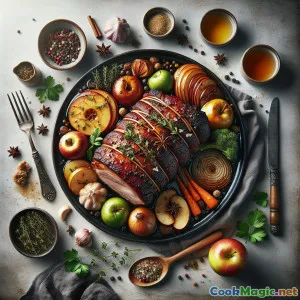
Словенская запечённая свинина, пропитанная яблочным сидром и яблоками
(Slovenian Cider-Kissed Roast Pork with Apples)
(0 Обзоры)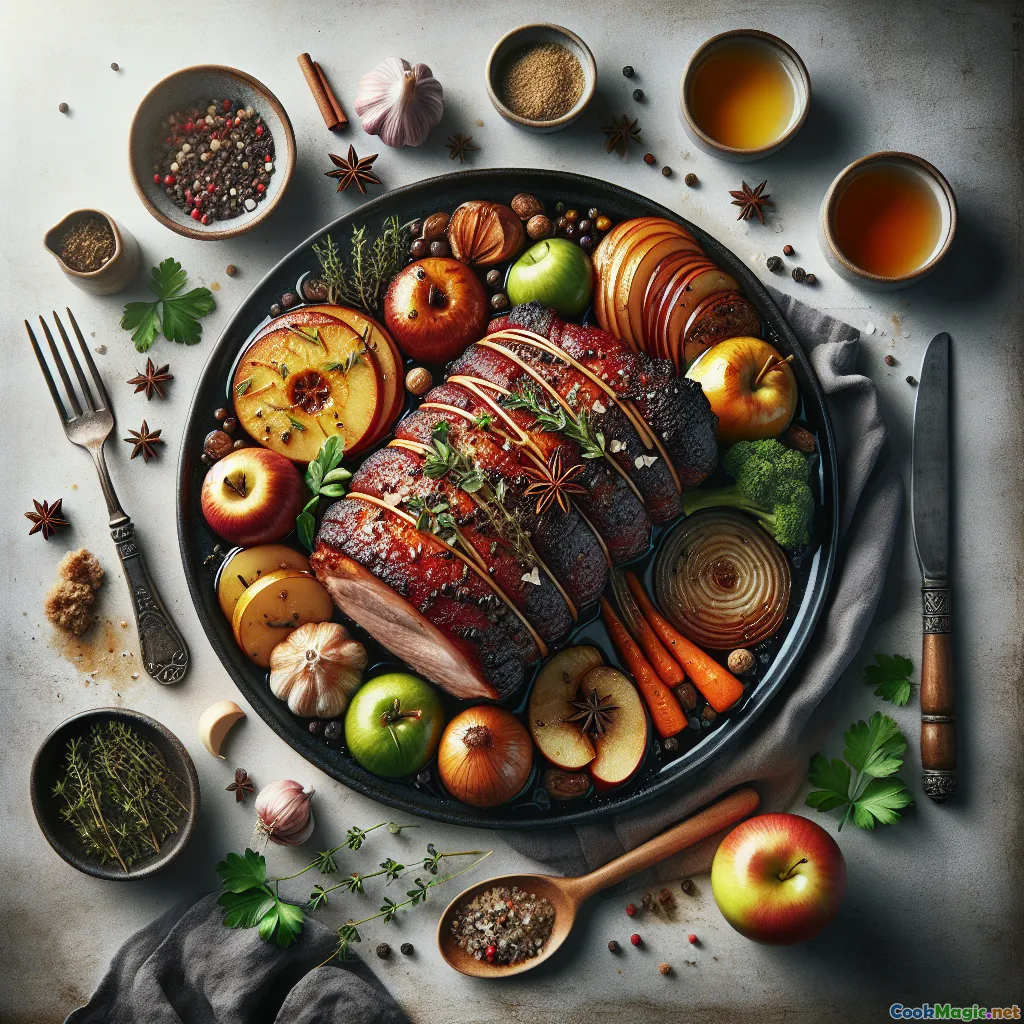
0
22
январь 11, 2026
Сообщить о проблеме
Ингредиенты
-
1.6 kg свиная лопатка без кости
(Also called pork butt; well-marbled for tenderness.)
-
18 g Кошерная соль
(About 1% of meat weight; adjust to taste.)
-
1.5 tsp Чёрный перец
(Freshly cracked for best aroma.)
-
1 tsp Семена тмина
(Traditional Central European note.)
-
8 each ягоды можжевельника
(Lightly crushed; adds resinous forest aroma.)
-
2 tbsp Свежая майоран
(Or 2 tsp dried marjoram.)
-
2 sprigs Свежий тимьян
(Leaves only if stems are woody.)
-
6 cloves Чеснок
(Smashed.)
-
2 medium Жёлтый лук
(Sliced into thick wedges.)
-
3 large терпкие яблоки
(Granny Smith or local Slovenian varieties.)
-
2 medium Морковь
(Cut into large chunks for roasting bed.)
-
2 each Стебли сельдерея
(Cut into large chunks for aromatic base.)
-
500 ml Сухой яблочный сидр (без газа)
(Unfiltered if possible; not sparkling.)
-
2 tbsp Яблочный уксус
(Brightens the sauce.)
-
1.5 tbsp Горчица из цельных зерен
(For texture and tang in the glaze.)
-
1 tbsp Мед
(Slovenian forest honey if available.)
-
2 each Лавровые листья
(Dried bay leaves.)
-
2 tbsp Нейтральное масло
(Or rendered pork fat for searing.)
-
1 tbsp Несоленое масло
(Adds silkiness to the sauce.)
-
2 tsp Кукурузный крахмал
(For gluten-free gravy; or use 2 tbsp flour.)
-
30 ml Вода
(To make a cornstarch slurry.)
-
2 tbsp Свежая петрушка
(Рубленый, для украшения.)
(Also called pork butt; well-marbled for tenderness.)
(About 1% of meat weight; adjust to taste.)
(Freshly cracked for best aroma.)
(Traditional Central European note.)
(Lightly crushed; adds resinous forest aroma.)
(Or 2 tsp dried marjoram.)
(Leaves only if stems are woody.)
(Smashed.)
(Sliced into thick wedges.)
(Granny Smith or local Slovenian varieties.)
(Cut into large chunks for roasting bed.)
(Cut into large chunks for aromatic base.)
(Unfiltered if possible; not sparkling.)
(Brightens the sauce.)
(For texture and tang in the glaze.)
(Slovenian forest honey if available.)
(Dried bay leaves.)
(Or rendered pork fat for searing.)
(Adds silkiness to the sauce.)
(For gluten-free gravy; or use 2 tbsp flour.)
(To make a cornstarch slurry.)
(Рубленый, для украшения.)
Питательная ценность
- Порции: 6
- Размер порции: 1 slice with sauce (200g)
- Calories: 610 kcal
- Carbohydrates: 0 g
- Protein: 45 g
- Fat: 34 g
- Fiber: 4 g
- Sugar: 16 g
- Sodium: 980 mg
- Cholesterol: 145 mg
- Calcium: 60 mg
- Iron: 2.8 mg
Инструкции
-
1 - Dry brine the pork:
Pat the pork shoulder dry. Rub evenly with salt, black pepper, caraway (if using), and half the marjoram. Let rest uncovered in the fridge at least 1 hour (or overnight) for deeper seasoning.
-
2 - Sear for crust:
Preheat oven to 170°C/340°F. Heat oil in a heavy roasting pan over medium-high. Sear pork on all sides until deeply browned, about 3 minutes per side. Transfer pork to a plate.
-
3 - Build aromatic bed:
Lower heat to medium. Add onions, carrots, celery, and garlic to the pan with a pinch of salt. Stir 3–4 minutes to soften. Add bay leaves, juniper, and thyme (if using).
-
4 - Deglaze with cider:
Pour in 300 ml cider to deglaze, scraping up browned bits. Nestle the pork on top of the vegetables. Scatter apple wedges around the meat.
-
5 - Roast gently, covered:
Cover tightly with a lid or foil and roast until nearly tender, about 90 minutes. The cider should simmer softly; add a splash of water if the pan looks dry.
-
6 - Mix cider-mustard glaze:
In a small bowl, whisk remaining 200 ml cider with mustard, vinegar, honey, and remaining marjoram. Uncover pork and brush with half the glaze.
-
7 - Roast to caramelize:
Increase oven to 190°C/375°F. Roast uncovered, basting once more with glaze, until the top is lacquered and internal temp reaches 70–72°C/160–162°F, about 25–30 minutes.
-
8 - Rest the meat:
Transfer pork to a board, tent loosely with foil, and rest 15 minutes to redistribute juices. Remove and discard bay leaves and thyme stems from the pan.
-
9 - Make the pan sauce:
Skim excess fat. Mash some roasted apples/onions into the juices. Stir in butter. If thicker gravy is desired, whisk cornstarch with water and cook the pan juices over medium until glossy.
-
10 - Slice and Serve:
Slice pork against the grain. Spoon over cider-gravy and scatter with parsley. Serve with remaining roasted apples and vegetables.
Pat the pork shoulder dry. Rub evenly with salt, black pepper, caraway (if using), and half the marjoram. Let rest uncovered in the fridge at least 1 hour (or overnight) for deeper seasoning.
Preheat oven to 170°C/340°F. Heat oil in a heavy roasting pan over medium-high. Sear pork on all sides until deeply browned, about 3 minutes per side. Transfer pork to a plate.
Lower heat to medium. Add onions, carrots, celery, and garlic to the pan with a pinch of salt. Stir 3–4 minutes to soften. Add bay leaves, juniper, and thyme (if using).
Pour in 300 ml cider to deglaze, scraping up browned bits. Nestle the pork on top of the vegetables. Scatter apple wedges around the meat.
Cover tightly with a lid or foil and roast until nearly tender, about 90 minutes. The cider should simmer softly; add a splash of water if the pan looks dry.
In a small bowl, whisk remaining 200 ml cider with mustard, vinegar, honey, and remaining marjoram. Uncover pork and brush with half the glaze.
Increase oven to 190°C/375°F. Roast uncovered, basting once more with glaze, until the top is lacquered and internal temp reaches 70–72°C/160–162°F, about 25–30 minutes.
Transfer pork to a board, tent loosely with foil, and rest 15 minutes to redistribute juices. Remove and discard bay leaves and thyme stems from the pan.
Skim excess fat. Mash some roasted apples/onions into the juices. Stir in butter. If thicker gravy is desired, whisk cornstarch with water and cook the pan juices over medium until glossy.
Slice pork against the grain. Spoon over cider-gravy and scatter with parsley. Serve with remaining roasted apples and vegetables.
Подробнее о: Словенская запечённая свинина, пропитанная яблочным сидром и яблоками
Why this recipe sings
Dolenjska Apple Cider Roast Pork layers rustic Slovenian flavors with orchard-bright acidity for a roast that is both comforting and nuanced. Pork shoulder, a well-marbled cut prized across Central Europe, becomes spoon-tender in a bath of dry apple cider, herbs, and woodland aromatics like juniper and bay. The final glaze—cider kissed with whole grain mustard, a touch of honey, and cider vinegar—delivers a lacquered finish that’s deeply savory yet refreshingly crisp on the palate.
A nod to Dolenjska
Dolenjska, a rolling, vineyard-laced region in southeastern Slovenia, is synonymous with orchards, forest herbs, and the light, distinctive local wine called Cviček. The use of apples and apple cider here isn’t just seasonal intuition; it’s regional logic. Cider’s gentle acidity tenderizes and perfumes the meat without overwhelming it, much like cooking with wine. Juniper evokes the region’s forests, while marjoram—a beloved Slovenian herb—adds warm, floral-green notes that harmonize with pork.
Technique highlights
- Dry brine for flavor and juiciness: Salting ahead seasons the interior and helps retain moisture. Even one hour makes a difference; overnight is gold.
- Sear, then steam-roast: A hard sear creates Maillard depth. The covered phase gently braises in aromatic cider vapors, ensuring tenderness.
- Uncover and glaze: Raising the heat at the end caramelizes surface sugars and concentrates pan juices into a savory-sweet sheen.
- Pan-sauce wisdom: Mash some roasted apples and onions into the juices for natural body and sweetness. Finish with a knob of butter for silk.
Ingredient notes and smart swaps
- Pork shoulder vs. loin: Shoulder’s fat and connective tissue excel in slow roasting. If using loin, reduce cooking time and baste often to prevent dryness.
- Cider: Choose a dry, still cider (not sweet or sparkling). In a pinch, blend unsweetened apple juice with a splash of white wine or a teaspoon of lemon to mimic acidity.
- Herbs: Marjoram is classic; if unavailable, use a blend of oregano and a touch of savory. Caraway and juniper are optional but add unmistakable Central European soul.
- Thickener: Cornstarch keeps the gravy gluten-free; flour adds a slightly toastier note if you prefer.
Serving suggestions
- Starch: Pair with roasted potatoes, creamy polenta, or buckwheat žganci (a traditional Slovenian side) to echo regional comfort.
- Greens: Serve alongside braised red cabbage or sauerkraut (kislo zelje) for tangy balance.
- Wine pairing: Cviček from Dolenjska is a natural match—light, lively, and refreshingly dry. A crisp dry cider or a Riesling also complements the dish.
Make-ahead and leftovers
- Make-ahead: You can roast the pork up to one day ahead. Cool, slice, and store in the sauce. Reheat gently, adding a splash of cider or stock to loosen.
- Leftovers: Shred and pile into crusty rolls with mustard and pickled onions for a next-day sandwich. Or fold into potato cakes with chopped apples and herbs.
Tips & troubleshooting
- Avoid a sweet glaze: If your cider is off-dry, pull back the honey or skip it. You want balance, not dessert.
- Pan looks dry mid-roast? Add a small splash of water or stock—never let it scorch.
- Stringy slices? Rest longer and slice against the grain. Shoulder rewards patience.
- Want more bark? Broil for the last 2–3 minutes, watching closely to prevent burning.
Cultural resonance
This roast is a table-length conversation between land and pantry: orchard fruit, vineyard-friendly acidity, forest aromatics, and the time-honored comfort of pork. It’s the sort of dish that appears at a Sunday gathering, a harvest celebration, or any evening when the kitchen windows fog and family drifts toward the warmth of the oven. In Dolenjska, where modest ingredients become poetry through patient technique, this roast embodies hospitality: generous, aromatic, and meant to be shared.
Personal notes
I love how the cider does double duty—first as a gentle braising medium, then as a glossy glaze. The interplay of marjoram and juniper feels like a walk through Slovenian hills after a light rain: herbaceous, resinous, and clean. Don’t skip mashing some apples into the sauce; it’s the secret to a naturally velvety gravy without heavy cream. Finally, keep the carving thin and the sauce plentiful. Each slice should glimmer—cider-bright, apple-sweet, and ready for another sip of Cviček.