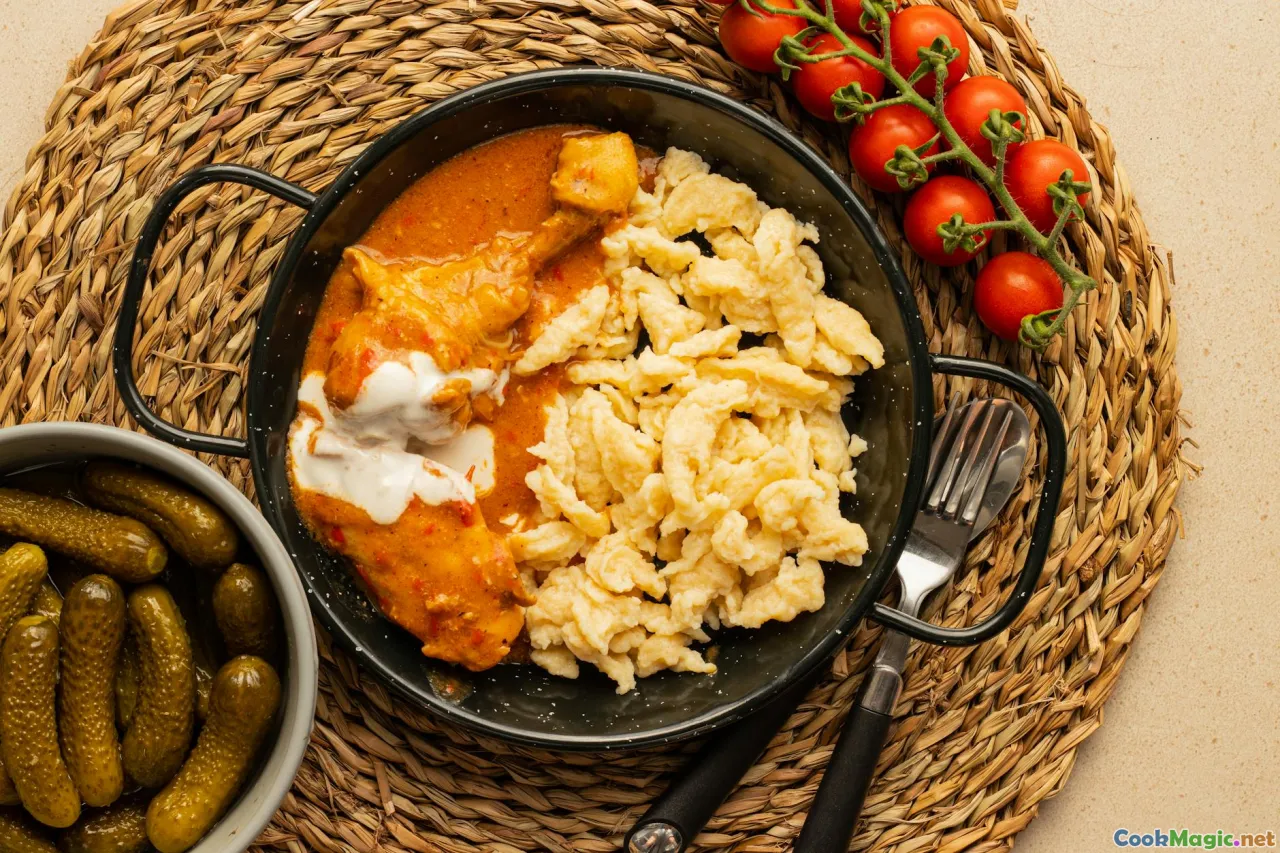
Kurczak po csárdaiu z papryką i nokedli
(Csárda Chicken Paprikash with Nokedli)
(0 Recenzje)

0
131
grudzień 14, 2025
Zgłoś problem
Składniki
-
1000 grams Udka z kurczaka z kością i skórą, soczyste i pełne smaku, idealne do pieczenia lub grillowania.
(Or mix of thighs and drumsticks)
-
2 tsp Sól kosher
(Divided between seasoning and sauce)
-
1 tsp Czarny pieprz
(Świeżo mielony)
-
2 tbsp Słonina lub olej neutralny
(Traditional lard adds depth)
-
400 grams Cebula żółta
(Cienko pokrojony)
-
3 cloves Czosnek
(Mielony)
-
3 tbsp Słodka papryka węgierska
(Szeged or Kalocsa; very fresh)
-
0.5 tsp Ostra papryka lub cayenne
(Dostosuj do smaku)
-
1 tsp Nasiona kminku
(Lekko rozgniecione)
-
2 pieces Czerwone papryki
(Seeded and sliced)
-
200 grams Pomidor
(Ripe; grated or finely chopped)
-
1 piece Liść laurowy
(Adds subtle aroma)
-
500 ml rosół z kurczaka
(niskosodowy)
-
200 grams Śmietana kwaśna
(Full-fat for silkiness)
-
1 tbsp Mąka uniwersalna
(To stabilize sour cream)
-
1 tsp Sok cytrynowy
(Balances richness)
-
2 tbsp Świeża pietruszka
(Posiekany, do dekoracji)
-
250 grams Mąka uniwersalna drobno mielona (do nokedli)
(Nokedli dumplings)
-
2 large Jaja
(Temperatura pokojowa)
-
120 ml Woda
(Or milk for richer dumplings)
-
0.5 tsp Sól (do ciasta nokedli)
(Season dumpling dough)
-
2 tbsp Masło
(To toss cooked nokedli)
-
1 tbsp olej słonecznikowy
(For paprika oil drizzle)
-
0.5 tsp słodka papryka węgierska (do oleju)
(Bloom gently in warm oil)
(Or mix of thighs and drumsticks)
(Divided between seasoning and sauce)
(Świeżo mielony)
(Traditional lard adds depth)
(Cienko pokrojony)
(Mielony)
(Szeged or Kalocsa; very fresh)
(Dostosuj do smaku)
(Lekko rozgniecione)
(Seeded and sliced)
(Ripe; grated or finely chopped)
(Adds subtle aroma)
(niskosodowy)
(Full-fat for silkiness)
(To stabilize sour cream)
(Balances richness)
(Posiekany, do dekoracji)
(Nokedli dumplings)
(Temperatura pokojowa)
(Or milk for richer dumplings)
(Season dumpling dough)
(To toss cooked nokedli)
(For paprika oil drizzle)
(Bloom gently in warm oil)
Wartości odżywcze
- Porcje: 4
- Wielkość porcji: 1 plate (450g)
- Calories: 780 kcal
- Carbohydrates: 0 g
- Protein: 46 g
- Fat: 44 g
- Fiber: 4 g
- Sugar: 7 g
- Sodium: 980 mg
- Cholesterol: 220 mg
- Calcium: 130 mg
- Iron: 4.7 mg
Instrukcje
-
1 - Season the Chicken:
Pat chicken dry. Season all over with 1½ tsp salt and black pepper. Let stand at room temperature while you prep aromatics.
-
2 - Sear to build fond:
Heat lard or oil in a wide pot over medium-high. Sear chicken skin-side down until deep golden, 5–7 minutes. Flip and brown briefly. Remove and set aside.
-
3 - Sweat the onions:
Lower heat to medium. Add onions with a pinch of salt. Cook, stirring, until soft and translucent, 8–10 minutes. Add garlic; cook 1 minute more.
-
4 - Bloom paprika and spices:
Off the heat, stir in sweet paprika, hot paprika, and crushed caraway. Coat onions until brick red and fragrant—about 30 seconds. Avoid burning.
-
5 - Build the Base:
Return pot to medium heat. Stir in bell peppers and tomatoes; cook 2–3 minutes. Add bay leaf and pour in chicken stock, scraping up browned bits.
-
6 - Simmer the chicken:
Nestle chicken, skin-side up. Bring to a gentle simmer, cover slightly ajar, and cook 25–30 minutes until chicken is tender and nearly pulls from the bone.
-
7 - Make sour cream liaison:
Whisk sour cream with flour and a ladle of hot sauce until smooth. This prevents curdling and keeps the sauce silky.
-
8 - Prepare nokedli batter:
In a bowl, whisk eggs, water, and ½ tsp salt. Stir in 250 g flour until a sticky, stretchy batter forms. Rest 5 minutes while water boils.
-
9 - Cook nokedli:
Boil salted water. Press batter through a spaetzle maker or use a board and knife into simmering water. Cook 1–2 minutes until they float; scoop into a bowl with butter.
-
10 - Finish the paprikash:
Remove chicken to a warm plate. Whisk liaison into the pot off heat. Return to low and simmer gently 1–2 minutes. Add lemon juice and adjust salt.
-
11 - Make paprika oil (optional):
Warm sunflower oil in a small pan (do not smoke). Remove from heat; stir in paprika to bloom. Set aside for drizzling.
-
12 - Serve:
Spoon nokedli onto plates, top with chicken and generous paprika sauce. Drizzle paprika oil and scatter parsley. Serve immediately.
Pat chicken dry. Season all over with 1½ tsp salt and black pepper. Let stand at room temperature while you prep aromatics.
Heat lard or oil in a wide pot over medium-high. Sear chicken skin-side down until deep golden, 5–7 minutes. Flip and brown briefly. Remove and set aside.
Lower heat to medium. Add onions with a pinch of salt. Cook, stirring, until soft and translucent, 8–10 minutes. Add garlic; cook 1 minute more.
Off the heat, stir in sweet paprika, hot paprika, and crushed caraway. Coat onions until brick red and fragrant—about 30 seconds. Avoid burning.
Return pot to medium heat. Stir in bell peppers and tomatoes; cook 2–3 minutes. Add bay leaf and pour in chicken stock, scraping up browned bits.
Nestle chicken, skin-side up. Bring to a gentle simmer, cover slightly ajar, and cook 25–30 minutes until chicken is tender and nearly pulls from the bone.
Whisk sour cream with flour and a ladle of hot sauce until smooth. This prevents curdling and keeps the sauce silky.
In a bowl, whisk eggs, water, and ½ tsp salt. Stir in 250 g flour until a sticky, stretchy batter forms. Rest 5 minutes while water boils.
Boil salted water. Press batter through a spaetzle maker or use a board and knife into simmering water. Cook 1–2 minutes until they float; scoop into a bowl with butter.
Remove chicken to a warm plate. Whisk liaison into the pot off heat. Return to low and simmer gently 1–2 minutes. Add lemon juice and adjust salt.
Warm sunflower oil in a small pan (do not smoke). Remove from heat; stir in paprika to bloom. Set aside for drizzling.
Spoon nokedli onto plates, top with chicken and generous paprika sauce. Drizzle paprika oil and scatter parsley. Serve immediately.
Więcej o: Kurczak po csárdaiu z papryką i nokedli
A tavern-born classic, hearty and honest
Csárda Style Chicken Paprikash is named for Hungary’s rustic roadside inns—csárdák—where food was bold, unfussy, and deeply comforting. This dish captures that spirit in a paprika-laced stew of tender chicken and sweet onions, finished with a spoonful of tangy sour cream and ladled beside pillowy nokedli dumplings. It’s a study in balance: sweet and smoky paprika, savory onions, gentle heat, and creamy richness.
The soul of Hungarian paprika
Paprikás csirke lives or dies by paprika. Use fresh, high-quality Hungarian sweet paprika from Szeged or Kalocsa; it should smell fruity and vibrant, not dusty. The short “bloom” step—stirring paprika into the hot onion fat briefly off the heat—awakens essential oils without scorching, which would turn the sauce bitter. A pinch of hot paprika (or a whisper of cayenne) builds warmth without overshadowing the dish’s signature sweetness.
Why bone-in chicken matters
Traditional csárda cooking favors bone-in, skin-on pieces for deeper flavor. Searing the skin develops fond that dissolves into the sauce, while gentle simmering releases gelatin for body. If you only have boneless thighs, reduce simmer time to avoid dryness and consider adding a splash more stock for silkiness.
Onion technique is everything
Hungarian stews often start with a generous onion base. Here, onions are sweated until soft and glossy, not browned to sweetness. This preserves a clean, sweet-savory profile that lets paprika shine. The sequence—sear, sweat onions, bloom spices, then add liquids—is classic pörkölt/paprikás technique.
The nokedli advantage
Nokedli, cousins to German Spätzle, are delightfully imperfect dumplings. The batter should be sticky and stretchy; a brief rest helps hydration and tenderness. Pressing through a spaetzle maker is easiest, but a cutting board and a wet butter knife is the csárda way: drag, flick, repeat. Tossing the just-cooked dumplings in a pat of butter prevents sticking and adds gloss.
Stabilizing with a liaison
Mixing sour cream with a little flour and a ladle of hot sauce creates a liaison that resists curdling. Whisk it in off the heat, then return to a low simmer for only a minute or two. High heat is the enemy of smooth paprikash.
Flavor builders and smart substitutions
- Fat: Lard is traditional and adds subtle depth, but neutral oil works. A knob of butter at the end is a nice flourish.
- Peppers and tomato: Red bell peppers add sweetness and color. In winter, a spoon of good-quality canned tomato can stand in.
- Spices: Caraway brings a distinct Hungarian character; lightly crush the seeds to release aroma. A bay leaf is optional but pleasant.
- Dairy: If sour cream is unavailable, crème fraîche is a stable substitute. For a lighter finish, use half the sour cream and brighten with lemon.
- Gluten-free: Serve with boiled potatoes or rice instead of nokedli and omit the flour in the liaison; temper sour cream with extra hot sauce instead and keep the heat low.
Serving and pairing
Paprikash begs for something to soak up the sauce. Nokedli are traditional, but buttered egg noodles, mashed potatoes, or simple rice also work. Garnish with chopped parsley and a quick paprika oil drizzle for color and aroma. Pair with a Hungarian white like Furmint (dry) to echo the dish’s spice and cut richness, or a light-to-medium red such as Kékfrankos/Blauburger. A cold lager echoes the csárda tavern feel beautifully.
Make-ahead and storage
The stew improves after a gentle overnight rest as flavors meld; reheat slowly to avoid breaking the sauce. Keep the liaison step for just before serving if possible. Nokedli can be cooked ahead, tossed in a little butter, and reheated in a skillet. Leftovers keep 2–3 days refrigerated.
Cultural roots and distinctions
Paprikás, pörkölt, and gulyás share a culinary lineage. Gulyás (goulash) is a soup-stew, pörkölt is a thicker meat stew, and paprikás is closely related but typically finished with sour cream and often served with nokedli. The csárda style emphasizes robust portions, straightforward technique, and hospitality—food designed to warm travelers and locals alike against the Hungarian plains.
Tips for success
- Keep paprika fresh: buy small tins and store airtight away from heat and light.
- Control heat when blooming paprika to prevent bitterness.
- Season in layers: salt the chicken, the onions, and the sauce for depth.
- Simmer gently; a rolling boil tightens proteins and dulls flavors.
- Rest nokedli batter briefly; it helps tenderness.
- Finish with acid: a teaspoon of lemon juice or a splash of vinegar sharpens the dish without making it sour.
This Csárda Style Chicken Paprikash is humble in method yet majestic in flavor—proof that the simplest ingredients, guided by time-honored Hungarian technique, can become a feast worthy of a tavern table.