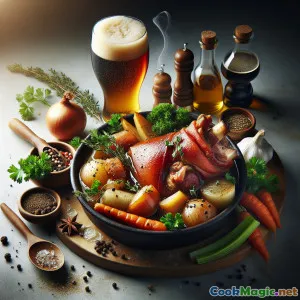
Golonka wieprzowa duszona w piwie Cheb: Aromatyczna angielska delicja
(Cheb Beer Braised Pork Knuckle: A Savory English Delight)
(0 Recenzje)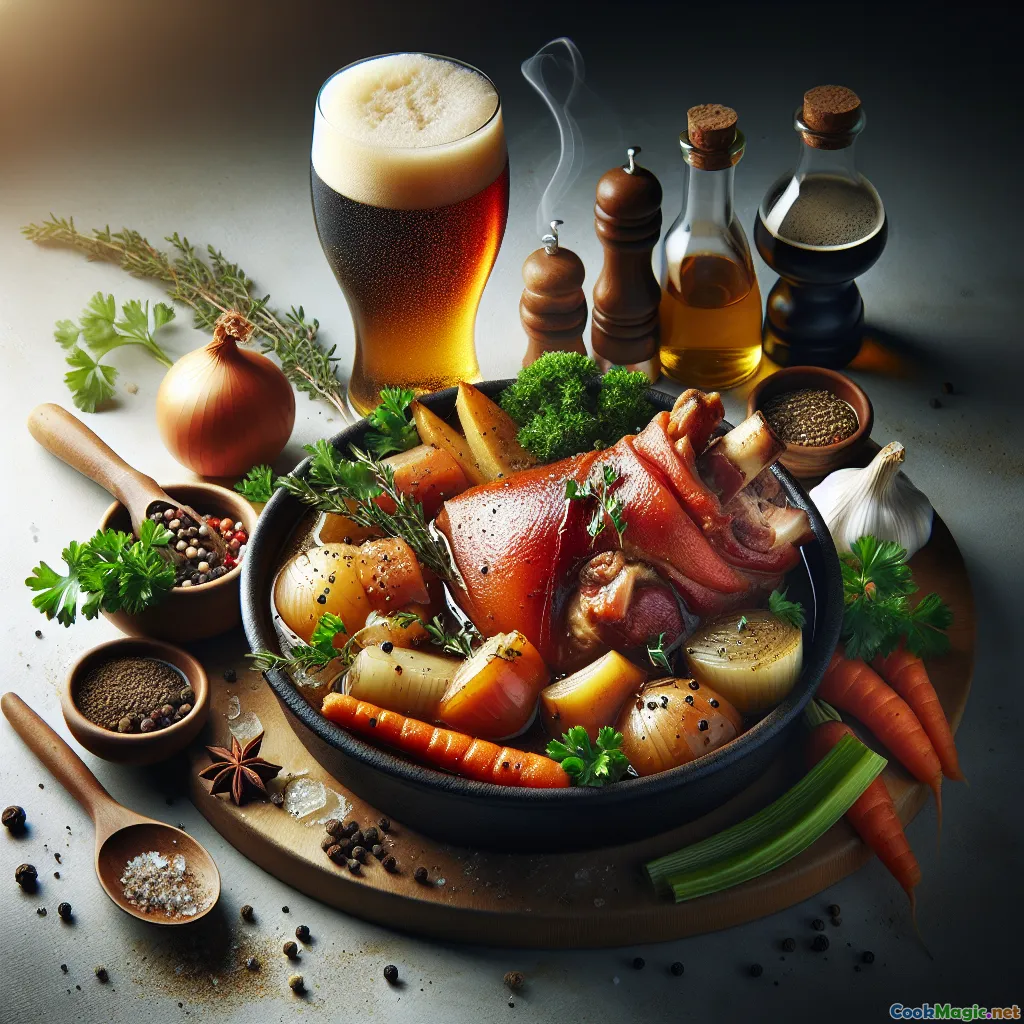
0
1,024
lipiec 19, 2025
Zgłoś problem
Składniki
-
2 large Goleń wieprzowa (szynkowa kość)
(Świeży, ze skórką, dla prawdziwej żelatynowej tekstury.)
-
750 ml Angielski ale (Cheb lub podobne ciemne piwo)
(Wybierz bogatą, słodową angielską ale dla głębi smaku.)
-
500 ml rosół z kurczaka
(Możesz także użyć bulionu wołowego, aby uzyskać intensywniejszy smak.)
-
2 medium Cebula
(Grubo posiekane)
-
2 large Marchewka
(Pokrój na kawałki o długości 1 cala.)
-
2 stalks Seler
(Pokroić na kawałki)
Ząbki czosnku, 6
Liście laurowe, 3
-
6 sprigs Świeży tymianek
-
1 tbsp Całe czarne pieprzowe kulki
-
3 tbsp Ocet słodowy
-
2 tbsp Miód
(Wykończenie glazurą karmelizowaną)
-
2 tbsp Oliwa z oliwek
-
2 tsp Sól
(Do smaku)
-
1 tsp Świeżo zmielony czarny pieprz
(Do smaku)
-
1 large Pasternak
(Pokrojone na kawałki; opcjonalnie dla dodatkowej słodyczy)
-
1 tbsp Musztarda Dijon
(Dla dodatkowej ostrości w glazurze)
-
2 tbsp Pietruszka liściowa płaska
(Posiekany, do dekoracji)
(Świeży, ze skórką, dla prawdziwej żelatynowej tekstury.)
(Wybierz bogatą, słodową angielską ale dla głębi smaku.)
(Możesz także użyć bulionu wołowego, aby uzyskać intensywniejszy smak.)
(Grubo posiekane)
(Pokrój na kawałki o długości 1 cala.)
(Pokroić na kawałki)
(Wykończenie glazurą karmelizowaną)
(Do smaku)
(Do smaku)
(Pokrojone na kawałki; opcjonalnie dla dodatkowej słodyczy)
(Dla dodatkowej ostrości w glazurze)
(Posiekany, do dekoracji)
Wartości odżywcze
- Porcje: 4
- Wielkość porcji: 1 golonka z warzywami (około 400 g)
- Calories: 875 kcal
- Carbohydrates: 33 g
- Protein: 62 g
- Fat: 53 g
- Fiber: 7 g
- Sugar: 13 g
- Sodium: 1450 mg
- Cholesterol: 215 mg
- Calcium: 106 mg
- Iron: 5.8 mg
Instrukcje
-
1 - Przygotować Warzywa:
Posiekaj grubo cebulę, marchew, seler i pastinak (jeśli używasz), a następnie rozgnieć ząbki czosnku. Odstaw warzywa na bok.
-
2 - Obsmaż kostki palców.:
W dużym żeliwnym garnku lub ciężkim rondlu podgrzej olej z oliwek na średnio-wysokim ogniu. Dodaj golonki wieprzowe, obsmaż je ze wszystkich stron przez 5–7 minut, aby rozwijały się smak i kolor. Wyjmij i odstaw.
-
3 - Smaż aromatyczną bazę.:
Na pozostałym oleju smaż cebulę, marchew, seler naciowy, pastinak i czosnek przez 5–6 minut, aż nabiorą złotego koloru i aromatu.
-
4 - Deglazuj z użyciem ale.:
Wlej angielskie ale, zeskrobując z dna garnka brązowe, przypalone drobiny. Doprowadź do lekkiego wrzenia na małym ogniu i wytwarzaj pianę, lekko redukując przez 5 minut.
-
5 - Przygotuj bazę do duszenia i rozpocznij duszenie:
Włóż z powrotem do garnka obsmażone golonki wieprzowe. Dodaj bulion drobiowy, liście laurowe, gałązki tymianku, ziarna pieprzu, ocet słodowy, sól i pieprz. Upewnij się, że mięso jest w dużej części przykryte.
-
6 - Dusić na małym ogniu.:
Przykryj garnek i duś na małym ogniu przez 2 godziny, odwracając golonki co 40 minut. Zdejmuj z wierzchu zanieczyszczenia. Mięso jest gotowe, gdy prawie odchodzi od kości.
-
7 - Karamelizuj glazurę:
Wymieszaj miód z musztardą Dijon (jeśli używasz); zwiększ ogień w garnku, odkryj pokrywkę i posmaruj odsłoniętą skórę glazurą. Nalej trochę płynu do duszenia na wierzch. Duś przez 10 minut, aż będzie lepki i skarmelizowany.
-
8 - Odpocznij i Serwuj:
Usuń golonki i warzywa, aby odpoczęły. Łyżką usuń nadmiar tłuszczu z sosu; w razie potrzeby zredukuj płyn. Następnie polej mięso sosem. Udekoruj natką pietruszki o płaskich liściach i podawaj na gorąco.
Posiekaj grubo cebulę, marchew, seler i pastinak (jeśli używasz), a następnie rozgnieć ząbki czosnku. Odstaw warzywa na bok.
W dużym żeliwnym garnku lub ciężkim rondlu podgrzej olej z oliwek na średnio-wysokim ogniu. Dodaj golonki wieprzowe, obsmaż je ze wszystkich stron przez 5–7 minut, aby rozwijały się smak i kolor. Wyjmij i odstaw.
Na pozostałym oleju smaż cebulę, marchew, seler naciowy, pastinak i czosnek przez 5–6 minut, aż nabiorą złotego koloru i aromatu.
Wlej angielskie ale, zeskrobując z dna garnka brązowe, przypalone drobiny. Doprowadź do lekkiego wrzenia na małym ogniu i wytwarzaj pianę, lekko redukując przez 5 minut.
Włóż z powrotem do garnka obsmażone golonki wieprzowe. Dodaj bulion drobiowy, liście laurowe, gałązki tymianku, ziarna pieprzu, ocet słodowy, sól i pieprz. Upewnij się, że mięso jest w dużej części przykryte.
Przykryj garnek i duś na małym ogniu przez 2 godziny, odwracając golonki co 40 minut. Zdejmuj z wierzchu zanieczyszczenia. Mięso jest gotowe, gdy prawie odchodzi od kości.
Wymieszaj miód z musztardą Dijon (jeśli używasz); zwiększ ogień w garnku, odkryj pokrywkę i posmaruj odsłoniętą skórę glazurą. Nalej trochę płynu do duszenia na wierzch. Duś przez 10 minut, aż będzie lepki i skarmelizowany.
Usuń golonki i warzywa, aby odpoczęły. Łyżką usuń nadmiar tłuszczu z sosu; w razie potrzeby zredukuj płyn. Następnie polej mięso sosem. Udekoruj natką pietruszki o płaskich liściach i podawaj na gorąco.
Więcej o: Golonka wieprzowa duszona w piwie Cheb: Aromatyczna angielska delicja
Cheb Beer Braised Pork Knuckle
Overview & Cultural Insights
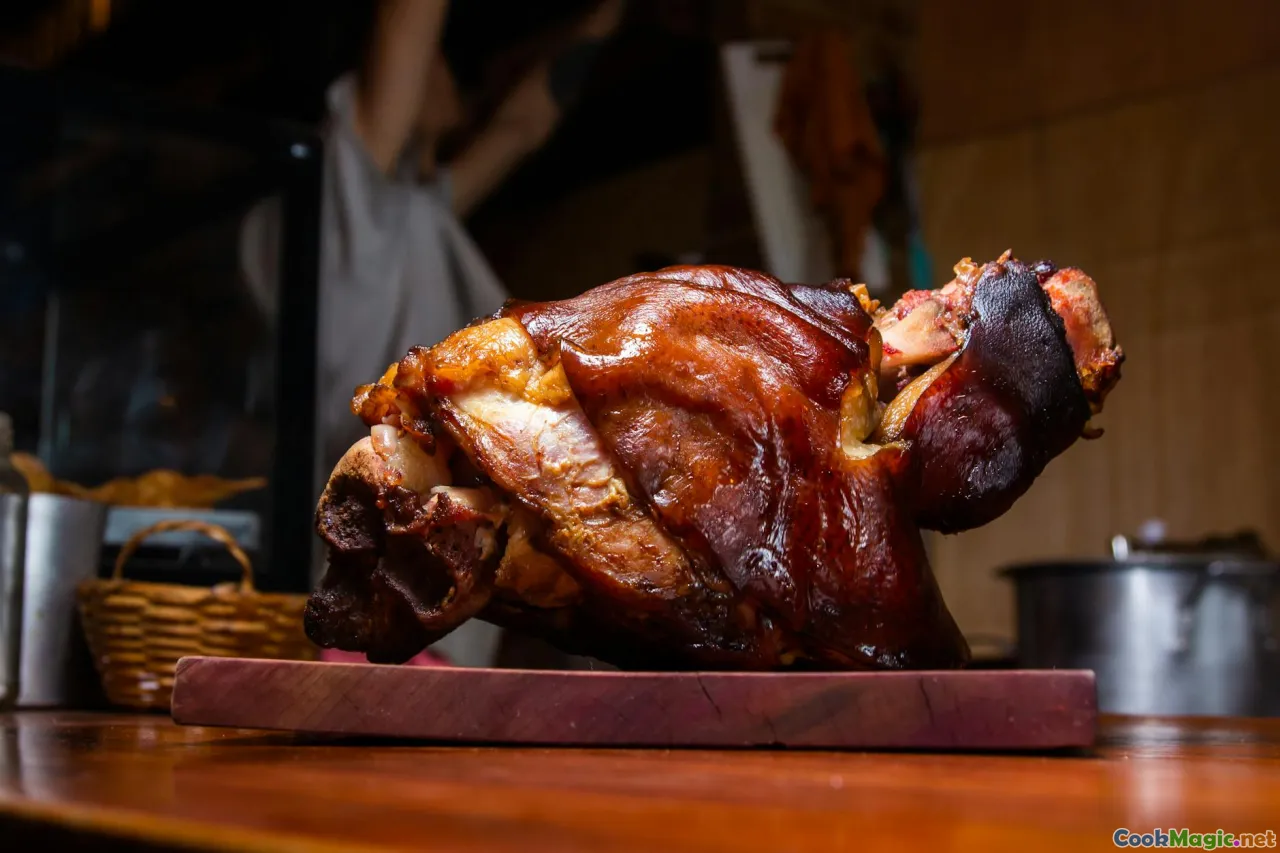
Cheb Beer Braised Pork Knuckle is a rustic English specialty fashioned in the tradition of classic beer-braised meats that have graced pub menus and family tables across the United Kingdom for centuries. Traditionally utilizing robust, malty ales—here focusing on the deep character of a Cheb-style or classic English-brewed dark beer—the recipe transforms humble pork knuckles into a fork-tender, gelatin-rich masterpiece.
The pork knuckle, known as the ham hock, is revered in British culinary circles for both its affordability and exceptional flavor—a staple for hearty, slow-cooked preparations enjoyed in the cooler months. Part of the dish’s brilliance is owed to its origins combining peasant economy (making the most of moderately priced cuts) with the bountiful local ale tradition. The method melds simple ingredients into a dish of layered complexity, redolent of roasted root vegetables, aromatics, tangy malt, and floral herbs.
Unique Aspects & Flavor Profile
This recipe distinguishes itself through the use of English ale, which brings gentle bitterness, caramel, and biscuit notes to the cooking broth. Over several hours, the beer’s flavor softens and melds with meat juices, aromatics, and a hint of malt vinegar for brightness. Aromatic punches from thyme, bay, and garlic cut through the luscious, sticky pork fat rendered tender and spoonable. Root vegetables both reinforce the sweetness and add nutrition.
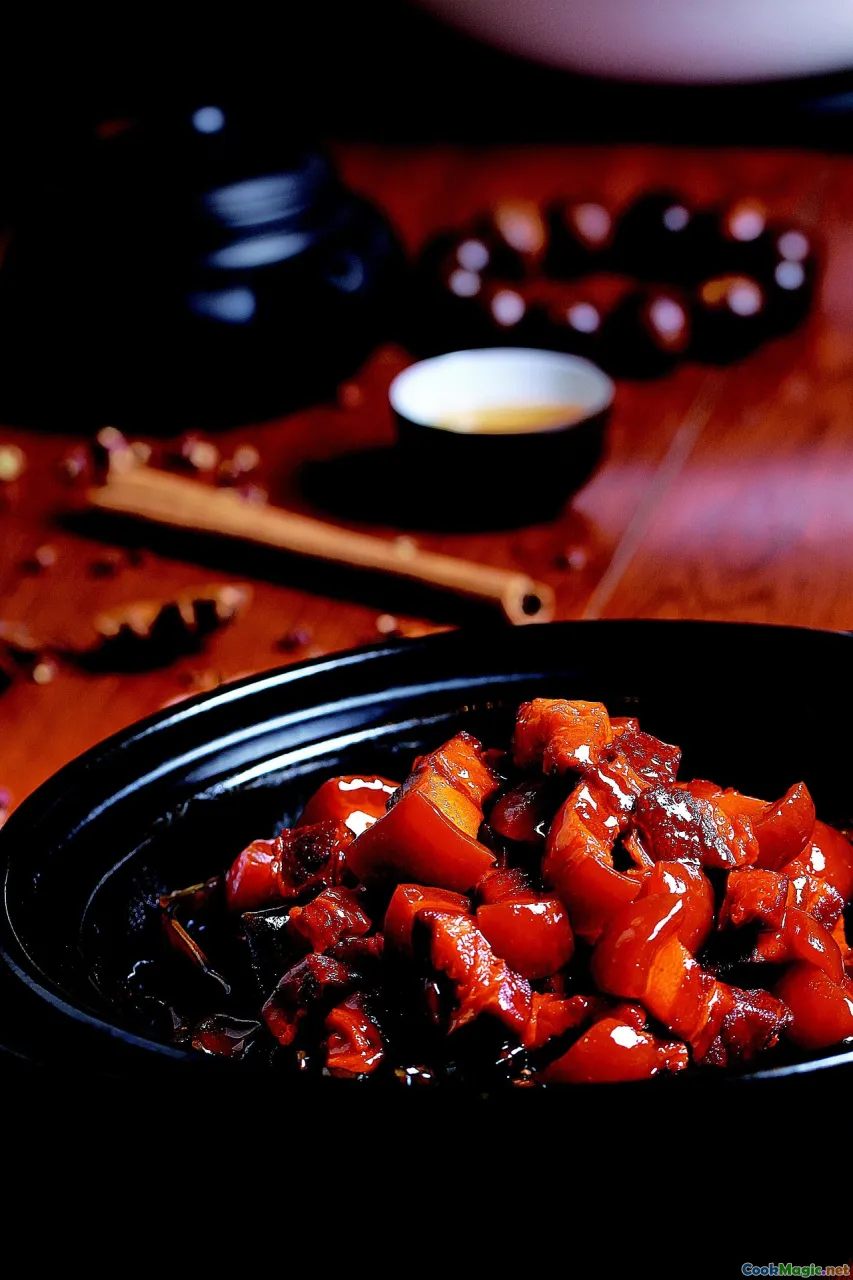
The caramelized glaze—a blend of honey and (optionally) Dijon mustard—is lovingly finished atop the skin to create a shattering crust juxtaposed against the melting interior. Using fresh, skin-on pork knuckles is key: this will offer you that mouthcoating, glossy exterior that’s not only deeply satisfying but thematic of British comfort gastronomy.
Serving Suggestions
Best served hot, this pork knuckle pairs well with creamy mashed potatoes, jacket potatoes, or even simple buttered peas and parsley for brightness. Try serving it with something tart or pickled on the side—mustard, tangy sauerkraut, or apple chutney—to balance the succulence.
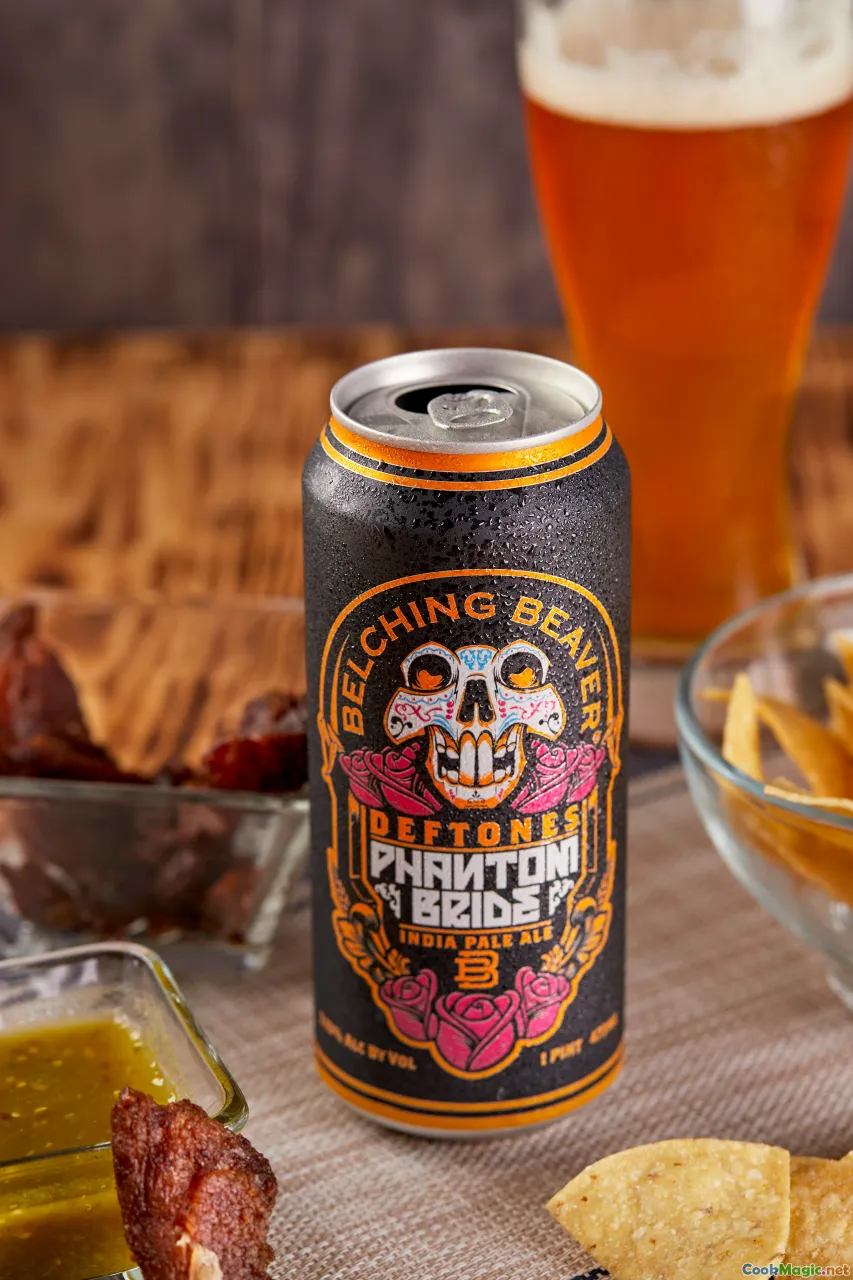
For a genuine pub experience, accompany with a glass of traditional English ale—it resonates with the flavors imported into the meat during the braise. Leftover knuckles can be shredded for incredible sandwiches, hashes, or repurposed into savory pies.
Cooking Tips & Success Notes
- Sear the pork knuckles well, as this foundation of color amplifies richness throughout the slow cooking stage.
- Patience is rewarded—low, gentle heat preserves tenderness. Check on your beer–stock mix every hour to ensure the liquid level stays high enough for even cooking.
- For a deeper glaze flavor, prepare an additional tablespoon of honey mixed with wholegrain mustard to brush on five minutes before serving.
- Skim fat before reducing the final sauce. If you’ve made too much, save it as liquid gold—excellent for roasting potatoes!
- Parsnip is optional, but recommended for its mellowing, buttery sweetness; omitting it will deliver a sharper, more beer-forward result.
- This recipe scales well. Double quantities for larger gatherings, allowing a longer pot or roasting tin to keep knuckles in a single layer.
Historical and Personal Reflection
Pork knuckles cooked in ale bridge a gap between tradition and innovation. Medieval cooks in English and central European households slow braised cuts with whatever strong beverage was locally produced: robust English and Czech ales infused complexity where water and wine were scarce, as both sustained flavor and provided modest preservation. Cheb, a town in West Bohemia, Czechia, lends its beer's name as inspiration but the universal theme is rooted in everyday fare shared over laughter and warm hearths.
As a chef, crafting this dish pays homage to the old-world craftsmanship of butchery and brewing. Braises like these recall the sociable slow pace of Sunday roasts—long, aromatic hours allowing stories to rise with the steam from kitchen pans. This recipe is a celebration; a marriage of thrift and abundance, and the comfort of something satisfyingly slow in our fast-paced lives.
Try Cheb Beer Braised Pork Knuckle, and bring a taste of English taverns, harvest tables, and history into your home. It’s soul food, rich with culture and exceedingly delicious.