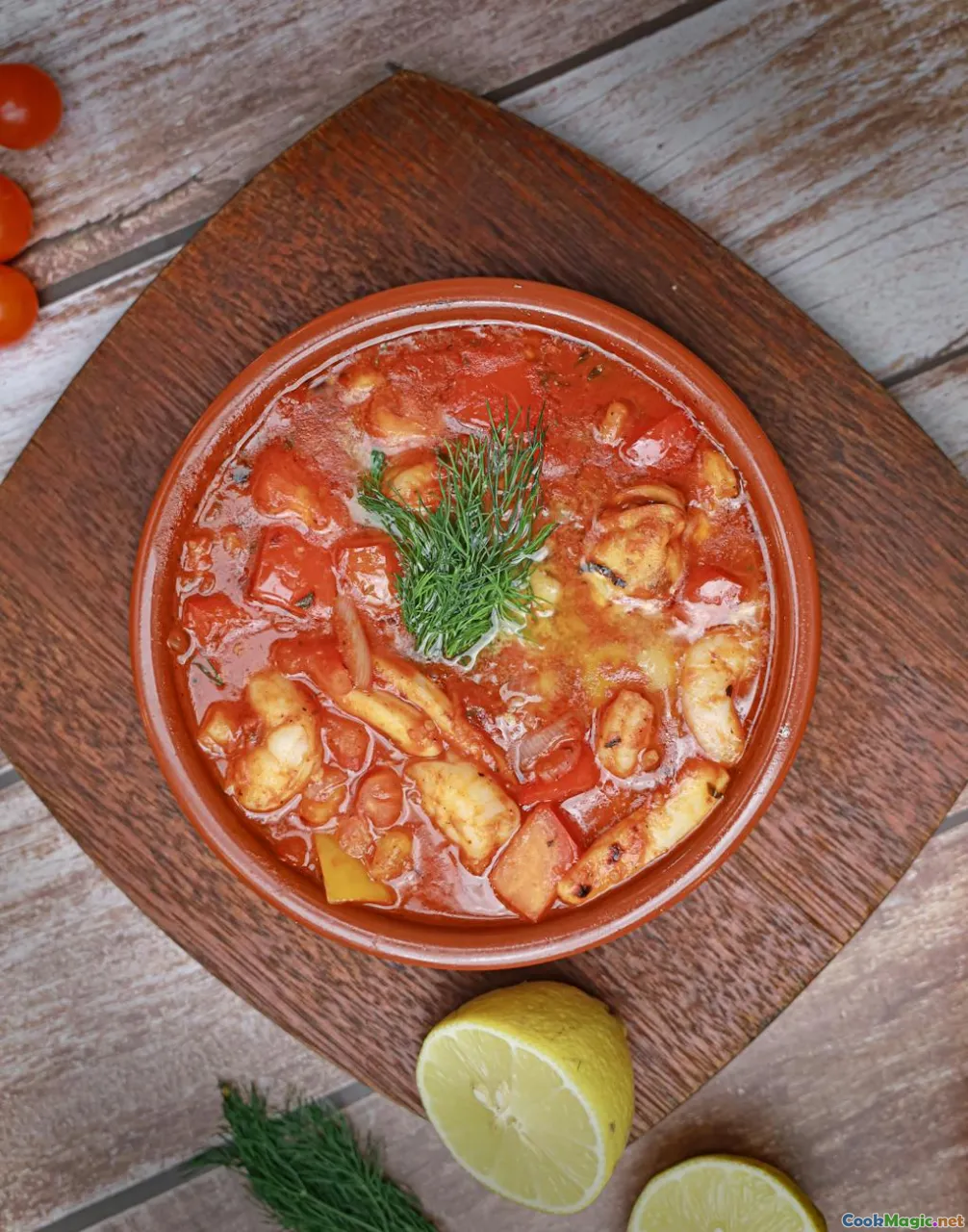
Cacciucco Toskańskie: sycący livornoński gulasz rybny
(Tuscan Cacciucco: Hearty Livornese Fish Stew)
(0 Recenzje)

0
141
grudzień 13, 2025
Zgłoś problem
Składniki
-
3 tbsp Oliwa z oliwek extra virgin
(High-quality oil enhances flavor)
-
1 medium Żółta cebula, drobno posiekana
(Soffritto base)
-
1 small Marchewka drobno posiekana
(Soffritto base)
-
1 stalk Łodyga selera naciowego, drobno posiekana
(Soffritto base)
-
6 cloves Ząbki czosnku, posiekane
(Divide: most for stew; keep 1 clove whole for toast)
-
1 tsp Płatki czerwonego chili
(Dostosuj do preferencji dotyczących temperatury)
-
2 pieces Filety anchois
(Melt into base for umami; can use 1 tsp anchovy paste)
-
1 tbsp Pasta pomidorowa
(Caramelize to deepen color)
-
800 grams rozdrobnione pomidory w puszce
(San Marzano style preferred)
-
150 ml Suche czerwone wino
(Chianti or Sangiovese works well)
-
750 ml Bulion rybny lub z owoców morza
(Domowe, jeśli to możliwe)
-
2 leaves Liście laurowe
(Aromatic backbone)
-
4 leaves Świeże liście szałwii
(Traditional Tuscan herb)
-
1 small sprig Rozmaryn
(Adds piney aroma; remove before serving)
-
300 grams Kalmary, oczyszczone i pokrojone w pierścienie
(Tenderize by longer simmer)
-
400 grams Twarda biała ryba (dorsz, monkfish), w kawałkach
(Cut into 3–4 cm pieces)
-
500 grams Małże, oczyszczone i bez brody
(Discard any that won’t close before cooking)
-
500 grams Małże, oczyszczone i pozbawione piasku
(Soak in salted water 20–30 min to purge sand)
-
300 grams Krewetki surowe, obrane i oczyszczone z jelita
(Medium or large)
-
1 tbsp Ocet winny czerwony
(Traditional bright finish)
-
2 tbsp Pietruszka liściasta, posiekana
(For fresh finish)
-
1.5 tsp Gruboziarnista sól morska
(Adjust to taste and salinity of stock)
-
0.5 tsp Świeżo zmielony czarny pieprz
(Dostosuj do smaku)
-
4 slices Chleb wiejski, chrupiący i tostowany
(Stale bread preferred; 1.5–2 cm thick)
-
1 clove ząbek czosnku do wcierania w tost
(Rubbed onto hot toast)
-
4 pieces Kliny cytryny
(Opcjonalne do podania)
(High-quality oil enhances flavor)
(Soffritto base)
(Soffritto base)
(Soffritto base)
(Divide: most for stew; keep 1 clove whole for toast)
(Dostosuj do preferencji dotyczących temperatury)
(Melt into base for umami; can use 1 tsp anchovy paste)
(Caramelize to deepen color)
(San Marzano style preferred)
(Chianti or Sangiovese works well)
(Domowe, jeśli to możliwe)
(Aromatic backbone)
(Traditional Tuscan herb)
(Adds piney aroma; remove before serving)
(Tenderize by longer simmer)
(Cut into 3–4 cm pieces)
(Discard any that won’t close before cooking)
(Soak in salted water 20–30 min to purge sand)
(Medium or large)
(Traditional bright finish)
(For fresh finish)
(Adjust to taste and salinity of stock)
(Dostosuj do smaku)
(Stale bread preferred; 1.5–2 cm thick)
(Rubbed onto hot toast)
(Opcjonalne do podania)
Wartości odżywcze
- Porcje: 4
- Wielkość porcji: 1 miska (350g)
- Calories: 610 kcal
- Carbohydrates: 38 g
- Protein: 44 g
- Fat: 18 g
- Fiber: 6 g
- Sugar: 8 g
- Sodium: 1200 mg
- Cholesterol: 220 mg
- Calcium: 160 mg
- Iron: 5.5 mg
Instrukcje
-
1 - Prep shellfish and seafood:
Scrub mussels and clams; discard any cracked shells. Soak clams in lightly salted water 20–30 minutes to purge sand, then rinse. Peel and devein shrimp. Cut fish into chunks and slice squid into rings; pat everything dry.
-
2 - Make the soffritto:
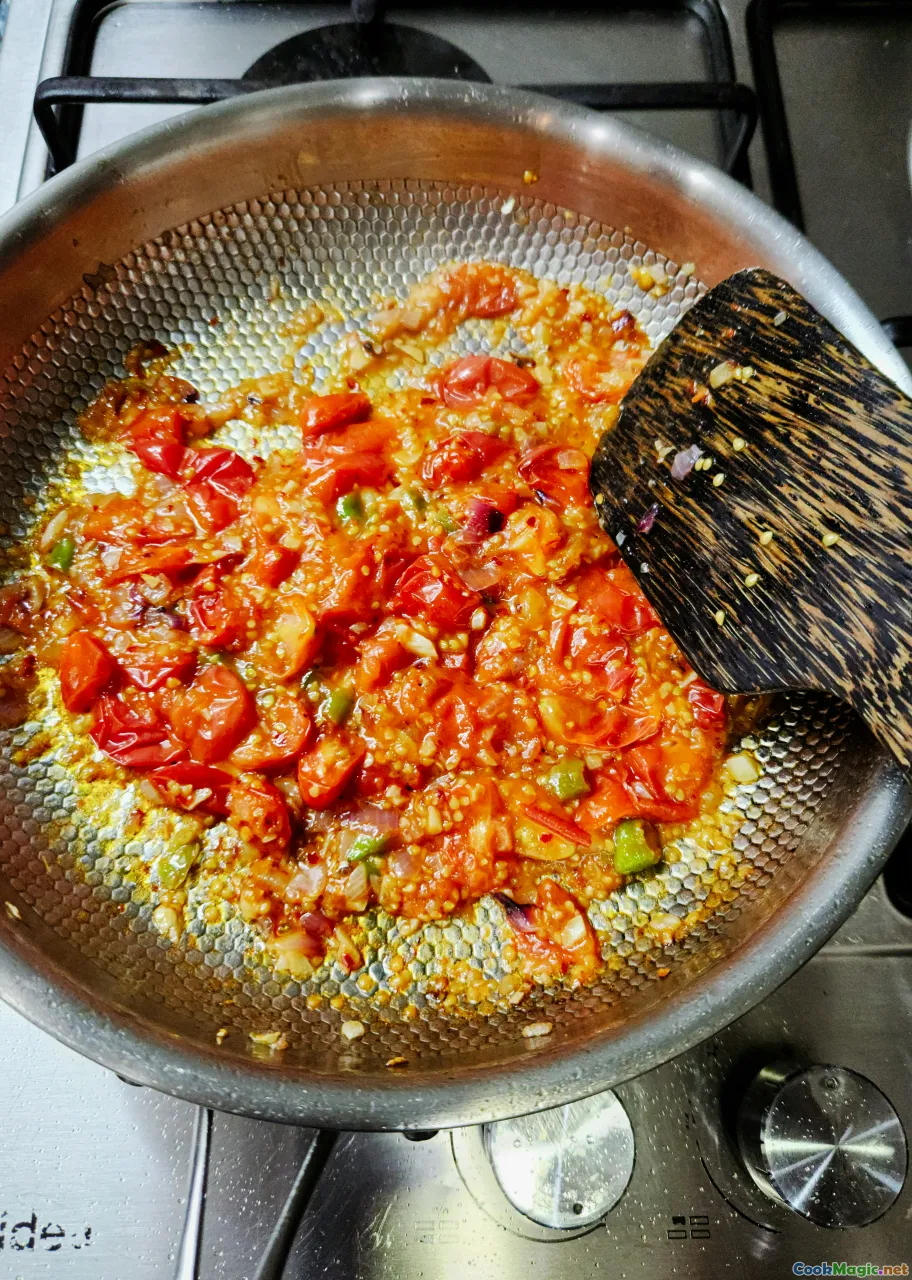
Warm olive oil in a wide heavy pot over medium heat. Add onion, carrot, and celery with a pinch of salt. Sweat 8–10 minutes until translucent and sweet, stirring occasionally without browning.
-
3 - Bloom aromatics:
Stir in minced garlic, chili flakes, and anchovies. Cook 1–2 minutes until fragrant and anchovies melt. Add tomato paste and cook 2 minutes to caramelize lightly.
-
4 - Deglaze with Wine:
Pour in red wine; scrape up any fond. Simmer 3–5 minutes to reduce by half and cook off alcohol.
-
5 - Build the Base:
Add crushed tomatoes, stock, bay leaves, sage, and rosemary. Season lightly with salt and pepper. Bring to a gentle boil, then reduce to a steady simmer 10–15 minutes to concentrate flavors.
-
6 - Tenderize the squid:
Add squid to the simmering base and cook 12–15 minutes until just tender. Adjust heat to maintain a gentle simmer to avoid toughening.
-
7 - Steam clams and mussels:
Add clams and mussels; cover and cook 4–6 minutes, shaking occasionally, until shells open. Discard any that remain closed.
-
8 - Poach fish and shrimp:
Nestle in fish and add shrimp. Simmer gently 4–6 minutes until fish is opaque and shrimp are pink. Avoid stirring vigorously to keep fish intact.
-
9 - Finish and balance:
Remove bay leaves, sage, and rosemary. Stir in vinegar and parsley. Taste and adjust salt, pepper, and heat level.
-
10 - Make garlic toasts:
Grill or toast bread slices until golden. While hot, rub one side with the reserved garlic clove. Drizzle a hint of olive oil if desired.
-
11 - Serve:
Place a garlic-rubbed toast in each warm bowl. Ladle stew over, ensuring a good mix of fish and shellfish. Serve immediately with lemon wedges.
Scrub mussels and clams; discard any cracked shells. Soak clams in lightly salted water 20–30 minutes to purge sand, then rinse. Peel and devein shrimp. Cut fish into chunks and slice squid into rings; pat everything dry.
Warm olive oil in a wide heavy pot over medium heat. Add onion, carrot, and celery with a pinch of salt. Sweat 8–10 minutes until translucent and sweet, stirring occasionally without browning.
Stir in minced garlic, chili flakes, and anchovies. Cook 1–2 minutes until fragrant and anchovies melt. Add tomato paste and cook 2 minutes to caramelize lightly.
Pour in red wine; scrape up any fond. Simmer 3–5 minutes to reduce by half and cook off alcohol.
Add crushed tomatoes, stock, bay leaves, sage, and rosemary. Season lightly with salt and pepper. Bring to a gentle boil, then reduce to a steady simmer 10–15 minutes to concentrate flavors.
Add squid to the simmering base and cook 12–15 minutes until just tender. Adjust heat to maintain a gentle simmer to avoid toughening.
Add clams and mussels; cover and cook 4–6 minutes, shaking occasionally, until shells open. Discard any that remain closed.
Nestle in fish and add shrimp. Simmer gently 4–6 minutes until fish is opaque and shrimp are pink. Avoid stirring vigorously to keep fish intact.
Remove bay leaves, sage, and rosemary. Stir in vinegar and parsley. Taste and adjust salt, pepper, and heat level.
Grill or toast bread slices until golden. While hot, rub one side with the reserved garlic clove. Drizzle a hint of olive oil if desired.
Place a garlic-rubbed toast in each warm bowl. Ladle stew over, ensuring a good mix of fish and shellfish. Serve immediately with lemon wedges.
Więcej o: Cacciucco Toskańskie: sycący livornoński gulasz rybny
Why this Cacciucco Livornese Fish Stew Works
Cacciucco is Tuscany’s most seafaring comfort food—briny, tomato-rich, and perfumed with garlic and herbs. This version aims for balance: a velvety base layered with soffritto, a burst of umami from anchovy, gentle heat from chili, and the sweet brine of shellfish. Squid is simmered longer for tenderness, while delicate fish and shrimp go in near the end to stay succulent. Garlic-rubbed toast (traditionally made from day-old bread) anchors the bowl, soaking up every drop.
Origins and Cultural Significance
Cacciucco hails from Livorno, a bustling Tuscan port on the Ligurian Sea. Historically, it was a fisherman’s stew: the catch of the day—often small, bony, or unsold pieces—was cooked with tomatoes, herbs, and stale bread. Many legends claim the name nods to “coccio” (earthenware pot) or that it should feature five types of fish for the five Cs in its name. In practice, it’s resourceful cooking that celebrates abundance and thrift, a dish meant to gather friends and family around a pot that tastes of the sea and the market.
Ingredient Notes and Substitutions
- Fish mix: Use what’s fresh and sustainable. Firm white fish like monkfish or cod holds shape; add oily fish (mackerel) for richness if you like. Avoid delicate fillets that flake excessively.
- Shellfish: Mussels and clams bring brine and aroma. Always discard cracked shells before cooking and unopened shells afterward.
- Squid vs. octopus: Squid tenderizes either quickly (2–3 minutes) or low and slow (12–20 minutes). Here we choose the longer path for a soft bite. Octopus or cuttlefish can substitute with a longer simmer.
- Anchovy: It melts into the base for quiet depth; it won’t make the stew taste “fishy.” Omit if needed or replace with a splash of colatura (anchovy essence) at the end.
- Bread: Stale, rustic bread is ideal. The garlic rub on hot toast is the small step that makes it authentic.
- Acid: A spoon of red wine vinegar brightens the stew; lemon at the table lets diners tune their bowl.
Technique Tips for Success
- Heat management: Keep the stew at a gentle simmer once seafood is added. A boil can toughen squid and break fish into flakes.
- Layering: Build flavor early—caramelizing tomato paste and blooming garlic, chili, and anchovy creates a savory backbone that mimics a long-cooked stew without hours on the stove.
- Sand insurance: Purge clams in salted water and rinse shellfish well. Grit ruins texture.
- Timing: Stagger additions by density. Squid needs longer; fish and shrimp need only minutes. Shellfish go in covered to steam open.
- Bread barrier: Place toast in the bowl before ladling; it softens into a garlicky layer that thickens each spoonful.
Variations
- Cacciucco in bianco: Skip tomatoes; use white wine, extra stock, and more herbs for a pale, briny version.
- Spicier Livornese: Add a whole dried peperoncino or a pinch of Calabrian chili paste.
- Tomato-forward: Increase tomato paste and reduce stock slightly for a thicker base.
- Herb swap: Try thyme or marjoram in place of rosemary; always remove woody stems before serving.
Pairing and Serving
- Wine: Pour a coastal Italian red (young Sangiovese) or a structured white (Vermentino). Both complement the stew’s savory-saline character.
- Sides: Keep it simple—a peppery arugula salad and extra toast. The stew is the star.
Make-Ahead, Storage, and Reheating
- Make-ahead: Cook the base (through Step 5) up to 2 days ahead. Reheat gently and proceed with seafood additions just before serving.
- Storage: Refrigerate leftovers up to 1 day; seafood is delicate. Bread should be toasted fresh.
- Reheating: Warm gently over low heat. Avoid boiling to keep seafood tender.
Sustainability and Sourcing
Choose local, seasonal species when possible, and consult sustainable seafood guides. Smaller, underutilized fish make exceptional cacciucco and honor the dish’s roots.
Final Thoughts
Cacciucco is more than a recipe—it’s a method for cooking the sea with warmth and thrift. Respect the order of operations, lean on great olive oil and herbs, and use a lively acidity to lift the broth. With crusty garlic toast and a communal pot, you’ll channel the docks of Livorno from your own kitchen.