Sup Ikan Tradisional Nelayan dari Ibiza
(Ibizan Bullit de Peix: Traditional Fishermen’s Stew)
(0 Ulasan)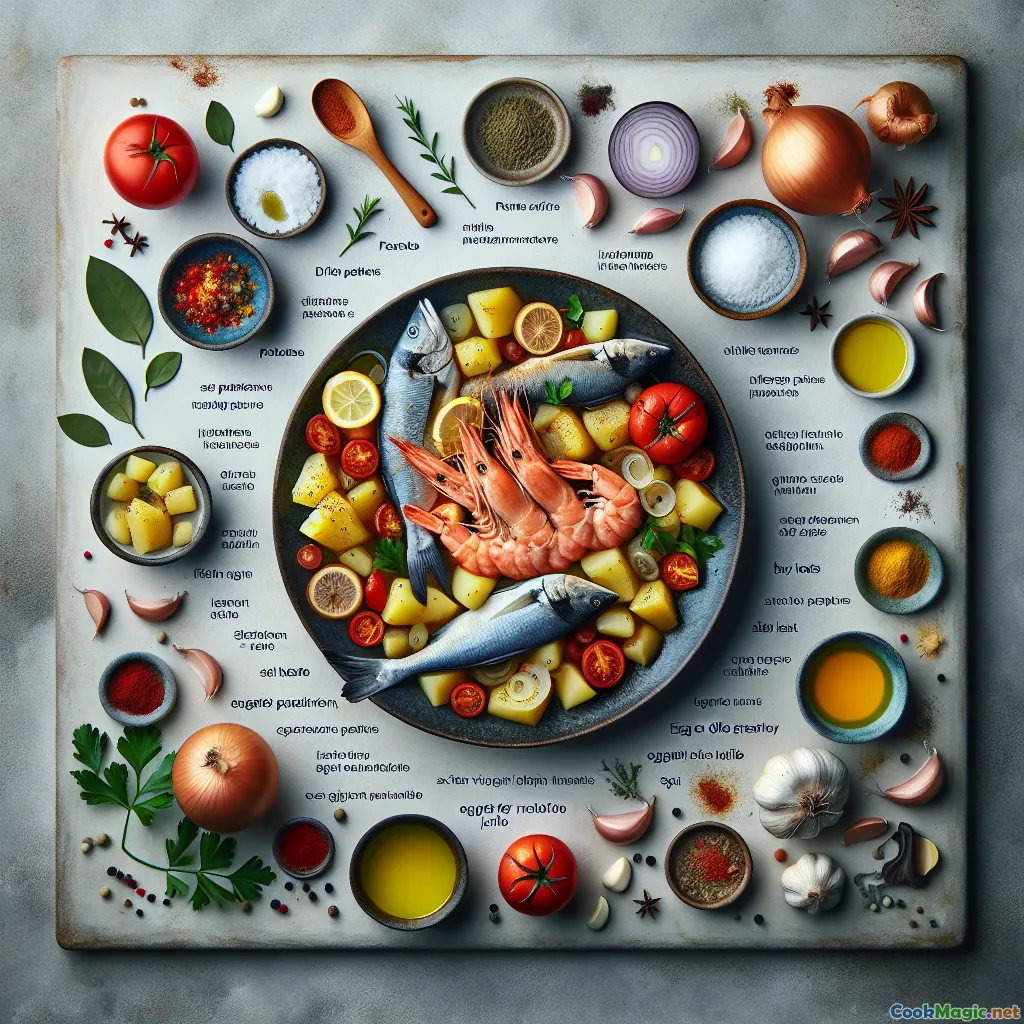
0
1,089
Juli 17, 2025
Laporkan Masalah
Bahan
-
900 grams Ikan putih campuran (grouper, monkfish, scorpionfish)
(Potongan segar dengan tulang lebih disukai untuk kedalaman rasa.)
-
8 pieces Udang besar
(Dengan kulit untuk menambah rasa)
-
500 grams Kentang
(Varietas ketan lengket)
-
1 large Bawang
(Dihaluskan halus)
-
2 medium Tomat matang
(Dikupas, dicincang halus)
-
6 whole Siung bawang putih
(Kupas, 2 siung untuk aioli)
-
2 tsp Paprika Manis
-
0.5 g Serat saffron
(Direndam dalam 2 sendok makan air hangat)
-
2 pieces Daun salam
-
1.2 liters Kaldu ikan
(Sebaiknya dibuat sendiri dengan tulang ikan, kepala ikan, dan kerang.)
-
60 ml Minyak zaitun extra virgin
-
3 tbsp Peterseli daun datar segar
(Dihaluskan halus)
Garam laut, to taste
Lada hitam, to taste
-
1 small Kuning telur (untuk aioli)
(Pada suhu ruangan)
-
2 tsp Air lemon (untuk aioli)
(Potongan segar dengan tulang lebih disukai untuk kedalaman rasa.)
(Dengan kulit untuk menambah rasa)
(Varietas ketan lengket)
(Dihaluskan halus)
(Dikupas, dicincang halus)
(Kupas, 2 siung untuk aioli)
(Direndam dalam 2 sendok makan air hangat)
(Sebaiknya dibuat sendiri dengan tulang ikan, kepala ikan, dan kerang.)
(Dihaluskan halus)
(Pada suhu ruangan)
Nutrisi
- Porsi: 4
- Ukuran Porsi: 1 mangkuk (sekitar 300g)
- Calories: 430 kcal
- Carbohydrates: 38 g
- Protein: 36 g
- Fat: 16 g
- Fiber: 6 g
- Sugar: 4 g
- Sodium: 820 mg
- Cholesterol: 120 mg
- Calcium: 105 mg
- Iron: 3.5 mg
Instruksi
-
1 - Persiapkan ikan dan bahan-bahan:
Cuci ikan dan keringkan dengan tisu. Kupas dan cuci kentang. Cincang bawang bombay, tomat, bawang putih, dan peterseli. Rendam helai saffron dalam 2 sendok makan air hangat.
-
2 - Rasa tumisan:
Panaskan minyak zaitun di dalam panci besar yang lebar. Tambahkan bawang bombay cincang, 4 siung bawang putih, dan daun salam. Masak hingga harum dan empuk, sekitar 7 menit.
-
3 - Tambahkan tomat, bumbu, dan kentang:
Tambahkan tomat, paprika, garam, lada hitam, dan saffron dengan cairan perendaman. Aduk. Tambahkan irisan kentang (setebal sekitar 2 cm) ke dalam panci dan aduk perlahan.
-
4 - Tuang kaldu, didihkan basis semur.:
Tuang kaldu ikan di atas sayuran. Didihkan perlahan, kecilkan api hingga mendidih pelan, tutup sebagian. Masak hingga kentang hampir lunak, sekitar 20 menit.
-
5 - Tambahkan ikan dan kerang:
Letakkan potongan ikan putih secara merata di antara kentang. Jika menggunakan udang, letakkan di atasnya. Biarkan mendidih perlahan hingga ikan benar-benar matang, sekitar 12–14 menit.
-
6 - Siapkan aioli buatan sendiri:
Di dalam mortar atau blender, hancurkan 2 siung bawang putih dengan sejumput garam. Masukkan kuning telur dan, sambil mengocok, tuang minyak zaitun secara perlahan. Selesaikan dengan jus lemon.
-
7 - Penyajian dan Penyajian:
Sajikan kentang dan ikan ke dalam piring dalam. Siram dengan sedikit kaldu di atasnya, taburi peterseli. Sajikan dengan aioli di samping. Nikmati selagi hangat.
Cuci ikan dan keringkan dengan tisu. Kupas dan cuci kentang. Cincang bawang bombay, tomat, bawang putih, dan peterseli. Rendam helai saffron dalam 2 sendok makan air hangat.
Panaskan minyak zaitun di dalam panci besar yang lebar. Tambahkan bawang bombay cincang, 4 siung bawang putih, dan daun salam. Masak hingga harum dan empuk, sekitar 7 menit.
Tambahkan tomat, paprika, garam, lada hitam, dan saffron dengan cairan perendaman. Aduk. Tambahkan irisan kentang (setebal sekitar 2 cm) ke dalam panci dan aduk perlahan.
Tuang kaldu ikan di atas sayuran. Didihkan perlahan, kecilkan api hingga mendidih pelan, tutup sebagian. Masak hingga kentang hampir lunak, sekitar 20 menit.
Letakkan potongan ikan putih secara merata di antara kentang. Jika menggunakan udang, letakkan di atasnya. Biarkan mendidih perlahan hingga ikan benar-benar matang, sekitar 12–14 menit.
Di dalam mortar atau blender, hancurkan 2 siung bawang putih dengan sejumput garam. Masukkan kuning telur dan, sambil mengocok, tuang minyak zaitun secara perlahan. Selesaikan dengan jus lemon.
Sajikan kentang dan ikan ke dalam piring dalam. Siram dengan sedikit kaldu di atasnya, taburi peterseli. Sajikan dengan aioli di samping. Nikmati selagi hangat.
Informasi Lebih Lanjut: Sup Ikan Tradisional Nelayan dari Ibiza
History and Cultural Significance
Bullit de Peix (pronounced boo-LEET duh paysh) is one of Ibiza’s best-kept culinary secrets—a soulful, fishermen’s stew originally devised as a practical way to use the day’s catch while feeding a crowd on the sun-baked Balearic coast. The literal translation, 'Fish Boil,' may sound humble, but beneath this simplicity lies a heritage dish layered with intense sea flavors, saffron warmth, and a sense of convivial, seaside eating.
Historical Roots
The dish has existed for centuries in coastal Ibizan homes, especially those whose livelihoods depended on fishing. Ingredients were dictated by availability—there was no single strict list of fish, though sturdy, bony white fish like grouper, monkfish, or scorpionfish are most traditional. The broth is always fragrant, deeply savory with aromatic sea and earthy tones. At table, Bullit de Peix is often served in two parts: first, the candied potatoes and fish moistened with broth; next, a comforting arroz a banda (rice cooked in leftover broth), though my adaptation proposes serving as a rich stew alone.
Preparational Tips & Notes
- Use the freshest white fish available for outstanding results. If possible, combine types, using everything from head to tail for extra gelatin and flavor.
- Homemade fish stock forms the backbone of this stew—do not skip this if you have fish heads, prawn shells, and trimmings from your market.
- Soaking saffron is worth every second; it amplifies both flavor and the classic golden color.
- The prawns are optional, reflecting the sometimes fortuitous haul of the Ibizan sea.
- Bullit de Peix always benefits from slow, gentle simmering—do not boil vigorously or the fish will toughen.
- Aioli (garlicky mayonnaise) on the side is non-negotiable, adding both creaminess and a garlicky bite that Ibizans and visitors universally adore. For the best aioli, patience is key—the gradual emulsification by hand is traditional and doesn’t risk splitting as quickly as mechanized means.
Uniqueness & Adaptations
Unlike Spanish paellas sprinkled abundantly along the peninsula, Bullit de Peix stands as distinctively Ibizan/a. What makes it special:
- No herbs overpower the sea’s flavor—just subtle parsley and garlic, saffron for opulence, and bright olive oil.
- It’s utterly and authentically local: you may spot modern twists (adding clams, different potatoes, or serving eaten cool in summer), but the original spirit survives unchanged.
- It is a celebration dish—family and friends gathered for messily delicious bowls with bread to mop up every drop of golden broth.
Personal Reflections
This recipe is a tribute to Ibizan hospitality and the essence of slow coastal eating. There's magic in sharing this around a table brimming with sunshine, laughter, and simplicity—true Mediterranean pleasure. Making Bullit de Peix connects you immediately to generations of islanders who cooked as an act of resourcefulness and love. I have adapted the rice step out for this version to highlight the incredible symphony between potatoes, fish, and aioli—yet you could serve arroz a banda after, watching your diners become true converts to Balearic cuisine.
If you are looking for that one dish to impress at a summer gathering, introducing your guests to the fullness of Mediterranean Spain, look no further. Bullit de Peix is convivial, heartwarming, and pure edible nostalgia brewed by the blue seas of Ibiza.
Enjoy—Buen provecho!