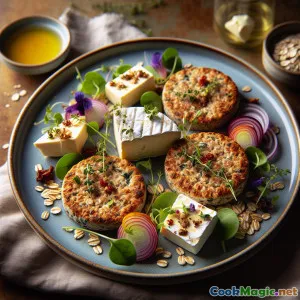
Fromage de chèvre Galloway avec des galettes d'avoine aux herbes
(Galloway Goat Cheese with Herbed Oatcakes)
(0 Avis)
0
89
janvier 06, 2026
Signaler un problème
Ingrédients
-
120 grams Avoine pinhead écossaise (avoine grossière)
(For authentic texture; do not fully grind)
-
80 grams Flocons d'avoine
(Lightly pulse for a mix of flakes and meal)
-
60 grams Farine d'avoine
(Helps bind; use certified gluten-free if needed)
-
1 tsp Poudre à lever
(Traditional versions skip it; adds lift)
-
0.5 tsp sel de mer fin
(Season the dough)
-
50 grams Beurre non salé, froid et coupé en petits dés
(Cold fat yields flakier oatcakes)
-
120 ml eau bouillante tout juste
(Add gradually until dough holds together)
-
1 tbsp Huile de colza pressée à froid
(Brush tops for golden gloss)
-
200 grams Fromage de chèvre doux (chèvre de style Galloway)
(Creamy, tangy; room temperature for easy spreading)
-
1 tbsp Feuilles de thym frais
(Haché finement)
-
1 tsp Zeste de citron, finement râpé
(Brightens the cheese)
-
0.25 tsp Poivre noir fraîchement moulu
(Ajuster au goût)
-
2 tbsp Miel de bruyère (ou miel de fleurs sauvages)
(Drizzle for aromatic sweetness)
-
0.5 tsp Sel de mer floconneux
(For finishing crunch)
-
30 grams Oignon rouge mariné, finement émincé
(Adds tangy contrast)
-
30 grams Cresson ou roquette bébé (arugula)
(Peppery greens for garnish)
(For authentic texture; do not fully grind)
(Lightly pulse for a mix of flakes and meal)
(Helps bind; use certified gluten-free if needed)
(Traditional versions skip it; adds lift)
(Season the dough)
(Cold fat yields flakier oatcakes)
(Add gradually until dough holds together)
(Brush tops for golden gloss)
(Creamy, tangy; room temperature for easy spreading)
(Haché finement)
(Brightens the cheese)
(Ajuster au goût)
(Drizzle for aromatic sweetness)
(For finishing crunch)
(Adds tangy contrast)
(Peppery greens for garnish)
Nutrition
- Portions: 4
- Taille de portion: 2 oatcakes with cheese (180g)
- Calories: 500 kcal
- Carbohydrates: 0 g
- Protein: 20 g
- Fat: 27 g
- Fiber: 6 g
- Sugar: 6 g
- Sodium: 520 mg
- Cholesterol: 70 mg
- Calcium: 220 mg
- Iron: 2.8 mg
Instructions
-
1 - Heat oven and prep tray:
Preheat oven to 190°C (375°F). Line a baking tray with parchment or lightly flour a cast-iron griddle for extra traditional crispness.
-
2 - Prepare oat mix:
Pulse rolled oats 3–4 times in a processor to a coarse meal with some flakes. In a bowl, combine pinhead oatmeal, pulsed oats, oat flour, baking powder, and fine sea salt.
-
3 - Rub in the Butter:
Add chilled butter to the oat mixture. Rub between fingertips until you have a sandy mix with pea-sized flecks of butter remaining.
-
4 - Hydrate and form dough:
Drizzle in just-boiled water a little at a time, stirring with a spoon until the mix clumps. Quickly knead in the bowl 2–3 times to form a soft, cohesive dough.
-
5 - Roll and Cut:
On a lightly floured board (use oat flour), roll dough 4–5 mm thick. Cut 6–8 cm rounds or triangles. Re-roll scraps gently to avoid toughness.
-
6 - Bake to crisp:
Arrange on tray, brush tops with rapeseed oil if using, and bake 12–15 minutes until just golden at edges and dry in the center. Cool on a rack.
-
7 - Mix the cheese:
In a small bowl, stir goat cheese with thyme, lemon zest, and black pepper until creamy. If very firm, warm the bowl briefly over a pot of hot water.
-
8 - Assemble:
Spread warm oatcakes with a generous layer of herbed goat cheese. Drizzle with heather honey, sprinkle flaky salt, and top with pickled onion and greens if using.
-
9 - Serve and store:
Serve immediately while the oatcakes are crisp. Store plain oatcakes airtight for 3–4 days; re-crisp in a low oven. Add toppings just before serving.
Preheat oven to 190°C (375°F). Line a baking tray with parchment or lightly flour a cast-iron griddle for extra traditional crispness.
Pulse rolled oats 3–4 times in a processor to a coarse meal with some flakes. In a bowl, combine pinhead oatmeal, pulsed oats, oat flour, baking powder, and fine sea salt.
Add chilled butter to the oat mixture. Rub between fingertips until you have a sandy mix with pea-sized flecks of butter remaining.
Drizzle in just-boiled water a little at a time, stirring with a spoon until the mix clumps. Quickly knead in the bowl 2–3 times to form a soft, cohesive dough.
On a lightly floured board (use oat flour), roll dough 4–5 mm thick. Cut 6–8 cm rounds or triangles. Re-roll scraps gently to avoid toughness.
Arrange on tray, brush tops with rapeseed oil if using, and bake 12–15 minutes until just golden at edges and dry in the center. Cool on a rack.
In a small bowl, stir goat cheese with thyme, lemon zest, and black pepper until creamy. If very firm, warm the bowl briefly over a pot of hot water.
Spread warm oatcakes with a generous layer of herbed goat cheese. Drizzle with heather honey, sprinkle flaky salt, and top with pickled onion and greens if using.
Serve immediately while the oatcakes are crisp. Store plain oatcakes airtight for 3–4 days; re-crisp in a low oven. Add toppings just before serving.
En savoir plus sur: Fromage de chèvre Galloway avec des galettes d'avoine aux herbes
Why This Recipe Works
Galloway Goat Cheese and Oatcakes pays homage to the rugged beauty and agricultural traditions of Scotland’s southwest. Oatcakes are a cornerstone of Scottish home cooking—humble, satisfying, and endlessly adaptable. This version pairs their nutty, toasted character with tangy, creamy goat cheese brightened by lemon and thyme. A whisper of heather honey adds floral sweetness that echoes windswept moors in a single bite.
Oats behave differently from wheat flours; they lack gluten and rely on hydration and fat for structure. Using a blend of pinhead oatmeal (for crunch), lightly pulsed rolled oats (for body), and oat flour (for cohesion) creates a biscuit that is crisp-edged yet tender. Cold butter rubbed into the dry ingredients gives a short, flaky snap, while just-boiled water helps the oat particles swell and bind quickly, reducing the need for prolonged mixing.
Tips and Notes
- Texture balance: Pinhead oatmeal provides nubbly texture; if you prefer smoother oatcakes, increase oat flour by 20–30 g and reduce pinhead oatmeal accordingly.
- Gluten-free assurance: Oats are naturally gluten-free but often cross-contaminated. Choose certified GF oats and oat flour if needed.
- Heat management: Oatcakes brown quickly due to natural sugars. Bake on the middle rack and rotate the tray for even coloring.
- Resting option: A 10-minute rest before rolling allows oats to hydrate, making the dough easier to handle and reducing cracks.
- Thickness guide: Roll to 4–5 mm. Thinner bakes crispier; thicker yields a heartier, more biscuit-like bite.
- Pan alternative: Cook on a dry, preheated cast-iron griddle over medium-low heat, 3–4 minutes per side, for a traditional stovetop method.
- Cheese spreadability: If the goat cheese is firm from the fridge, warm it gently or whisk in a teaspoon of cream or rapeseed oil.
- Flavor variations: Swap thyme for chives, tarragon, or a pinch of crushed juniper. Add a smear of wholegrain mustard beneath the cheese for a savory push.
- Serving ideas: Pair with smoked trout, beetroot relish, or pickled cucumbers. For a brunch feel, top with a poached quail egg.
History and Cultural Significance
Oatcakes are woven into Scotland’s culinary fabric. In regions where wheat struggled, oats thrived, shaping daily bread and travel rations alike. Griddle-baked rounds, known as bannocks or farls in some areas, fueled shepherds and farmers through harsh weather. Today, oatcakes bridge generations—from farmhouse hearths to modern cheeseboards.
Galloway, with its rolling pastures and salt-kissed air from the Solway Firth, has a rich tradition of dairying and artisan cheese. Goat cheese from the region captures a sense of place: bright, lightly acidic, and creamy, with seasonal nuances depending on pasture and producer. Marrying this cheese with oatcakes is both practical and poetic—grain and dairy, land and herd, simplicity and character.
Unique Aspects
- Oat trifecta: The combination of pinhead oatmeal, pulsed rolled oats, and oat flour ensures layers of texture without wheat.
- Hot-water method: Hydrating with just-boiled water helps the oats gelatinize slightly, improving cohesion and tenderness without overworking.
- Heather honey: Distinctive and floral, it complements goat cheese while nodding to Scotland’s heather-clad hills.
Make-Ahead and Storage
- Oatcakes: Bake ahead and keep airtight up to 4 days. Re-crisp at 150°C (300°F) for 5–7 minutes.
- Dough: Can be prepared and chilled for 24 hours; bring to cool room temperature before rolling.
- Cheese: Mix the herbed goat cheese up to 2 days in advance; store covered and stir before spreading.
Pairings
- Drink: A crisp dry cider, a zesty Sauvignon Blanc, or a light, malty Scottish ale.
- Condiments: Tart berry compote (rowan or blackcurrant), mustard pickles, or a drizzle of rapeseed oil infused with rosemary.
Personal Notes
I love how the lemon zest lifts the cheese without overpowering the oats. The thyme feels woodsy and local, but don’t be afraid to play: chives bring allium freshness and tarragon adds aniseed charm. The beauty of this dish lies in its restraint—each element has a purpose, and together they form a snack that’s rustic yet refined. Whether you serve these as a canape for guests or as a simple supper with a salad of bitter leaves, Galloway Goat Cheese and Oatcakes deliver a sense of place and a satisfying crunch that lingers long after the last bite.