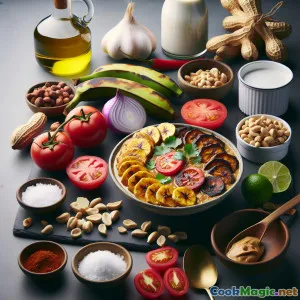
Banane plantain bouillie avec sauce crémeuse aux arachides
(Boiled Plantain with Creamy Gnut Sauce)
(0 Avis)


0
169
décembre 04, 2025
Signaler un problème
Ingrédients
-
6 pieces Banane plantain (verte à jaune, ferme)
(Peeled and cut into large chunks)
-
200 grams Arachides torréfiées non salées
(Or use 3/4 cup unsweetened peanut butter)
-
1 medium Oignon
(Haché grossièrement)
-
2 medium Tomates
(Haché grossièrement)
-
3 cloves Ail
(Écrasé)
-
1 tsp Gingembre frais
(Râpé finement)
-
1 piece Scotch bonnet ou piment
(Seeded for mild heat)
-
1 tbsp Concentré de tomate
(Boosts color and depth)
-
200 ml Lait de coco
(For creaminess; water works too)
-
300 ml eau ou bouillon de légumes léger
(Adjust to reach desired sauce thickness)
-
2 tbsp Huile végétale
(Neutral oil such as sunflower or canola)
-
1.25 tsp Sel fin
(Divided between boiling water and sauce)
-
1 tbsp Jus de citron vert ou citron
(Prevents plantains from browning; brightens sauce)
-
2 tbsp Coriandre fraîche (cilantro)
(Haché, pour garnir)
-
0.5 tsp Paprika fumé
(Adds subtle smokiness to the sauce)
(Peeled and cut into large chunks)
(Or use 3/4 cup unsweetened peanut butter)
(Haché grossièrement)
(Haché grossièrement)
(Écrasé)
(Râpé finement)
(Seeded for mild heat)
(Boosts color and depth)
(For creaminess; water works too)
(Adjust to reach desired sauce thickness)
(Neutral oil such as sunflower or canola)
(Divided between boiling water and sauce)
(Prevents plantains from browning; brightens sauce)
(Haché, pour garnir)
(Adds subtle smokiness to the sauce)
Nutrition
- Portions: 4
- Taille de portion: 1 assiette (350g)
- Calories: 780 kcal
- Carbohydrates: 0 g
- Protein: 15 g
- Fat: 41 g
- Fiber: 10 g
- Sugar: 26 g
- Sodium: 650 mg
- Cholesterol: 0 mg
- Calcium: 70 mg
- Iron: 3.6 mg
Instructions
-
1 - Prep the plantains:
Score the peels lengthwise, then remove the skins. Cut plantains into 2–3 inch chunks. Rinse and toss with a little lime or lemon juice to reduce browning.
-
2 - Boil the plantains:
Bring a large pot of salted water to a boil. Add plantain pieces and cook until fork-tender but not falling apart, about 12–15 minutes. Keep warm in the pot off heat.
-
3 - Grind the groundnuts:
If using whole roasted groundnuts, blitz in a blender or grinder to a fine, slightly oily paste. If using natural peanut butter, measure it out and set aside.
-
4 - Blend the aromatics:
Blend onion, tomatoes, garlic, ginger, and chili with a splash of water until smooth. Alternatively, finely chop by hand for a rustic texture.
-
5 - Cook the base:
Warm oil in a saucepan over medium heat. Pour in the blended mixture and cook, stirring, until thickened and glossy, 5–6 minutes. Stir in tomato paste, if using.
-
6 - Build the gnut sauce:
Whisk in the groundnut paste. Gradually add coconut milk and water or stock, stirring to prevent lumps. Simmer on low until silky and coats the spoon, 5–7 minutes.
-
7 - Season and finish:
Add salt and smoked paprika. Adjust thickness with more liquid if needed. Off heat, add a squeeze of lime for brightness and stir in cilantro, if using.
-
8 - Drain plantains:
Drain the boiled plantains well and let steam-dry for a minute so surfaces are not watery.
-
9 - Serve:
Pile plantains onto warm plates and ladle generous amounts of gnut sauce over the top. Garnish with extra cilantro or a pinch of paprika.
Score the peels lengthwise, then remove the skins. Cut plantains into 2–3 inch chunks. Rinse and toss with a little lime or lemon juice to reduce browning.
Bring a large pot of salted water to a boil. Add plantain pieces and cook until fork-tender but not falling apart, about 12–15 minutes. Keep warm in the pot off heat.
If using whole roasted groundnuts, blitz in a blender or grinder to a fine, slightly oily paste. If using natural peanut butter, measure it out and set aside.
Blend onion, tomatoes, garlic, ginger, and chili with a splash of water until smooth. Alternatively, finely chop by hand for a rustic texture.
Warm oil in a saucepan over medium heat. Pour in the blended mixture and cook, stirring, until thickened and glossy, 5–6 minutes. Stir in tomato paste, if using.
Whisk in the groundnut paste. Gradually add coconut milk and water or stock, stirring to prevent lumps. Simmer on low until silky and coats the spoon, 5–7 minutes.
Add salt and smoked paprika. Adjust thickness with more liquid if needed. Off heat, add a squeeze of lime for brightness and stir in cilantro, if using.
Drain the boiled plantains well and let steam-dry for a minute so surfaces are not watery.
Pile plantains onto warm plates and ladle generous amounts of gnut sauce over the top. Garnish with extra cilantro or a pinch of paprika.
En savoir plus sur: Banane plantain bouillie avec sauce crémeuse aux arachides
About this dish
Boiled Plantain with Gnut Sauce is comfort on a plate, the kind that warms you from the inside out. In Uganda and across much of East Africa, groundnuts (often called gnuts) are a staple; they are roasted and ground into a thick paste that becomes the base of a rich, savory sauce. Paired with simply boiled plantains, the result is a meal that is filling, balanced, and deeply satisfying without being fussy.
While matooke (cooking bananas) is a classic partner for gnut sauce, plantains make a closely related and accessible pairing when matooke is not available. The plantains are cooked until just tender, retaining their structure so that each piece acts like a vessel for the velvety, nutty sauce. The sauce, meanwhile, leans on tomatoes, onion, garlic, ginger, and optional chili to create aromatic depth and gentle heat.
Why it works
- Contrast of textures: The gentle starchiness of plantain meets the silky emulsified groundnut sauce.
- Pantry-friendly: Peanuts or peanut butter, onion, tomato, and a few spices are all you need.
- Naturally gluten-free and dairy-free: With coconut milk optional for added creaminess, the dish suits many dietary needs.
Ingredient spotlight
- Groundnuts (peanuts): Roasted and ground until just releasing their oils, they create body and savoriness without flour or cream. If using peanut butter, choose unsweetened and unsalted for best control of flavor.
- Plantains: Semi-ripe (green-yellow) are ideal. Fully green gives a very firm, starchy result; fully ripe turns sweeter and softer. Pick the stage that suits your preferences.
- Coconut milk: Traditional variations may use water alone, but coconut milk adds a polished, restaurant-style silkiness.
- Chili: Scotch bonnet or a local chili adds warmth. Remove the seeds for moderate heat or leave them in for a bolder bite.
Technique notes and tips
- Peeling plantains: Score lengthwise through the skin (not the flesh) and pry sideways. A little lime juice on the cut surfaces keeps them from browning.
- Sauce smoothness: Add liquids gradually to the groundnut paste while whisking. This prevents lumps and helps emulsify the sauce.
- Oil separation clue: When the sauce is ready, you will notice a gentle sheen, and a little oil may rise to the surface at the edges—this is a sign of proper cooking rather than greasiness.
- Seasoning: Groundnuts are naturally rich; salt lifts their flavor. Add a final squeeze of lime to accentuate brightness.
Variations and swaps
- Leafy greens: Stir in a handful of chopped sukuma wiki (collard greens), spinach, or amaranth leaves near the end.
- Smoke notes: Smoked paprika mimics the whisper of woodfire you might experience at a roadside kitchen. Start small and adjust.
- Protein add-ins: While this is excellent as-is, some regions add dried fish or small pieces of smoked meat to the sauce. Keep it vegetarian by adding roasted mushrooms for savory depth.
- No blender method: Finely chop the aromatics and pound the roasted groundnuts in a mortar for a rustic, hand-made texture.
Serving suggestions
- Serve family-style with extra sauce on the side.
- Add a simple kachumbari (fresh tomato-onion salad) for brightness.
- Pair with steamed greens to round out the plate.
Cultural significance and history
Groundnuts arrived in East Africa centuries ago and quickly became integral to local cuisines because they are nutritious, affordable, and adaptable. In Uganda, gnut sauce is a beloved everyday staple that can accompany steamed bananas (matooke), cassava, sweet potatoes, or yams. The dish represents practicality and generosity: a pot of sauce can stretch to feed a crowd, and the starch of the day adapts to what is seasonal or available. The flavors are direct yet layered—roasty nuts, savory tomato, an aromatic base of onion and garlic—speaking to both home cooking and festive spreads.
Make-ahead and storage
- Sauce: Cools and thickens as it sits. Thin with a splash of water or coconut milk when reheating. Stores 4 days in the fridge or up to 2 months frozen.
- Plantains: Best enjoyed fresh. If you must hold them, drain well and keep warm; reheat by briefly steaming to prevent drying out.
Troubleshooting
- Sauce too thick: Whisk in warm water or stock a little at a time.
- Sauce too thin: Simmer gently to reduce; the groundnuts will naturally thicken as they cook.
- Bitter or raw flavor: Cook the aromatic base longer before adding the groundnut paste; you want the sharpness gone and a jammy smell.
Sustainability and health notes
Peanuts are nutrient-dense, providing plant-based protein, fiber, and healthy fats. Pairing them with starchy plantain makes for a complete, energy-giving meal. Because the dish relies on plant-based ingredients and uses minimal packaging, it is an earth-friendly choice that supports local produce where plantains are grown.
Personal thoughts
This recipe is a celebration of minimalism done right. You take a few everyday ingredients and let them speak clearly. Boiled Plantain with Gnut Sauce is soothing yet vibrant, humble yet memorable—perfect for weeknights, gatherings, or whenever you crave a bowl of something honest and nourishing.