Garífuna Seafood Sere with Coconut and Plantain
(0 Reviews)


0
234
November 13, 2025
Report a Problem
Ingredients
-
600 grams Snapper (or grouper) fillets, cut in chunks
(Use any firm white fish; bones add flavor.)
-
300 grams Shrimp, peeled and deveined
(Leave tails on for presentation.)
-
400 grams Blue crab pieces or claws, cleaned
(Substitute with crabmeat if needed.)
-
200 grams Conch meat or squid rings
(Traditional; squid is an accessible substitute.)
-
30 ml Fresh Lime Juice
(For marinating seafood and finishing.)
-
2 tsp Kosher salt
(Adjust to taste.)
-
1 tsp Black pepper
(Freshly ground for best flavor.)
-
1 tsp Ground annatto (achiote) or turmeric
(Adds warm color and mild earthiness.)
-
2 tbsp Coconut oil or vegetable oil
(Coconut oil enhances aroma.)
-
4 cloves Garlic (minced)
(Fresh garlic for depth.)
-
1 medium Yellow onion, diced
(White onion works too.)
-
1 medium Sweet bell pepper, diced
(Red or yellow for sweetness.)
-
2 stalks Scallions, sliced
(Adds fresh, mild onion flavor.)
-
2 sprigs Fresh Thyme
(Or 1/2 tsp dried thyme.)
-
15 grams Culantro (recao) or cilantro, chopped
(Reserve some for garnish.)
-
1 whole Scotch bonnet or habanero, left whole
(Pierce for more heat; remove before serving.)
-
800 ml Coconut milk (full-fat)
(Preferably unsweetened; two cans.)
-
500 ml Fish stock (or water)
(Homemade stock elevates flavor.)
-
3 large Green plantains, peeled
(For machuca (plantain dumplings).)
-
1 large Ripe plantain, peeled
(Adds subtle sweetness to machuca.)
-
300 grams Yuca (cassava), peeled and cubed
(Traditional root vegetable; optional.)
-
1 medium Green banana, sliced
(Starchy depth; optional.)
-
100 grams Okra, trimmed
(Natural thickener; optional.)
-
10 grams Fresh parsley, chopped
(Herbal garnish.)
-
1 liters Water for boiling plantains
(Lightly salted.)
-
4 pieces Cassava bread (ereba)
(Traditional accompaniment.)
-
4 pieces Extra lime wedges
(For serving.)
(Use any firm white fish; bones add flavor.)
(Leave tails on for presentation.)
(Substitute with crabmeat if needed.)
(Traditional; squid is an accessible substitute.)
(For marinating seafood and finishing.)
(Adjust to taste.)
(Freshly ground for best flavor.)
(Adds warm color and mild earthiness.)
(Coconut oil enhances aroma.)
(Fresh garlic for depth.)
(White onion works too.)
(Red or yellow for sweetness.)
(Adds fresh, mild onion flavor.)
(Or 1/2 tsp dried thyme.)
(Reserve some for garnish.)
(Pierce for more heat; remove before serving.)
(Preferably unsweetened; two cans.)
(Homemade stock elevates flavor.)
(For machuca (plantain dumplings).)
(Adds subtle sweetness to machuca.)
(Traditional root vegetable; optional.)
(Starchy depth; optional.)
(Natural thickener; optional.)
(Herbal garnish.)
(Lightly salted.)
(Traditional accompaniment.)
(For serving.)
Nutrition
- Servings: 4
- Serving Size: 1 bowl (400g)
- Calories: 640 kcal
- Carbohydrates: 0 g
- Protein: 42 g
- Fat: 28 g
- Fiber: 8 g
- Sugar: 7 g
- Sodium: 980 mg
- Cholesterol: 220 mg
- Calcium: 160 mg
- Iron: 4.5 mg
Instructions
-
1 - Marinate the seafood:
In a bowl, toss fish, shrimp, crab, and conch with lime juice, half the salt, pepper, and annatto/turmeric. Chill while you prepare the base.
-
2 - Prep Aromatics:
Mince garlic; dice onion and bell pepper; slice scallions; chop culantro/cilantro. Set aside a small handful of herbs for garnish.
-
3 - Bloom flavors in oil:
Warm coconut or vegetable oil in a wide pot over medium heat. Add onion, bell pepper, and garlic. Sweat until translucent and fragrant without browning.
-
4 - Build the coconut broth:
Stir in coconut milk and fish stock. Add thyme, scallions, and the whole habanero. Simmer gently 10 minutes to meld flavors.
-
5 - Simmer roots and veg:
Add yuca, green banana, and okra. Season with remaining salt. Simmer until yuca is just tender and the broth is silky.
-
6 - Make machuca dumplings:
Boil green plantains (and ripe plantain if using) in lightly salted water until soft. Drain and mash vigorously, adding a ladle of hot coconut broth for suppleness. Form 8–12 rustic dumplings.
-
7 - Poach fish and crab:
Slide fish chunks and crab into the simmering broth. Cook gently until fish is opaque and almost done.
-
8 - Add quick-cooking seafood:
Add shrimp and conch/squid. Simmer briefly until shrimp turns pink and conch is just firm. Avoid overcooking.
-
9 - Finish and Adjust:
Remove the habanero if desired. Stir in most of the chopped culantro/cilantro and a squeeze of lime. Taste and adjust salt, pepper, and acidity.
-
10 - Serve with machuca:
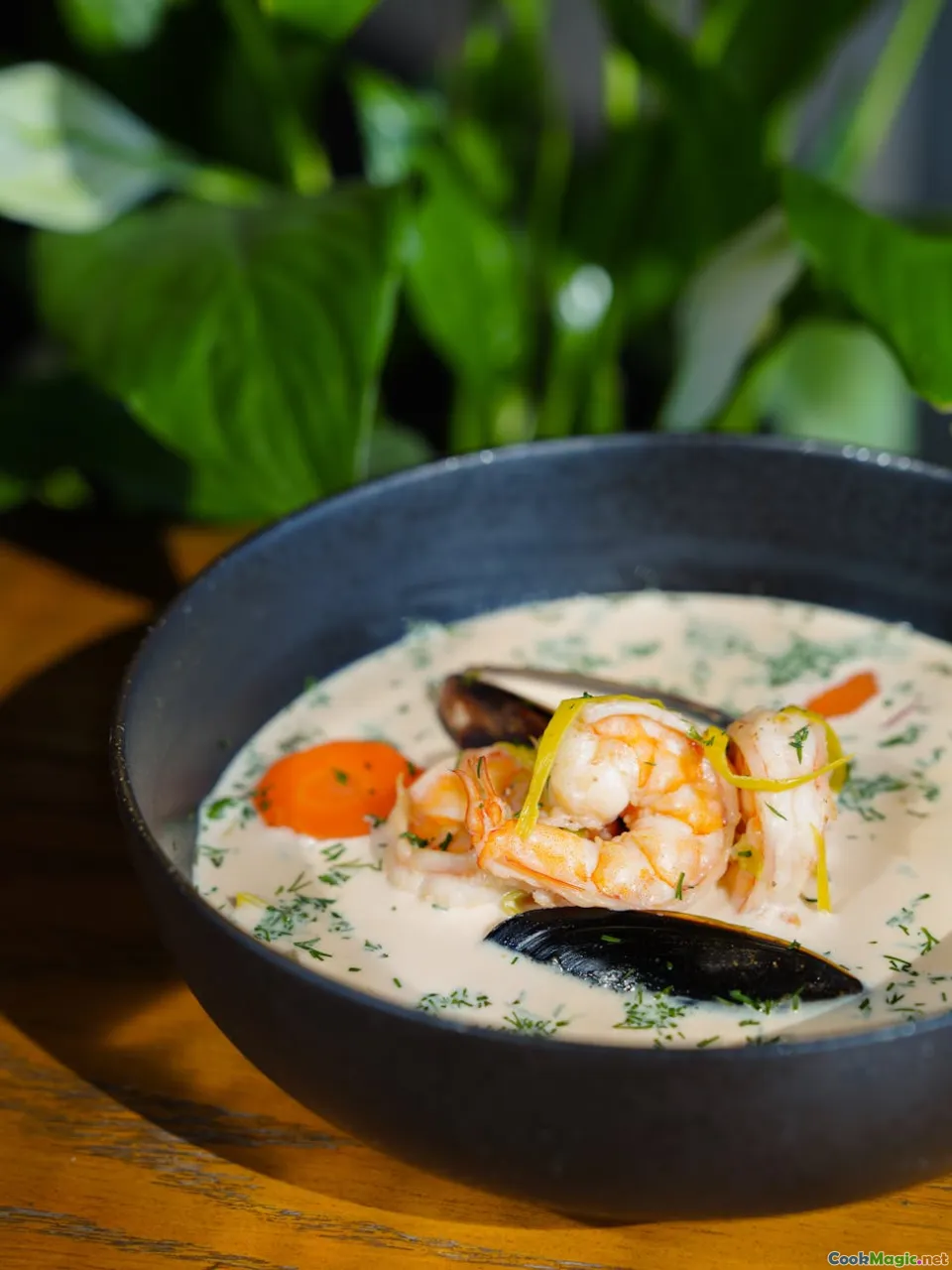
Nestle 2–3 machuca dumplings in each bowl. Ladle sere over top. Garnish with parsley and reserved herbs. Serve with cassava bread and lime wedges.
In a bowl, toss fish, shrimp, crab, and conch with lime juice, half the salt, pepper, and annatto/turmeric. Chill while you prepare the base.
Mince garlic; dice onion and bell pepper; slice scallions; chop culantro/cilantro. Set aside a small handful of herbs for garnish.
Warm coconut or vegetable oil in a wide pot over medium heat. Add onion, bell pepper, and garlic. Sweat until translucent and fragrant without browning.
Stir in coconut milk and fish stock. Add thyme, scallions, and the whole habanero. Simmer gently 10 minutes to meld flavors.
Add yuca, green banana, and okra. Season with remaining salt. Simmer until yuca is just tender and the broth is silky.
Boil green plantains (and ripe plantain if using) in lightly salted water until soft. Drain and mash vigorously, adding a ladle of hot coconut broth for suppleness. Form 8–12 rustic dumplings.
Slide fish chunks and crab into the simmering broth. Cook gently until fish is opaque and almost done.
Add shrimp and conch/squid. Simmer briefly until shrimp turns pink and conch is just firm. Avoid overcooking.
Remove the habanero if desired. Stir in most of the chopped culantro/cilantro and a squeeze of lime. Taste and adjust salt, pepper, and acidity.
Nestle 2–3 machuca dumplings in each bowl. Ladle sere over top. Garnish with parsley and reserved herbs. Serve with cassava bread and lime wedges.
More About: Garífuna Seafood Sere with Coconut and Plantain
A seaside bowl of comfort
Garífuna Sere de Mariscos is a luminous coconut seafood stew, prized along the northern coast of Honduras and across Garífuna communities in Belize and Guatemala. The word “sere” broadly refers to a coconut-based stew, rich yet gentle, with a silkiness that only coconut milk and slow simmering can bring. This version celebrates the ocean’s abundance: firm white fish, shrimp, and (when available) conch or crab. It’s served with machuca—pounded plantain dumplings that give each bowl body and a satisfying, rustic chew. Together, sere and machuca make a complete, comforting meal with deep cultural resonance.
History and cultural significance
The Garífuna people trace their roots to the island of St. Vincent, with ancestry intertwined among West African, Island Carib, and Arawak peoples. After forced displacement in the late 18th century, Garífuna communities established vibrant coastal settlements across Central America. Food became a keeper of identity. Coconut, plantain, yuca, and fresh fish tell the story of survival and celebration; cooking techniques echo both West African mortar-and-pestle traditions and Indigenous knowledge of cassava, herbs, and peppers. Sere is cooked for family gatherings, religious festivities, and everyday nourishment. The accompanying cassava bread (ereba) connects directly to ancestral cultivation and painstaking preparation of bitter cassava. In every spoonful, you taste ingenuity—how coastal people transform humble, local ingredients into a dish that’s both restorative and festive.
What makes this sere unique
- Layered aromatics: Onion, bell pepper, garlic, and thyme are gently sweated rather than browned to keep the broth light and creamy.
- Coconut base: Full-fat coconut milk and fish stock simmer into a velvety broth. A whole scotch bonnet or habanero infuses perfume and a whisper of heat without overpowering the palate.
- Machuca: Pounded green plantain provides starch and substance, while a touch of ripe plantain adds a hint of sweetness. Formed into rustic dumplings, they thicken the stew and make it hearty enough for a main course.
- Thoughtful seafood timing: Firm fish and crab go in first; quick-cooking shrimp and conch enter last to stay tender.
Tips for success
- Don’t boil hard: Keep the coconut broth at a gentle simmer to prevent splitting and to preserve its silky texture.
- Handle the chile with care: Leave it whole for fragrance; pierce or slice for more heat. Remove before serving if you prefer a mild stew.
- Salt in layers: Season the marinade lightly, then adjust salt after adding stock and roots. Coconut milk’s sweetness can mute salt, so taste at the end.
- Machuca texture: For springy dumplings, mash plantains while hot and moisten with a ladle of broth or a spoon of coconut oil. If the mash cracks when forming, add a splash more broth.
- Sustainable seafood: Use what’s abundant and locally responsible. Squid is a fine stand-in for conch; mussels or clams can replace crab.
Serving and variations
Traditionally, sere is served with cassava bread (ereba), whose delicate crunch contrasts the stew’s creaminess. Lime wedges brighten each bite, and a shower of chopped culantro or cilantro adds a green, citrusy lift. You can enrich the stew with okra for natural thickening, or add green banana and yuca for starch and tradition. A vegetarian riff swaps seafood for roasted pumpkin, okra, and hearts of palm, simmered in the same coconut-thyme base.
Make-ahead and storage
- Broth base: The aromatic coconut broth (Steps 3–5) can be prepared a day ahead. Chill and reheat gently before adding seafood.
- Machuca: Form dumplings in advance and refrigerate. Warm briefly in the broth right before serving to keep them supple.
- Leftovers: Store refrigerated for up to 2 days. Reheat gently without boiling to avoid overcooking the seafood.
Final thoughts
Garífuna Sere de Mariscos is more than a recipe—it’s a living tradition. Each family seasons it a little differently, guided by the day’s catch and what the garden offers. Take your time, simmer softly, and taste often. When you set a bowl down—fragrant with coconut and thyme, dotted with tender seafood, anchored by plantain—you’re sharing a story of ocean, land, and resilience.