Vegan Adaptations of Classic Thai Recipes
43 min read Reimagine Pad Thai, Tom Yum, and green curry with vibrant plant-based techniques, authentic flavors, and smart swaps like vegan fish sauce, tofu, and mushrooms—without compromising Thai culinary soul. October 25, 2025 07:05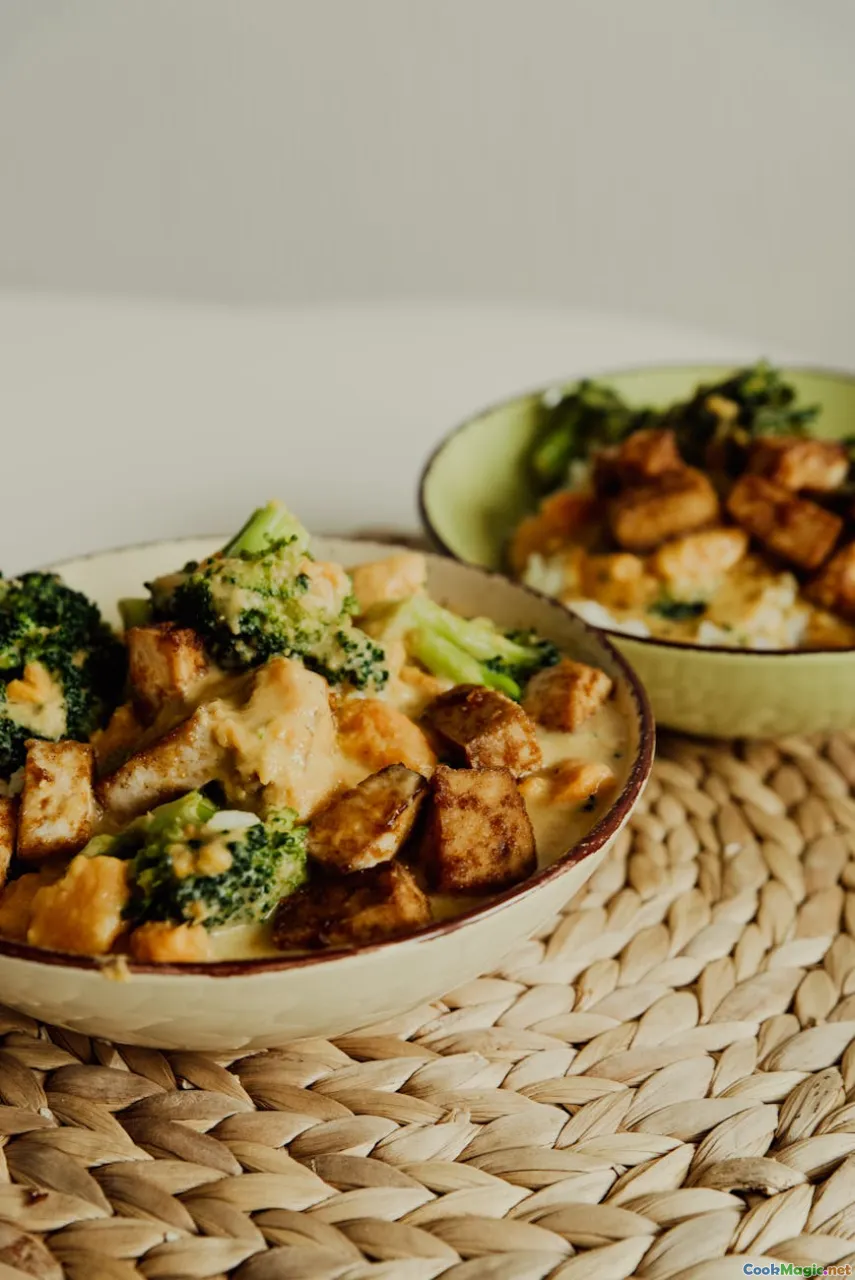
Bangkok wakes before the sun: woks flare like brief fireworks, oil hisses, and the air tastes of lemongrass and motorbike exhaust. The first time I ducked into a narrow soy-sauce-slicked alley off Yaowarat Road during the Vegetarian Festival, I felt a jolt of recognition. Yellow flags with red Thai characters (“เจ,” jay) fluttered like saffron prayer cloths, and every stall seemed to radiate something delicious and familiar—stir-fries perfumed with holy basil, curries heavy with coconut and galangal—yet everything was plant-based. The cooks grinned, ladling noodle soups studded with tofu skin to office workers who’d pinned tiny gold “เจ” badges to their shirts. Nothing felt like a compromise. These bowls were as loud and confident as any night-market classic, just tuned to a different instrument.
That morning set the tone for my ongoing obsession: vegan adaptations of classic Thai recipes that honor their roots—the surging quartet of salty-sour-sweet-spicy and the supporting chorus of funk and perfume—while swapping fish and shrimp for plants. Not austere substitutes, but bold, aromatic stand-ins that know when to whisper and when to roar.
The Thai Flavor Compass

Thai cuisine can feel effortless when you eat it, and maddeningly intricate when you cook it. But there’s a pragmatic compass the aunties at Warorot Market in Chiang Mai taught me to trust: keep a small bowl, a spoon, and four pillars within reach. Taste and steer.
- Salty: In non-vegan kitchens, fish sauce leads. For plant-based, rely on light soy, seasoning sauce, and a vegan fish sauce (more on that soon). For deeper salinity, a pinch of fine salt lets aromatics shine without shouting soy.
- Sour: Lime juice is bright and volatile; tamarind is deep and plush. Som tam wants lime; pad thai wants tamarind. Tom yum wants both, if you’re generous.
- Sweet: Palm sugar tastes like toasted honey and caramelized coconut. It softens edges. When palm sugar is scarce, coconut sugar is a faithful understudy.
- Spicy: Fresh bird’s eye chilies prick like pins; dried red chilies bloom in smoky, back-of-throat heat. They’re accents, not the whole song.
Then there is funk and perfume: the makrut lime leaves that smell like the idea of citrus, galangal’s piney pep, lemongrass’s clean lemon-zest-without-acid. Any vegan adaptation that honors these sensory landmarks will read “Thai” the moment the steam hits your face.
Jay vs. Vegan: A Cultural Shortcut Worth Knowing

In Thailand, “jay” is a form of Buddhist veganism practiced widely during the ninth lunar month, especially in Phuket and Bangkok Chinatown. Jay excludes animal products and, traditionally, pungent aromatics like garlic, chives, and onions, which are believed to overstimulate. Most Thai vegetarians outside the jay period are more flexible, and global vegans certainly keep their garlic.
Understanding this distinction helps when adapting dishes:
- If you want the clean, temple-kitchen vibe: no alliums, lean into herbs, white pepper, and umami from fermented soy.
- If you’re simply cooking vegan Thai: garlic and shallots are welcome. You’ll see this more commonly in restaurants like May Kaidee in Bangkok and Chiang Mai, where the stir-fries sing with garlic and holy basil.
Both approaches are “authentically Thai.” They just navigate different moral and sensory lanes.
The Vegan Thai Pantry: Foundations with Fragrance

Stock this pantry and you can cook flavorful Thai food any night of the week.
- Aromatics and herbs:
- Lemongrass: Use the pale core for pastes; bruise the stalks for soups. Freeze chopped sections for easy access.
- Galangal: Firmer and brighter than ginger; slice thin or grate. Freeze coins.
- Makrut lime leaves: Chiffonade into ribbons for curries; keep a bag in the freezer.
- Coriander root: The secret peppery backbone of countless Thai dishes. If roots are scarce, use stems and a pinch of white pepper.
- Thai basil (horapha) and holy basil (kaprao): Don’t swap them blindly. Thai basil is anise-fragrant and glossy; holy basil is peppery, fuzzy, and explosive. If you can’t find kaprao, combine basil with a sliver of mint and a sprinkle of white pepper.
- Acids and sweeteners:
- Tamarind pulp: Soak, squeeze, strain; keeps in the fridge. Essential for pad thai and gaeng som.
- Limes: Never bottled. Keep them at room temperature for juiciness.
- Palm sugar: Sold in disks. Shave with a knife; dissolve gently.
- Salty, umami-rich anchors:
- Light soy sauce and seasoning sauce (look for Golden Mountain or Healthy Boy). Choose brands without animal derivatives.
- Mushroom “oyster” sauce: A subtle, glossy binder for stir-fries. Lee Kum Kee makes a reliable vegetarian version; Healthy Boy’s mushroom sauce is common in Thai markets.
- Tao jiew (Thai fermented soybean paste): Earthy, savory; stir into dips and sauces. It’s a sleeper star for plant-based funk.
- Dried shiitake and kombu: Soak for broths and “fish sauce” substitutes.
- Vegan fish sauce: If you can’t find brands like Ocean’s Halo or 24Vegan, make your own (recipe below).
- Heat and crunch:
- Dried red chilies: For pastes, toasting, and chili flakes.
- Prik bon (toasted chili powder): Smoky warmth. Make by dry-toasting and pounding chilies.
- Khao khua (toasted rice powder): Essential for larb’s fragrance and sandy crunch. Toast sticky rice until bronzed; grind.
- Coconut products:
- Coconut milk and cream: Choose brands that separate when simmered. Mae Ploy and Aroy-D are widely used; avoid stabilizers that prevent the all-important crack of oil.
With these, you’re ready to translate almost any classic into a plant-forward dialect.
Replacing Fish Sauce and Shrimp Paste Without Losing Soul
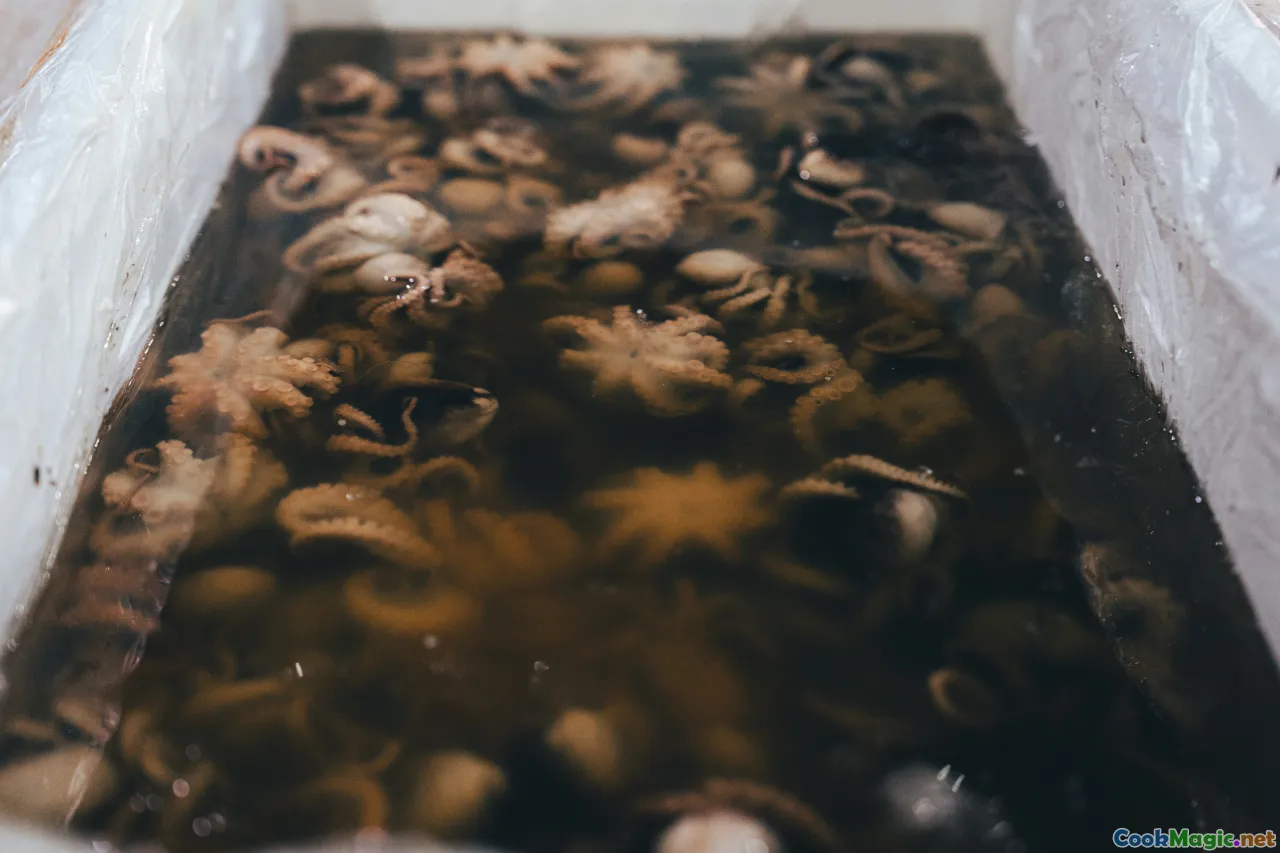
Fish sauce (nam pla) and shrimp paste (kapi) are not just salt—they’re history in a bottle: coastal weather, patient fermentation, an ancient logic of preservation. Vegan Thai cooking doesn’t deny that pedigree; it mimics it with plants.
Try these two homemade pantry heroes.
Nam Pla Hed (Mushroom-Seaweed “Fish Sauce”)
- 20 g dried shiitake
- 10 g kombu
- 2 sheets toasted nori
- 700 ml water
- 3 tbsp light soy sauce
- 1 tbsp dark soy sauce (for color)
- 1 tbsp palm sugar
- 1 tsp black peppercorns
- Optional: 1 piece of makrut lime peel (no white pith)
Steps:
- Rinse kombu; combine with shiitake, nori, peppercorns, and water. Bring to a bare simmer, then reduce heat and steep 30 minutes.
- Remove kombu before it turns slimy. Continue simmering with shiitake for 20 minutes.
- Strain, then season with light and dark soy, palm sugar, and the lime peel. Simmer 5 more minutes. Cool and bottle. Keeps in the fridge 2–3 weeks.
Use this anywhere fish sauce appears: pad krapao, nam prik dressings, marinades.
Kapi Jay (Vegan “Shrimp Paste” for Curry Pastes)
- 3 tbsp tao jiew (fermented soybean paste), drained
- 1 tbsp white miso (for gentle sweetness)
- 1 tsp toasted nori flakes
- 1 tsp roasted chili powder (prik bon)
- 1 pinch salt
Mash together in a mortar until smooth. The soybean base lends fermented depth; nori gives the whisper of tide; the chili contributes roast and color. Use 1–2 teaspoons in any curry paste that would call for kapi.
These condiments do a neat trick: they don’t replicate shrimp or anchovy precisely; they echo the same spectrum—saline, fermented, gently metallic—and they’re stable workhorses in every vegan Thai kitchen I’ve cooked in, from an airy Chiang Mai studio to my cramped apartment with an angry smoke alarm.
Curry Pastes: From Mortar to Meal
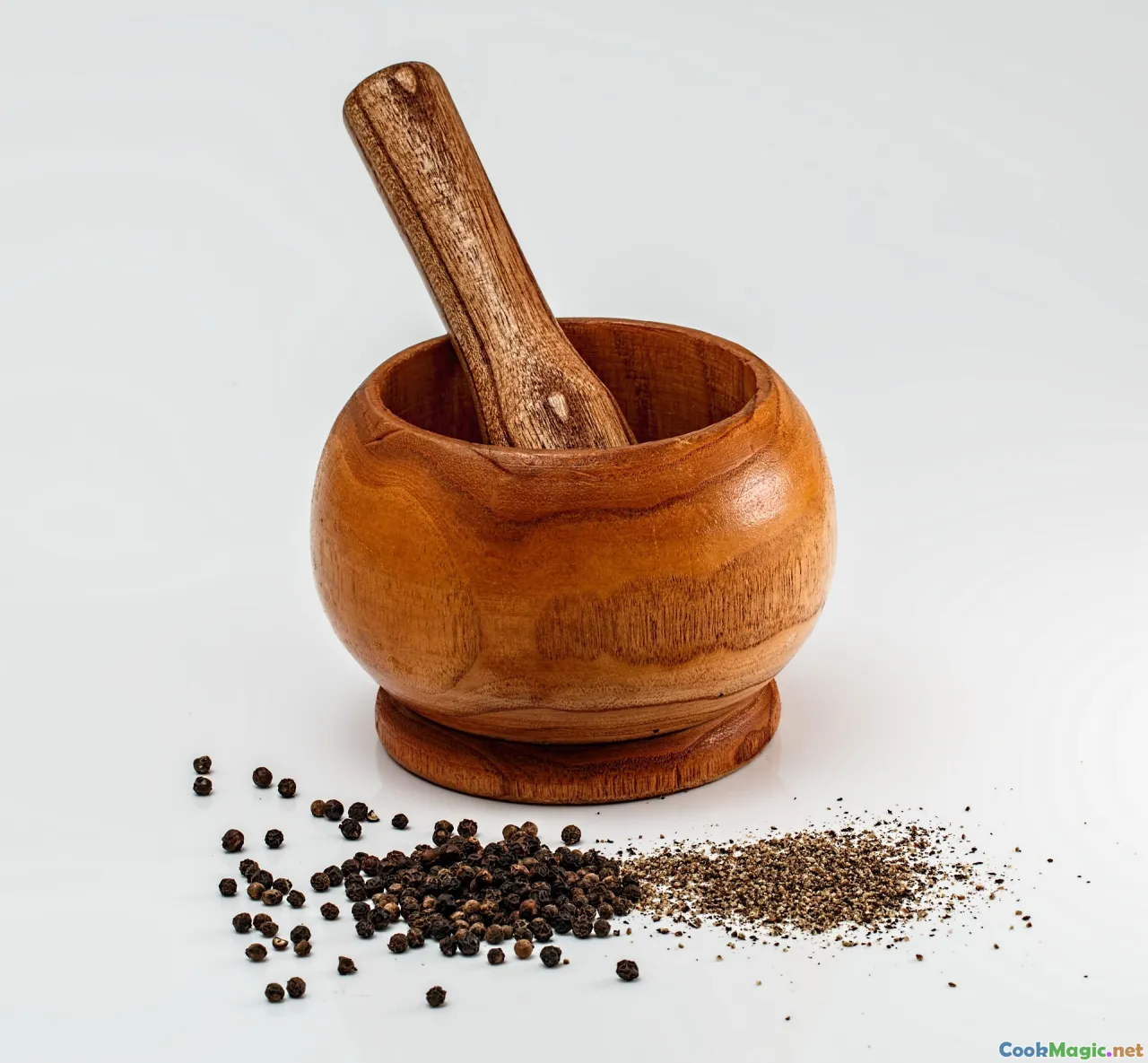
Pounding a curry paste is meditation and gym session. A food processor is fine on a weeknight, but the mortar’s granite weight bruises fibrous lemongrass and makrut leaf veins in ways a blade cannot. If you do go electric, add ice cubes to the bowl so heat doesn’t dull your aromatics.
Vegan Red Curry Paste (Prik Gaeng Phet Jay)
- 10 dried long red chilies, seeded and soaked until pliable
- 5 bird’s eye chilies (more for heat), fresh
- 1 tbsp coriander seeds, toasted
- 1 tsp cumin seeds, toasted
- 1 tsp white peppercorns
- 2 stalks lemongrass (tender inner part), minced
- 6 coins galangal, minced
- 6 cloves garlic (omit for strict jay)
- 4 small shallots (omit for strict jay)
- 1 tsp makrut lime zest
- 1 tsp sea salt
- 1–2 tsp Kapi Jay (see above)
Pound spices first to a powder. Add soaked chilies and salt; pound to a brick-red paste. Add lemongrass, galangal, garlic, shallot, lime zest, then the Kapi Jay. The paste should be sticky, cohesive, and stained the color of a ripe chili pepper.
To cook: warm coconut cream in a wok until the oil “cracks”—it will be glistening and fragrant. Fry 2–3 tablespoons paste until your kitchen smells like a market stall at 6 a.m. Add your vegetables or tofu, coconut milk, palm sugar, and “fish” sauce. Simmer until the flavors marry.
Green curry? Swap in green chilies, add fresh coriander stems and Thai basil stems for chlorophyll brightness. Panang? Increase roasted peanuts and add a hint of makrut zest. The principles remain: toast, pound, bloom.
Story from the Pestle: A Morning in Chiang Mai

At Warorot Market, a grandmother sold small baggies of curry paste tied shut with a red rubber band for ten baht. Her hands were stained turmeric gold, and she told me she learned to pound paste in a wooden mortar so big it doubled as a stool when she was a girl. “We did not buy paste then,” she said, patting a sack of dried chilies, “we bought time.” She pointed to a tray labeled gaeng keow wan jay—vegan green curry, studded with coins of bamboo shoot and puffs of fried tofu. No shrimp paste, she promised. I bought the paste and ate curry in a plastic chair under a fan that refused to turn. It tasted like rain after a dry season: green, lush, herbaceous. I could smell Thai basil before the spoon reached my mouth, and the broth left a coconut ring on my lips. I have been trying to build that flavor at home ever since, convinced that discipline with ingredients is the only sorcery that matters.
Tom Yum Hed: Mushroom Hot-and-Sour Soup that Breathes

This is the dish that taught me how to exhale while cooking. The broth is light yet assertive, like squeezing a lime with your whole hand.
Serves 4
- 1.2 liters mushroom stock (soak water from dried shiitakes topped up with water)
- 2 stalks lemongrass, bruised and cut into 2-inch pieces
- 5 coins galangal
- 4 makrut lime leaves, torn
- 250 g mixed mushrooms (oyster, shimeji, straw if you find them), torn into biteable pieces
- 2 roma tomatoes, cut into fat wedges
- 2 tbsp vegan fish sauce (Nam Pla Hed)
- 1–2 tbsp chili jam (nam prik pao), vegan or homemade
- 2–3 bird’s eye chilies, lightly crushed
- 1 tbsp palm sugar
- Juice of 2 limes (add to taste)
- A handful of sawtooth coriander and cilantro for serving
Steps:
- Bring stock to simmer with lemongrass, galangal, and lime leaves. Breathe the steam. That’s your direction.
- Add mushrooms and tomatoes; simmer 5–7 minutes until tender.
- Season with vegan fish sauce, chili jam, palm sugar, and chilies.
- Kill the heat, wait 30 seconds, then stir in lime juice. Taste: adjust salty with fish sauce, sour with more lime, sweet with sugar.
- Ladle into bowls; scatter herbs. The lime should ride the front of your tongue; the lemongrass will ring like a bell.
Pad Krapao, Plant-Powered but Full-Throttle

Pad krapao is a siren call of Thai street food: garlic and chilies smashed into a wok, protein browning just shy of burn, and holy basil thrown in at the last second, punching peppery perfume into the steam. Most stalls top it with a runny fried egg. For vegan cooks, there are choices: skip the egg, or crown with shattered shards of fried tofu skin for a salty crunch.
Serves 2
- 300 g firm tofu or tempeh, crumbled into bite-size pieces
- 6 cloves garlic, roughly chopped
- 4–8 bird’s eye chilies, chopped (choose your heat)
- 1 tbsp neutral oil
- 1 small handful long beans or green beans, cut 1-inch
- 1 tsp sugar
- 1 tbsp light soy sauce
- 1 tbsp mushroom “oyster” sauce
- 1–2 tsp vegan fish sauce, to taste
- A big handful holy basil leaves
- Optional: crispy fried shallots or tofu skin for topping
Steps:
- Heat a wok until it begins to smoke. Add oil. Throw in garlic and chilies; stir for 10 seconds until fragrant.
- Add tofu or tempeh; press it against the wok to brown. Toss with beans.
- Splash in soy, mushroom sauce, and vegan fish sauce; add sugar. Stir-fry hard, letting sauce thicken and glaze.
- Kill the heat, toss in holy basil. The leaves should wilt instantly and scent the kitchen. Serve with jasmine rice, topped with crunch if you like.
This dish is noisy, salty, and unapologetic. It is also a litmus test for your sauce balance: the sweet should barely peep, the basil should bloom, the chilies should leave a slow burn down your throat.
Som Tam Without Shrimp: Mortar, Pestle, Thunder
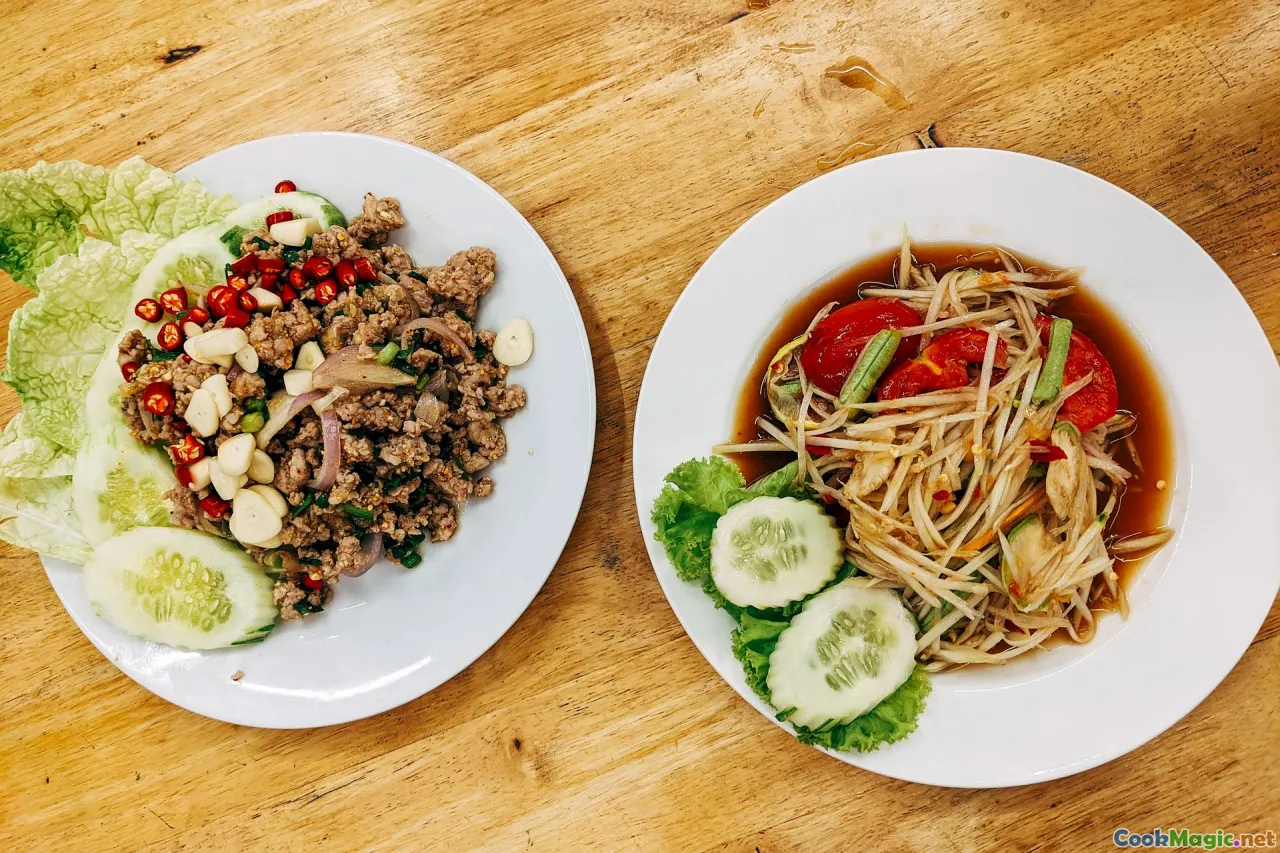
Som tam Thai is usually pounded with dried shrimp and fish sauce. The vegan trick is to layer ocean notes with seaweed and toast.
Serves 2–3
- 1 small green papaya, peeled and julienned (or a firm cucumber, deseeded and sliced, for som tam taeng)
- 2 cloves garlic
- 2–6 bird’s eye chilies
- 2 tbsp palm sugar, shaved
- 2 tbsp vegan fish sauce
- 2 tbsp lime juice
- 1 small tomato, wedges
- 2 tbsp roasted peanuts
- 1 tsp nori flakes or fine crumbled toasted seaweed
- Optional: 1 tsp tao jiew for funk
Steps:
- In a clay mortar, pound garlic and chilies until just crushed.
- Add palm sugar, vegan fish sauce, and lime juice; pound lightly to dissolve.
- Add tomato, peanuts, and seaweed; bruise to release juices.
- Add papaya (or cucumber); pound and toss simultaneously with a spoon until the strands bend but retain snap. Taste—adjust lime and fish sauce.
If you hear the papaya squeak against the mortar, you’re doing it right. The dressing should pool in the bottom like brown amber.
Larb Hed: Smoke, Mint, and Sand

Larb is a Northern and Isan salad seemingly made of opposites: fresh herbs play against the warming, sandy crunch of toasted rice powder. When made with mushrooms, it tastes like a forest picnic.
Serves 3–4
- 400 g mixed mushrooms, minced by hand (don’t puree)
- 2 tbsp roasted rice powder (khao khua)
- 1–2 tbsp toasted chili powder
- 2–3 tbsp vegan fish sauce
- 2–3 tbsp lime juice
- 1–2 tsp palm sugar
- A handful each: mint leaves, cilantro, sliced scallions (omit scallions for jay)
- Optional: sawtooth coriander
Steps:
- Dry-sauté the minced mushrooms in a wide pan until their moisture cooks off and edges start to brown.
- Off the heat, stir in vegan fish sauce, lime juice, palm sugar, and chili powder. The mushrooms will drink it up.
- Fold in herbs and toasted rice powder. Taste; finish with more lime if the richness needs a lift.
Serve with crisp cabbage leaves and long beans. The dish should smell smoky, minty, and faintly nutty from the rice.
Khao Soi Jay: Silk and Crunch in a Northern Bowl
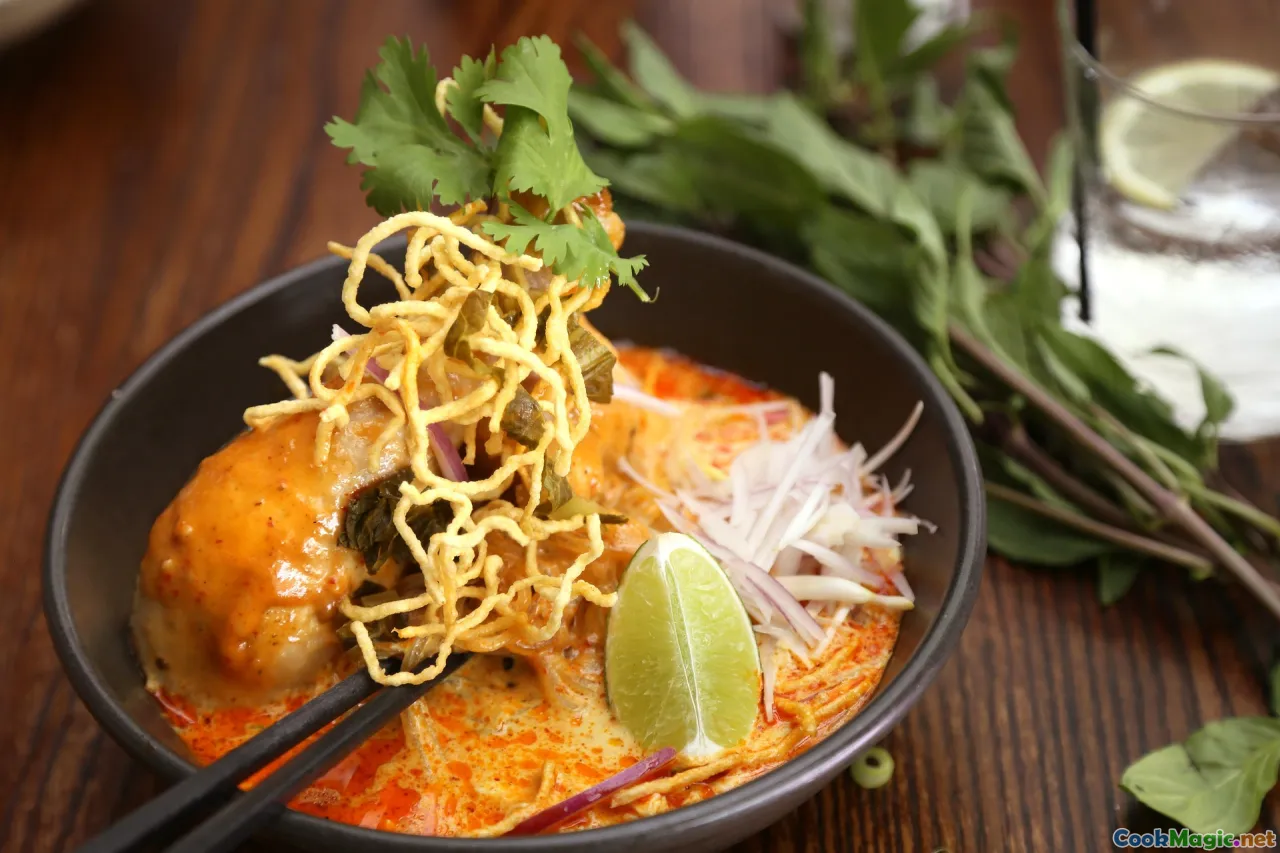
Chiang Mai’s beloved curry noodle soup is typically crowned with fried noodles and uses chicken. The jay version replaces that heft with tofu and crunchy tofu skin, and no one misses a thing.
Serves 4
Paste:
- 6 dried red chilies, soaked
- 1 tsp coriander seeds, toasted
- 1/2 tsp cumin seeds, toasted
- 1/4 tsp turmeric powder
- 3 cloves garlic
- 2 shallots
- 1 tsp Kapi Jay
- Pinch salt
Soup:
- 400 ml coconut milk
- 400 ml coconut cream
- 3 cups vegetable stock
- 300 g fried tofu puffs or firm tofu in chunks
- 300 g fresh eggless wheat noodles (look for vegan eggless noodles or use rice noodles if necessary)
- Season with soy sauce, vegan fish sauce, and palm sugar
- Garnishes: pickled mustard greens, lime wedges, chili oil, sliced shallots, fried tofu skin “noodles”
Steps:
- Pound paste. Crack coconut cream in a pot; fry the paste until aromatic.
- Add coconut milk and stock; simmer gently. Season with vegan fish sauce and palm sugar until savory-sweet.
- Add tofu and warm through. Cook noodles separately.
- Serve broth over noodles; crown with pickles, chili oil, shallots, lime, and crunchy tofu skin. Sip, then squeeze lime. The broth should coat your lips like satin.
Massaman with Pumpkin and Peanuts: Perfume of Trade Winds
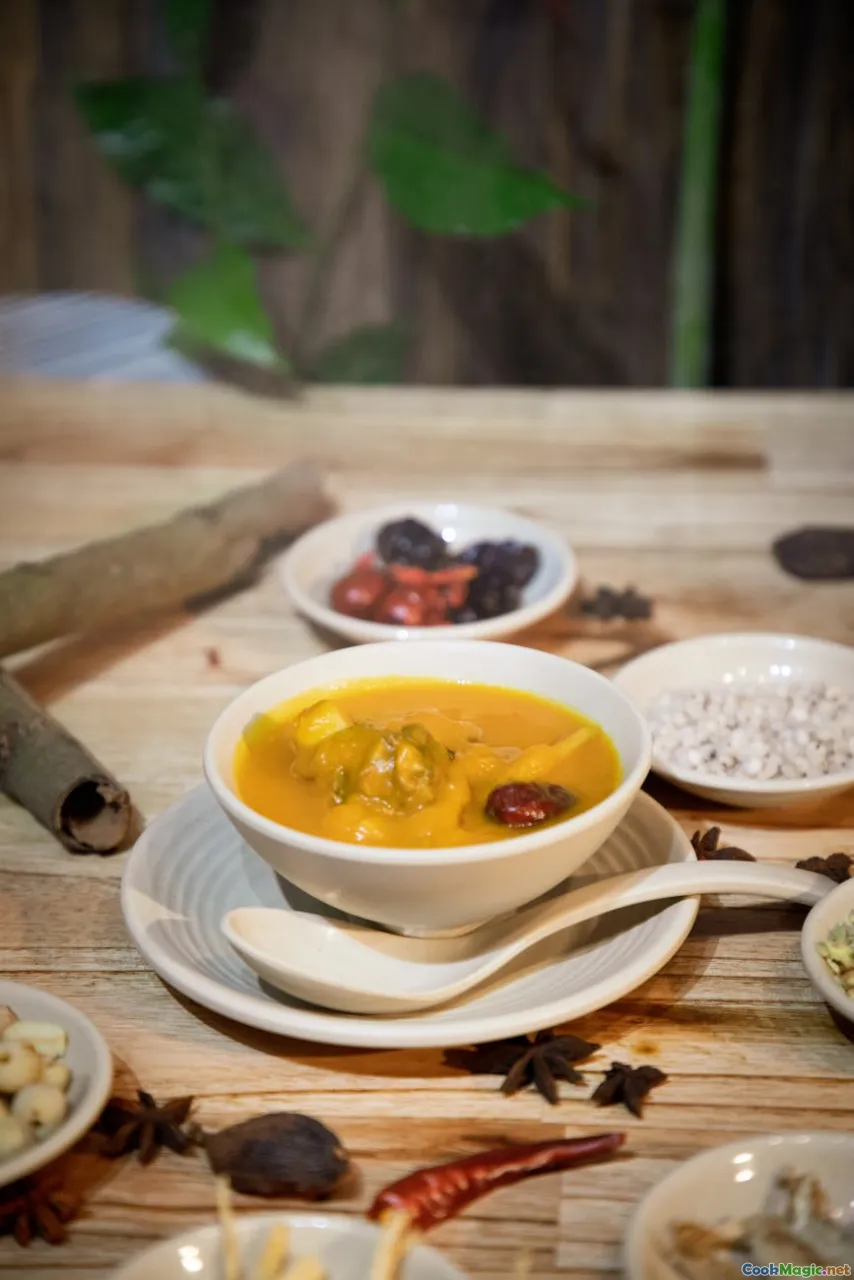
Massaman carries whispers of history—Persian and Malay influences—cinnamon, star anise, cardamom. It’s a mellow, cozy curry, and pumpkin makes it hum.
Serves 4–6
Paste:
- 6 dried red chilies, soaked
- 1 tbsp roasted peanuts
- 1 tsp coriander seeds
- 1/2 tsp cumin seeds
- 2 cardamom pods (seeds only)
- 1 small stick cinnamon, broken
- 2 cloves
- 1 tsp white peppercorns
- 3 cloves garlic
- 3 shallots
- 1 tsp Kapi Jay
- 1 tsp makrut lime zest
Curry:
- 400 ml coconut cream
- 500 ml coconut milk
- 500 g pumpkin or kabocha, chunked
- 1 large potato, chunked (optional)
- 1 onion, sliced thick (omit for strict jay)
- 2 tbsp palm sugar
- 2–3 tbsp vegan fish sauce
- 1 tbsp tamarind juice
- 1/2 cup roasted peanuts
Steps:
- Fry the paste in cracked coconut cream until fragrant and slightly oily.
- Add coconut milk, pumpkin, potato, and onion. Simmer until tender.
- Season with palm sugar, vegan fish sauce, and tamarind. Fold in peanuts. The sauce should be soft, round, and faintly sweet, with spice like a warm scarf.
Gaeng Pa, Jungle Heat Without Animals

Jungle curry traditionally has no coconut milk; it’s lean, herbal, and unapologetically fiery. Mushroom broth anchors this vegan version.
Serves 4
- 2 tbsp jungle curry paste (use red paste plus extra fingerroot, green peppercorns, and makrut zest)
- 3 cups robust mushroom stock
- 1 cup water
- 1 cup baby corn, halved
- 1 cup pea eggplant (or sliced Thai eggplant)
- 1 cup bamboo shoots
- 1 handful green beans
- 2 sprigs fresh green peppercorns, if available
- 3–4 makrut leaves, torn
- 2 tbsp vegan fish sauce
- 1 tsp palm sugar
- Handful of Thai basil
Steps:
- Fry paste briefly in a spoonful of oil. Add stock and water; simmer.
- Add vegetables by hardness, ending with beans and peppercorns.
- Season with vegan fish sauce and a whisper of sugar. Finish with makrut leaves and Thai basil. The broth should be glassy and hot, tasting like rain-soaked leaves.
The Stir-Fry Sauce Matrix: Quick Swaps for Weeknights
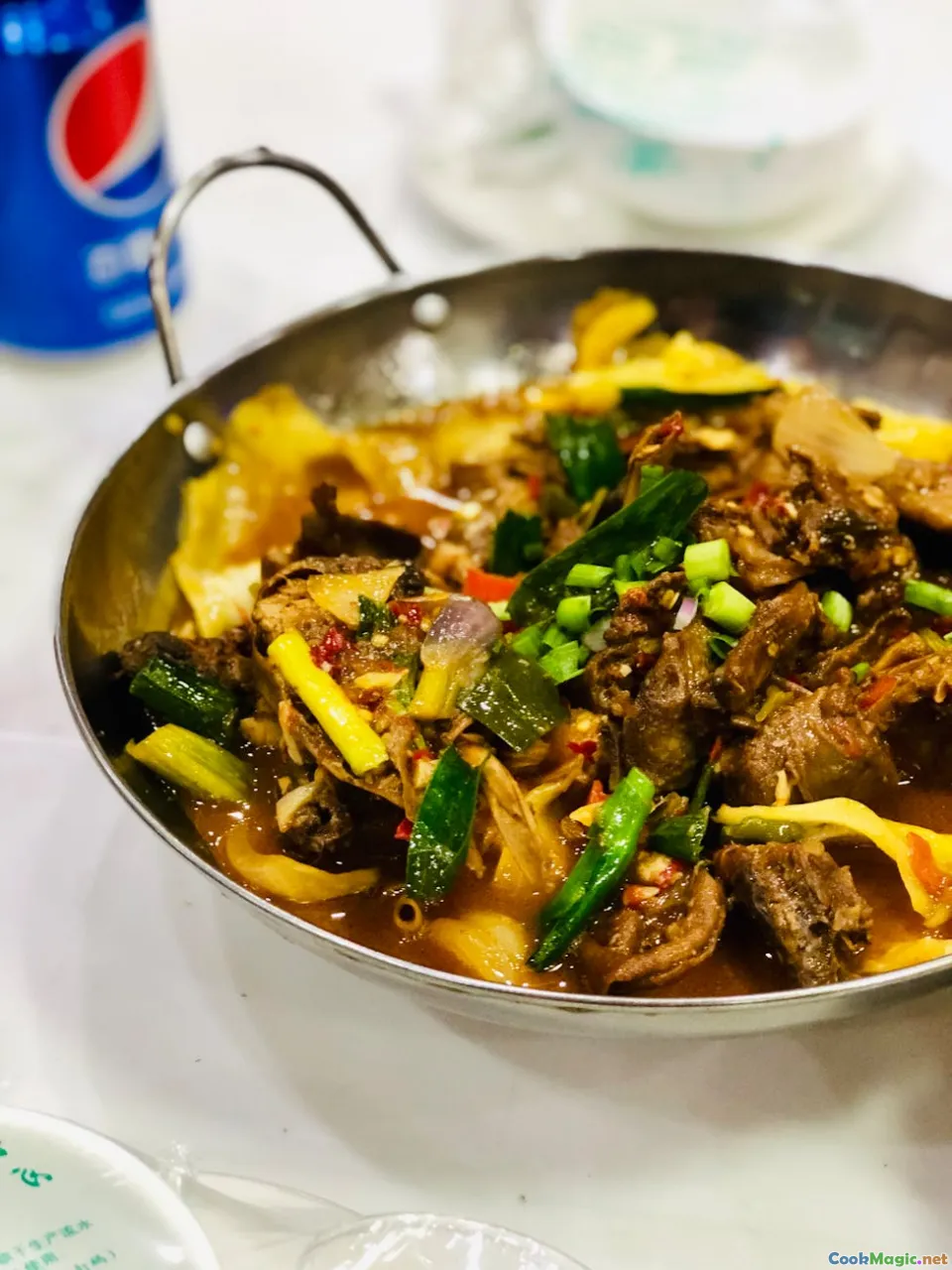
When you have five minutes, these pre-mixed sauces are lifesavers.
- “Pad Krapao” sauce: 1 tbsp light soy + 1 tbsp mushroom sauce + 2 tsp vegan fish sauce + 1 tsp sugar + splash of water. Add at the end to reduce and glaze.
- “Pad See Ew” sauce: 1 tbsp light soy + 1 tbsp dark sweet soy (use a vegan kecap manis or Thai dark soy) + 1 tsp vegan fish sauce. Toss with rice noodles, Chinese broccoli, and smoked tofu.
- “Nam Jim” dipping sauce for fried tofu or greens: 2 tbsp lime juice + 2 tbsp vegan fish sauce + 1 tbsp palm sugar + 1 chopped fresh chili + 1 tbsp minced cilantro stems.
- “Pad Prik King” curry stir-fry: 2 tbsp red curry paste + 1 tsp palm sugar + 1 tsp vegan fish sauce. Fry paste in oil until oily, toss green beans and tofu. No coconut milk needed.
Label a few jars in your fridge; dinner becomes a wok away.
The Umami Toolbox: When Plants Behave Like the Sea
No single ingredient replaces fish sauce or shrimp paste. Think chords, not notes.
- Dried shiitake: Brings savory depth with a delicate marine twang when paired with seaweed.
- Kombu: Supplies glutamates cleanly. Remove before simmer turns slimy.
- Nori: Toasted, crumbled, and added late, it smells like tide pools on a hot day.
- Tao jiew: It’s soy with a quiet funk. Stir a spoonful into sauces to make them taste lived-in.
- Miso: White miso is the diplomat; red miso is the provocateur. Use lightly in Thai dishes—enough to deepen, not dominate.
- Roasted peanuts and toasted rice: They don’t add sea, but they build complexity and length on the palate.
Used together, these ingredients make vegan Thai food feel inevitable rather than imitative.
Technique Notes: What Makes It Taste Thai
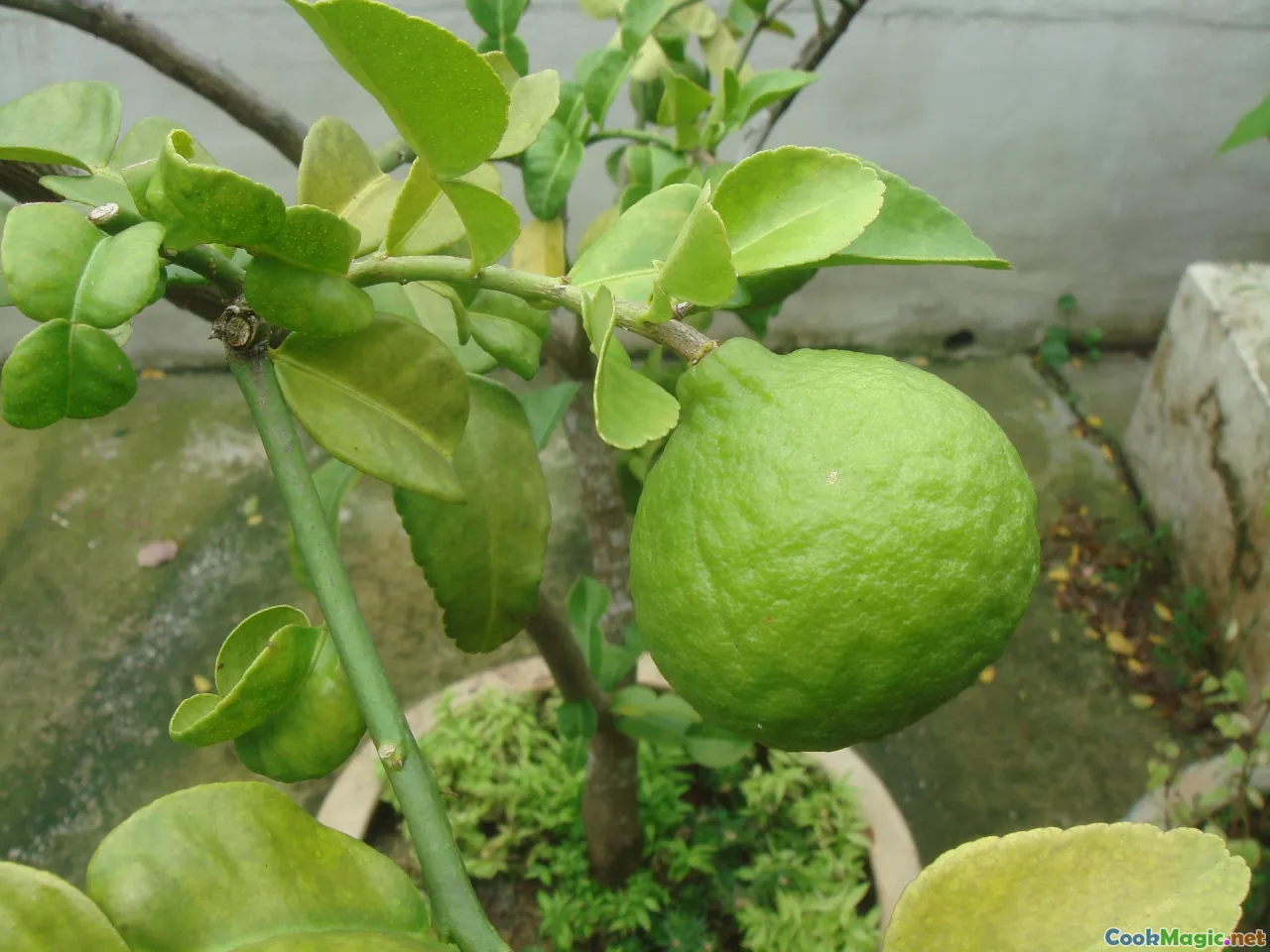
- Crushing vs chopping: Bruising lemongrass and tearing makrut leaves release oils differently than neat slices. Bruise and tear; your nose will tell you the truth.
- Crack the coconut: Let coconut cream simmer until the oil breaks and glistens. This unlocks richness without heaviness and fries your paste properly.
- Order of seasoning: Start under-salted; finish with vegan fish sauce and lime at the end for top-note brightness.
- Heat management: Thai stir-fries aren’t wok hei chases like Cantonese cooking, but they still need fierce heat for a minute or two. Preheat the wok until it smokes. Move quickly.
- Chiffonade makrut leaves: Stack, roll tight, slice into threads. A few strands transform a curry from “good” to “this is Thailand.”
Sourcing and Substitutions: Markets, Windowsills, and Freezers
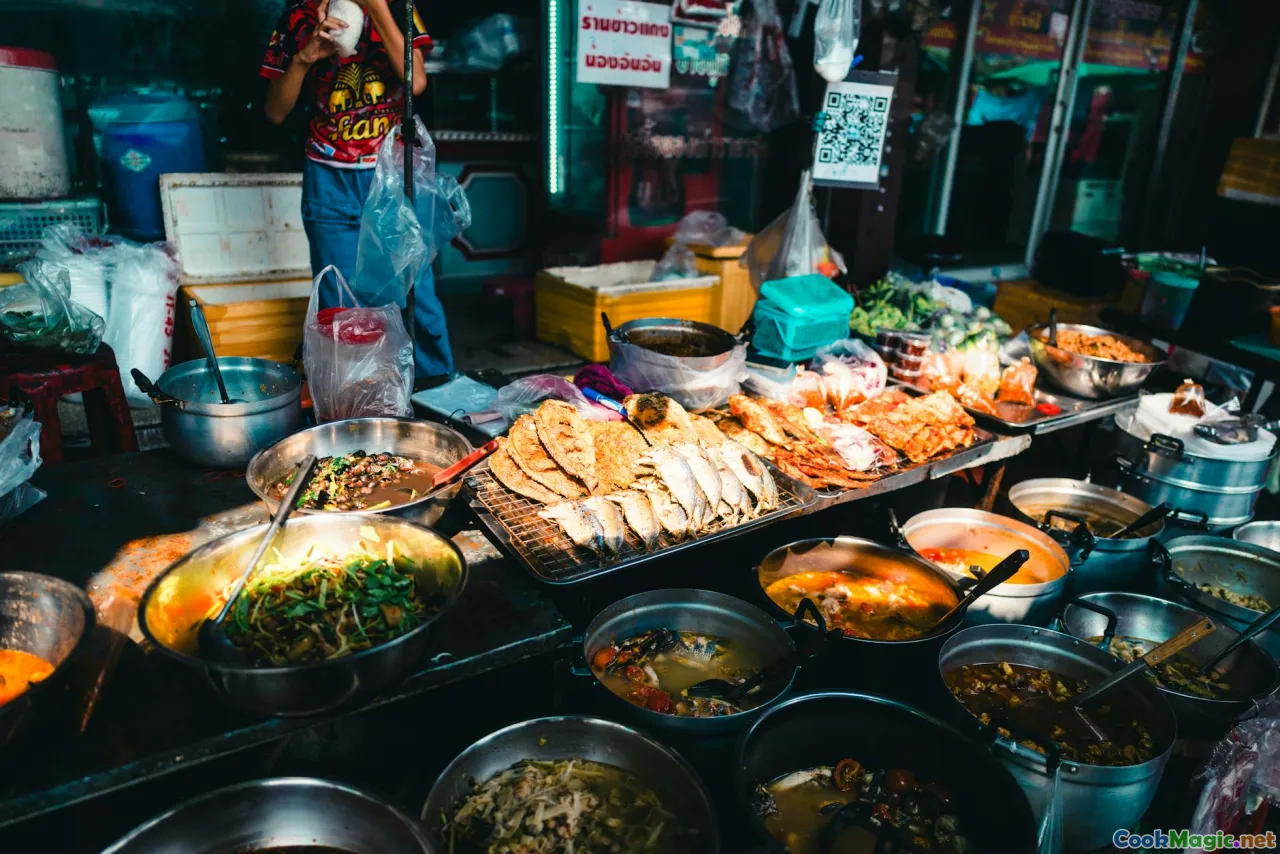
- Markets to love: Or Tor Kor in Bangkok is a cathedral for produce lovers. In the U.S., poke around at H Mart, 99 Ranch, or your local Southeast Asian grocer. Ask for makrut leaves and galangal by name; show a photo.
- Grow your own: A small makrut lime tree thrives on a sunny balcony; harvest leaves as needed. Holy basil can be grown from seed in summer—pinch often to keep it leafy.
- Freeze smart: Galangal, lemongrass, and makrut leaves freeze beautifully. Bundle lemongrass sections and bag leaves flat so you can pull out one or two at a time.
- Substitutions when you must: If you can’t find holy basil, use Thai basil with a pinch of white pepper and torn mint. No palm sugar? Combine light brown sugar with a drip of molasses. No tamarind? Combine lime juice with a tiny bit of brown sugar for pad thai in a pinch—but seek tamarind when you can.
Restaurant and Market Touchstones: Where Vegan Thai Thrives

- Phuket Vegetarian Festival: A living atlas of jay cuisine. Vendors display yellow flags signaling adherence. Try curry-rice stalls where trays of gaeng line up—green, red, jungle—each labeled jay. The mock meats here lean soy-based, but the stars are vegetables and herbs.
- May Kaidee (Bangkok/Chiang Mai): A gateway for plant-based Thai; their tom kha is a masterclass in galangal.
- Pun Pun (Chiang Mai): Farm-to-table Thai with a reverent treatment of herbs. Their larb hed is a case study in balance.
- Street stalls under yellow flags in Yaowarat during the festival: Look for stir-fried morning glory (pak boong fai daeng) cooked with mushroom sauce instead of oyster sauce—garlicky, a bit smoky, and green as a jungle.
Use these places as taste-memory banks. When you cook at home, you’ll have a map in your mouth.
Troubleshooting Thai Flavors: The Quiet Art of Fixing Things
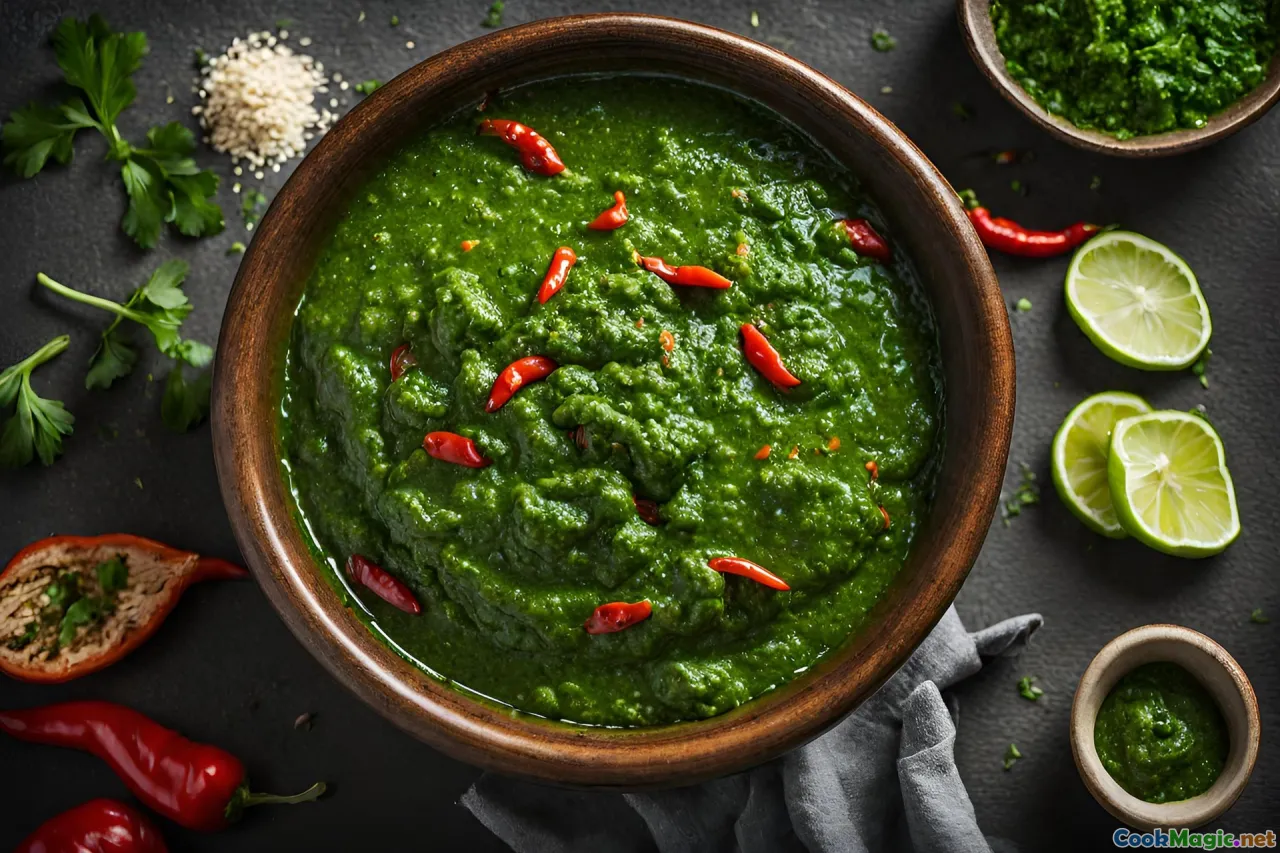
- Too salty: Add a squeeze of lime and a pinch of palm sugar; if a soup, add water or unsalted stock. In curries, add more coconut milk.
- Too sweet: More lime and vegan fish sauce; consider a small hit of chili.
- Flat flavor: A few drops of vegan fish sauce and a chiffonade of makrut leaves at the end can resurrect a dish.
- Coconut refuses to crack: Your coconut milk might have stabilizers. Use a brand with minimal ingredients, or cheat with a spoon of coconut oil to fry the paste.
- Curry paste tastes raw: You didn’t cook it long enough in fat. Fry until the paste shifts from sharp to rounded and the scent deepens.
- Som tam is watery: You pounded too hard or too long. Aim to bruise, not mash. Drain lightly before serving if needed.
A Brief Analysis: Authenticity, Adaptation, and the Taste of Home

Authenticity is a door we pass through, not a room we stay in. Classic Thai recipes were built on what grew nearby, what swam in local waters, and what fermented peacefully in clay jars behind houses. When I replace fish sauce with a mushroom-seaweed brew, I’m not pretending that anchovies grew on trees; I’m honoring the logic behind the ingredient: the need for anchoring savor, preserved and layered.
Thai cooks have always adapted. Regional curries adapted to Muslim dietary laws; massaman traveled with merchants and married local coconut. In Los Angeles today, chefs translate Thai flavors with California produce; in Portland, Oregon, there’s a vegan khao man “gai” with crisp tofu laid over fragrant rice cooked in ginger and garlic—narratives honoring technique more than dogma.
To cook vegan Thai food well is to inhabit this lineage of flexibility with respect. Put in the work at the mortar. Taste constantly. Learn the grammar of the cuisine so your improvisations read as poetry, not parody.
A Personal Menu for a Thai Vegan Feast

If you’re cooking for friends:
- Starters: Fried tofu with nam jim; larb hed with cabbage leaves.
- Soup: Tom yum hed, served piping with herbs added at the table so they bloom.
- Mains: Pad krapao with tempeh; massaman with pumpkin and peanuts; jungle curry for heat-heads.
- Sides: Jasmine rice; quick-pickled mustard greens; stir-fried morning glory with garlic and mushroom sauce.
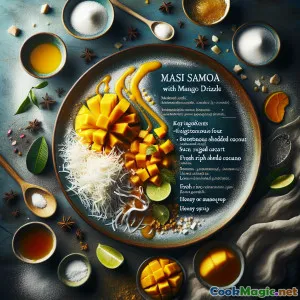
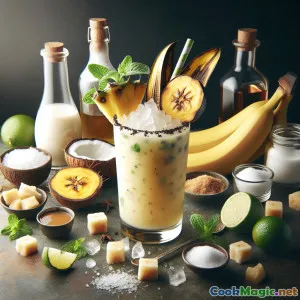
- Sweet ending: Coconut sticky rice with mango (vegan by default) or palm-sugar bananas in salty coconut cream.
Serve everything family-style. The table will smell like lime and basil, and your guests will reach for seconds while still chewing their first bite.
Recipe Notes: Vegan Nam Prik Pao (Chili Jam) at Home
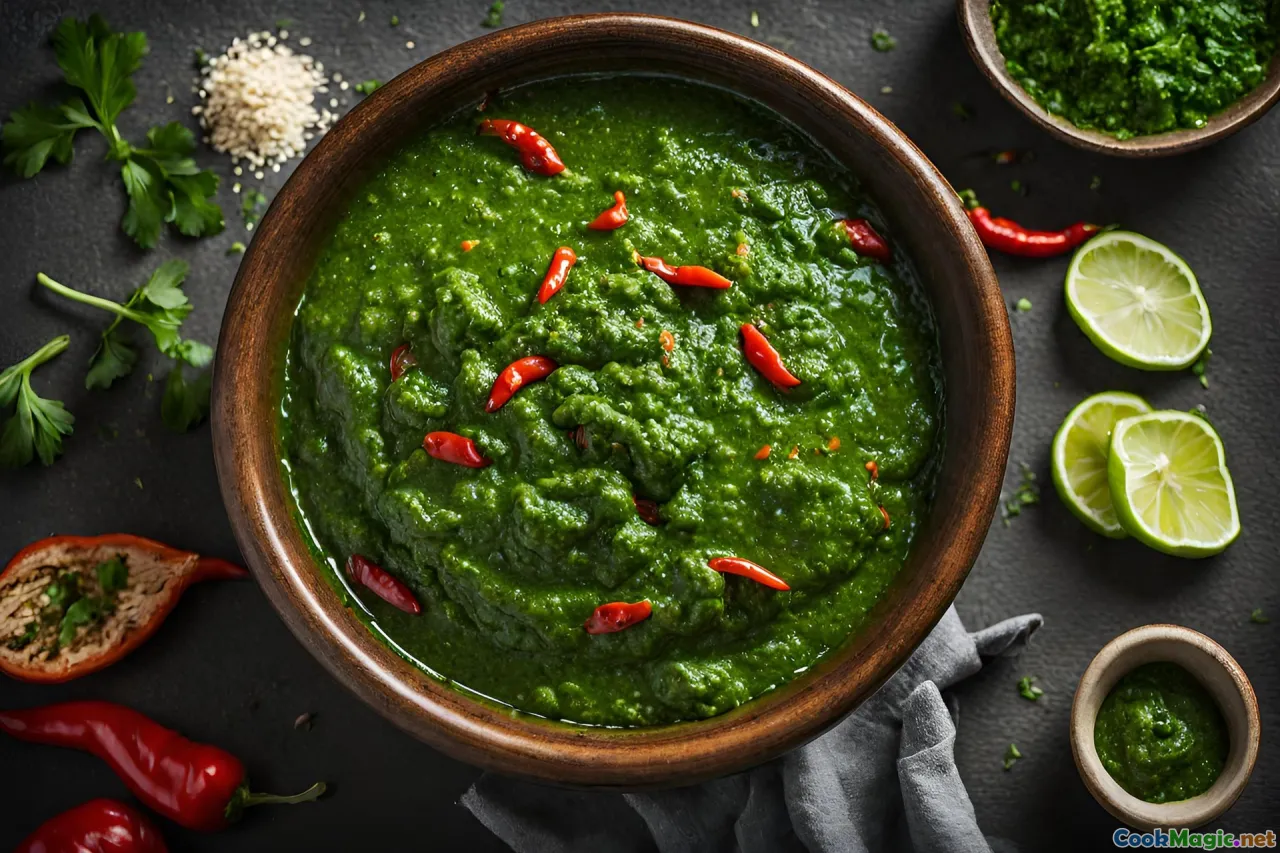
Nam prik pao is the smoky-sweet heart of many soups and stir-fries. Store-bought versions often contain shrimp. Here’s a vegan jar to keep handy.
- 8 dried long red chilies, deseeded
- 4 shallots, peeled (omit for jay and double the tamarind later)
- 6 cloves garlic (omit for jay)
- 2 tbsp tamarind paste
- 2 tbsp palm sugar
- 2 tbsp vegan fish sauce
- 2 tsp dark soy sauce
- 1 sheet nori, toasted
- Neutral oil for frying
Steps:
- Dry-toast chilies until fragrant; soak in warm water. Fry shallots and garlic in a good depth of oil until bronze; drain.
- Blend chilies, shallots, garlic, tamarind, palm sugar, vegan fish sauce, dark soy, and nori into a thick paste.
- Fry the paste in a little of the reserved aromatic oil until glossy and jammy, 6–8 minutes. Cool and jar. Spoon it into tom yum or onto morning glory; it’s a bolt of smoke and sweetness.
How-To: Build a Pad Thai Sauce That Doesn’t Miss Fish
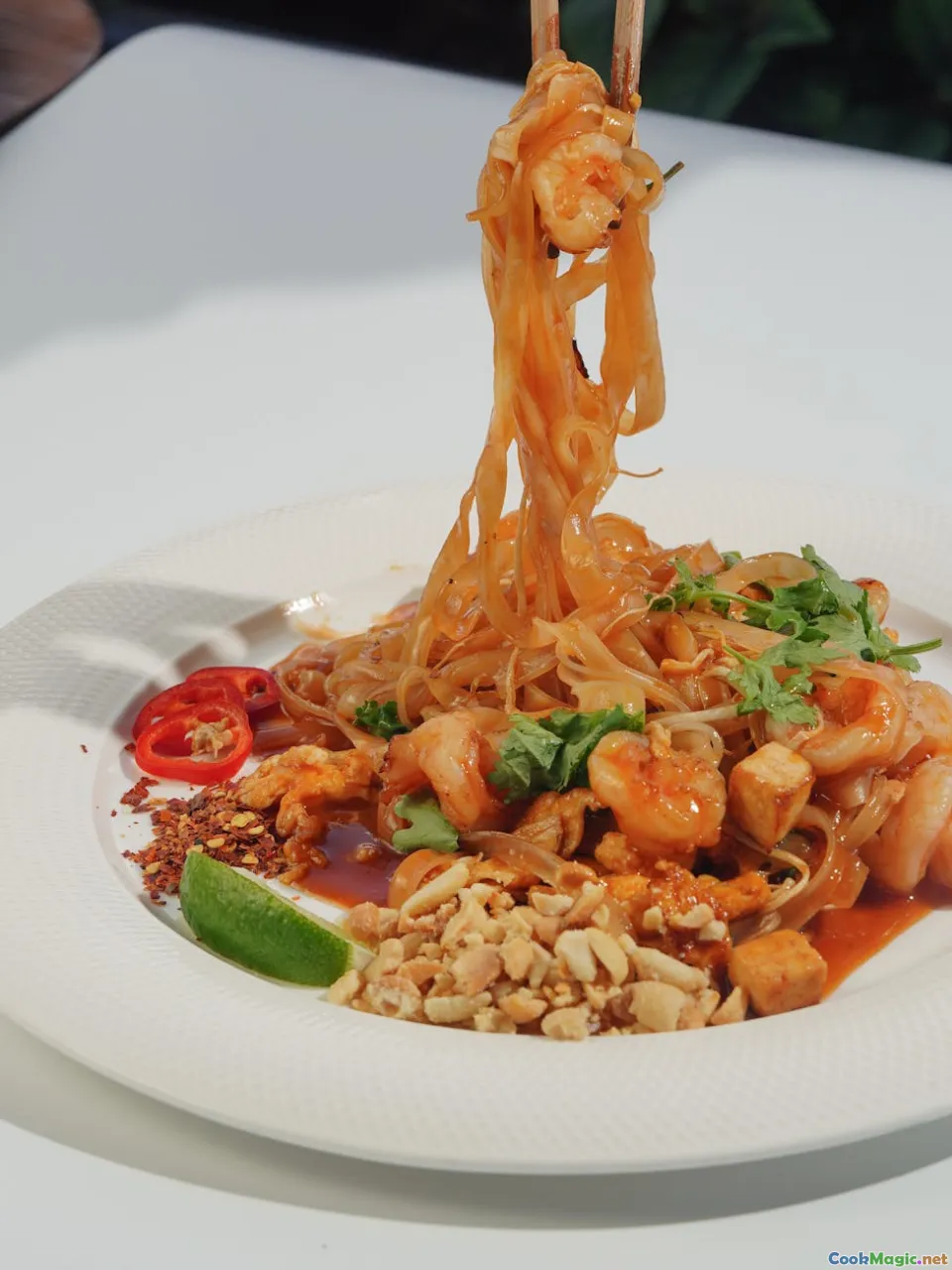
Pad thai is all about sauce equilibrium wrapped in chewy rice noodles.
Sauce (enough for 2 servings):
- 2 tbsp tamarind pulp
- 2 tbsp palm sugar
- 1.5 tbsp vegan fish sauce
- Optional: 1 tsp tao jiew for depth
Steps:
- Warm gently to dissolve sugar. Taste: sour should lead, sweet should support, salty should snap in after.
- Stir-fry garlic and pressed-firm tofu sticks. Add soaked rice noodles, then sauce. Push to one side; add Chinese chives, bean sprouts.
- Toss until noodles are glossy and just tender. Finish with peanuts and a squeeze of lime. If you crave the eggy richness, crumble crisp-fried tofu skin and dust with a pinch of kala namak for sulfuric perfume.
The sizzle should smell like tamarind steam and caramelizing sugar. The noodles should pull like ribbon candy.
Small Rituals that Change Everything

- Keep a bowl of water and a tasting spoon by the stove. Taste every 60 seconds when finishing a dish. Thai food will tell you where to drive it.
- Warm your serving bowls. Hot bowls keep soups shimmering and stir-fries perfumed.
- Slice herbs at the last moment. Chiffonade makrut leaves over the bowl and watch faces light up.
- Prep chilies with intent. Split lengthwise for perfume with less heat, chop fine for fire, bruise whole for a stealthy warmth.
On busy nights, these rituals feel like fussiness. On the plate, they read as generosity.
The first vegan Thai meal I cooked that truly satisfied my nostalgia for Bangkok’s thunderous breakfasts happened on a wet Tuesday. I had stubborn holy basil, a late lime, a memory of curry steam on my face, and time—enough time to stand with a mortar and persuade lemongrass to become silk. The rest unfolded predictably: crackling coconut cream, a pinch of palm sugar, the room filling with a clove-sweet promise from massaman spices. I plated by instinct and ate too fast, then slowed down. Everything I love about Thai food—the audacity of sour lime, the swallow of heat, the warmth of coconut, the soft hand of sugar—was there, as present as a Bangkok alley at dawn.
Adaptation, at its best, is an act of care. Cook these dishes for someone you love or for the person you are after a long day. Let holy basil fog your windows. Let tamarind stain your wooden spoon. And the next time you pass a yellow jay flag or a cluster of Thai basil at the market, pocket a leaf and breathe in: pepper, anise, sun. You’ll know exactly what to make when you get home.