Preparing Goat Water for Celebratory Meals
36 min read Learn traditions, spices, and techniques for authentic Antiguan goat water—a hearty centerpiece for festive gatherings, with tips on seasoning, texture, and perfect accompaniments. January 09, 2026 07:06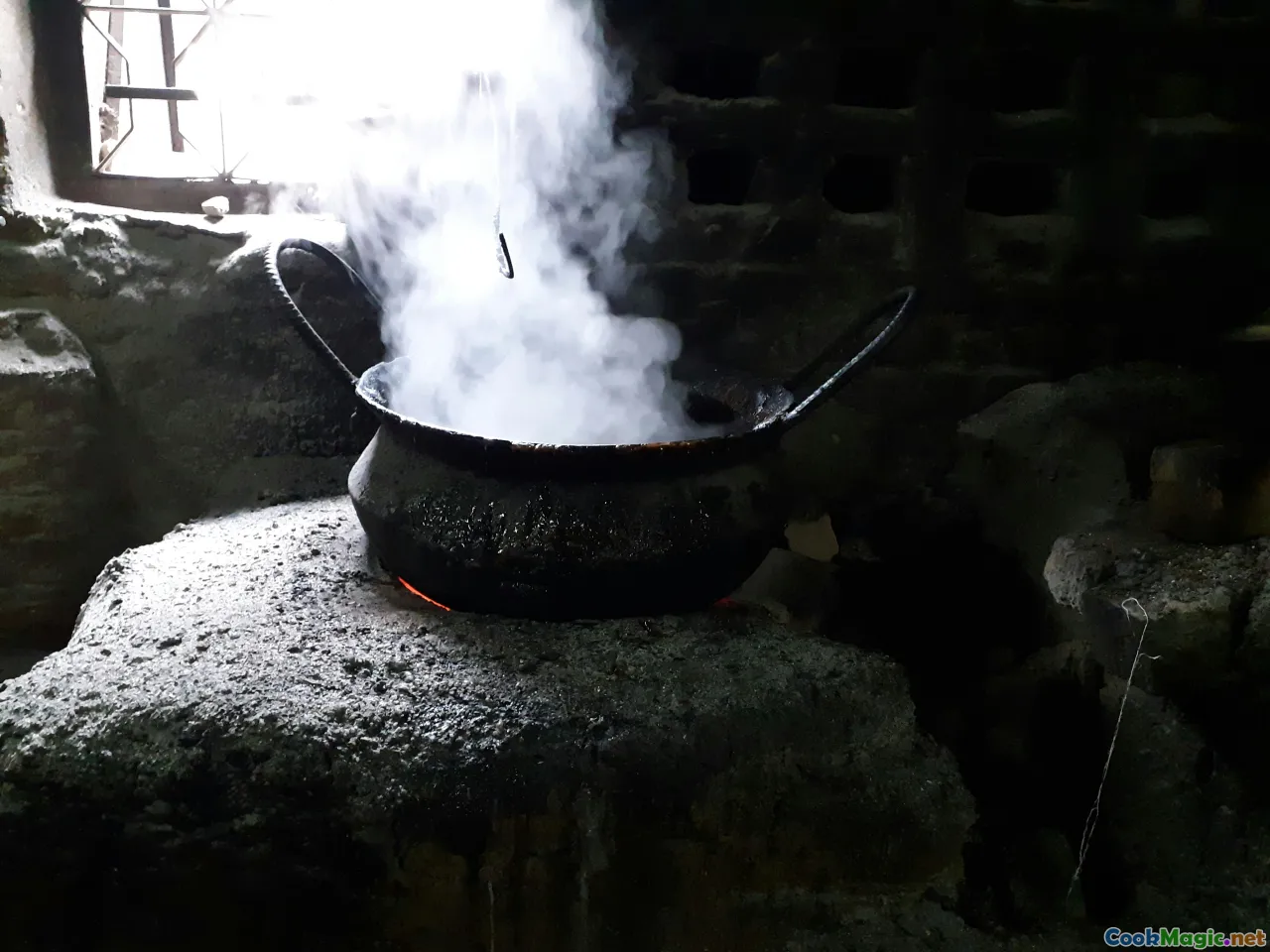
The first time I saw a pot of goat water rolling like a dark sea on a coal pot in All Saints, the steam smelled like stories even older than the village. Cinnamon and bay did a slow dance with thyme, and a Scotch bonnet rode the surface like a buoy, promising heat without insisting on it. Each ladle revealed bronze-kissed broth with pearls of rendered fat glistening at the rim. A few pale spinners—thin, finger-length dumplings—surfaced and sank. A shoulder bone, cut into a coin and split to reveal a bright circle of marrow, appeared like a relic. Someone put a slice of salt bread into my hand and said, “Teh, try that,” and I burned my fingers and didn’t care. The goat’s flavor was deep and slightly wild, the sort of taste that makes a crowd go quiet for a second before the chatter resumes.
Antigua and Barbuda loves a celebratory pot, and goat water is a pot with presence. It’s most famous just across the channel in Montserrat, sure—yet in Antigua’s villages and at food fairs, at cricket watch parties and independence gatherings, you’ll find goat water kept warm under a folded kitchen towel, offering the kind of comfort people remember long after the last bowl is scraped clean. This is a stew that belongs to both sea and hills: a pastoral animal transformed by colonial spice routes; a humble broth that anchors big moments.
What goat water means in Antigua and Barbuda
There’s a practical reason goat water shows up at celebratory meals in Antigua and Barbuda: it feeds a crowd easily and stays delicious over hours of gentle heat. But the emotional logic is clearer once you stand near the pot. The aroma cues memory—grandmothers in house dresses skimming the pot with a spoon, uncles tasting and arguing about whether to put dumplings this time, children drawn by the cinnamon-clove sweetness that sneaks under the pepper.
Goat water is a cousin of many Caribbean brown soups and stews, with Montserrat’s version widely celebrated. Antigua and Barbuda’s plates intersect with Montserrat’s history more than a map can show. When Soufrière Hills erupted and Montserratians relocated, many came through Antigua; family ties braided stronger. Now at Independence Food Fairs in St. John’s Botanical Gardens, at church fundraisers in Liberta, out near the ball field in Parham after a hard-fought cricket day, you can find a Styrofoam cup brimming with goat water, offered with a “Suh come, it nice.”
Where Antigua is known for fungee and pepperpot, ducana with saltfish, and a straight-shooting love for fresh fish and lobster, goat water folds right into the repertoire during holidays and wakes, Christenings, and victory dances. It’s restorative after long nights of Carnival; it’s bracing on a rainy Sunday when the wind comes off the hill. The dish carries hints of British stews, West African soup-building, and a spice cabinet that arrived in the Caribbean on ships: pimento (allspice), cinnamon stick, clove, sometimes nutmeg. A pot of goat water is a map, but it’s also a simple promise: we’ll take care of you.
Choosing the goat, choosing the cut

If you want celebratory flavor, begin with the animal. Goat water isn’t shy; it needs goat that tastes like goat. Look for meat from a mature animal—ram-goat or a well-grown ewe—rather than the very young, which can simmer away into blandness. A whiff of clean, slightly grassy aroma is right; anything sour is a walk-away.
In St. John’s Public Market, a good butcher will know exactly what you’re after if you say “Goat water cut.” Ask for a mix:
- Shoulders and shanks cut into 1.5–2 inch (4–5 cm) chunks, bone in
- A few pieces of leg for lean body
- And crucially, some bone coins—cross-cut marrow bones that will release gelatin and flavor
Bones are the secret architect of the soup’s body. Split marrow will cloud the broth lightly and give it a faint cling on the lips, the way a good stock does. Some cooks include a piece of goat head or feet for extra gelatin; I like a compromise: a couple of knuckles and plenty of shoulder bone. Avoid too much fat; you want flavor, not grease.
While you’re at the market, pick up a basket of thyme, a bundle of scallions, a few cloves of garlic, and a Scotch bonnet that looks like it has stories to tell. Antiguans often say, “Wash the meat good,” and they mean it: lime and salt aren’t just for brightness; they’re part of the cleaning ritual that sets the flavor from the first touch.
The spice map: pimento, cinnamon, and friends
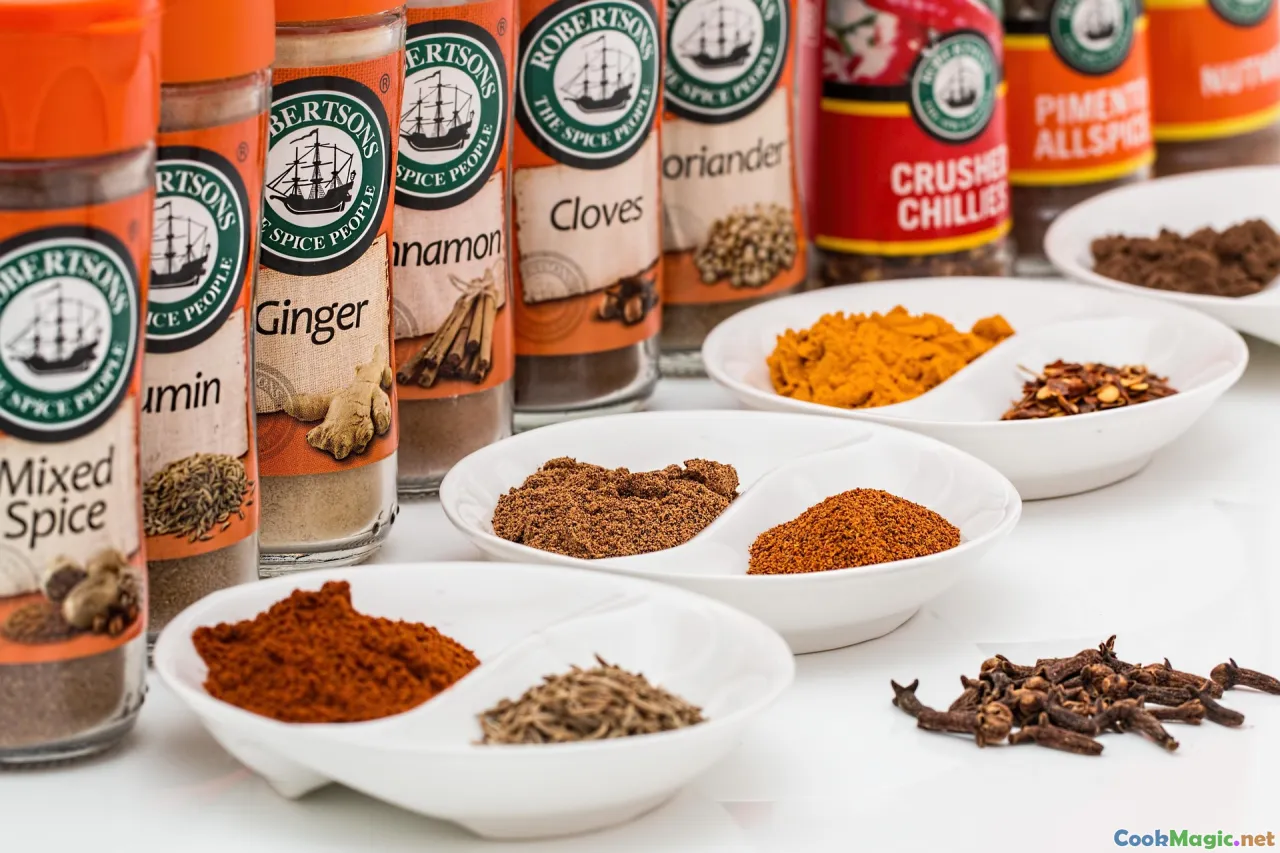
Goat water’s palate is warm and round rather than fiery, though a Scotch bonnet on the surface adds heat if you squeeze it near the end. The spice profile leans into what the British called “sweet spices,” introduced to Antigua’s kitchens through long trade routes.
- Pimento (allspice) berries: Drawn from the West Indies themselves, pimento tastes like cinnamon, clove, and nutmeg got together and wrote a harmony. Crushing them releases a peppery, warm backbone.
- Cinnamon stick: Not powder, which muddies the broth—use a stick or two so the sweetness whispers.
- Clove: A few cloves, no more, or your soup will taste like a dental office. Two to four for a large pot is plenty.
- Bay leaf: Caribbean bay if you can get it, but any good laurel leaf will lend a gentle, herbal perfume.
- Thyme: Fresh sprigs, stems and all, tied if you want to retrieve them easily.
- Black pepper: Coarse-cracked for aroma.
Supporting cast:
- Fresh aromatics: scallion (spring onion), onion, garlic, a little ginger if your household likes it (I do; it brightens the goat’s depth without going “curry”).
- Green seasoning: In Antigua, green seasoning can mean many things, but a basic quick blend—scallion, thyme, cilantro or shadow beni (culantro), garlic, and a touch of lime juice—gives goat water its garden-fresh heartbeat.
- Scotch bonnet: Whole, slit once, or chopped if you’re bold. Most celebratory pots keep it whole to let people control their heat at the bowl with pepper sauce.
You might see nutmeg or mace in some family pots, especially if the cook’s grandmother came from Montserrat or Nevis. I rarely add nutmeg—but a few gratings at the end can knit the aromas together if the soup seems shy.
Browning, burnt sugar, and balance

The difference between a merely good pot and a pot people remember is often in the browning. Antigua’s kitchens know two pathways:
-
Burnt sugar browning: A spoonful of sugar melted and taken just to the edge of bitterness, then shocked with water or stock to make a syrupy “browning.” This technique, shared with stewed chicken and oxtails, brings a luster and deep mahogany color.
-
Dry sear plus fond: Sear the goat pieces in a little oil until the pot grows a lacquer of browned bits (fond). Deglaze with water, rum, or stock. This approach yields a slightly lighter color but a toastier flavor.
Many celebratory cooks combine both: a light burnt sugar browning to set color and a vigorous sear to anchor flavor. Balance matters. Too bitter a browning and you’ll chase that taste all afternoon. Too timid a sear and the soup will taste flat, no matter how many aromatics you wave at it.
Here’s how I stabilize the burn: Heat 2 tablespoons of sugar in a heavy pot over medium heat, stirring only when edges melt. As soon as it smokes and darkens to the color of molasses with a whisper of bitterness, splash in about 1/2 cup water and stir. You will think you ruined it; you did not. Keep that syrup aside.
Then, in the same pot, film the base with oil, and sear the goat in batches until the surfaces are well-browned and the marrow coins pick up color. That contrast—caramel from browning, Maillard from sear—makes the broth sing.
Step-by-step: a celebratory goat water for 10

This is a party-sized pot that serves 8–10 bowls. It holds well for hours—flavors deepen as the day lingers.
Ingredients
For the goat and marinade:
- 4 lb (1.8 kg) goat pieces, bone-in (shoulder, shank, some leg), plus a few marrow bone coins
- 2 limes, juiced, plus wedges for washing
- 2 teaspoons coarse salt
- 1 tablespoon white vinegar (optional, for washing)
- 4 cloves garlic, smashed
- 1 medium onion, sliced
- 4 scallions, chopped
- 2 tablespoons green seasoning (see below)
- 1 Scotch bonnet pepper, whole or slit once
- 2 teaspoons coarse black pepper
For the pot:
- 2 tablespoons neutral oil (coconut or canola)
- 2 tablespoons brown sugar (for browning), optional but recommended
- 10–12 pimento (allspice) berries, lightly crushed
- 1–2 cinnamon sticks
- 3 whole cloves
- 2 bay leaves
- 8–10 sprigs fresh thyme
- 1 tablespoon tomato paste (for body and color)
- 1 tablespoon Worcestershire sauce (optional; some Antiguan cooks use a dash)
- 1–2 tablespoons English Harbour rum for deglazing (optional but lovely)
- 10 cups (2.4 liters) water or light stock, plus more as needed
- Salt to taste
For spinners (dumplings):
- 1 1/2 cups (180 g) all-purpose flour
- 1/2 teaspoon salt
- About 2/3 cup (160 ml) water
- 1 teaspoon oil (optional)
Green seasoning (makes about 1/2 cup; you’ll use 2 tbsp and save the rest):
- 1 small bunch scallions
- 10 sprigs thyme, leaves and tender stems
- 1 small handful cilantro or culantro (shadow beni), roughly chopped
- 3 cloves garlic
- 1/2 small onion
- Juice of 1/2 lime
- 2 tablespoons water or oil to help it blend
- Pinch of salt
Method
-
Clean and season the goat: Rinse the meat under cold water. Rub with lime halves and a pinch of salt. Rinse again, then pat dry. In a large bowl, toss the goat with 2 teaspoons salt, black pepper, smashed garlic, onion, scallion, Scotch bonnet (leave whole or slit), and 2 tablespoons green seasoning. Let it sit at least 1 hour, or overnight in the fridge for deeper flavor.
-
Make the browning (optional but recommended): In a heavy stockpot, heat the brown sugar over medium until it melts, darkens, and smokes. When it approaches the color of nearly-black caramel, carefully add 1/2 cup water. Stir until smooth. Pour into a small bowl and reserve.
-
Sear the goat: In the same pot, add oil. Lift the goat from its marinade (reserve the aromatics) and sear in batches until well-browned on all sides. Take your time; develop that fond. Deglaze browned bits with a splash of rum or water between batches, scraping the bottom with a wooden spoon.
-
Build the pot: Return all goat and reserved aromatics to the pot. Add 1 tablespoon of the browning syrup (taste; you can add more later), tomato paste, pimento berries, cinnamon stick(s), cloves, bay, and thyme. Stir until fragrant.
-
Add liquid: Pour in 10 cups water or light stock to cover by an inch. Bring to a rolling simmer, then lower to a lazy blip. Skim foam and excess fat as it rises during the first 20 minutes.
-
Simmer: Let it go uncovered for 1 hour, then partially cover and simmer another 45–60 minutes, until the meat yields and the marrow bones have shared their richness. Keep the Scotch bonnet buoying on top, unsqueezed, unless you want more heat.
-
Make spinners: While the pot simmers, mix flour and salt for dumplings. Add water gradually to form a soft, slightly tacky dough. Knead briefly, then pinch off marble-size pieces and roll into thin cylinders about 2–3 inches long. Toss with a teaspoon of oil to prevent sticking.
-
Taste and adjust: Check salt and depth. If the flavor feels pale, add another spoon of browning and a teaspoon of Worcestershire. If it feels sharp, let it simmer longer; time rounds the edges. A few grinds of black pepper now can lift the aroma.
-
Add spinners: Drop dumplings into the simmering pot and cook 10–12 minutes. They should bob and turn glossy, cooked through but still with a slight chew at the center.
-
Finish: Fish out the cinnamon sticks, bay, and thyme stems. If you left the Scotch bonnet whole, you can press it lightly against the side of the pot to release a little heat, or remove it. Let the pot rest 15 minutes before serving; the surface will settle and the broth will slip from “busy” to “silky.”
Serve in deep bowls with a side of Antiguan salt bread, bakes, or hard dough bread for dipping. On the table: a bottle of pepper sauce for those who want fire, lime wedges for brightness, and maybe a chilled Wadadli beer or a glass of homemade ginger beer to chase the heat.
A Sunday around the pot: All Saints memories
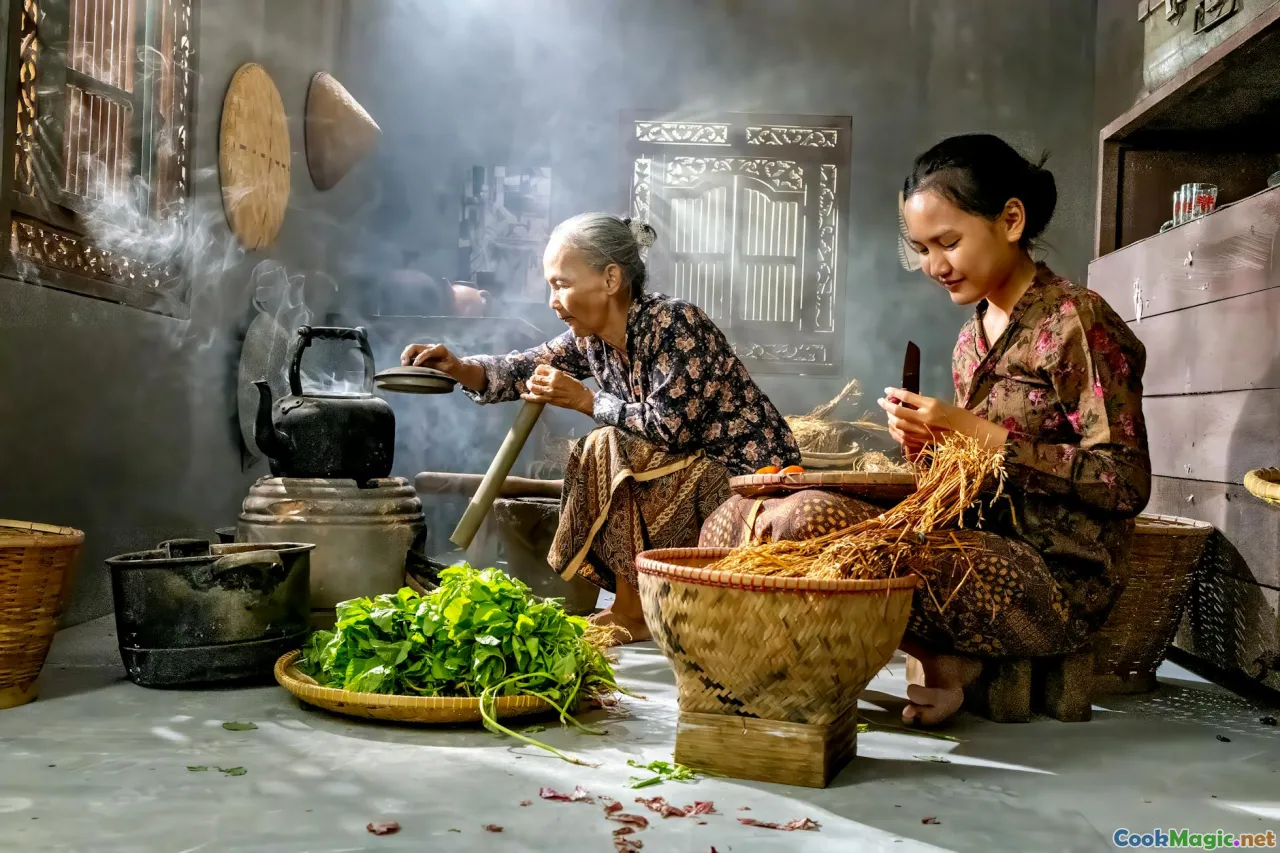
I learned my goat water ways from a friend called Auntie Inez, a talker whose hands never stopped moving. On her veranda in All Saints, with a view of sloping green and a radio murmuring calypso, she kept a coalpot going like a small red galaxy. The goat was washed with lime and a whispered prayer—“Behave, you”—then seasoned and left to dream while we did the early things: picking thyme, toasting pimento, testing the weight of the pot.
Children drifted in to pinch dough and roll spinners under Inez’s supervision. “Not too fat, not too skinny—it must look like it can swim,” she said. Someone arrived with a container of hot sauce thick with bird peppers, and someone else with brown paper bag bread still warm.
By the time the pot reached what I now call the “story boil,” the air tasted of clove and goat fat and a breeze from farther down the island. Men returned from church and sniffed the air like hounds. The first bowl was always for the oldest present, a neighbor with stories about cricket and hurricanes. He would blow on the spoon and say something like, “Cinnamon hold it together this year,” which he also said last year and the year before, but somehow it was always true.
The pot was eaten in stages. Early, when the dumplings were still firm, people stood around like satellites, dipping bread and commenting on the broth’s shine. Later, with a hotter sun and the broth thickened a little by evaporation, kids would fish for the snappy bits of meat around the bone. In the afternoon, when only one marrow coin remained, Auntie would save it for the quietest child. “Watch how he eat it; he become a man today,” she’d say, half-joking, fully serious.
Antigua versus elsewhere: subtle differences
In Montserrat, goat water is a flag—a national dish that appears at every festival, especially around St. Patrick’s in March. Some Montserratian versions are thinner, with fewer dumplings, relying on the purity of spice and goat. In Nevis and St. Kitts, goat water often leans slightly sweeter and may include breadfruit or green papaya in some family pots—more Saturday soup than minimalist stew. Antigua and Barbuda’s celebratory goat water, shaped by proximity to Montserrat and the island’s own taste for balance, sits somewhere in the middle: a brown broth with presence, a few spinners for comfort, and a spice bouquet that never shouts.
Antiguan cooks I’ve met tend to:
- Use whole spices and avoid powdered cinnamon or clove, which cloud the texture.
- Include green seasoning for freshness.
- Float a whole Scotch bonnet rather than mince it in, letting diners invite fire by the spoon.
- Embrace a hint of burnt sugar browning for that gemstone color.
Barbudan cooks, whose fishing lives inform their plates, may pair goat water with a sharp side salad of cucumber, onion, and lime, especially when the sun is high and the celebration happens near the beach. I’ve even seen goat water served alongside a tray of grilled spiny lobster at a wedding in Codrington—a mingling of land and sea that felt exactly right for the islands.
Green seasoning: the quiet heartbeat

Every household’s green seasoning is a passport. In Antigua, it slips into stewed fish, rubs on chicken, and, in goat water, tucks a garden behind the spice rack. If you have culantro (shadow beni), use it—it’s the island cousin of cilantro, with deeper bass notes and a carrot-top aroma. I like a squeeze of lime to make the herbs sparkle without brashness.
Tips for a good green seasoning:
- Blend herbs with just enough water or oil to move the blades. You want a paste, not a smoothie.
- Keep salt light; you’ll season the pot later.
- A little celery leaf can add a clean, almost anise lift.
Elsewhere in the Caribbean, green seasoning might include bell pepper or vinegar. Here, I keep it simple: thyme, scallion, culantro/cilantro, garlic, onion, and lime. It’s the sort of flavor that feels like early morning in the backyard.
The science under the sway: collagen, perfume, and heat

Goat water works because it marries chemistry with intuition. Collagen in shanks and shoulder dissolves into gelatin around 160–180°F (71–82°C), giving the broth that gentle cling. Browning transforms the goat’s amino acids and sugars into hundreds of Maillard compounds, which read as “roasty,” “nutty,” and “savory.” Cinnamon and clove contain eugenol and cinnamaldehyde, volatile compounds that rise in steam and announce the pot well before you lift the lid. Thyme’s thymol keeps the fat feeling clean on the palate.
Heat is managed generosity. A whole Scotch bonnet releases capsaicin slowly, mostly into the oil droplets at the top. That’s why one spoon might feel gentle and another a little hotter, depending on how close you skim to the surface. If you want steady heat, slit the pepper so the capsaicin mingles with the broth, but know you’re bringing a tiger to dinner.
Cooking for a crowd: timing and technique

Celebratory meals are a logistics puzzle. Goat water helps because it tastes better after a rest and holds without sulking. For a party of 30–40, I scale up to 12–15 lb (5.5–7 kg) of goat and use a pot big enough to make a drummer jealous.
A timeline for an evening fete:
- Morning: Wash and season the goat; store in cooler on ice.
- Afternoon: Make green seasoning; chop aromatics; pre-measure spices; prep dumpling flour.
- 3 hours before serving: Sear in batches; build the pot; bring to a simmer.
- 2 hours before: Skim, adjust water, keep a slow, glugging simmer going.
- 45 minutes before: Add spinners; taste and adjust seasoning.
- 15 minutes before: Turn off heat and rest. The broth clears a little, and the heat evens out.
Serving tips:
- Keep ladles of different sizes—one for broth, one for fishing out meaty pieces. That way each bowl has balance.
- Warm bowls if you can; hot ceramic keeps broth sultry to the last sip.
- If outdoor, position the pot out of the wind; wind robs heat and skews simmer timing.
Sidekicks and pairings: what the bowl wants

- Bread: Antiguan salt bread, with its tender crumb and faint saline lift, is the classic. Bakes (fried dumpling rounds) are excellent for scooping, and hard dough bread gives a chewy contrast. Some serve cassava bread for a gluten-free pairing that echoes island history.
- Hot sauce: A bright pepper sauce—mango-based or sharp with vinegar and bird pepper—lets guests correct heat at the table. Put a teaspoon in the bowl and watch it bloom.
- Drinks: Wadadli beer, cold and uncomplicated, or a rum and Ting if you like a citrus snap. For non-alcoholic, homemade ginger beer or a sorrel drink, especially around Independence and Christmas, sets the spices ringing.
- Sides: A cucumber-onion-lime salad; slices of ripe avocado; wedges of lime for those who like to cut the richness.
What I wouldn’t add: starchy vegetables in the pot. Goat water is a broth-forward dish in its Antiguan celebratory form. Save the yam and breadfruit for another bowl, or serve them alongside.
Troubleshooting a tricky pot
- Too salty: Slip in a peeled green banana for 10 minutes to absorb excess salt, then remove. Or ladle out some broth and replace with boiling water, simmering another 10 minutes to reset flavor.
- Too bitter from browning: Add water and simmer longer; time and dilution are your friends. A teaspoon of tomato paste can help steer the palate back to savory.
- Too thin: Simmer uncovered to reduce. Or mash a few spinners against the pot’s side and stir them in; the starch will lightly tighten the broth.
- Bland: Check for missing warmth. Add a few crushed pimento berries, a crack of black pepper, and taste your salt. A teaspoon of Worcestershire can deepen umami delicately.
- Too spicy: Remove the Scotch bonnet. Add a small knob of butter; fat disperses capsaicin and softens the blow.
Equipment notes:
- Pressure cooker: You can pressure the goat for 15–20 minutes to tenderize, then finish in an open pot with spices to build flavor. I prefer the open simmer for celebratory pots; the aroma is part of the event.
- Coalpot or wood: Wood smoke adds a background bass note that no spice can simulate. If using wood, lift the pot occasionally and rotate to avoid hot spots.
The ethics of the bowl: respect for the animal, respect for the eater

I’m convinced goat water tastes better when we acknowledge the animal’s life and the farmer’s work. In Antigua, smallholders often sell goat that grazed on local scrub—tamarind leaves, roadside grasses, a little bush. That diet writes itself into the flavor. Buying from a butcher who knows the farms supports a cycle that keeps good meat—and good stories—close to home.
Waste nothing. Bones that don’t make the final cut can build the initial stock. A bowl shared with someone who needs a warm meal is part of the celebratory ethic. And when people are done, if you see them lift the empty bowl to catch the last sheen of broth with bread, you’ve done right by everyone involved.
A word on Barbuda: sea breeze and goat steam
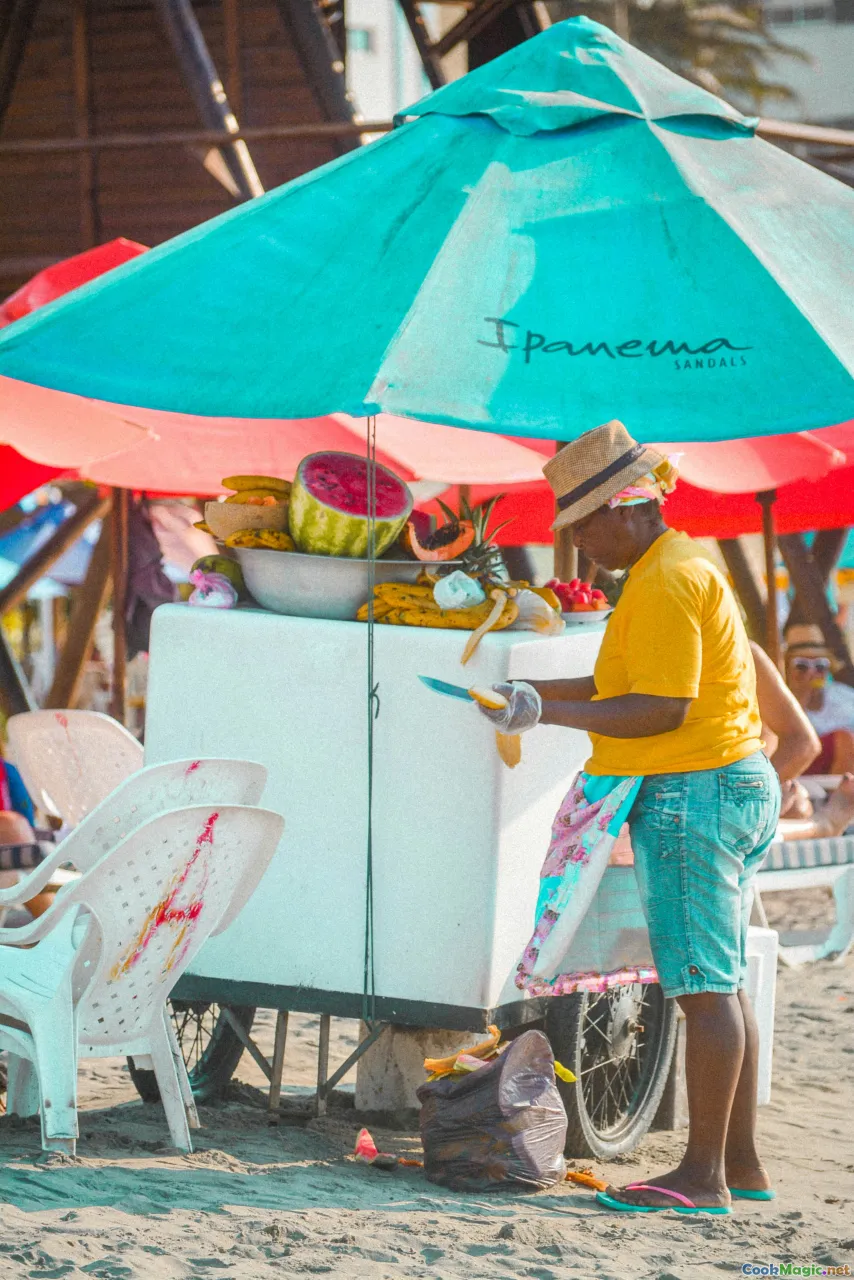
Barbuda’s flat horizon and glass-clear shallows shape appetite differently. I’ve sat near Codrington and watched a pot of goat water tilt gently on a breeze-worried flame while conch was cracked at another table. The goat water there was lighter, almost tea-like in clarity but with a depth that only bones and time can give. The cook added a single strip of orange peel, a trick she learned from an aunt who’d lived in Montserrat. She served it with thin slices of onions sweating in lime, sea salt flake, and the freshest avocado I’ve ever tasted. Between sips, the scents braided together—lime, thyme, the sea. It felt like the islands nodding at one another over a bowl.
Safety and serenity: pepper and steam
Scotch bonnet peppers are beautiful and not to be trifled with. Handle with care—use a knife to slit them and avoid touching your eyes. If one breaks in the pot and you overshoot the heat, don’t panic. Remove the pepper, add a knob of butter or a splash of coconut milk (nontraditional but effective), and let the pot rest. Steam burns are their own mischief; lift lids away from your face and hands.
And remember: steam carries flavor. Don’t crowd your pot under a tight lid the whole time. Let it breathe so aromas develop and the broth comes into its own voice.
The last ladle: why this dish for celebrations
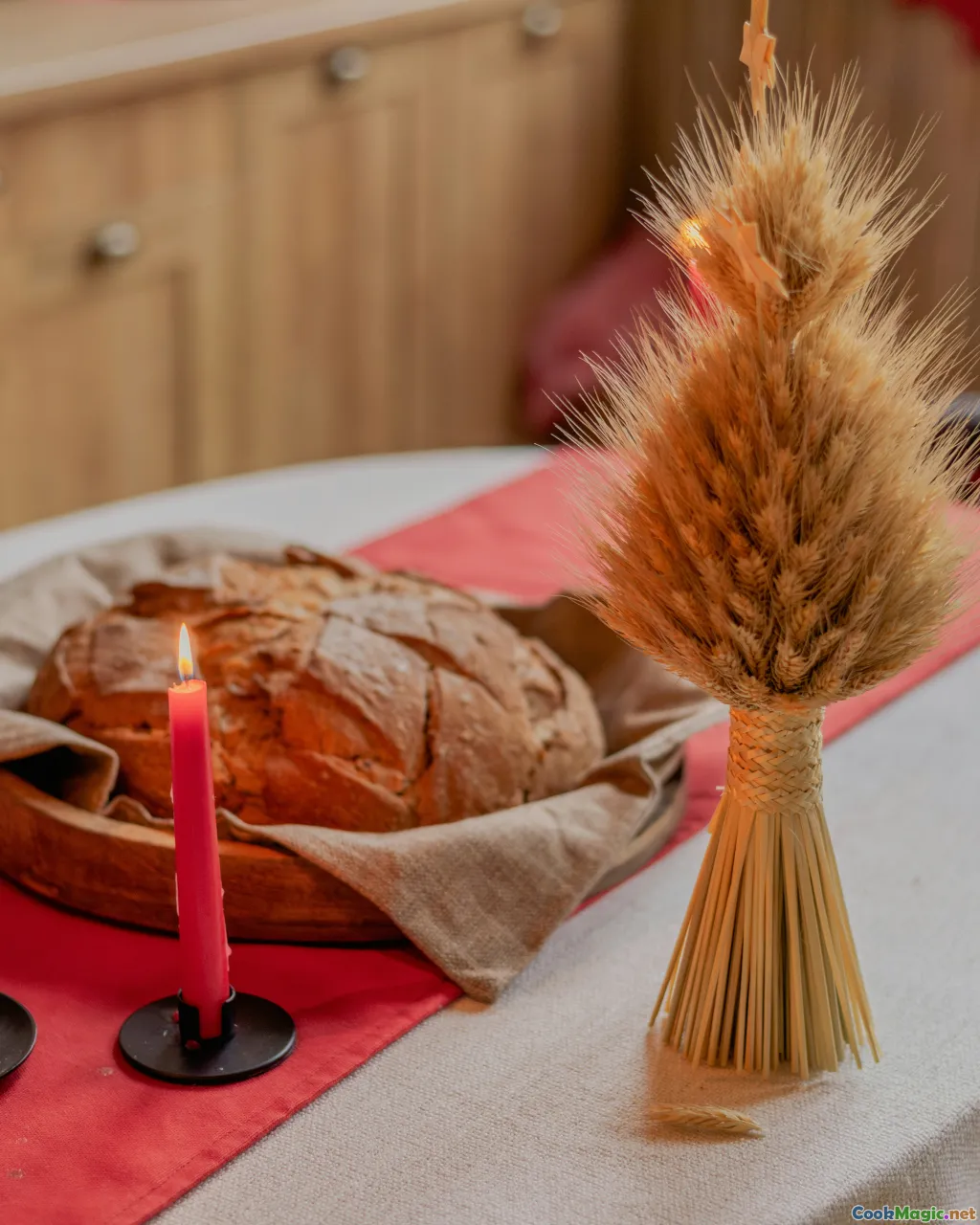
Celebratory meals are about marking time. Goat water marks it with the deep tick of a wooden spoon on the pot’s rim. It’s the dish you serve when people arrive hungry from church, from the stadium, from a long ferry ride. It asks nothing fancy of you—no perfect knife cuts, no white tablecloth—but it rewards patience and attention and a willingness to taste and adjust.
I’ve watched a dozen quarrels end over a shared bowl of goat water, and I’ve seen the beginnings of friendships too. In Antigua and Barbuda, where the light seems carved and the breeze makes its own music, a pot like this anchors the day. You taste the goat, yes, but you also taste the cinnamon ship that sailed centuries ago, the thyme clipped from a neighbor’s yard, the pimento berries crushed under a spoon that belonged to someone’s mother. You taste the island’s resourcefulness—bones turned into silk, heat turned into comfort.
If you make it for a celebration, you’ll be tempted to keep stirring, keep skimming, keep doing. Give the pot its fifteen-minute rest. Let it find its level. People will gather as if drawn by tide. Someone will reach for the salt bread; someone will ask if it’s too hot. You’ll ladle and watch the broth catch the light and think: this tastes like belonging. And you’ll be right.